Creating a Fire-Safe Landscape With California Native Plants
By Amber Huntington
Wildfire resilience begins at home—literally. A thoughtfully designed landscape using California native plants can dramatically reduce wildfire vulnerability while supporting biodiversity, water conservation, and long-term ecological health. Fire-safe landscaping isn’t about eliminating plants; it’s about rearranging, maintaining, and selecting them wisely. California natives are uniquely adapted to our climate’s cycles of drought, heat, and fire, making them ideal allies in creating a defensible space that looks beautiful year-round.
- Fire-safe landscaping rearranges rather than removes plants.
- California natives are naturally adapted to drought and fire conditions.
- Goal: beauty + biodiversity + reduced wildfire vulnerability.

Before choosing plants, it’s essential to understand the three defensible space zones defined by CAL FIRE and adapted here for home gardeners. Zone 0 (0–5 feet) is the immediate non-combustible zone around structures, where the priority is removing anything that can catch fire. Zone 1 (5–30 feet) forms the lean, clean, and green buffer—plants are widely spaced, with meticulous maintenance. Zone 2 (30–100 feet) is the transition zone, where low-density, well-maintained vegetation creates reduced fuel continuity. Organizing your landscape around these zones helps slow fire, protect structures, and give firefighters room to work.
Zone 0: 0–5 feet—no combustibles, minimal vegetation.
Zone 1: 5–30 feet—widely spaced, low-volume plantings.
Zone 2: 30–100 feet—broader spacing, reduced fuel loads.
Zones help slow fire and protect structures.
Zone 0 (0–5 Feet): The Immediate Safety Perimeter
Zone 0 is your home’s closest layer of protection and the most critical. Plants are generally not recommended here; instead, use gravel, decomposed granite, stone, or hardscape. If vegetation is absolutely desired—for aesthetic or ecological reasons—select low-profile, moisture-retentive, non-woody California natives in containers. Keep leaf litter cleared, irrigation functioning, and avoid storing firewood, mulch piles, or tools against the house.
- Avoid woody shrubs and grasses in Zone 0.
- Use hardscape and minimal, low-fuel potted natives if needed.
- Maintain clean surfaces and remove leaf litter regularly.
- Keep combustible materials away from structures.
Zone 1 (5–30 Feet): Low-Growing, Low-Fuel, Well-Maintained Natives
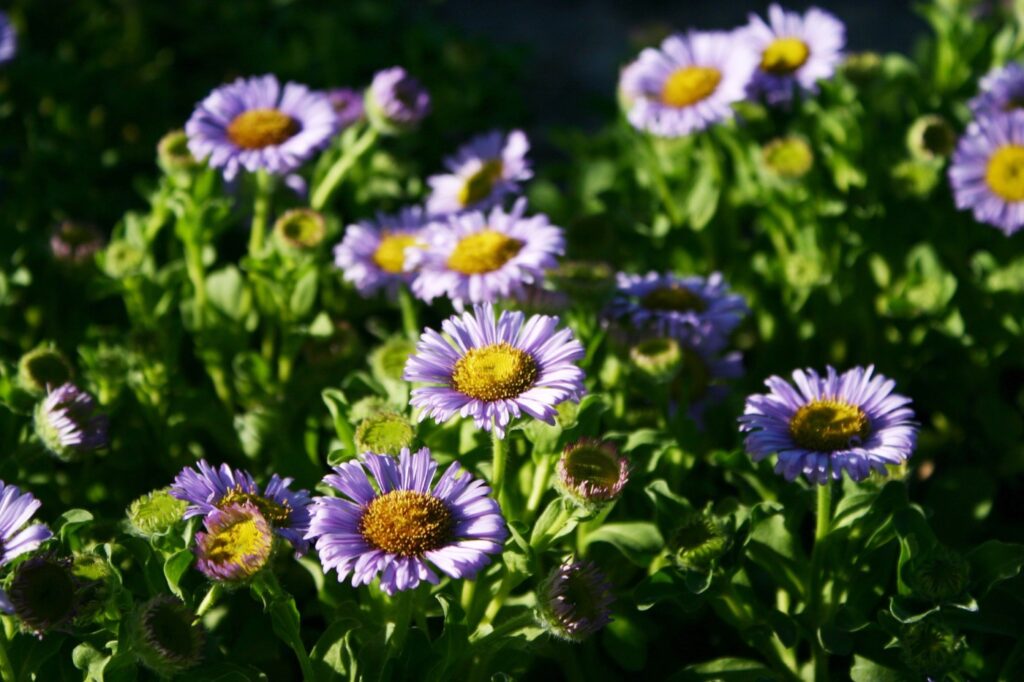
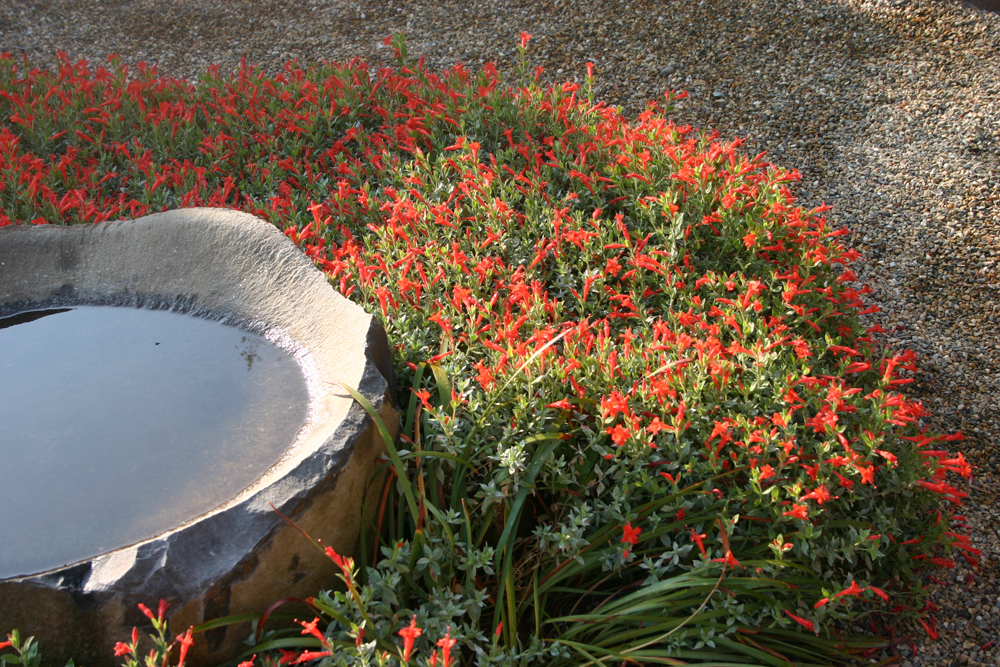
Zone 1 is where California native plants can shine—as long as they’re low-growing, widely spaced, and carefully maintained. Here, choose species with high moisture content, minimal resin, and moderate growth rates. Good choices include California fuchsia (Epilobium canum), seaside daisy (Erigeron glaucus), yarrow (Achillea millefolium), and low bunch grasses such as California oat grass (Danthonia californica). Keep them no taller than 18–24 inches and prune regularly. Space plants so that mature foliage doesn’t overlap, and irrigate deeply but infrequently to maintain vigor without encouraging excess growth.
- Use low-growing natives with moderate moisture content.
- Maintain 18–24” max height and avoid overlapping foliage.
- Deep, occasional irrigation promotes resilience without excess growth.
- Good picks: California fuchsia, Seaside daisy (Erigeron glaucus), common yarrow (Achillea millefolium), and California oat grass (Danthonia californica).
Choosing Fire-Wise Shrubs for Zone 1
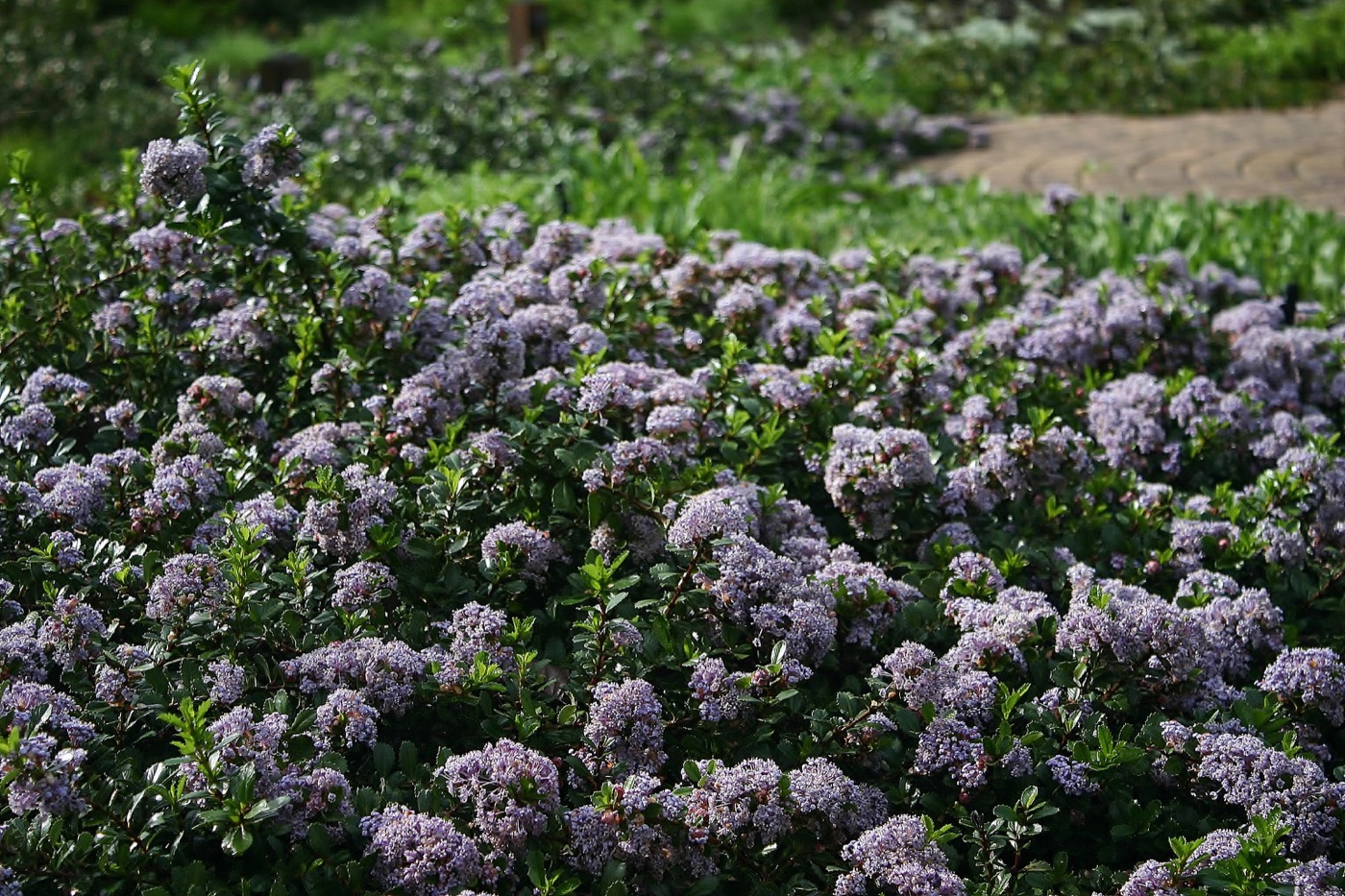
If shrubs are desired in Zone 1, select low-growing, compact forms of naturally fire-resistant California natives. Examples include manzanita (Arctostaphylos spp.), California lilac (Ceanothus spp.), and coyote brush (Baccharis pilularis). These shrubs maintain higher internal moisture and tend not to accumulate deadwood as aggressively. Position them as isolated accents rather than clusters, and prune annually to remove dead stems and thin out density.
Avoid resiny shrubs like sages (Salvia spp.) and chamise (Adenostoma fasciculatum)—they are valuable farther from the home.
- Compact, fire-resistant native shrubs can work in Zone 1.
- Examples: low-growing Arctostaphylos and Ceanothus species, and compact forms of coyote bush.
- Use as isolated specimens—not continuous hedges.
- Remove dead wood and thin annually.
Zone 2 (30–100 Feet): Transition to a Naturalistic Native Landscape
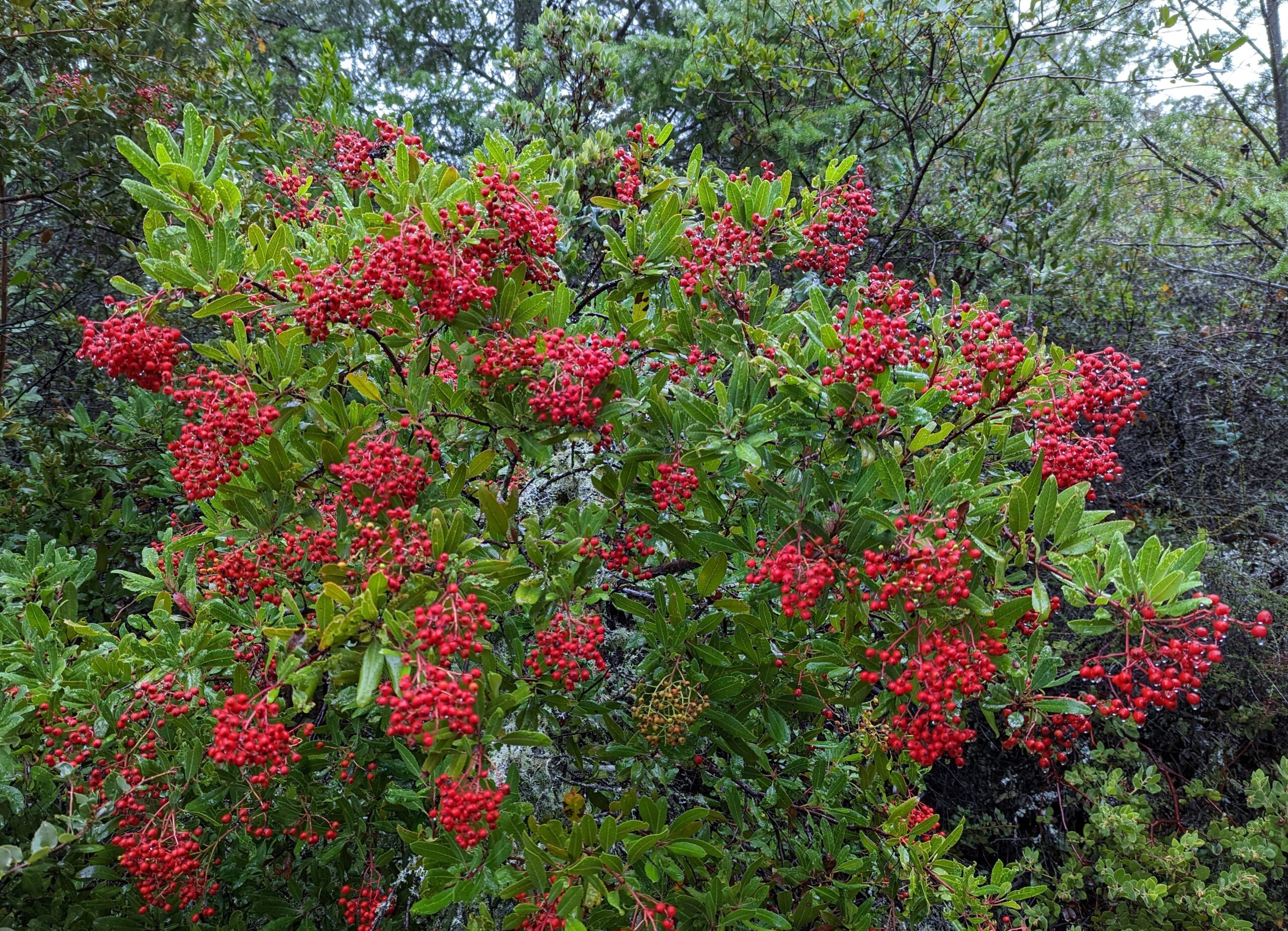
In Zone 2, you can begin incorporating more diverse and expressive California native plantings. This area aims to reduce fire intensity rather than eliminate it entirely. Well-maintained native grasses—such as purple needle grass (Stipa pulchra) or blue wild rye (Elymus glaucus)—can be used in drifts if mowed annually after seed set. Larger shrubs like mountain mahogany (Cercocarpus betuloides), coffeeberry (Frangula californica), native currant or gooseberry (Ribes spp.), and toyon (Heteromeles arbutifolia) are appropriate when spaced to avoid fuel ladders. Native, fire-resistant trees like oaks (Quercus spp.) are suitable here, provided lower limbs are pruned up and leaf litter is managed.

- Greater plant diversity is appropriate in Zone 2.
- Use native bunch grasses with annual maintenance.
- Include larger shrubs and small trees with ample spacing.
- Maintain separation between ground fuels and canopies (no fuel ladders).
Avoiding Fuel Ladders and Managing Vertical Space
A “fuel ladder” forms when ground covers, medium shrubs, and tree canopies connect vertically, giving fire an easy path upward.
California native plants of all sizes can be incorporated safely when you maintain vertical spacing: remove lower limbs of shrubs and trees, keep grasses and groundcovers low, and space plant layers so they don’t touch. Native oaks—when properly pruned—can create shaded microclimates that actually moderate temperatures and reduce the dryness of understory plants.
- Avoid contact between plant layers.
- Prune lower limbs of shrubs and trees.
- Oak shade can create cooler, less flammable microclimates.
- Fuel ladder interruption is essential across all zones.
Mulch Choices for Fire-Safe Native Gardens
Mulch is crucial in native gardens, but not all mulches are equal in fire-safe zones. Gravel, pumice, and decomposed granite are ideal for Zones 0 and 1. In Zone 2, composted wood chips—kept at a 2–3” layer—are usually acceptable and burn slowly with low flame height. Avoid shredded bark or “gorilla hair” mulch, which can ignite quickly and carry fire across the landscape. If planting natives that prefer leaf litter (such as manzanitas or oaks), rake and redistribute the material regularly so it doesn’t accumulate into deep, fluffy layers.
- In Zones 0–1, use mineral mulches (DG, gravel).
- Zone 2 can use composted wood chips.
- Avoid shredded bark mulches.
- Manage natural leaf litter to prevent deep accumulation.
Irrigation for Fire-Safe Natives
Even drought-tolerant natives need water—especially in fire-prone areas. Proper irrigation maintains plant health and moisture content, reducing flammability. For Zones 1 and 2, deep, infrequent irrigation encourages deep roots and reduces surface dryness. As plants mature, many natives can transition to reduced watering. In the summer, once a month deep soaks go a long way!
- Healthy plants burn less readily than stressed plants.
- Deep, infrequent watering strengthens root systems.
- Monthly summer deep soaks are essential for healthy, fire-safe plants.
Maintenance: The Backbone of Fire Safety
No plant is fireproof. The most important factor in wildfire preparedness is maintenance: pruning shrubs annually, removing dead stems, reducing thatch in bunch grasses, cleaning gutters, managing leaf litter, and eliminating invasive weeds that dramatically increase fire risk. A single well-maintained native manzanita is safer than an overgrown, deadwood-filled, non-native hedge. Periodic winter cleanup and pre-summer inspections make the biggest difference.
- Maintenance matters more than plant choice.
- Remove deadwood, reduce grass thatch, and manage weeds.
- Clean gutters and roof lines regularly.
- Seasonal cleanup greatly increases fire resilience.
Designing for Beauty, Habitat, and Safety
Fire-safe landscaping doesn’t mean sacrificing habitat or aesthetic richness. Many California native plants—like toyon (Heteromeles arbutifolia), buckwheats (Eriogonum spp.), sages (Salvia spp.), and manzanitas (Arctostaphylos spp.)—can be used beautifully in Zones 1 and 2 when pruned and spaced correctly. By combining thoughtful design with regular upkeep, homeowners can create a garden that supports pollinators, resists drought, enhances regional character, and stands resilient in the face of wildfire events.
- Fire safety and ecological beauty can coexist.
- Natives offer habitat benefits while remaining fire-compatible.
- Spacing and pruning are the keys to combining safety with aesthetics.
- Native gardens can be both resilient and regionally expressive.
Sources
- California Department of Forestry and Fire Protection. (2025). Defensible space: How to create defensible space for wildfire safety. Ready for Wildfire. https://readyforwildfire.org/prepare-for-wildfire/defensible-space/
- California Native Plant Society. (2019). Fire recovery guide. California Native Plant Society. https://www.cnps.org/give/priority-initiatives/fire-recovery
- Kent, D. (2005). Firescaping: Creating fire-resistant landscapes, gardens, and properties in California’s diverse environments. Wilderness Press.
More Gardening Guides

Native Plant for Hummingbirds