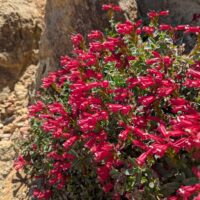
Penstemon newberryi v. sonomensis
This rare, perennial, inland beauty, found only in Sonoma, Napa, and Lake Counties, is a great addition to the dry, inland rock garden. A low mat of small, gray-green, succulent-like leaves gives rise to 5-12” stalks topped with clusters of chunky, tubular, magenta-red flowers with white, fuzzy throats and reproductive structures. Mature plants are no more than 2' wide. A native bee and hummingbird magnet. Plant in full sun with decent soil drainage. Little to no water once established.

Penstemon parryi
An adaptable species from the desert southwest of the United States. Thick bluish-green foliage forms a low rosette around 2 feet wide. Bright pink funnel-shaped flowers are produced in profusion on stems 2-3 ft. tall in spring. Good drainage and full sun with moderate to little water once established. Attracts bees, butterflies and hummingbirds.
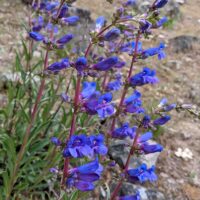
Penstemon speciosus
Found in higher elevation localities of inland Northern California, royal penstemon is a vibrantly colorful addition to the dry, full sun garden. In summer, the large, saturated blue-purple florets are held in clusters on stems rising almost 2’ tall above a low, evergreen rosette of glossy, strap-like foliage, reaching 1' - 2' wide. Attracts a multitude of pollinators. Does best with decent soil drainage, and inland sites that provide seasonality—colder winters, and hotter summers. Drought-tolerant once established.
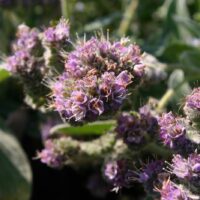
Phacelia californica
A low elevation species inhabiting bluffs, open slopes, road cuts and canyons of our inner and outer Coast Ranges down through the central coast. Forms perennial clumps of crinkled gray leaves. Stout stems rise above the rosette one foot to 18 inches tall with large coils of lavender flowers. Excellent rock garden subject. Plant in sunny areas with good drainage where it will be drought tolerant, and will do fine with a little summer water. Phacelias are great for attracting bees and butterflies.

Plantago maritima
From coastal bluffs up and down the California coast comes this charming little plantain. Starting in late spring and continuing through summer, small, greenish-yellow flowers flank the top of slender stems up to 6 inches tall. The dense rosettes of narrow, succulent leaves provide a striking accent in a rock garden or nestled in crevices between pavers or stones. A good container specimen. Recognized for its edible and medicinal uses. Plant in full sun to light shade. Tolerates low to regular moisture. May spread vigorously by seed.
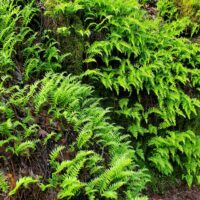
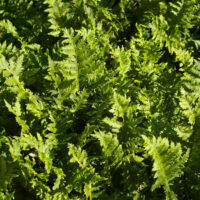
Polypodium californicum ‘Sarah Lyman’
An interesting cultivar of the California polypody fern with finely divided leaves. A wonderful addition to the shade garden where it is perfectly adapted to our dry summers. With the first coolness of autumn the fiddleheads emerge and unfurl. Energetic bright green frilly foliage thrives all winter and into spring. Goes dormant late spring or early summer where it waits out the dry season returning dependably again in the autumn. Grows 12 to 15 inches tall and slowly spreads.
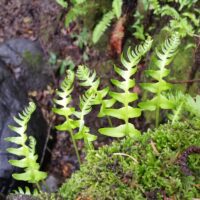
Polypodium glycyrrhiza
Native to moist coastal forests from Monterey County to Alaska. This epiphytic fern enjoys shady environments where it grows on trees, logs and stumps, mossy rocks and slopes. The long, narrow, deeply lobed fronds spread by creeping rhizomes, which have a sweet licorice flavor and a history of use by various native American peoples. They grow happily in moist shady gardens, going summer dormant once conditions get too dry, returning with the autumn rains and coolness. Drought tolerant in somewhat coastal conditions. Good container subject. Deer resistant.
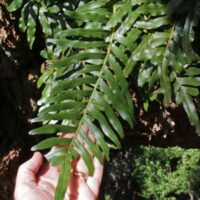
Polypodium scouleri
A choice species native to moist coastal forests of the western U.S. where this fern will grow on trees, rocks and logs. Beautiful, leathery, deeply lobed, evergreen fronds grow on creeping rhizomes to about 8-12 inches tall and slowly spreading. Requires good drainage with a humusy soil and some summer moisture, but not overly wet. Wonderful on rocks, cracks in walls, and logs in shady locations. Excellent in containers. Makes a lovely hanging basket.
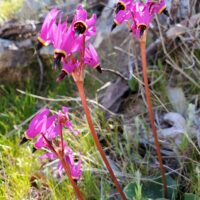
Primula (Dodecatheon) hendersonii
Description coming soon! Also known as: Primula hendersonii
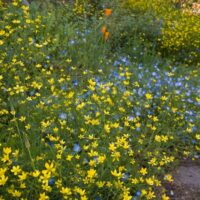
Ranunculus occidentalis
Native to open woodlands and meadows, this buttercup often occurs under deciduous oaks and buckeyes or on edges of forests. Perennial, with basal foliage, the flower stems rise 12 to 20 inches with bright yellow shiny petals. Has been surprisingly adaptable. Does fine with moderate summer irrigation, where it stays evergreen and long blooming. Once established can be allowed to go summer dry, where it will go dormant after setting seed, and returning with the winter rains.
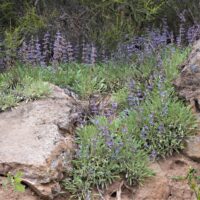
Salvia sonomensis
Sonoma sage is a wonderful native perennial and can be a serviceable groundcover if its needs are met. Good drainage is a must and it performs best with light shade. Water plants to get established-very drought tolerant, will NOT tolerate regular summer water. Mat forming, flowers rise to about 6 inches above the foliage and are lavender-blue. This species attracts bees and hummingbirds. Deer resistant.
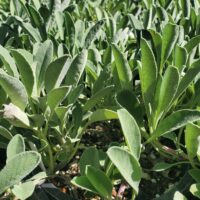
Salvia sonomensis ‘Greenberg Gray’
We named this wonderful gray-leaved form of the Sonoma sage for Katherine Greenberg who had it growing in her beautiful Lafayette garden. This striking species forms a ground hugging carpet of leaves with charming, blue-purple flowers in late spring on stems up to 6 inches tall. Bees, butterflies and hummingbirds love the blossoms. Needs lightly dappled shade and excellent drainage with little to no water once established. Great under manzanitas. Deer resistant.
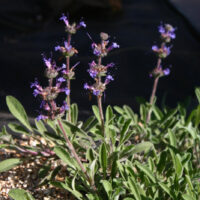
Salvia sonomensis ‘Hobbit Toes’
An interesting selection of Sonoma sage from the Cuesta Grade in San Luis Obispo County. A compact grower forming a flat mat of gray leaves covered with soft white hairs. The blue-violet flowers spikes are darker than many of our local forms and make a beautiful display in late spring, a favorite of bees and hummingbirds. This fragrant ground cover tolerates heat and drought and requires good drainage with only occasional to no summer watering once established. Will grow in a variety of exposures but often seems happiest with a bit of light shade. Deer resistant.
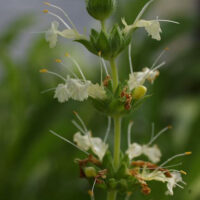
Salvia sonomensis ‘John Farmar-Bowers’
Thanks to Kent Calkins for sharing this unique form of sonoma sage he found growing on his property in the hills above Santa Rosa. Instead of the usual lavender-blue flowers, this plant has creamy white flowers on 6 inch stalks above the ground hugging mat of aromatic foliage. A wonderful native groundcover which requires good drainage and performs best with light shade. Water plants to get established - very drought tolerant, will NOT tolerate regular summer water. Deer resistant. Attracts bees and hummingbirds.
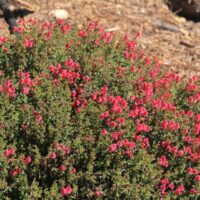
Scutellaria suffrutescens
Sturdy, compact, long blooming perennial growing less than 6 inches tall by 15 inches wide. Deep green foliage and dense growth habit make a tidy foil for the profusion of small rosy- pink snapdragon-like flowers over a long period spring-summer. Highly attractive to pollinators and hummingbirds. Plant in full sun to light shade with occasional water. Drought and heat tolerant. Deer tolerant too.
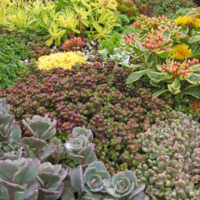
Sedum divergens
This is a little beauty. Mat-forming and evergreen, this succulent is native to California north to Alaska. Tolerant of wet winters, the shiny round bead-like leaves turn a dark red in full sun. Stays compact and slowly spreads, 2 - 4 inches tall, reaching about 18 inches in diameter. Blooms starry yellow flowers in summer. Great in rock gardens, planters, useful as an edge plant. Adapts to many soil types. Fully hardy and drought tolerant once established. We have this planted in our trough in front of the greenhouse.
Sedum spathulifolium ‘Cape Blanco’
A mat forming, western native succulent, often seen on rocky cliffs and shady banks in California’s Coast Ranges and Sierra Nevada north to British Columbia. Small, spoon-shaped leaves form flat rosettes where bright yellow star-like flowers appear in late spring and early summer. The cultivar 'Cape Blanco' was selected along the Oregon coast, for its chalky-white foliage. A natural for the rock garden or container plantings where they are best with part shade. Very drought tolerant.
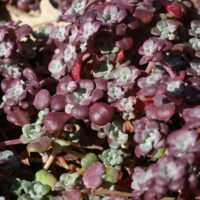
Sedum spathulifolium ‘Purpureum’
This distinctive form of the Pacific stonecrop features purple leaves which turn particularly dark in the winter. Bright yellow flowers are produced in late spring and early summer on short stems up to 4 inches high. This mat forming succulent grows in rocky crevices and shady banks in California’s Coast Ranges and Sierra Nevada north to British Columbia. The small, spoon-shaped leaves form flat rosettes. Needs excellent drainage and some shade, especially in the afternoon. A natural for the rock garden or container plantings where its diminutive nature can be appreciated. Very drought tolerant.
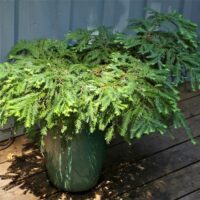
Sequoia sempervirens ‘Kelly’s Prostrate’
A low growing form of the coast redwood with a flat, spreading habit. Exceptionally low growing, we have never seen any upright growth in this form. The flat sprays of foliage are deep green with light green new growth and spreading to five foot wide or more. Best in moist, well drained soils with light shade. Use where the unique form can be shown off. Makes an excellent container subject.
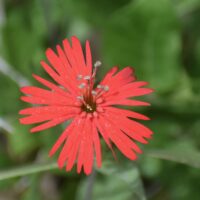
Silene laciniata ssp. californica
Native to open woods from Southern California north to Oregon, this native perennial is a knock out in bloom. Late spring and early summer bring brilliant, deeply lobed scarlet petals over the low growing mound of foliage 1-2 feet tall and about as wide. Best suited for well drained soils in lightly shaded settings where water can be withheld once plants begin to go dormant. A top notch rock garden subject and hummingbird favorite.
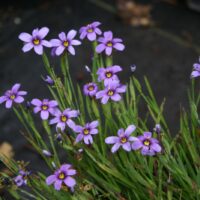
Sisyrinchium bellum ‘Dwarf’
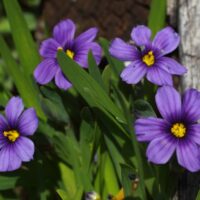
While we’re a little unsure about this selection’s origins, we do know it’s an AMAZING bloomer and an easy garden plant! In spring and into summer, deep blue-purple flowers with yellow centers cover this very dwarf blue-eyed grass which stays under 6 inches tall. Very narrow, iris-like leaves slowly increase to form a small clump. Plant in full sun to light shade and provide moderate to infrequent irrigation. If allowed to go dry in summer, it will go dormant, only to re-emerge with the winter rains. Deer resistant.
Sisyrinchium bellum ‘Rocky Point’
A vigorous selection of dwarf blue-eyed grass discovered on Rocky Point south of Carmel in Monterey County and introduced by Native Sons Nursery. Robust, rich green clumps of wide, iris-like leaf blades 4 - 6 inches tall feature vibrant blue-purple flowers with yellow centers. A great rock garden item. Plant in full sun to part shade. This spring bloomer will go semi-dormant in summer if allowed to go somewhat dry. With moderate irrigation it will be evergreen and have an extended bloom preiod. Deer resistant.
Sisyrinchium bellum ‘Stripey’
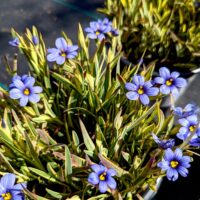
An eye-catching cultivar of blue-eyed grass, forming compact clumps of narrow variegated foliage. The gray-green blades have pale yellow margins growing around 6 inches tall and a foot or so wide. The chubby clumps of narrow, variegated leaves are topped with cool blue flowers in the spring. Perfect rock garden item or container accent for sun to light shade with moderate water. Deer resistant.
Teucrium cossonii (majoricum)
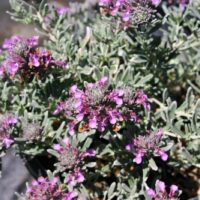
A beautiful little shrublet that hugs the ground to 2 ft. or more wide. Narrow gray-green foiage is topped with dense clusters of rosy-lavender flowers, nearly the entire growing season. Requires decent drainage with moderate to occasional summer water once established. Great rock garden plant. Pollinator friendly and deer resistant.
Trichostema lanatum
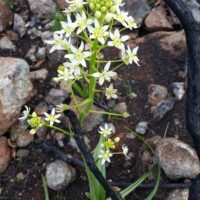
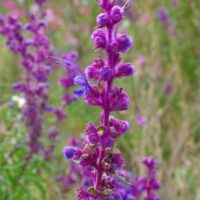
Woolly blue curls is a much sought after evergreen shrub with pungent, dark green, narrow leaves and spectacular flower spikes. Grows up to 5 ft tall and often wider, and blooms over a long period. Blue-purple to pink flowers, covered in purple hairs with protruding, long, curving stamens are a sight to behold. Native to coastal scrub and chaparral communities from Monterey county to northern Baja. Requires full sun, good drainage and is drought tolerant once established. Avoid regular irrigation, fertilizer and organic mulches. Pollinated by hummingbirds and visited by bumblebees and butterflies. Deer resistant.
Triteleia hyacinthina
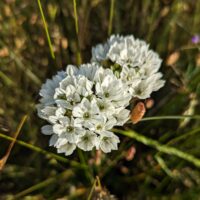
One of the easier to grow native bulbs that adapts well to garden conditions. Native to vernally moist areas that become summer dry in the Coast Ranges, Central Valley and Sierra Nevada into southwestern Oregon. Slender flowering stems rise one to two feet above the narrow leaves, with umbels of white, star-shaped flowers with green centers. If happy, the corms will multiply, forming drifts among grasses and shrubs and in open woodland settings. Easy to grow in containers, where they can be stashed in the shade once they go dormant. Bee and butterfly favorite.