Triteleia laxa ‘Corrina’
A beautifully dark flowered form of our Ithuriel’s spear, with flowers a darker blue-purple than the more common ‘Queen Fabiola’. The trumpet-shaped flowers form circular clusters at the top of slender stalks 12 to 18 inches high. This easy to grow bulb sends up slender, grass-like leaves in late winter followed by the striking flowers in late spring. Multiplies readily forming colorful drifts which mix well with grasses and smaller perennials. Tolerant of pretty much all soil types and can be allowed to dry out completely in summer when it goes dormant. Unlike most grassland bulbs, this species will also tolerate moderate irrigation. Plant in full sun to light shade. Attracts bees, butterflies and hummingbirds.
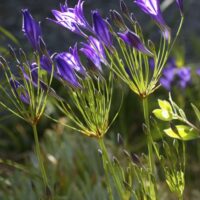
Triteleia laxa ‘Queen Fabiola’
Trumpets of bluish-purple blossoms make a dazzling display at the height of spring on this easily grown lily relative. The showy flowers rise up to 18 inches tall in dense whorls on slender stalks above grasslike leaves. The small bulbs increase rapidly to form small, colorful drifts. Give full sun to light shade. Tolerant of dry conditions but accepts occasional irrigation. Will go dormant by mid-summer but reemerges in early winter. Attracts bees, butterflies and hummingbirds. Plant in openings between low, evergreen plants or in meadows with yarrow, California fuchsia and grasses.
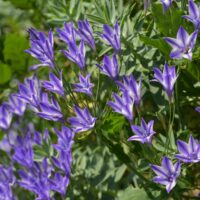
Triteleia laxa ‘Rudy’
An interesting flower color variation of this easy to grow native bulb. Grasslike blades 12 - 18 inches tall produce flower stems with large clusters of showy, funnel-shaped, pale blue-lavender blossoms with a vivid violet stripe down the center of each petal. An eye catching addition to a naturalistic planting, in sun to light shade. A willing grower which will multiply if happy. Enjoys dry conditions once done flowering, but will accept some moisture. Good container subject. Attracts bees, hummingbirds and butterflies.
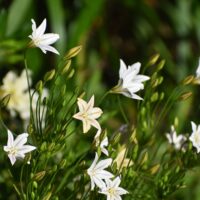
Triteleia laxa ‘Silver Queen’
A white form of Ithuriel’s spear! We kid you not. You may be familiar with this species and its traditionally blue-purple, trumpet-shaped flowers perched in whorls atop stalks a foot or more tall. We now have a selection featuring soft white flowers. This native bulb sends up grass-like foliage in the winter followed by the charming flowers in spring and early summer. The bulbs multiply readily, forming small colonies over time. While it tolerates dry conditions in summer, it will also accept occasional irrigation, making it very useful in the garden. Enjoys full sun to light shade and will tolerate clay soil.
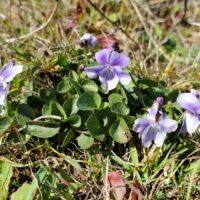
Viola adunca
Native to both coastal and mountain plant communities, this violet can be seen locally blooming in coastal meadows and bluffs. Forms low-growing, slowly creeping, neat clumps of heart-shaped leaves. Sweetly fragrant, nodding, blue to purple flowers with white interiors and purple nectar guides bloom in the spring. This pretty little wildflower is visited by bees and other pollinators and is a host plant for a number of butterflies, some of which are rare and endangered. Grows in sun along the coast and light shade inland with moderate summer water. Can reseed if happy.
Viola palustris
Native to moist environments in both coast and mountain plant communities of N. America and Eurasia. Rare in California, where it is found in the northern counties of Mendocino, Humboldt and Del Norte. Rounded to heart shaped leaves with shallow scalloped edges grow from basal rosettes and spread by slender rhizomes. The charming flowers bloom April through July and range from white through lavender in color with dark-purple nectar guides. Used by Fritillary butterflies as a larval food source. Easy to grow, this is not a violet for heavy shade, but prefers brighter locations with light shade and moist, but well drained soils.