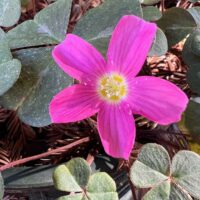
Festuca californica ‘Willits Giant’
Living up to its name, this selection is extremely robust, growing twice the size of typical California fescue. Wide gray blades grow in mounds about 3 ft. tall and wide. The grass flowers rise 5-6 feet tall with loose inflorescences dangling from the arching stems. Useful as a specimen or in drifts, this grass serves as a sturdy ground cover in deciduous oak woodlands or other lightly shaded areas. Drought tolerant once established but thrives with occasional summer water. We selected this cultivar from a seed crop collected near Willits, Mendocino County. Deer resistant.
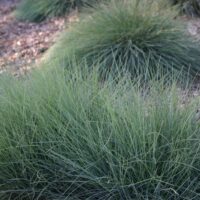
Festuca rubra – Molate strain
Discovered on Point Molate near Richmond, this selection spreads to form soft, flowing drifts of gray-green foliage 12 to 18 inches tall with graceful, open flowers rising to 3 feet. One of the biggest forms of our native red fescue, it’s eye-catching when planted in large masses or when combined with mounding shrubs or some of the more robust native bulbs. Very choice for a meadow or parking strip. Prefers some afternoon shade in the hotter climates and occasional water away from the coast. More drought tolerant than many other red fescues. Deer resistant.
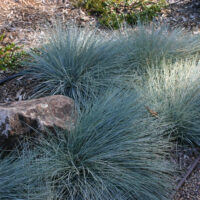
Festuca rubra ‘Patrick’s Point’
Discovered on a rock at Patrick's Point on our north coast, this perennial grass slowly spreads by creeping rhizomes to form tufted drifts of silvery blue. Effective as a component of a meadow or as a small scale groundcover. Typically at its best in situations where it is either unmown or infrequently mown. The 6 - 12 inch tall, vivid blue-gray blades have a soft flowing appearance which combines strikingly with dark foliaged plants such as Iris and beach strawberries. The grass flowers rise 6 to 12 inches above the foliage in loose panicles. Plant in full sun to light shade. Protect form the hot afternoon sun in inland areas. Enjoys occasional to moderate irrigation away from the coast. Deer resistant.
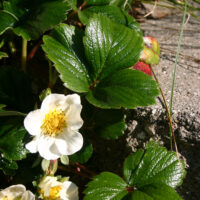
Fragaria chiloensis ‘Green Pastures’
Beach strawberry is native to Pacific coast beaches and bluffs of North and South America. A popular and adaptable groundcover growing well in a wide range of climates and conditions. This selection forms lush carpets of shiny dark green foliage. The five-petaled white flowers are particularly large, showy and profuse in the spring. A great colonizer and stabilizer, this vigorous perennial spreads by runners to form dense carpets. Plant in sun to light shade with moderate to occasional summer water. Drought tolerant along the coast. This ia a male selection and will not fruit. Deer resistant.
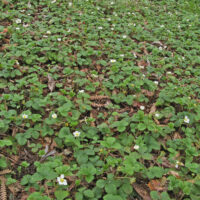
Fragaria vesca
This native woodland strawberry is a great colonizer and can cover a lot of ground in a hurry. Pretty little white flowers are followed by small, tasty, red berries. Tolerates drought but best with a little summer water. Well suited for under oaks and conifers. Said to be deer resistant.
Fragaria vesca ‘Montana de Oro’
A vigorous, heavy blooming selection of woodland strawberry from a coastal canyon at Montana de Oro in San Luis Obisbo County. This easy to grow, carpet forming, ground cover is a great colonizer and stabilizer for lightly shaded areas. Deals well with root competition and thin soils. Pretty little white flowers are followed by small, tasty, red fruits. Often deer resistant.
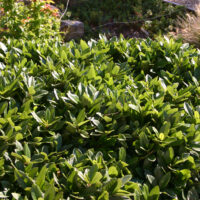
Frangula (Rhamnus) californica ‘Ed Holm’
Prized by gardeners for its low, dense habit and shiny, leathery leaves, this special selection of coffeeberry was discovered along Skyline Dr. in the northern Santa Cruz Mountains. Clusters of small, creamy-yellow flowers are produced from spring through fall and are followed by penny-sized, deep purple fruits. Over time, 'Ed Holm' will reach a height of up to 3 ft. and a width up to 6 ft.. Plant in full sun to light shade. Protect from the hot afternoon sun in hot areas and give moderate to infrequent irrigation. The blossoms are a favorite of bees.
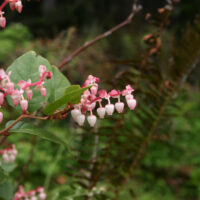
Gaultheria shallon
A handsome evergreen shrub, happiest in fog shrouded coastal zones. Large, leathery, dark green leaves are a gorgeous foil to the loose clusters of white to pinkish urn-shaped flowers. Fat, blue-black berries follow and are relished by wildlife and eaten by people too. Salal can grow tall in moist coastal areas of the Pacific Northwest but usually forms a ground cover 2 - 4 ft. tall and spreading in California. Best with some shade and acidic, humus-rich, moist soils. The foliage is prized for flower arranging. Deer resistant.
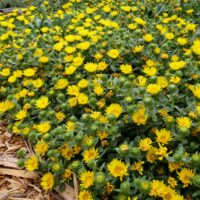
Grindelia stricta var. platyphylla ‘Mendocino’
This selection features particularly large bright yellow 2 1/2 inch daisies over a long period in the summer. Each fat green flower bud holds a dollop of gummy white resin which protects the blooms from predators, hence the name “gum plant”. 'Mendocino' is a particularly prostrate form under 8 inches tall and spreading to at least 6' wide. Native to dunes, marshes and bluffs in coastal scrub throughout coastal California. Excellent pollinator plant. Useful in a meadow planting or with other low groundcovers and shrubs. Looks nice draping over a wall too. An adaptable plant for sun to light shade, moderate to occasional water. A natural along the coast where it tolerates wind and salt spray. Deer resistant.
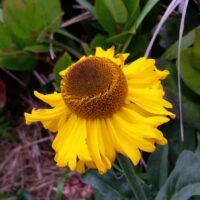
Hierochloe (Anthoxanthum) odorata
Invite good spirits into your home and garden with this interesting, fragrant grass. Sweet grass is an aromatic, native perennial, with an extensive range in the United States, Canada and Eurasia. Growing in wetlands, prairies and meadows, it prefers rich, moist, soils and at least half day of sun. The grass flowers sit just above the foliage where they can dance with the wind. This cool season grass is sacred to indigenous people, where it is used in herbal medicine, a kind of tobacco, basket making, and burned as a smudge. Growing 1 - 2 ft. tall and spreading widely by sturdy rhizomes that can be difficult to eliminate once well established. Winter dormant in cold areas. Deer resistant.
Juniperus communis ‘Point Saint George’
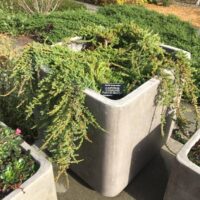
A striking selection from our northern coast of a species that is widespread across the Northern Hemisphere but rare on the coast of California. Sadly, the original population no longer exists due to seaside erosion. Forming dense mats of silver-green foliage under six inches tall, it slowly spreads to several feet wide. A perfect addition to the rock garden, preferring decent drainage and occasional water once established. Also works well as a container plant where the branches can cascade over the sides creating silvery waterfalls. Likes full sun to light shade. Deer resistant.
Lessingia (Corethrogyne) filaginifolia
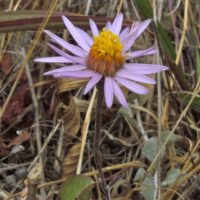
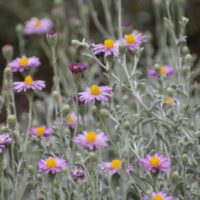
This California native perennial often hugs the ground, spreading widely, it threads its silvery foliage decoratively among other plants. Bright lavender, yellow centered aster-like flowers give a summer long season of bloom. Provide full sun to light shade, some summer water and reasonable drainage. A nectar and larval food source for butterflies. Deer resistant.
Lessingia (Corethrogyne) filaginifolia ‘Silver Carpet’
A variable species, this selection hails from the Big Sur Coast and was discovered by Carol Bornstein. Forms an attractive ground hugging mat 4 ft. or more wide. The gorgeous silver foliage is the perfect foil for the 1 inch lavender-pink daisies with yellow centers. Tolerates a wide range of conditions including full sun to light shade, drought and wind. Useful groundcover, meadow plant or spiller where its flowers are enjoyed by bees and butterflies. Best with some summer water inland. Deer resistant.
Lobelia dunnii var. serrata
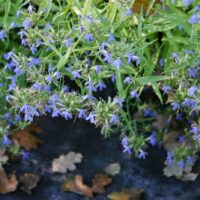
Water loving perennial native to creek sides and other wet places in Southern California. Growing one foot tall and spreading vigorously by rhizomes with clusters of soft blue, one inch flowers in summer. Best with regular water and part shade. A perfect addition for a shady water feature, moist meadow or container planting. The flowers are highly attractive to butterflies of all sorts and are visited by hummingbirds. Winter dormant. Deer resistant.
Lotus (Hosackia) formosissimus (gracilis)
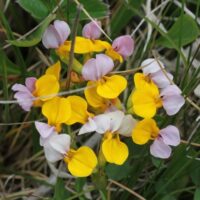
A low growing native perennial found in seasonally moist meadows, ditches and seeps along California's coast, north to British Columbia. Small, neat leaves form a pretty, low ground cover spreading up to 2 ft. wide. Pea-like flowers have a bright yellow upper petal and deep pink lower petals which bloom in the spring then sporadically through the summer. Plant in full sun to light shade with regular moisture. Makes a nice container plant, too. Flowers visited by bees and other pollinators. Thought to be the larval food source for the possibly extinct lotus blue butterfly.
Lupinus littoralis var. variicolor
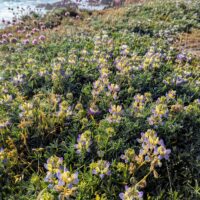
Often found nestled amid rocks and sand, this low-growing, perennial lupine is native to the beaches and dunes of coastal California. Forms a clump or mat of silver-green foliage under 18 inches tall, with jewel-like flower spikes. Blooms in a subtle range of colors, typically shades of purple-blue with white to pale yellow banners. Makes for an excellent addition to a rock garden. Formerly known as Lupinus variicolor, it is currently considered a variety of bluff lupine that is endemic to the Bay Area from Sonoma County down to the Peninsula. It attracts pollinators, and is one of the few hosts for the rare Mission Blue butterfly. Accepts various watering regimens from regular to occasional so long as it gets excellent drainage. Drought tolerant once established.
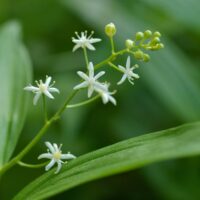
Maianthemum (Smilacina) stellatum
Native to California and much of North America, this woodlander makes a worthy and useful addition to the shade garden. Spreading by stout rhizomes forming colonies of lush, green foliage one foot to 18 inches tall. Small, white, star-shaped flowers top the slender stems in the spring and early summer. Berries follow that are often striped with purple or black, eventually turning red. Thrives in shade with moisture but tolerates dryish conditions once established. Can grow in quite a bit of light as long as there is moisture. A variety of insects seek nectar or pollen from the flowers and woodland song birds love the berries.
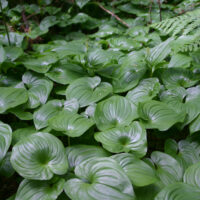
Maianthemum dilatatum
This lush, lily relative is native to coastal forests of Northern California to Alaska. When happy, spreads by underground root stocks to form broad mats of heart-shaped, glossy, green leaves with parallel veins. Bears clusters of tiny white flowers followed by red, translucent berries. Dies back to the ground in winter. Loves shade and moisture. Competes well with tree roots.
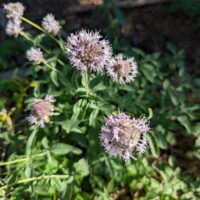
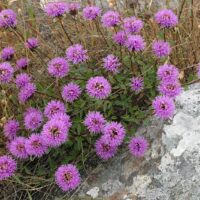
Monardella purpurea
A locally rare and more refined version of our common coyote mint, often with darker flowers, colored purple. Mature plants typically stay under a foot tall, but will get a little wider. Leaves are narrow and dark green, lining burgundy-tinged stems. While native to serpentine soils, it does well in most soils with good drainage. Plant in full sun to part shade and water infrequently. A great, rarely offered native for rock gardens or smaller areas, where butterflies and bees will enjoy the summer blossoms. Deer resistant.
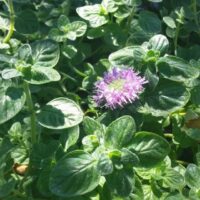
Monardella villosa ssp. franciscana ‘Pomo Canyon’
This low growing, dense selection of our native coyote mint was discovered near the mouth of the Russian River. Large, round, deeply veined leaves colored dark blue-green give this groundcover a lush appearance. In summer, soft lavender flowers which look like pincushions cover the plant. Reaches a height of up to 12 inches and spreads fairly quickly to form drifts. Provide full sun to light shade and moderate to infrequent irrigation. A stellar plant for bees, butterflies and hummingbirds. Coyote mint is not a true mint and won’t spread invasively by roots. Deer resistant.
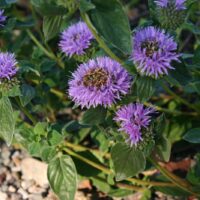
Monardella villosa ssp. franciscana ‘Russian River’
Our own selection of coyote mint from a rocky slope along the lower Russian River. Although Monardella is sometimes difficult in cultivation, this plant has proven to be vigorous. Grows 12 to 18 inches tall with ball-like clusters of pinkish-purple above the fragrant evergreen foliage. Good for a dry sunny site. Attracts bees and butterflies. Deer resistant.
Monardella villosa ssp. villosa – Mark West seed strain
This sweet little coyote mint hails from the dry, inland hills above the Mark West watershed in North East Santa Rosa. It is more compact than the ‘Russian River’ selection, mounding to about 1’ high and spreading to 3’ across. The aromatic foliage is a light minty green, and the round lavender-pink flower heads bloom from late spring through summer. Best with a bit of protection from the hot afternoon sun, this coyote mint is great to tuck under a large, upright, drought tolerant shrub, such as manzanita or Ceanothus. Drought tolerant once established, but blooms best with occasional deep soaks. Needs good drainage. Like other coyote mints, it is a butterfly and native bee magnet. Deer resistant.
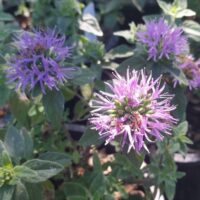
Monardella villosa ssp. villosa – Mark West seed strain ‘Mark West’
This sweet little coyote mint hails from the dry, inland hills above the Mark West watershed in North East Santa Rosa. It is more compact than the ‘Russian River’ selection, mounding to about 1’ high and spreading to 3’ across. The aromatic foliage is a light minty green, and the round lavender-pink flower heads bloom from late spring through summer. Best with a bit of protection from the hot afternoon sun, this coyote mint is great to tuck under a large, upright, drought tolerant shrub, such as manzanita or Ceanothus. Drought tolerant once established, but blooms best with occasional deep soaks. Needs good drainage. Like other coyote mints, it is a butterfly and native bee magnet. Deer resistant.
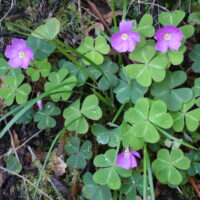
Oxalis oregana
A natural companion of coast redwoods where it forms low carpets of clover-like foliage. Useful ground cover for the woodland garden where it competes well with tree roots and thrives in partial to deep shade. Low and spreading with spring flowers that can range from white through dark pink . Best with humus in the soil and some summer moisture, though it is drought tolerant in coastal zones. Deer resistant.
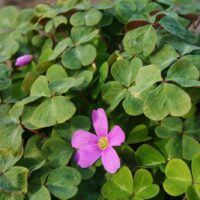
Oxalis oregana ‘American Beauty’
This remarkable selection of our native redwood sorrel has perhaps the largest flowers of any of the forms we've seen. The big pink blooms appear in spring above the lush, green, clover-like foliage. This ground cover competes well with tree roots and thrives in even the shadiest spots. Best with humus in soil and some moisture, though it is drought tolerant in coastal zones. Deer resistant.