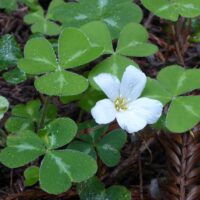
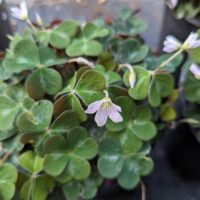
Oxalis oregana ‘Klamath Ruby’
Low spreading groundcover which thrives in the shady conditions of Douglas fir and redwood forests. The cultivar ‘Klamath Ruby’ offers dark green clover-like foliage with beautiful burgundy backed leaves. White flowers with pale pink veining on the petals bloom in the spring. A lovely groundcover for a shady garden with some summer water, though it is drought tolerant in coastal zones, once established. Deer resistant.
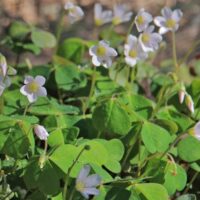
Oxalis oregana ‘Smith River White’
This Cal Flora selection carries white flowers with thin pink lines on the petals held up above the foliage, thus creating an effect somewhat reminiscent of our small native anemones. The foliage is handsome with dark olive green tops and purple-red undersides to the leaves. The perfect ground cover for deep to moderate shade with some summer moisture. Drought tolerant when grown in more coastal areas. Rampant when its needs are met, it competes well with tree roots and is the perfect companion to other redwood forest understory plants. Deer resistant.
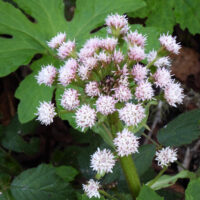
Petasites frigidus var. palmatus
A bold, beautiful and AGGRESSIVE creekside native, found in coastal and montane regions in California, north to Alaska, where it grows along shady creek banks. The large, almost tropical, palmate leaves spread from thick creeping rootstocks to form large colonies. Flowers before the foliage fully emerges in the spring with flat topped clusters of white to pink flowers on 1-2 ft. tall stems. Requires shade and plenty of water and is useful as a soil stabilizer. To control its spreading nature, use in containers or in contained areas. It won't spread into areas which are dry. Dies back to the ground in the winter. Flowers attractive to a wide range of beneficial insects.
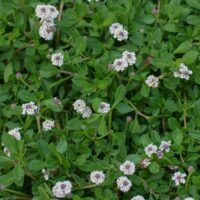
Phyla nodiflora
Vigorous, spreading ground cover native to California, North America and other parts of the world. It's a tough one, able to survive a wide range of conditions and soil types. Tolerates both drought and flooding, but best with occasional deep watering in full sun to very light shade. Flowers heavily over a long period with charming little heads of mauve-pink, lavender and white blossoms, delighting an assortment of bees and butterflies. This dense, carpeting plant makes a serviceable ground cover or lawn-like replacement, tolerating moderate foot traffic and occasional mowing. May look rough in the winter, but quickly recovers in spring. Free flowering and pollinator friendly.
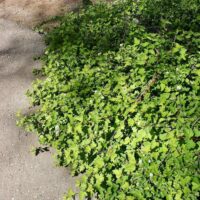
Physocarpus capitatus ‘Tilden Park’
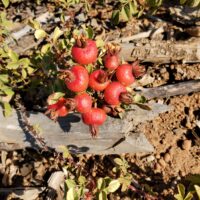
A rare and delightful prostrate form of the native ninebark from San Bruno Mountain. Makes a sturdy groundcover about 3 ft. tall and spreading to at least 6 ft. wide, featuring lush, bright green, maple-like leaves with white flower clusters in the spring. The blossoms give way to bright red seed pods in the summer. Sun to light shade with moderate water, but will tolerate dryish conditions in part shade once established. Clay tolerant.
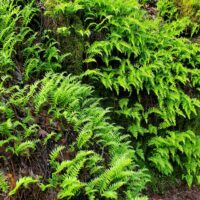
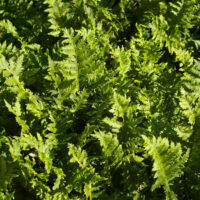
Polypodium californicum ‘Sarah Lyman’
An interesting cultivar of the California polypody fern with finely divided leaves. A wonderful addition to the shade garden where it is perfectly adapted to our dry summers. With the first coolness of autumn the fiddleheads emerge and unfurl. Energetic bright green frilly foliage thrives all winter and into spring. Goes dormant late spring or early summer where it waits out the dry season returning dependably again in the autumn. Grows 12 to 15 inches tall and slowly spreads.
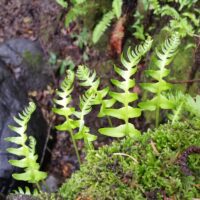
Polypodium glycyrrhiza
Native to moist coastal forests from Monterey County to Alaska. This epiphytic fern enjoys shady environments where it grows on trees, logs and stumps, mossy rocks and slopes. The long, narrow, deeply lobed fronds spread by creeping rhizomes, which have a sweet licorice flavor and a history of use by various native American peoples. They grow happily in moist shady gardens, going summer dormant once conditions get too dry, returning with the autumn rains and coolness. Drought tolerant in somewhat coastal conditions. Good container subject. Deer resistant.
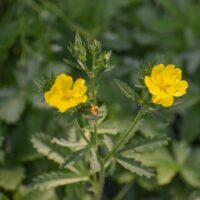
Potentilla gracilis
Prolific displays of bright yellow flowers resembling buttercups make this little cinquefoil a hit from spring through autumn. Flowers are held on two foot stems above low mats of dissected,dark green leaves. Native to mountainous areas throughout California. Provide full sun to light shade and give occasional to regular moisture. Will spread slowly by seed if exposed soil is nearby. A favorite of bees and butterflies. Deer resistant.
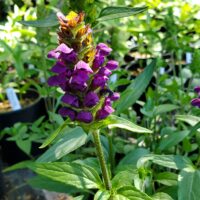
Prunella vulgaris v. lanceolata
Native to moist areas usually near coniferous forests and woodlands. Creeping perennial forms a low dense mat of foliage. Upright spikes of purple flowers over a long period summer - fall. Give some thought to placement because if happy it will reseed vigorously. Plant in full sun or light shade with regular water.
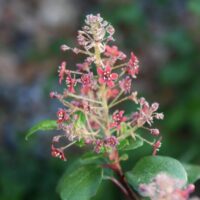
Ribes viburnifolium
Native to Santa Catalina Island, this Ribes is unique for the genus, being evergreen and low growing. Leathery, dark green, glossy leaves with a spicy fragrance on red stems forms a spreading shrubby groundcover to 2- 3 ft. tall. Small clusters of interesting, star-shaped, salmon-pink flowers decorate the arching branches in late winter to early spring, followed by little, red fruits. Requires part shade and is drought tolerant once established. Adaptable to a variety of soil types including heavy clay. Tip pruning is recommended to encourage a dense growth habit. Deer resistant.
Salvia ‘Bee’s Bliss’
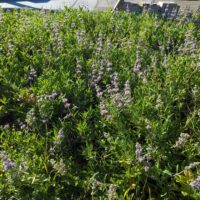
A beautiful native hybrid sage grows around 18 inches tall by 6 ft. wide or more. The handsome gray foliage is topped with a profusion of lavender flowers on long spikes in the spring. Sun, decent drainage, occasional to little water. Deer tolerant. A bee and hummingbird favorite.
Salvia ‘Mrs. Beard’
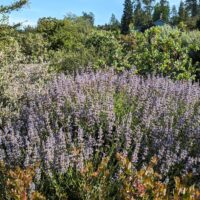
This cultivar has been around since 1965, a chance seedling discovered in a Berkeley garden. A hybrid between Salvia sonomensis and Salvia mellifera, 'Mrs. Beard’ has proven durable and disease resistant. Forms a dense mat of gray fragrant foliage up to 2 ft. tall and 4-6 ft. wide. Spring brings an abundance of tiny pale lavender-blue flowers in ball-like clusters that are highly attractive to bees and hummingbirds. Plant in full sun along coast and light shade in hot inland sites, where it will be quite drought tolerant once established. Deer resistant.
Salvia leucophylla
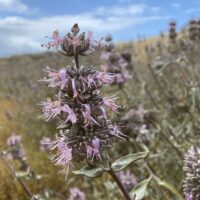
Purple sage is a highly-aromatic shrub, native to coastal scrub and chaparral from the Big Sur to San Diego. This delightful and dependable salvia boasts lavender-pink floral whorls arranged along spike-like stems. In summer, the spent flower stalks retain attractive showy bracts, good for seasonal interest and seeds for birds. The foliage has a mounding habit with soft-green-to-silvery leaves. This species generally reaches 3-5 ft tall and considerably wide, but some popular cultivars range from more upright to a 2-foot spreading groundcover. Easy to grow in full sun with occasional-to-infrequent water. A great choice for a sunny bank. Deer resistant.
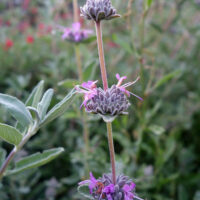
Salvia leucophylla ‘Amethyst Bluff’
Selected by Carol Bornstein for its vivid rosy-pink flowers, this willing grower starts out as a low mounding shrub, eventually getting very large, reaching 5 ft. or more tall by 8 ft. wide. The fragrant silvery foliage is a lovely foil for the large flower heads on 12 inch stalks. Perfect choice for sunny banks where it can sprawl freely and is excellent for erosion control. Drought tolerant, particularly along the coast, but appreciates an occasional summer watering. A bee and hummingbird favorite. Deer and drought resistant.
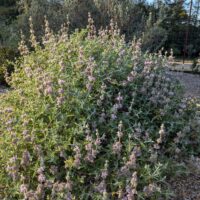
Salvia leucophylla ‘Point Sal’
A compact, low form of the native purple sage reaching 2 ft. or so tall by more than 6 ft. wide. An evergreen shrub with beautiful, silvery, aromatic foliage and pale lavender-pink flowers in whorls on wand-like stems. Useful in dry sunny areas but will also accept moderate moisture, unlike most native sages. An excellent garden subject which is more sturdy and disease resistant than the popular 'Bee's Bliss'. Great for covering hot banks and retaining walls. Discovered on Point Sal in southern California. Attracts bees and hummingbirds. Deer resistant.
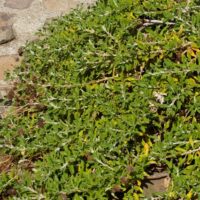
Salvia mellifera ‘Terra Seca’
Here is an interesting form of the normally upright, native black sage. 'Terra Seca' grows to about 2 1/2 ft. tall and 5 ft. wide. Perfect for a dry sunny bank where it will cover the ground densely and thickly. It will spill over a wall beautifully. The flowers are pale lavender. Deer and drought resistant. This species attracts bees and hummingbirds.
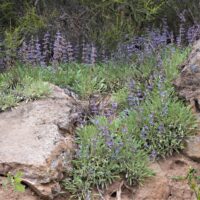
Salvia sonomensis
Sonoma sage is a wonderful native perennial and can be a serviceable groundcover if its needs are met. Good drainage is a must and it performs best with light shade. Water plants to get established-very drought tolerant, will NOT tolerate regular summer water. Mat forming, flowers rise to about 6 inches above the foliage and are lavender-blue. This species attracts bees and hummingbirds. Deer resistant.
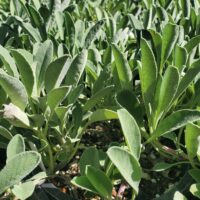
Salvia sonomensis ‘Greenberg Gray’
We named this wonderful gray-leaved form of the Sonoma sage for Katherine Greenberg who had it growing in her beautiful Lafayette garden. This striking species forms a ground hugging carpet of leaves with charming, blue-purple flowers in late spring on stems up to 6 inches tall. Bees, butterflies and hummingbirds love the blossoms. Needs lightly dappled shade and excellent drainage with little to no water once established. Great under manzanitas. Deer resistant.
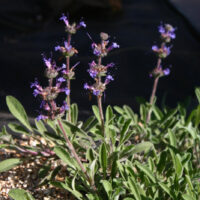
Salvia sonomensis ‘Hobbit Toes’
An interesting selection of Sonoma sage from the Cuesta Grade in San Luis Obispo County. A compact grower forming a flat mat of gray leaves covered with soft white hairs. The blue-violet flowers spikes are darker than many of our local forms and make a beautiful display in late spring, a favorite of bees and hummingbirds. This fragrant ground cover tolerates heat and drought and requires good drainage with only occasional to no summer watering once established. Will grow in a variety of exposures but often seems happiest with a bit of light shade. Deer resistant.
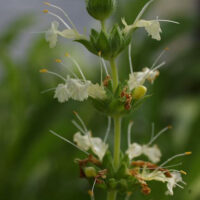
Salvia sonomensis ‘John Farmar-Bowers’
Thanks to Kent Calkins for sharing this unique form of sonoma sage he found growing on his property in the hills above Santa Rosa. Instead of the usual lavender-blue flowers, this plant has creamy white flowers on 6 inch stalks above the ground hugging mat of aromatic foliage. A wonderful native groundcover which requires good drainage and performs best with light shade. Water plants to get established - very drought tolerant, will NOT tolerate regular summer water. Deer resistant. Attracts bees and hummingbirds.
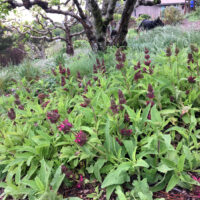
Salvia spathacea
A wonderful native sage, endemic to California where it is found at low elevations of the Coast Ranges from San Bruno Mountain in the north to Orange County in the south. Fragrant, fruity foliage spreads by creeping rhizomes to form handsome mats. Flower stems rise 2 - 3 ft. above the leaves carrying many large ball-like clusters of magenta flowers that the hummingbirds adore. Does best in cool sun or part shade in hot areas. Drought tolerant, but looks best with occasional summer water. This species attracts hummingbirds. Deer resistant.
Salvia spathacea ‘Avis Keedy’
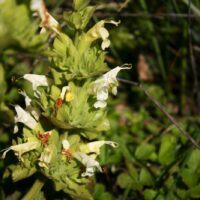
An striking yellow-flowered form of the normally magenta-flowered hummingbird sage, introduced by the Santa Barbara Botanic Garden. Discovered in an oak woodland in Santa Barbara County, this cultivar has unusual lemon yellow petals that fade to creamy white and are backed by lime green bracts. Forms the usual fragrant, spreading mat of large leaves topped with 2-3 foot tall flower stalks with distinctive whorls of flowers in the spring. Best with part shade unless directly along the coast and an occasional summer watering to keep it going through the summer. Without summer water will go summer dormant reviving with the rains. A bee and hummingbird favorite. Deer resistant.
Salvia spathacea ‘Las Pilitas’
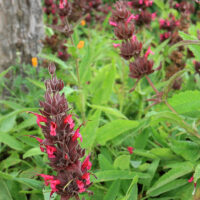
A very LOW form of the fragrant hummingbird sage, selected and introduced by Las Pilitas Nursery. Ground hugging foliage spreads to form handsome mats 3 - 6 ft. wide. Flower stems rise 18 inches above the foliage with ball-like clusters of magenta flowers which are bee and hummingbird favorites. Best with light shade and occasional summer water. Deer resistant.

Salvia spathacea ‘Powerline Pink’
This selection of the wonderful native hummingbird sage is notable for its size. It stands 2 ft. tall before it flowers, and its flowering stalks can add another 2-3 ft. to the height. Fragrant, fruity foliage spreads by creeping rhizomes to form handsome mats. The flower stems carry many large ball-like clusters of magenta flowers that the bees and hummingbirds love. Does best in cool sun or part shade in hot areas. Drought tolerant but looks best with occasional summer water. Deer resistant.
Salvia x ‘Dara’s Choice’
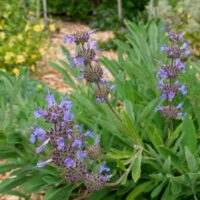
Selected by Santa Barbara Botanic Garden, this native hybrid sage forms a dense, dark green, mounding groundcover 1.5-2 ft. tall by 3 – 5 ft. wide. The aromatic foliage is topped with wands of soft lavender-blue flowers on small whorls in the late spring to early summer. In hotter climates, light or part shade is preferred, where it will be quite drought tolerant once established. A more refined native sage which combines well with iris, California fuchsia and grasses. Adored by bees and hummingbirds but not eaten by deer.
Scutellaria californica
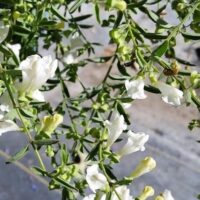
A charming perennial native to gravelly soils of low and mid elevation mountains of Northern California where it grows on the edge of woodlands and chaparral communities. Leaves are arranged oppositely on erect stems around one foot tall. The very sweet, small, creamy-white snapdragon-like flowers occur in pairs at the leaf axils. Spreads by underground rootstocks to form colonies. In our nutritious, water-retentive soils has spread quite vigorously, in dryer leaner soils less so. Plant in full sun to light shade. Drought tolerant but would appreciate a little summer water.
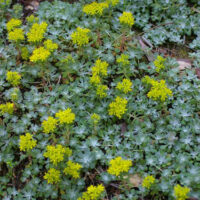
Sedum spathulifolium
A mat forming native succulent often seen on rocky cliffs and shady banks in California’s Coast Ranges and Sierra Nevada north to British Columbia. Small, spoon-shaped leaves form flat rosettes where bright yellow star-like flowers appear in late spring and early summer. A natural for the rock garden or container plantings where they are best with part shade. Very drought tolerant.