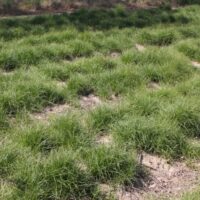
Carex pansa
A durable spreading sedge which can be used as a lawn substitute or unmowed meadow. Growing 8 -12 inches tall and spreading by rhizomes to form dense colonies of curling dark green foliage. The foliage is evergreen in mild climates and grows well in full sun to partial shade with regular to occasional water. Too much drought causes summer dormancy. Flowers appear in early spring but are not real showy. Deer resistant.
Carex praegracilis
Similar to Carex pansa but growing taller. The fine textured grass-like blades can reach a foot or more tall and spreads freely by rhizomes to form a thick weed smothering groundcover. Useful for meadows, green roofs, bio-swales, erosion control and as a lawn substitute. Can be left natural where it has a lush tousled appearance or trimmed occasionally for a low turf-like appearance. Tolerates drought, inundation, poor soils, salt spray, heat, cold, shade and foot traffic. Plant in sun to light shade where it requires some summer moisture but far less than a conventional lawn. Will go summer dormant if allowed to get too dry. Deer resistant.

Carex praegracilis ‘Chisai’
An excellent cultivar of the native field sedge, selected for it's compact form and slower spreading habit. Increases by short rhizomes to form a sturdy, dark-green carpet, 6 -8 inches tall and 1 - 2 ft wide. Grows more clumping and significantly tighter than the rapidly spreading forms more typical of the species. Still, it will form a solid, small scale ground cover or turf substitute, between stepping stones or mixed with bulbs and perennials for a meadow affect. Plant in full sun to light shade with occasional to moderate water. Tolerates light foot traffic. Deer resistant.
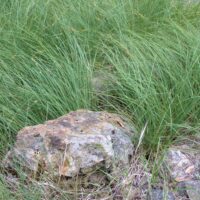
Carex serratodens
From serpentine meadows comes this lush, blue-green sedge. Our form grows 1 - 2 ft. tall and spreads at a moderate pace, creating broad drifts over time. Needs moderate to regular moisture and full sun to part shade. Often goes semi-dormant in winter at which time the plants can be cut back to just a few inches. A useful sedge for gardens on serpentine or for bank stabilization where it can provide cover for tree frogs and other critters. Does not require serpentine soils to thrive. Deer resistant.
Carex tumulicola
This is the TRUE Carex tumulicola, the foothill sedge, not to be confused with the so called Berkeley sedge which is correctly identified as Carex divulsa and is non-native AND invasive. Foothill sedge has a wide distribution in California and north to Washington. A tough and adaptable tufted evergreen growing 12 inches (or more) tall and spreading slowly by underground rootstocks. Useful as an informal groundcover under shrubs or trees, for a meadow planting or for soil stabilization where the spreading roots help control erosion. Best with some shade unless right along the coast. Responds to water but is able to tolerate periods of dryness.
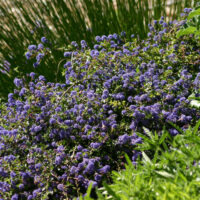
Ceanothus ‘Centennial’
This low growing Ceanothus has bright, cobalt-blue flowers and small dark-green, shiny leaves. Spreads quickly to around one foot tall by 6 - 8 feet wide. The flowers are displayed in profusions of small pom-poms colored an intense deep-blue set above small glossy foliage. Drought tolerant but will tolerate moderate irrigation in faster draining soils. More shade tolerant than many Ceanothus but will take full sun except in hot, inland areas. Selected by Roger Raiche at Horseshoe Cove, Sonoma County.
Ceanothus ‘Coronado’
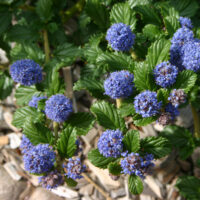
Phil van Soelen selected this striking natural hybrid from along the Sonoma Coast. It was named for the late David Coronado, our dear friend and a talented plantsmen. Compact habit growing to around 2 ft. tall and 6 ft. wide with dark green, deeply veined, toothed leaves. Frosty blue buds open to luminous deep blue blossoms in early spring. Perhaps best in somewhat cooler climates where it performs beautifully in full sun with moderate to no water once established. Ceanothus are excellent habitat plants providing cover and food for wildlife. The early flowers provide nectar for pollinators and seeds for birds. The myriad of insects attracted to the flowers are an added attraction to birds.
Ceanothus ‘Joan Mirov’
A naturally occurring hybrid from the Sonoma Coast selected by Roger Raiche and introduced by the U.C. Berkeley Botanic Garden. Low spreading habit with a dense form grows 4 ft. tall spreading widely 6-10 ft. or more. The small dark green shiny leaves are topped with an abundance of dark pink buds opening to cobalt blue flower clusters in the spring. An excellent bank cover where a dense ground covering shrub is needed on a sunny dry site. When planted inland a little afternoon shade and some summer irrigation is best. Ceanothus are valuable habitat plants where they offer food and cover and excellent forage for pollinators.
Ceanothus ‘Joyce Coulter’
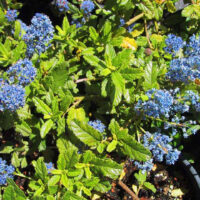
A very useful medium sized mounding evergreen groundcover discovered in 1956 by John Coulter. Grows 2 - 5 ft. tall and spreads 12 ft. or more wide. Medium-blue flowers cover this shrub in spring. Tolerates garden conditions better than most Ceanothus. Responds well to shearing and can easily be kept to a more compact size. Plant in full sun where it is drought tolerant but best with some summer water in hot interior sites. Shrubby ceanothus provide seeds eaten by bushtits, mockingbirds, quail and finches, as well as cover for birds.
Ceanothus cuneatus – flat form
This unusual form of the ubiquitous buckbrush comes to us from Yerba Buena Nursery. Reaches a height of only 1 - 2 ft. and spreads out to 6 ft. or more. Pale blue flowers appear in early spring and perfume the air with their sweet fragrance. Bees and butterflies are drawn to the flowers while birds enjoy the seeds which follow. An excellent groundcover for hot, dry banks requiring no irrigation once established. Needs full sun and good drainage. Likely to be deer resistant.
Ceanothus divergens ssp. confusus
A species of special concern due to its limited distribution in the wild and continued habitat loss. The Rincon Ridge ceanothus is worth considering for those hot inland gardens where some of the more commonly available coastal ceanothus may not be as long lived. Forms a low growing mound of decumbent stems with small holly-like leaves usually under a foot tall. Flowers in dense clusters in early spring are lavender-purple. Plant in sunny areas with good drainage and little to no water once established. Ceanothus are wonderful additions to the habitat garden attracting a wide array of wildlife. This species is likely to be deer resistant.
Ceanothus foliosus
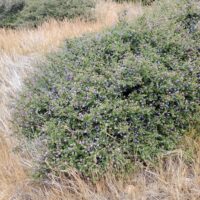
Not commonly found in the trade, this rugged shrub is native to dry slopes of the Coast Ranges nearly throughout the state. Grows to around 3 - 4 ft. tall by 6 ft. wide, with glossy wavy-edged leaves and brilliant blue flower clusters in the spring. Perfectly suited for dry banks and slopes in hot summer areas where it tolerates heat, drought and even winter cold. Not tolerant of summer water once established. Excellent for the habitat garden where it provides nectar to pollinators, larval food for moths and butterflies and cover and seed for birds.
Ceanothus gloriosus var. exaltatus ‘Emily Brown’
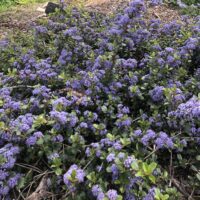
One of the earliest blooming California lilacs. A low spreading evergreen shrub 2 - 4 ft. tall, 8 - 10 ft. wide with dark green hollylike leaves. Flowers of dark violet blue in 1 inch clusters cover the shrub in early spring. Sun and drought tolerant, but will need some afternoon shade in hot areas. Shrubby ceanothus provide seeds eaten by bushtits, mockingbirds, quail and finches, as well as cover for birds. Perhaps the most deer resistant of the ceanothus.
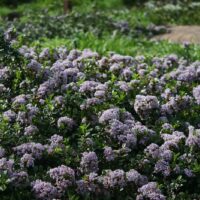
Ceanothus gloriosus var. gloriosus ‘Anchor Bay’
This Point Reyes ceanothus grows 1 - 2 ft. high or more and spreads 8 ft. wide or more with an attractively dense and luxuriant appearance. The evergreen foliage is dark green and holly-like in shape. Flowers of blue-violet cover the plant in spring. Sun to light shade. Drought tolerant along the coast - a little extra water inland but will tolerate up to moderate irrigation. Ceanothus are great additions to the habitat garden offering food and cover for birds and nectar for bees and butterflies. This species is somewhat deer resistant.
Ceanothus gloriosus var. gloriosus ‘Heart’s Desire’
One of the lowest growing ceanothus, under one foot tall and spreading three or more feet wide. The small, holly-like leaves line stems which tightly hug the ground. Performs better than most ground cover ceanothus on relatively hot inland sites. Flowers of lavender-blue appear in early spring. Sun, decent drainage, moderate to little summer water once established. Ceanothus are excellent additions to the habitat garden offering flowers for pollinators and seeds for birds. Deer resistant.
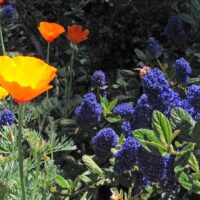
Ceanothus griseus ‘Kurt Zadnik’
Selected by Roger Raiche of the UC Berkeley Botanic Garden from the northern Sonoma Coast. Grows about 3 ft. tall and 10 - 15 ft. wide. The flower buds are very dark with beautiful rich indigo blue flowers, perhaps the darkest of any ceanothus. This fine selection is a prolific bloomer and works well to cover large banks in a hurry. Low to moderate irrigation. Shrubby ceanothus provide seeds eaten by bushtits, mockingbirds, quail and finches, as well as cover for birds.
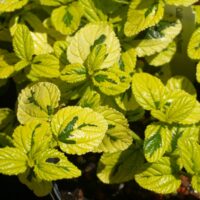
Ceanothus griseus var. horizontalis ‘Diamond Heights’
Grown for its beautiful golden variegated foliage, this low growing shrub spreads 3 - 5 ft. wide and up to 1 ft. high. Scant, light blue flowers in spring contrast nicely with the yellow foliage. Best with light shade in warmer regions. Enjoys some summer water though drought tolerant once established. Discovered from a colony of cultivated Carmel ceanothus in San Francisco in the area known as Diamond Heights.
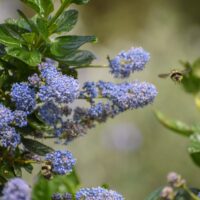
Ceanothus griseus var. horizontalis ‘Yankee Point’
An energetic bright green shrub growing up to 3 ft. tall and spreading rapidly to 10 - 12 ft. wide. Powder blue flowers in the spring. A good evergreen, weed-smothering groundcover for full sun to light shade. Drought tolerant, but appreciates an occasional summer watering and will accept moderate water. Tolerant of hot interior locations as long as some shade and irrigation are provided. Older specimens may reach up to 5 ft. tall, especially when side pruned. Ceanothus are great additions to the habitat garden offering food and cover for birds and nectar for bees and butterflies.
Ceanothus hearstiorum
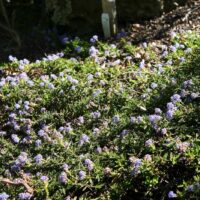
A rare species with limited distribution in San Luis Obispo County. One of the lowest of the ceanothus, up to 12 inches tall and about 6 ft. wide. Often completely flat with a star-like pattern of growth. Medium-blue flowers sit atop the narrow, wrinkled leaves in spring. Sun to light shade. More shade tolerant than most Ceanothus, making it a suitable option for under the dappled shade of oaks. Drought tolerant but will accept occasional irrigation. Excessive irrigation will shorten the life of this species. Provide good drainage.
Ceanothus maritimus ‘Point Sierra’
An excellent choice for a small scale ground cover, this rare Ceanothus is found on coastal bluffs and low hills in northern San Luis Obsipo County. Even though it is native to the coast it does surprisingly well inland. Smaller and slower growing than most Ceanothus, it blooms very early often beginning in late January or early February. 'Point Sierra' was selected from Arroyo de la Cruz by Native Son's Nursery. Grows 2-3 ft. tall with small, thick, leathery leaves and a dense mounding habit looking almost like Cotoneaster. Rounded clusters of blue-violet flowers from dusty white buds in late winter provide an early nectar source for pollinators of all sorts. A natural for coastal areas in full sun but has proven durable inland when it is provided a little shade. Tolerates heavy soils. Drought tolerant once established. Somewhat deer resistant.
Ceanothus maritimus ‘Popcorn’
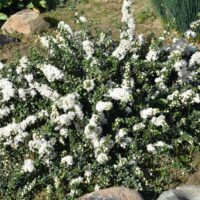
A special white-flowered form of a very rare species from Hearst Castle in San Luis Obispo County. This rugged groundcover ceanothus reaches up to 3 ft tall and spreads to 5 ft wide, an excellent candidate for parkway strips and drier borders. The thick, rigid leaves are serrated along the margins and colored a pleasing gray-green. In spite of its coastal origin, 'Popcorn' tolerates sun and heat quite well, but will enjoy a little afternoon shade in the hottest interior locations. It has been long-lived and very drought tolerant here in Fulton, even putting up with our heavy clay soil. A fabulous pollinator plant which also provides food and cover for birds.
Ceanothus maritimus ‘Valley Violet’
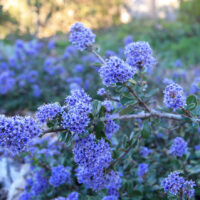
Valley Violet ceanothus is a tough and reliable shrub introduced by the UC Davis Arboretum as an "Arboretum All-Star", one of their 100 top recommended plants. This relatively small Ceanothus grows 2 ft. tall by 4 ft. wide with small leathery leaves and gorgeous dark-violet flowers in early spring. Though native to coastal bluffs of San Luis Obispo County, it performs well in both coastal and inland situations. In hot inland sites it may be best with a little afternoon shade. Drought tolerant once established. For a Ceanothus it is slower growing and has proven to be long lived and tolerant of many soil types. A wide array of pollinators are attracted to its flowers. Deer resistant.
Clinopodium (Satureja) douglasii
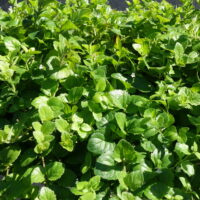
Wonderfully fragrant native perennial with trailing stems about 6 inches tall and spreading. Roundish, scallop-edged, deliciously minty leaves have a long history of herbal uses. Tiny white flowers are borne in axils of leaves in the spring. A sweet small scale groundcover for the woodland garden with light shade and moderate to a little summer water.
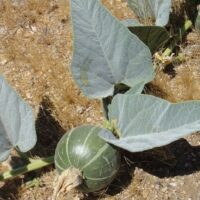
Cucurbita foetidissima
Found in valley grasslands and coastal scrub environments of Central and Southern California, the buffalo gourd is a deciduous perennial ground cover or vine that is sure to grab attention. In late winter and early spring, this vigorously spreading gourd emerges from a tuberous root, potentially spreading to 20’ feet or more, producing big, triangular, gray-green fuzzy leaves, followed by large, showy, orange-yellow, bell-shaped flowers in summer which attract bees. The round fruits, about 4 inches across, are green-striped when young, maturing to yellow. As the fruit matures, it is too bitter for humans to eat. The mature fruit is used by native peoples for decorative purposes or for making musical rattles. Plant in full sun. Drought-tolerant once established.
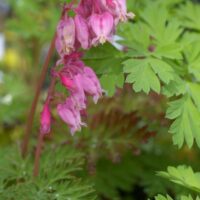
Dicentra formosa
Ferny foliage makes a lacy groundcover in shady areas. Clusters of pendulous, pink, heart-shaped flowers in spring and into summer. Will spread rapidly when happy, enjoying moist but not soggy woodland conditions. Tolerates dry shade where it goes dormant with drought. Early nectar source for hummingbirds and bumble bees. Deer resistant.
Dichondra donelliana
Dichondra is a small genus of flowering plants in the morning glory family that form a thick, mat-like ground cover of rounded leaves, once popular as lawn substitutes. This native species is uncommon in the nursery trade and in gardens, but has potential worth exploring. Native to California coastal plant communities on open slopes and moist grasslands, it forms a flat, perennial ground cover with tidy, rounded leaves, densely packed along creeping stems. The flowers are tiny and greenish-white, not real showy but interesting. An obvious application would be a small scale ground cover or meadow planting in areas with some moisture. Could be a candidate for green roofs or walls, where a low and spreading plant is the ticket. Plant in full sun on the immediate coast, otherwise light shade is necessary. Moderate summer water.
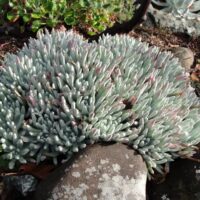
Dudleya ‘Frank Reinelt’
The beautiful and rarely offered Dudleya will form dense mounds 6" - 8" tall with silvery, finger-like leaves, sometimes developing a purple-red blush. Slender stalks appear in late spring and display star-like flowers of soft yellow up to a foot above the foliage. They make handsome specimens in a rock garden or perform as a striking groundcover up to 2' wide mixed with other coastal bluff plants like red buckwheat, seaside daisy, and sea thrift. Great in a container or planted under manzanitas amongst rocks. Needs good drainage and little water once established. Full sun near the coast, but light shade inland.
Dudleya ‘Seedlings from ‘Frank Reinelt’
These seedlings from the beautiful Dudleya ‘Frank Reinelt’ will form dense mounds 6 - 8 inches tall with silvery finger-like leaves. They make handsome specimens in a rock garden or perform as a striking groundcover in mass plantings mixed with other coastal bluff plants like red buckwheat, seaside daisy, and sea thrift. Avoid over-watering and control snails. Full sun to light shade with good drainage.
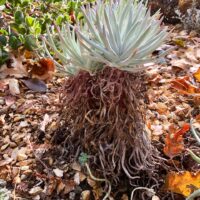
Dudleya virens ssp. hassei
Endemic to Catalina Island, this rare succulent forms chalky-grey rosettes made up of plump fingerlike leaves, 6 inches tall and spreading to form a mat 1 – 2 feet wide. Small white flowers with yellow centers on stems 6 -12 inches tall, bloom in the late spring and are attractive to hummingbirds and other pollinators. Plant in full sun to light shade with occasional deep summer watering. Tolerates heavier soils than most Dudleyas. A dependable small-scale groundcover or container plant.
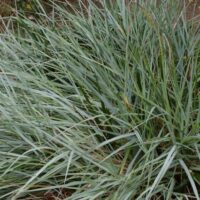
Elymus (Leymus) condensatus ‘Canyon Prince’
A beautiful selection from the Channel Islands off Southern California. Distinctive for the lovely, broad, silver-blue blades 2 1/2 to 3 ft. tall with wand-like grass flowers reaching up to 2 feet above the foliage. Accepts sun to very light shade and moderate to little water. Tolerates heavy soil. Spreads by rhizomes to form striking silver drifts, but is vigorous and aggressive. Best to use where a large patch is desired or where it is contained, such as a parkway strip. Cut back in winter to rejuvenate and remove old leaves. Drought and deer resistant.