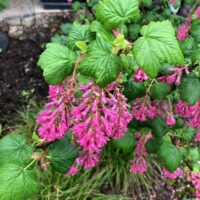
Ribes sanguineum v. glutinosum ‘Heart’s Delight’
A coastal Marin County selection of one of the West's choicest native shrubs. Deciduous, grows 6 ft. tall or more. In early spring it produces long drooping racemes of deep rosy-pink blossoms. Best with light shade inland, humusy soil and some summer water. Hummingbirds love the flowers and the berries attract many birds including robins, grosbeak and mockingbirds.
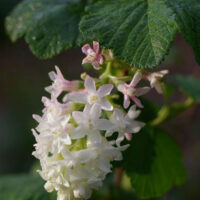
Ribes sanguineum v. glutinosum ‘Inverness White’
Selected by Roger Raiche on Inverness Ridge in Marin County. Distinguished from other white flowering cultivars in that the pure white blossoms develop a rosy cast as they fade. Deciduous shrub about 6 ft. tall by 6 ft. wide. Best with a little shade, woodsy soil and a little summer water. Berries attract many birds including grosbeak and mockingbirds.
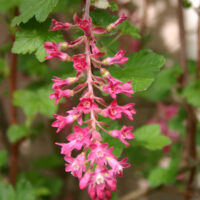
Ribes sanguineum v. glutinosum ‘Monte Bello’
This Cal Flora introduction was discovered in the hills west of Cupertino in the Santa Cruz Mountains. Long clusters of deep pink flowers make this selection of the pink-flowering currant stand out from other forms. In late winter and spring the flowers emerge on bare stems followed by rounded, maple-like leaves. This deciduous shrub has a vase-like shape, reaching a height of up to 10 ft. over time and a width of at least 6 ft. Provide full sun near the coast and light shade inland. Needs moderate to occasional irrigation once established. A great plant for hummingbirds and a wide array of pollinators. Birds enjoy the fruits.
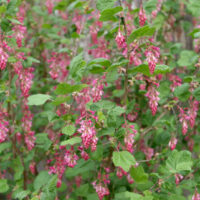
Ribes sanguineum v. glutinosum ‘Tranquillon Ridge’
A Native Sons Nursery selection from Tranquillon Ridge in Santa Barbara County, found growing under a canopy of Bishop pines. Super vigorous and very large, up to 10 ft. tall with extremely long racemes of dark pink flowers in the early spring. The racemes have an appealing shape, tapering to a point at the end of their long pendant flower clusters. Best with some shade even in coastal gardens where it’s drought tolerant. Occasional deep waterings are best in hot inland areas. Berries attract many birds including grosbeak and mockingbirds.
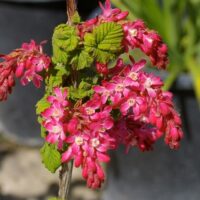
Ribes sanguineum v. sanguineum ‘Barrie Coate’
This selection of red flowering currant is a knock out in bloom. An early bloomer often starting in February with short racemes of nodding clusters of very deep rosy-pink, nearly red blossoms. Clusters of blue-black fruits follow and are enjoyed by birds. This deciduous shrub will grow 6 foot tall by 4 foot wide. Plant in sun to light shade with afternoon shade in hot regions and moderate to occasional summer water. An excellent early source of nectar for hummingbirds.
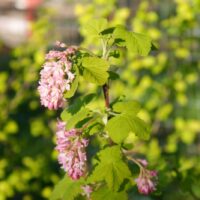
Ribes sanguineum v. sanguineum ‘Brocklebankii’
A distinctive shrub with gorgeous golden foliage on 5 ft. tall stems. Pendulous racemes of pink flowers in early spring just as the leaves are emerging are a favorite of hummingbirds. The leaves will scorch in the hot sun so part shade is best, especially during the hottest time of day. This cultivar prefers even moisture.
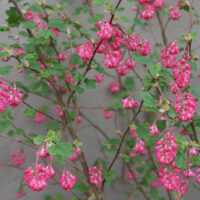
Ribes sanguineum v. sanguineum ‘Elk River Red’
This selection of the red flowering currant is from the Pacific Northwest. A deciduous shrub growing 6 ft. or more tall. Early spring brings eye catching bright rosy-red blossoms in drooping clusters. A wonderful early nectar source for hummingbirds. Plant in cool sun or light shade inland with occasional to moderate summer water. Berries attract many birds including grosbeak and mockingbirds.
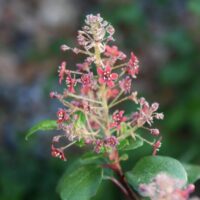
Ribes viburnifolium
Native to Santa Catalina Island, this Ribes is unique for the genus, being evergreen and low growing. Leathery, dark green, glossy leaves with a spicy fragrance on red stems forms a spreading shrubby groundcover to 2- 3 ft. tall. Small clusters of interesting, star-shaped, salmon-pink flowers decorate the arching branches in late winter to early spring, followed by little, red fruits. Requires part shade and is drought tolerant once established. Adaptable to a variety of soil types including heavy clay. Tip pruning is recommended to encourage a dense growth habit. Deer resistant.
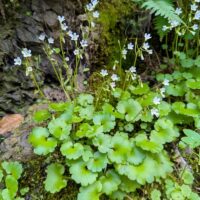
Romanzoffia californica
The California mistmaiden is diminutive, reaching a bit over a foot tall when its dainty white flowers are in bloom. The bell-shaped blossoms appear in winter, perched in clusters on tall, thin stems above lush foliage. Summer dormant until the first autumn rains, this plant is often the first garden greenery to return after a hot, dry summer. At home in the Coast Range from the Santa Cruz Mountains north to Oregon, it requires light shade and decent moisture during the growing season. Allow to go dry when the rains stop. Great for rock gardens and small nooks with excellent drainage.
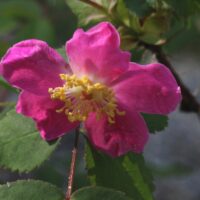
Rosa gymnocarpa
Delicate, native rose of woodlands, growing 3 - 4 ft. tall. Sprinkled with sweetly fragrant single pink flowers followed by small red rose hips. Best in woodsy shade where it tolerates drought. Bees, butterflies and other pollinators are attracted to rose blossoms and the fruits are enjoyed by birds.
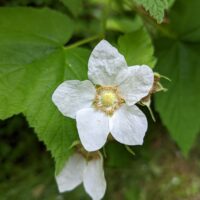
Rubus parviflorus
Thimbleberry is a deciduous native shrub with handsome large pale green velvety leaves. Small clusters of pretty white single flowers in spring and early summer followed by thimble-shaped mild-flavored edible berries in mid summer. Grows 3 - 6 ft. tall and spreading. Needs part shade and moisture.

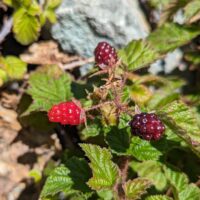
Rubus ursinus
Not to be confused with the weedy non-native Himalaya berry that has taken over acres in northern California. The native blackberry when happy can form a good sized patch, growing to about 3 ft. tall and spreading more than 6 ft. wide depending on available moisture. This thorny, spreading evergreen has excellent habitat value. The berries are widely used as a food source for wildlife. Offers excellent escape and nesting cover and is good for erosion control. People relish the berries and its fruits are highly prized for pies and jam. Best with some shade and moisture, but is drought tolerant once established.
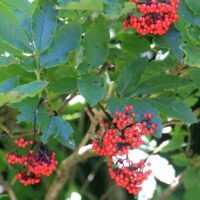
Sambucus racemosa
Red elderberry has light-green foliage topped by pretty, white flowers in pyramidal clusters which are followed by bright red berries. This 7-to-18-ft shrub or small tree is native to moist areas along the coast and in the Sierra-Nevada mountains. The fruits are relished by birds but are reputed to be poisonous to humans. Prefers cool sun or light shade, and moisture. Ripe berries are high on many birds’ favorite list!
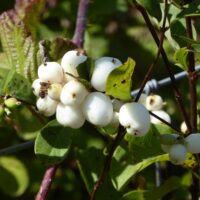
Symphoricarpos albus var. laevigatus
Snowberry is a deciduous, native shrub for dry or moist shade. Reaches about 4 - 6 ft. tall and spreading. Clusters of tiny, pinkish, urn-shaped flowers are followed by showy white berries on arching branches. Responds well to shearing. A good choice for under native oaks. Fruit may be toxic to humans. Hummingbirds like the flowers. Berries are palatable to hermit thrush, Swainson’s thrush, robins and other birds. Also creates good cover for birds.
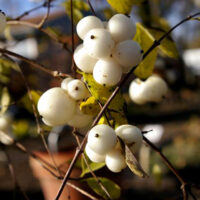
Symphoricarpos albus var. laevigatus ‘Bartlett Springs’
Snowberry is a deciduous, native shrub for dry or moist shade. Our own selection from Lake County, has particularly large oval leaves on graceful arching branches with exceptionally big fruits. Reaches about 4 ft. tall and spreading. Clusters of tiny, pinkish, urn-shaped flowers are followed by showy white berries on the branch tips. Responds well to shearing. A good choice for under native oaks. Fruit may be toxic to humans. Hummingbirds and bees like the flowers. Berries are palatable to hermit thrush, Swainson’s thrush, robins and other birds. Also creates good cover for birds.
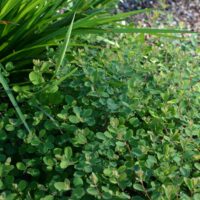
Symphoricarpos albus var. laevigatus ‘San Bruno Mountain’
This attractive low-growing form of our native snowberry is a Cal Flora Nursery selection from San Bruno Mountain. Its dimensions are about 8 inches tall and spreading. Indeed the spreading nature of this plant is robust and it should be included in areas where that is an asset rather than a liability. The wiry arching branches hold light green rounded leaves and the effect of the new growth is delicate and appealing. Tiny pink urn-shaped flowers decorate the branch tips, followed by small white fruits. Perfect for a lightly shaded bank or the light shade of a tree where it will be very drought tolerant. With total drought it may go summer deciduous but occasional summer water will keep it looking fresh. The flowers attract bees and hummingbirds.
Symphoricarpos albus var. laevigatus ‘Tilden Park’
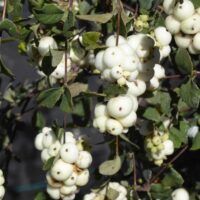
Here is a particularly fine selection of the native snowberry, notable for its dependable crop of showy white berries on arching branches. A deciduous shrub, snowberry grows to about 4 ft. tall and spreads to form drifts. A good choice for a shady bank, woodland edge, or under oaks. Appreciates and responds to moisture, but once established will tolerate dry conditions. Fruit may be toxic to humans. Hummingbirds like the flowers. Berries are palatable to hermit thrush, Swainson’s thrush, robins and other birds. Also creates good cover for birds.
Symphoricarpos mollis
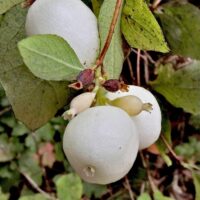
Low growing, spreading groundcover, usually staying around a foot tall by 3-6 feet wide. Rounded blue-green leaves on arching stems makes an excellent low growing thicket which competes well with tree roots. An amenable plant, able to grow in full sun in coastal areas and different depths of shade elsewhere, even fairly deep shade. The tiny, pink, bell shaped flowers are attractive to bees and hummingbirds and the white fruits that follow are eaten by birds. Good for erosion control and does well under oaks. Offers excellent habitat value with its flowers and fruits and provides cover for ground nesting birds. Drought tolerant once established. Deer often leave it alone.

Tellima grandiflora
Fringe cups is a sweet native perennial for the shade garden. Slender flower stalks rise above the soft mounds of foliage 18 inches to 2 ft. The small, urn-shaped flowers have tiny fringed petals which open green and then age to pink. Seeds about in a nice way. Tolerates dry shade. Deer resistant.
Tolmiea menziesii
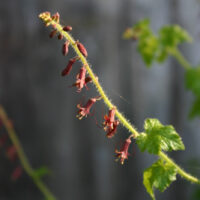
This western native of house plant fame, makes an attractive addition to the woodland garden. Lush looking, deep green leaves produce new plantlets at the junction of the leaf stalk and blade giving it its common name of piggyback plant. Tiny reddish-brown flowers are produced on 1 ft. stems are interesting though not terribly showy. Looks great as a small scale ground cover, in walls or containers. Needs filtered light and regular moisture.
Trautvetteria caroliniensis
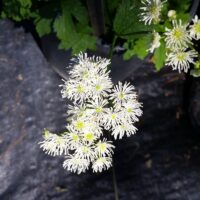
From moist woodlands in mountainous areas of northern California comes this lush and verdant buttercup relative. Large, serrated, palmate leaves up to 8 inches wide spread densely across the ground on slender stems. In summer through early fall, icy white flowers made up of thin filaments form flat topped clusters up to 5 inches wide. These delicate flowers sit atop stems reaching up to 3 ft. high. Plant in moist areas with part to full shade. The leaves will die down in winter only to re-emerge in spring. While very rare in California, false bugbane is more common in other parts of the country. Our form comes from the Siskiyou Mountains of northern California.
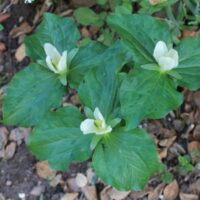
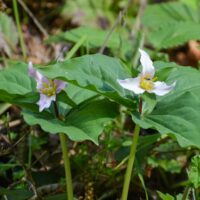
Trillium chloropetalum
The beautiful and distinctive giant Trillium is an elegant addition to the woodland garden. Native to coastal and interior open forests and woodlands of the San Francisco Bay Area and North Coast Ranges.Emerges in February with three broad leaves surrounding a leafless stem 10-18 inches tall. A single large flower arises directly from the whorl of leaves and can vary from white, pink, to maroon red. The leaves often have green or maroon mottling. After flowering it dies back to the ground. Prefers the dappled light of a woodland setting with humusy well drained soil and some summer moisture.
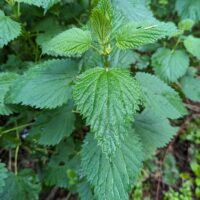
Urtica dioica
Found in moist woodlands and meadows throughout the state, stinging nettle is a habitat powerhouse. Growing at least 3 ft. tall and spreading vigorously to form large colonies, it's a great addition to any shady habitat garden or swale, where it stays moist throughout the year. Plant away from high traffic areas, as both the stems and foliage have small, stinging hairs that can cause skin irritation upon contact. This nettle has distinctive gray stalks, serrated leaves, and produces white, firework-like inflorescences that grow on stems in clusters throughout summer and early fall. Not only has it been used for centuries for a multitude of edible and medicinal purposes by indigenous tribes, it is also a larval host to several native butterflies including the painted lady and red admiral. Good cover for birds and small mammals.
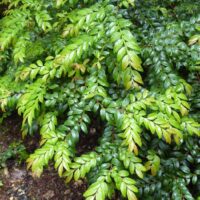
Vaccinium ovatum
A handsome evergreen shrub native to moist forests of the Pacific Coast. Leathery dark green leaves with new growth flushed bronzy-red. Small pinkish flowers in the spring are followed by delectable black berries prized in pies and jams. A slow growing shrub for shady situations or cool sun along the coast with moderate to regular water. Grows 4 - 5 ft. tall and wide or as much as 8 ft. in especially prime locations given time. Flowers provide nectar for hummingbirds and bees, fruit for many species including humans. Fire resistant. Deer resistant.
Vaccinium ovatum ‘Scarlet Ovation’
A round of applause for this cultivar of the evergreen huckleberry, featuring an especially compact habit and stand out bronzy-red new growth. Forms a small, dense shrub, 3 -4 ft. tall and wide. The new growth in the spring is dependably fiery-red, contrasting beautifully with the neat, dark-green older foliage. Small, urn-shaped, pinkish-white flowers are rich in nectar and attract an array of pollinators, including hummingbirds. The small, dark-blue berries are tasty and enjoyed by wildlife and humans. Huckleberries can grow in full sun along the coast, but require some shade in hot areas. Moderate to regular summer water. Fire and deer resistant.
Vaccinium ovatum (Inverness)
This Marin County selection of the evergreen huckleberry was chosen by landscape architect Ron Lutsko for its dense and compact habit. The leaves appear to us to be smaller than usual for this species and spaced more closely together. It has the classic, tasty huckleberries and blooms and fruits readily. Plant in part shade and provide regular to moderate irrigation. Will grow in full sun near the coast. While tolerant of somewhat shadier locations, evergreen huckleberries fruit best with adequate light. Fire resistant. Deer resistant.
Vancouveria hexandra
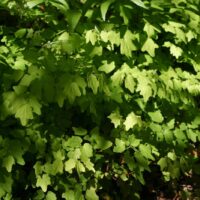
A useful ground cover for shady areas with delicate apple green, fern-like foliage and creeping rootstocks. Grows 6 to 12 inches tall and spreads slowly by underground rhizomes. Dainty, nodding, white flowers with reflexed petals give the impression of being turned inside out and can appear over a long period from April through June. This western native grows profusely in moist woodland conditions but tolerates dryish conditions once established. Competes well with tree roots too.
Venegasia carpesioides
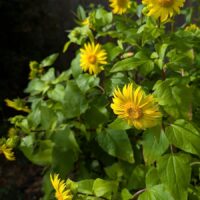
Native to coastal areas of central and southern California, the canyon sunflower brightens the garden with abundant blooms from spring into late summer. The daisy-like, golden-yellow blossoms are 2 in. wide and set against light-green, almost heart-shaped leaves. This 3 – 5 ft.-tall-and-wide, showy shrub is particularly useful for its pop of color in dry shade under oaks. It will also accept quite a bit of moisture, and full sun in warmer areas! Rarely offered in Northern California nurseries, it does well in our area, but may retreat back to the ground after hard frosts, only to re-emerge in spring. If kept dry through the summer, plants may go dormant until moisture returns.