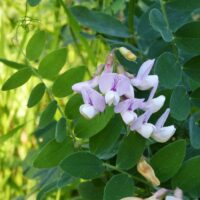
Lathyrus vestitus
From woodland to chaparral throughout much of the California coast ranges comes this charming sweet pea relative. Clusters of dainty flowers ranging in color from white to pink and lavender grace this evergreen vine in the spring, followed by clusters of small peapods. Plant along a fence or amongst shrubs where it will climb up to 8 ft. tall and wide. Provide light shade inland but will tolerate full sun near the coast. Drought tolerant once established but will also accept occasional irrigation. This vine is a host plant to the silvery blue butterfly and the arrowhead blue butterfly.
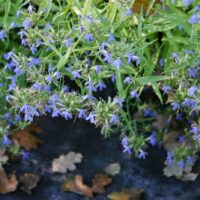
Lobelia dunnii var. serrata
Water loving perennial native to creek sides and other wet places in Southern California. Growing one foot tall and spreading vigorously by rhizomes with clusters of soft blue, one inch flowers in summer. Best with regular water and part shade. A perfect addition for a shady water feature, moist meadow or container planting. The flowers are highly attractive to butterflies of all sorts and are visited by hummingbirds. Winter dormant. Deer resistant.
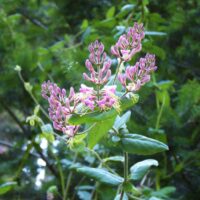
Lonicera hispidula
This native honeysuckle is often seen climbing over shrubs on the edge of woodlands where its roots are shaded and its foliage is sun drenched. The trumpet-shaped flowers range in color from rosy-pink to pink and white and feature prominent yellow stamens emerging from their mouths. They form clusters which decorate the tips of the vining branches and are attractive to bees and hummingbirds. The high point is the drooping clusters of luminous red berries in late summer which are beautiful to behold and provide a feast for birds, especially orioles. A drought tolerant vine but would appreciate occasional deep summer watering. Considered by some to be deer resistant.
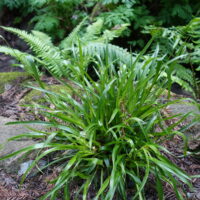
Luzula parviflora
This tidy native woodrush forms grass-like clumps 8 - 10 inches tall and a little wider with broad, bright green leaf blades. The small yellowish flowers occur on the tips of arching flowering stems in late spring. Occurs over a wide range of the Western U.S. and up into Canada, across and down into the northeastern states. Perfect for the woodland garden with moderate moisture. Will seed around if the conditions are right, but we have not found it to be weedy. Deer resistant.
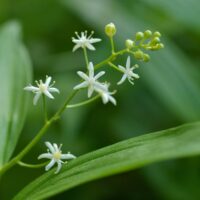
Maianthemum (Smilacina) stellatum
Native to California and much of North America, this woodlander makes a worthy and useful addition to the shade garden. Spreading by stout rhizomes forming colonies of lush, green foliage one foot to 18 inches tall. Small, white, star-shaped flowers top the slender stems in the spring and early summer. Berries follow that are often striped with purple or black, eventually turning red. Thrives in shade with moisture but tolerates dryish conditions once established. Can grow in quite a bit of light as long as there is moisture. A variety of insects seek nectar or pollen from the flowers and woodland song birds love the berries.
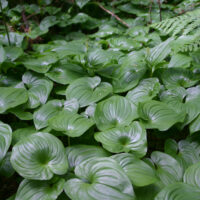
Maianthemum dilatatum
This lush, lily relative is native to coastal forests of Northern California to Alaska. When happy, spreads by underground root stocks to form broad mats of heart-shaped, glossy, green leaves with parallel veins. Bears clusters of tiny white flowers followed by red, translucent berries. Dies back to the ground in winter. Loves shade and moisture. Competes well with tree roots.

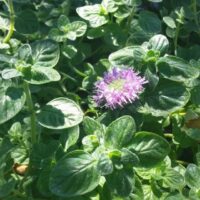
Monardella villosa ssp. franciscana ‘Pomo Canyon’
This low growing, dense selection of our native coyote mint was discovered near the mouth of the Russian River. Large, round, deeply veined leaves colored dark blue-green give this groundcover a lush appearance. In summer, soft lavender flowers which look like pincushions cover the plant. Reaches a height of up to 12 inches and spreads fairly quickly to form drifts. Provide full sun to light shade and moderate to infrequent irrigation. A stellar plant for bees, butterflies and hummingbirds. Coyote mint is not a true mint and won’t spread invasively by roots. Deer resistant.
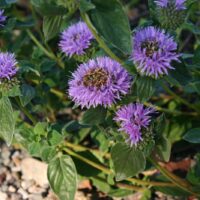
Monardella villosa ssp. franciscana ‘Russian River’
Our own selection of coyote mint from a rocky slope along the lower Russian River. Although Monardella is sometimes difficult in cultivation, this plant has proven to be vigorous. Grows 12 to 18 inches tall with ball-like clusters of pinkish-purple above the fragrant evergreen foliage. Good for a dry sunny site. Attracts bees and butterflies. Deer resistant.
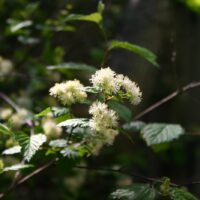
Neviusia cliftonii
Shasta snow-wreath is a rare species not know to science until 1992. Endemic to Shasta County, California, often on limestone embankments, in moist shady areas, this deciduous shrub grows to around 6 ft. tall spreading by underground rootstocks. Looking something like ocean spray or a delicate ninebark, heart shaped leaves with toothed edges are alternately arranged on the slender branches. The flowers are a starburst of white anthers in early spring surrounded by green petal-like sepals. A lovely addition to a woodland planting where it thrives in light shade with some summer water.
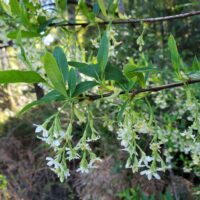
Oemleria cerasiformis
A charming native shrub which grows in moist areas along the coast or when inland on forest edges. Blooms in early spring just as the new leaves are beginning to expand with drooping clusters of fragrant white flowers. Male and female plants are separate and you'll need both to get the small blue-black fruits that birds enjoy. A suckering shrub growing 5 - 6 ft. tall or more. Plant in part shade with regular to occasional water. Can grow in cool full sun such as you find along the coast.
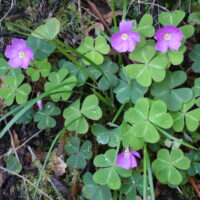
Oxalis oregana
A natural companion of coast redwoods where it forms low carpets of clover-like foliage. Useful ground cover for the woodland garden where it competes well with tree roots and thrives in partial to deep shade. Low and spreading with spring flowers that can range from white through dark pink . Best with humus in the soil and some summer moisture, though it is drought tolerant in coastal zones. Deer resistant.
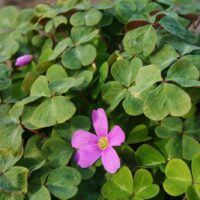
Oxalis oregana ‘American Beauty’
This remarkable selection of our native redwood sorrel has perhaps the largest flowers of any of the forms we've seen. The big pink blooms appear in spring above the lush, green, clover-like foliage. This ground cover competes well with tree roots and thrives in even the shadiest spots. Best with humus in soil and some moisture, though it is drought tolerant in coastal zones. Deer resistant.
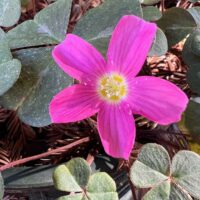
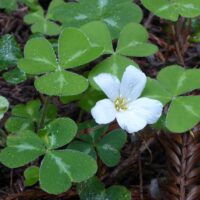
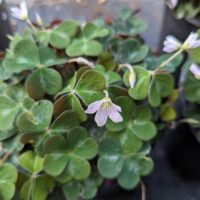
Oxalis oregana ‘Klamath Ruby’
Low spreading groundcover which thrives in the shady conditions of Douglas fir and redwood forests. The cultivar ‘Klamath Ruby’ offers dark green clover-like foliage with beautiful burgundy backed leaves. White flowers with pale pink veining on the petals bloom in the spring. A lovely groundcover for a shady garden with some summer water, though it is drought tolerant in coastal zones, once established. Deer resistant.
Oxalis oregana ‘Smith River White’
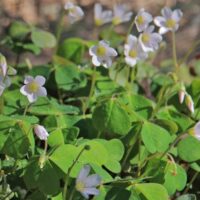
This Cal Flora selection carries white flowers with thin pink lines on the petals held up above the foliage, thus creating an effect somewhat reminiscent of our small native anemones. The foliage is handsome with dark olive green tops and purple-red undersides to the leaves. The perfect ground cover for deep to moderate shade with some summer moisture. Drought tolerant when grown in more coastal areas. Rampant when its needs are met, it competes well with tree roots and is the perfect companion to other redwood forest understory plants. Deer resistant.
Petasites frigidus var. palmatus
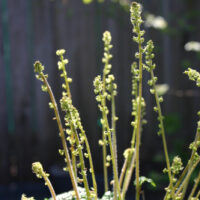
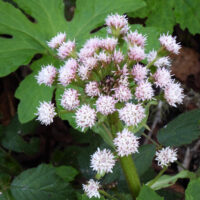
A bold, beautiful and AGGRESSIVE creekside native, found in coastal and montane regions in California, north to Alaska, where it grows along shady creek banks. The large, almost tropical, palmate leaves spread from thick creeping rootstocks to form large colonies. Flowers before the foliage fully emerges in the spring with flat topped clusters of white to pink flowers on 1-2 ft. tall stems. Requires shade and plenty of water and is useful as a soil stabilizer. To control its spreading nature, use in containers or in contained areas. It won't spread into areas which are dry. Dies back to the ground in the winter. Flowers attractive to a wide range of beneficial insects.
Polypodium glycyrrhiza
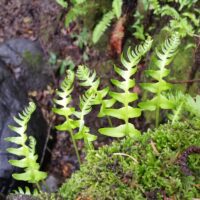
Native to moist coastal forests from Monterey County to Alaska. This epiphytic fern enjoys shady environments where it grows on trees, logs and stumps, mossy rocks and slopes. The long, narrow, deeply lobed fronds spread by creeping rhizomes, which have a sweet licorice flavor and a history of use by various native American peoples. They grow happily in moist shady gardens, going summer dormant once conditions get too dry, returning with the autumn rains and coolness. Drought tolerant in somewhat coastal conditions. Good container subject. Deer resistant.
Polystichum munitum
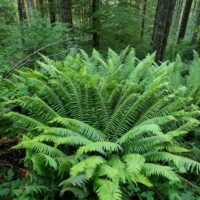
The versatile western sword fern is an evergreen native fern from California to Alaska. In most gardens it will reach about three feet tall and wide. In prime areas near the coast where moisture is readily available and cool temperatures prevail, this fern can get up to 5 feet tall and wide. Excellent for shady beds, along walls, as a large scale groundcover and mixed woodland planting. Best with humusy soil and regular to moderate water, but drought tolerant once established and tolerant of most soil types. Actually quite adaptable and deer resistant.
Primula (Dodecatheon) hendersonii
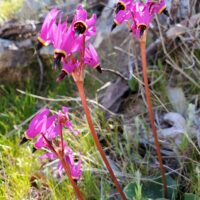
Description coming soon! Also known as: Primula hendersonii
Prunella vulgaris v. lanceolata
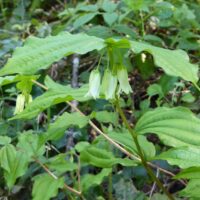
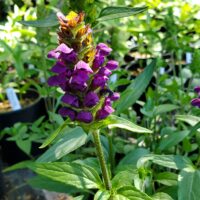
Native to moist areas usually near coniferous forests and woodlands. Creeping perennial forms a low dense mat of foliage. Upright spikes of purple flowers over a long period summer - fall. Give some thought to placement because if happy it will reseed vigorously. Plant in full sun or light shade with regular water.
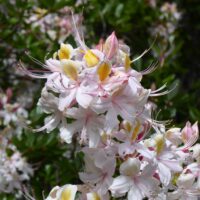
Rhododendron occidentale
A much sought after and admired native deciduous shrub found in moist places and stream banks in many plant communities throughout California. Leafs out in the spring with bright green foliage on a shrubby framework 3-6 ft. or more tall and wide. Glorious displays of fragrant azalea flowers in dense terminal clusters appear in late spring and can be pure white to pale pink often with yellow or orange markings. Needs decent light to bloom well but appreciates light shade, acid soils and regular water. Deer resistant
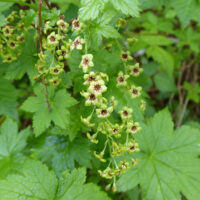
Ribes bracteosum
Native from Mendocino County northwards, this deciduous shrub is distinctive for its long, upright inflorescences and large, shiny leaves up to eight inches wide. As many as fifty of the soft orange, saucer-shaped flowers can occur on a single stem in the spring followed by small blue fruits in late summer. In shaded, moist conditions the blue currant can reach a height and width of about six feet but can get larger in cool, wet areas along the coast. Combine with other plants of the redwood forest such as ferns, sorrel and wild ginger.
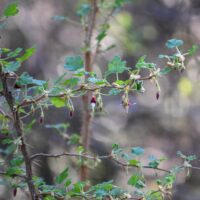
Ribes menziesii
A gooseberry of low elevation forests, growing to around 5-8 ft. tall with an open, arching habit. Bright green scalloped leaves with pale undersides are set on spiny stems. The charming flowers are small but sweet, with maroon sepals and white petals dangling beneath the thorny branches offering nectar to hummingbirds. The spiny red fruits that follow are decorative and attractive to birds. Often found on the edge or in openings of forests, the canyon gooseberry does best with light shade. It is drought tolerant especially near the coast, though it appreciates occasional summer water. An excellent habitat plant that provides shelter and food for a wide variety of birds.
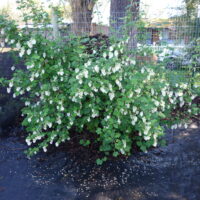
Ribes sanguineum v. glutinosum ‘Cal Flora White’
A Cal Flora Nursery original, a chance seedling in our nursery landscape. We watched this seedling develop into an elegant, eight foot, vase shaped shrub. The five inch pendulous racemes dangle from the branch tips and are pure white. Give flowering currants light or part shade except along the immediate coast where they grow in full sun. Moderate to occasional water once established. Hummingbird and bumblebee favorite. Birds enjoy the fruits.
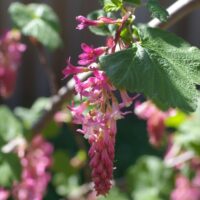
Ribes sanguineum v. glutinosum ‘Claremont’
Distinctive for its extra long, pendulous racemes of pink flowers with white centers. This Rancho Santa Ana Botanic Garden selection of the pink flowering currant is particularly vigorous, featuring abundant floral displays in early spring. Will attain a height and spread of 6 - 8 ft over time. Best with light shade and a little summer water. Important early nectar source for bumblebees and hummingbirds. Berries attract many birds including grosbeak and mockingbirds.