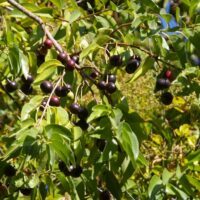
Prunus ilicifolia ssp. lyonii
This subspecies of our native cherry comes from Southern California and can be grown as a large shrub or trained into a small tree. The Catalina cherry is evergreen, with soft, glossy leaves and without the toothed leaf margin of our more local hollyleaf cherry. Gorgeous, creamy-white flower clusters make a showy display in spring. The purple-red fruits are edible, but are mostly preferred by wildlife. At 20-40 feet in height and slightly narrower in width, it is also larger than the hollyleaf cherry, but can be pruned to 8-10 feet. Its dense foliage makes an excellent hedge. Does best in well-drained soil with occasional deep watering once established. The flowers are adored by pollinators. Black-headed Grosbeaks, Cedar Waxings, Western Tanagers, and many other bird species love the cherries, which offer an excellent fall-migration food source.

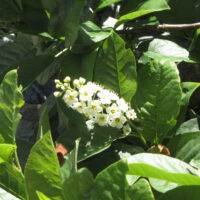
Prunus virginiana v. demissa
Large, deciduous shrub or small tree with red-purple bark and dark green foliage. Growing 8 foot or more tall and spreading slowly to form a thicket. Striking racemes of fragrant white flowers in the spring followed by dark red fruits which can be sweet but astringent. Foliage can take on nice fall color before dropping its leaves. Fabulous habitat plant drawing bees, butterflies and other pollinators to its flowers. Birds, especially bluebirds, adore the fruits and are known to swoop in and finish them off quickly. Where summers are hot, light or part shade is best, with regular to occasional water once established. They often grow where there is seasonal moisture in the spring, but somewhat dry as the season progresses.
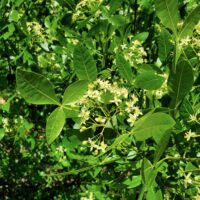
Ptelea crenulata
This interesting California endemic deserves wider use in California gardens. Hoptree is a deciduous, large shrub/small tree, growing 6 - 15 ft. tall, in the citrus family. Native to hot, interior coast ranges and the Sierra Nevada foothills, often growing in canyons where residual moisture can be found. Glossy, green, fragrant, trifoliate leaves with panicles of small creamy-white flowers decorate the branch tips in spring. Handsome, circular, flattened, fruits which look like hop seeds, start out green and age to tan and may hold on after the leaves have fallen in the autumn. Plant in full sun to light shade with occasional, deep summer watering. The fragrant flowers are attractive to a variety of pollinators including butterflies. A larval host for the two-tailed swallowtail butterfly.
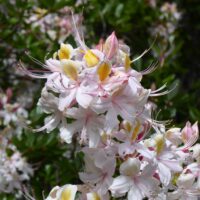
Rhododendron occidentale
A much sought after and admired native deciduous shrub found in moist places and stream banks in many plant communities throughout California. Leafs out in the spring with bright green foliage on a shrubby framework 3-6 ft. or more tall and wide. Glorious displays of fragrant azalea flowers in dense terminal clusters appear in late spring and can be pure white to pale pink often with yellow or orange markings. Needs decent light to bloom well but appreciates light shade, acid soils and regular water. Deer resistant
Rhus integrifolia
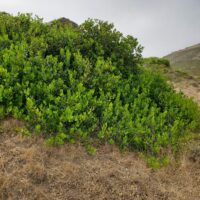
This sturdy native shrub or small tree is highly valued for its evergreen foliage and as a source of food for birds, bees and butterflies. Round, serrated, leaves, flatter than those of the sugar bush, cover this plant from head to toe. In late winter to early spring, white to pink flower clusters emerge, followed by sticky, reddish fruits. Ranging in height and width from 6 to 20 ft., lemonade berry is very tolerant of pruning, either into a small tree or a low hedge. Cold hardy to about 20 degrees. Plant in full sun to part shade. Will be very drought tolerant once established. Fire resistant. Deer resistant.
Rhus ovata
Handsome evergreen shrub native to dry slopes away from the coast in Southern California, Baja, and Arizona. A durable shrub thriving in hot, rocky conditions in full sun to part shade where it will be completely drought tolerant once established. Grows 6 - 10 ft. tall and wide. A profusion of dense flower clusters are rosy tinted in bud opening to white with a pinkish blush. Small reddish fruits follow that are coated with a sugary secretion that tastes lemony. Excellent subject for hot, dry inland conditions. Good for birds, bees and butterflies. Fire resistant. Deer resistant.
Ribes californicum
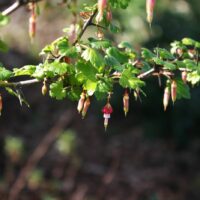
Undemanding, winter blooming, deciduous shrub, native to Coast Range mountains of California, from Mendocino County south to Orange County. Excellent choice for habitat gardens, where it provides abundant flowers and fruits plus thorny, protective cover. Variable in size, this spiny shrub can grow 4 - 6 ft. tall and wide. The pendant flowers are tiny but numerous and charming on close inspection. The tubular flower parts are white and extend beyond the reflexed red sepals, and are highly attractive to hummingbirds and other pollinators. Red, bristly, globular fruits follow and are adored by birds. The bright green leaves often take on striking crimson colors in the late summer before going dormant with drought. Host plant to several butterfly species as well as the white-lined sphinx moth. Best with light shade and a little irrigation, though once established it is completely drought tolerant.
Ribes divaricatum var. pubiflorum
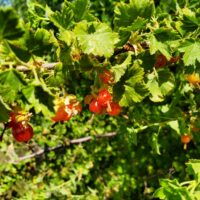
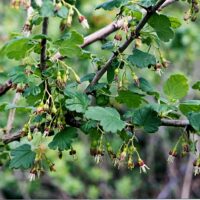
Native to coastal scrub, moist woods and shady canyons of the Pacific coast from British Columbia south through much of coastal California. This gooseberry is perhaps the most tasty of all of our native Ribes. The berries have the added benefit of being free of thorns. Forms an arching shrub 3-6 ft. tall and a bit wider with thorns at the leaf nodes. The tiny flowers are composed of reddish sepals and white petals that dangle beneath the branches and are attractive to hummingbirds. The small, blue-black berries are relished by birds. Plant in light shade with some summer moisture. Will tolerate full sun near the coast. Useful as a barrier, hedgerow or habitat plant where it provides excellent food and thorny cover for birds.
Ribes indecorum
Native to Southern California chaparral and coastal scrub plant communities from Santa Barbara County to Northern Baja. This vase shaped deciduous shrub features thick, aromatic, scalloped leaves and grows 6 feet or so tall and wide. Small clusters of white flowers cover the stems in November and attract hummingbirds, bees and butterflies. The fruits that follow are very appealing to birds. Plant in sun to light shade. Little to no summer water is required once established. While this currant is often summer deciduous, a little extra water will help it to retain most of its leaves all year long.
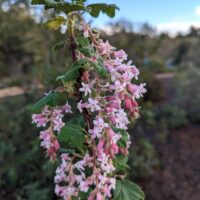
Ribes malvaceum ‘Dancing Tassels’
A dazzling selection by Rancho Santa Ana Botanic Garden from San Clemente Island. Blooming in winter over a long period with the longest dangling flower clusters we’ve seen in the species. Pendulous flower clusters are dusty pink in bud, opening to white and soft pink when fully open. Growing 6 ft. or more tall, this deciduous, vase shaped shrub has gray-green foliage with a pungent resinous fragrance. Peeling red-brown bark and clusters of blue-black berries add to its beauty and appeal. Chaparral currant blooms earlier and is more sun and drought tolerant than the popular pink flowering currant, Ribes sanguineum glutinosum. Plant in full sun to light shade with little to no water once established. An outstanding early nectar source for hummingbirds.
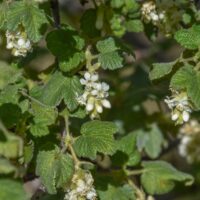
Ribes malvaceum ‘Rana White’
This unusual form of the chaparral currant has pure white flowers, not the typical pink flowers one normally sees. Forming an erect shrub of true green, aromatic foliage 6 ft. or more tall and wider. Winter and early spring bring short pendant racemes of the fragrant white flowers that are highly attractive to hummingbirds and pollinators. Clusters of sticky berries follow and are relished by birds. Though it will tolerate garden conditions, this currant is extremely drought tolerant once established. When allowed to go dry, this well-adapted species drops its leaves in late summer and leafs out again in late autumn. Moderate irrigation can make it almost evergreen. Plant in full sun to light shade. This species can be found throughout much of California in chaparral and on the edges of woodlands. Introduced by Rana Nursery.
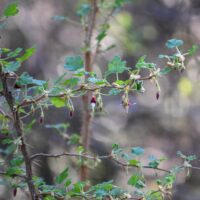
Ribes menziesii
A gooseberry of low elevation forests, growing to around 5-8 ft. tall with an open, arching habit. Bright green scalloped leaves with pale undersides are set on spiny stems. The charming flowers are small but sweet, with maroon sepals and white petals dangling beneath the thorny branches offering nectar to hummingbirds. The spiny red fruits that follow are decorative and attractive to birds. Often found on the edge or in openings of forests, the canyon gooseberry does best with light shade. It is drought tolerant especially near the coast, though it appreciates occasional summer water. An excellent habitat plant that provides shelter and food for a wide variety of birds.
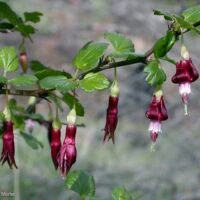
Ribes roezlii
The Sierra gooseberry's natural range is far beyond the Sierras, with varieties growing in the mountains of northern, southern and central California. Forms an arching shrub of thorny branches with pretty, little scalloped leaves, 2 - 4 ft. tall and wide. Pendant flowers are made up of burgundy-red sepals and small white to pink petals with protruding stamens, looking something like miniature fuchsias. Custom built for hummingbirds. In spring, showy, rounded fruits covered with prickles follow the flowers, starting out green and ripening to red, spiny globes which are relished by birds. This charming shrub is a lovely addition to the woodland garden where they receive light to moderate shade and are drought tolerant once established. Needs good drainage.
Ribes sanguineum v. glutinosum ‘Cal Flora White’
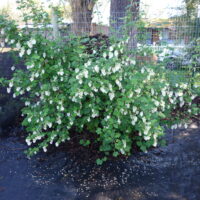
A Cal Flora Nursery original, a chance seedling in our nursery landscape. We watched this seedling develop into an elegant, eight foot, vase shaped shrub. The five inch pendulous racemes dangle from the branch tips and are pure white. Give flowering currants light or part shade except along the immediate coast where they grow in full sun. Moderate to occasional water once established. Hummingbird and bumblebee favorite. Birds enjoy the fruits.
Ribes sanguineum v. glutinosum ‘Inverness White’
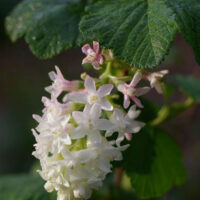
Selected by Roger Raiche on Inverness Ridge in Marin County. Distinguished from other white flowering cultivars in that the pure white blossoms develop a rosy cast as they fade. Deciduous shrub about 6 ft. tall by 6 ft. wide. Best with a little shade, woodsy soil and a little summer water. Berries attract many birds including grosbeak and mockingbirds.
Ribes sanguineum v. sanguineum ‘White Icicle’
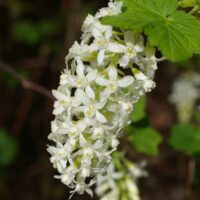
This selection of flowering currant is from the University of British Columbia Botanic Garden. Flowers in early spring are pure white on long racemes. Foliage is bright green. Compact habit, 6 - 8 ft. tall. Light shade in hot regions with occasional summer water. Berries attract many birds including grosbeak and mockingbirds.
Romanzoffia californica
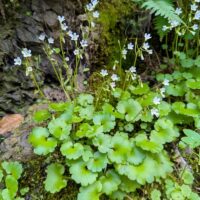
The California mistmaiden is diminutive, reaching a bit over a foot tall when its dainty white flowers are in bloom. The bell-shaped blossoms appear in winter, perched in clusters on tall, thin stems above lush foliage. Summer dormant until the first autumn rains, this plant is often the first garden greenery to return after a hot, dry summer. At home in the Coast Range from the Santa Cruz Mountains north to Oregon, it requires light shade and decent moisture during the growing season. Allow to go dry when the rains stop. Great for rock gardens and small nooks with excellent drainage.
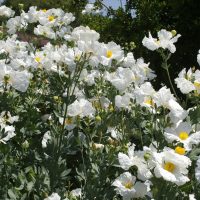
Romneya coulteri
A much admired, spectacular, shrub-like perennial, with a long history in cultivation. Can be both finicky to get going and extremely vigorous once established. The large flowers are made up of crinkly, crape paper-like, white petals with a shaft of yellow stamens in the center, at the top of long, gray-foliaged stems. Plant where its size and spreading won't be a problem and prune severely in winter. Height 4 -8 feet. Full sun. Drought and deer tolerant.
Rubus leucodermis
West coast native found in open or wooded places from British Columbia south to California.Forms an arching deciduous shrub 3-4 foot tall and wide.The stems and back of the leaves are covered in beautiful white blooms. White flowers are followed by tasty red to purple fruits.Tolerates many soil types, preferring some moisture and a little shade from the hottest sun. Excellent habitat plant where the the prickly shoots and thorny canes provide safe cover for birds, flowers attract a wide array of pollinators and tasty berries are a favorite of animals of all sorts.
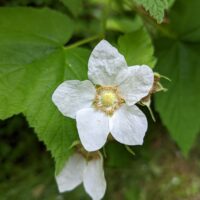
Rubus parviflorus
Thimbleberry is a deciduous native shrub with handsome large pale green velvety leaves. Small clusters of pretty white single flowers in spring and early summer followed by thimble-shaped mild-flavored edible berries in mid summer. Grows 3 - 6 ft. tall and spreading. Needs part shade and moisture.
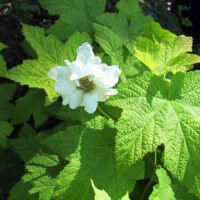
Rubus parviflorus ‘Dr. Stasek’
Bob Hornback found this interesting form of thimbleberry. Instead of the usual single white flowers, this cultivar offers double flowers. The extra petals are a nice touch against the background of large velvety leaves. Thimble-shaped edible berries follow which are mild flavored but sweet and much enjoyed by birds. Grows 3 - 6 ft. tall and spreading. Needs part shade and moisture.
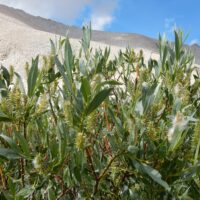
Salvia ‘Shirley’s Creeper’
A vigorous garden hybrid involving the native Salvia mellifera selected by Charlie Christiansen. The cultivar name is misleading. This shrub does not creep exactly but mounds up 4-6 ft. tall and wide. It can be kept lower and more dense by an annual cutting back after flowering. Dark green aromatic foliage is a nice foil for the whorls of white flowers in the spring which are a favorite of bees and hummingbirds. Plant in full sun to light shade. Very drought tolerant once established. Dependably deer resistant.
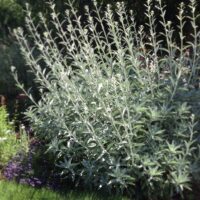
Salvia apiana
A striking native sage with large, silvery-white, aromatic leaves and tall flower stalks reaching above the foliage displaying lavender tinged white blossoms. The foliage of this shruby sage reaches 3 - 4 ft. tall with flowering stalks adding another 2 ft. or more above that. A useful plant for sunny, dry areas with good drainage. Combine with dark-leaved plants such as ceanothus and manzanitas to create a dramatic display. Used in smudge bundles as a natural incense. A bee and hummingbird favorite. Deer resistant.
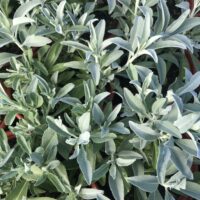
Salvia apiana ‘Compacta’
Having all the attributes of white sage, but growing about half the size, topping out at around 3 ft. tall. Gorgeous silver-gray foliage and stately flower stems of white, pollinator attracting blossoms. Heat and drought tolerant, this striking sage makes a wonderful specimen and contrasts beautifully with greener foliage. Plant in full sun with good drainage where it thrives with summer heat and drought. The powerfully fragrant foliage is dependably deer resistant.
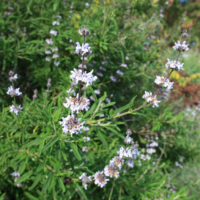
Salvia brandegeei
Native to Southern Spain and North West Africa, this herbaceous perennial spends much of the growing season as a low mound of gray-green wavy leaves. Early summer, tall flower stems rise 3 - 5 feet, with branched spikes of lovely light lavender-blue blossoms, that last about one month. Cut down old spikes or allow to go to seed for future propagation. Plant in sun with good drainage and moderate summer water. Pollinators of all sorts love sages.