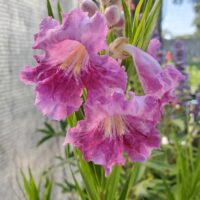
Chilopsis linearis
A graceful, summer-blooming, deciduous shrub, native to desert washes where it grows in gravelly soils and intense heat. Forms a large, multi-branched shrub or small tree reaching up to 15'-20' tall and wide with narrow, willow-like leaves. Terminal clusters of showy, trumpet-shaped flowers in summer come in shades of white, to pink and purple that attract hummingbirds and butterflies. Long, bean-like pods follow and hold on into winter. Enjoys hot climates with plenty of sun, decent drainage and occasional to moderate water. Avoid cool coastal conditions and heavy wet soils. Grows fast when happy with no pest or disease problems, demanding little. A great option for along sidewalks.
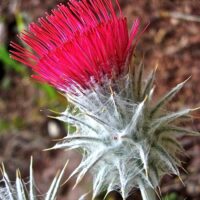
Cirsium occidentale
A beautiful NATIVE and NON-WEEDY thistle. Forms a rosette of gray woolly and spiny leaves the first year. A BIENNIAL, flowering occurs the second year with tall, narrow spikes of showy maroon-red to dark pink flowers with cobweb hairs on the bracts. A striking plant, usually reaching 3 - 6 ft tall when blooming, for sunny areas with good drainage and low to no irrigation. An excellent addition to the habitat garden where it attracts bees, butterflies and hummingbirds. Butterflies such as the painted lady and the mylitta crescent depend on cobweb thistle as a larval food source. Deer resistant.
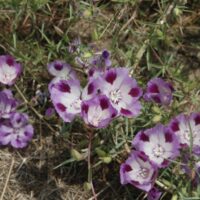
Clarkia williamsonii
The incredibly showy flowers of this native ANNUAL will take your breath away in late spring and early summer. The large, lavender-pink, papery flowers feature deep, burgundy-red brush strokes and cheery white centers. Plants form a loose mound about 1 ½ ft. around. Butterflies and other pollinators love Clarkias. Native to the Sierra foothills, where it grows in full sun to light shade. Plants enjoy moisture while they are developing in the winter and spring, but are accustom to hot and dry summers. Needs decent drainage. Reseeds readily, as long as there is exposed soil nearby. Deer resistant!
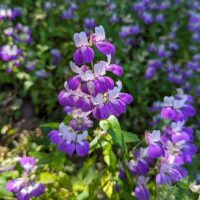
Collinsia heterophylla
A striking form of a native annual wildflower found in open woodlands in much of California. The open lipped flowers are stacked in tiers, and said to look pagoda-like. This charming woodlander is best in bright shade, in edges and openings, or under oaks, where it blooms from mid spring to early summer. Grows around 2 ft. by 2 ft. When happy it will reseed and those seedlings will require no irrigation. A bee and butterfly favorite.
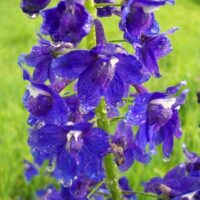
Delphinium trolliifolium
Towers of dense, blue purple flowers reaching up to 4 ft high make this one of our most striking native larkspur. The robust stalks rise above elegantly cut leaves featuring an appealing matte finish. The new leaves emerge in winter after a summer/fall dormancy, followed by the stunning floral display in early spring. Native to the northwest corner of our state, where it grows in oak woodlands, bright, coniferous forests and coast chaparral. Enjoys moisture in the winter and spring, but should be allowed to go somewhat dry in the summer when dormant. Provide light shade away from the coast. Attractive to butterflies and hummingbirds. All parts are poisonous if ingested.
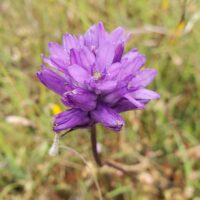
Dichelostemma congestum
A perennial wildflower with rounded, purple flower clusters held atop slender, naked stems. In late spring and early summer, the cheerful floral umbels rise 2 to 3 feet above low, grass-like leaves. Native to hillside grasslands and mountain meadows throughout western North America, this wild hyacinth species is taller than its Brodiaea relatives, with larger inflorescences than the similar blue dick. Usually spreads slowly by corms and seed to form colonies. An excellent nectar plant for the dry borders of pollinator gardens, alongside other native bulbs, and in meadow plantings. Plant in full sun to light shade with decent drainage. Water minimally and leave dry during summer dormancy.
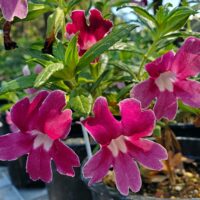
Diplacus (Mimulus) ‘Grape’
Large, open-mouthed flowers in a fruity purple with white throats and edging make the 'Grape' monkeyflower vibrant and showy. The lush, deep-green foliage stays a compact 2-foot or more tall and wide. This unique selection comes from Bay Area horticulturalist and teacher, Kathy Echols. Plant in full sun on the coast to part shade inland and give it good drainage. Best with occasional summer watering and pinching to keep good form. A favorite of hummingbirds and other pollinators. Checkerspot and buckeye butterfly larval food source. Deer resistant.
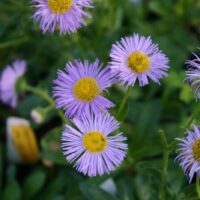
Erigeron ‘Olga’
A fine seaside daisy hybrid introduced by Siskiyou Rare Plant Nursery in Oregon. Forms a tidy, dense mat of dark green foliage. Lavender daisies rise 12 inches above the compact foliage late spring into summer. Plant in full sun along the coast, part shade inland with moderate to occasional summer water. This compact grower is perfect for small spaces, troughs or containers. Bee and butterfly favorite.
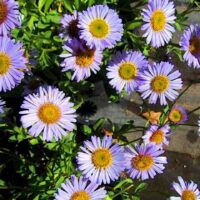
Erigeron ‘W.R.’
The "W. R." stands for the late Wayne Roderick, whom we can thank for many fine plant introductions. This hybrid involves the seaside daisy, Erigeron glaucus and some other native species more tolerant of heat. The lavender daisies sit on slender stalks about 10 inches above low rosettes of narrow leaves. The flowers bloom over a long period in summer and are very attractive to pollinators of all sorts. Provide full sun in cooler areas but will enjoy part shade in hot inland sites. Moderate to occasional irrigation. Their seeds are favored by juncos and finches. Wayne discovered this surpisingly heat tolerant selection on the Del Norte coast. This selection should not be confused with 'Wayne Roderick', which is an entirely diferent selection of Erigeron.
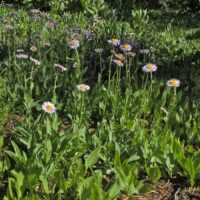
Erigeron glacialis
From mountain meadows throughout much of California and the West comes this endearing little daisy. Features clusters of refined, lavender-pink daisies with yellow centers held on stalks up to 10 inches tall above low, mat-forming leaves. Plant in full sun except in hot, inland areas where some afternoon shade would be appreciated. Needs moderate irrigation. This summer bloomer provides excellent habitat for bees and butterflies. A superlative candidate for a rock garden or narrow planting bed. Works well in containers.
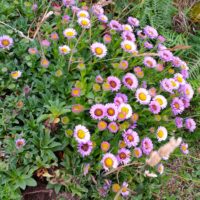
Erigeron glaucus
Low growing native perennial to 1 ft. tall with lovely, lavender, daisy-like flowers blooming over a long part of the year. Native to coastal dunes and bluffs, but does well inland with some afternoon shade and a little extra summer water. A natural along the coast where it thrives with little to no summer water and tolerates wind and salt spray. Good nectar source for butterflies and many different pollinators. Their seeds are favored by juncos and finches.
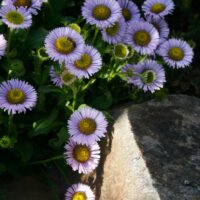
Erigeron glaucus ‘Bountiful’
Forms a lush mound of foliage 10 inches - 1 ft. tall by 2 ft. wide. Exceptionally floriferous and long blooming, 'Bountiful' offers masses of lavender daisies with yellow centers held above loose rosettes of green foliage. It slowly spreads to form drifts which combine wonderfully with Iris and low grasses. A natural along the coast where it grows in full sun and is drought tolerant. Appreciates some afternoon shade and summer water inland. A reliable and easy to grow perennial. Butterfly and bee favorite. Their seeds are favored by juncos and finches.
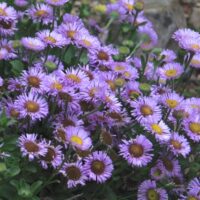
Erigeron glaucus ‘Cal Flora’
This seedling appeared at the base of a decorative pot planted with Erigeron glaucus ‘Cape Sebastian’. The seedling's foliage and form appears to be intermediate between Erigeron glaucus 'Cape Sebastian’ and Erigeron glaucus 'Bountiful'. It has a nice dense habit, though a bit taller than ‘Cape Sebastian', with larger and darker flowers held just above the foliage at about 10 inches in height. A natural along the coast where it thrives with little to no summer water once established and tolerates wind and salt spray. In hotter inland conditions give some afternoon shade and additional summer water. Good pollen and nectar source for bees and butterflies. Their seeds are favored by juncos and finches.
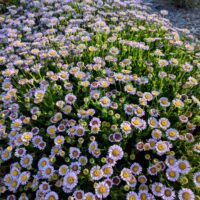
Erigeron glaucus ‘Cape Sebastian’
This selection of the West Coast native seaside daisy is from Oregon, just north of the California border. A compact and dense mound up to 6 inches high, topped with lavender daisies over a long period. Full sun near coast, light shade in hot regions. Best with moderate to occasional summer water in hotter climates. A favorite of pollinators. Their seeds are favored by juncos and finches.
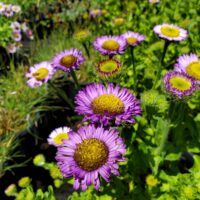
Erigeron glaucus ‘Wayne Roderick’
This selection offers the darkest flowers of any of the seaside daisies. Deep purple petals surround golden discs on flowers 1 ½ inches wide. The prolific blooms begin in spring and can continue into autumn if the spent flowers are removed. Bright green leaves create a slowly spreading mound up to a foot high with the flowers perched just above. Plant in full sun near the coast but protect from the hot afternoon sun in inland locales. Enjoys moderate to occasional irrigation. The seaside daisies make a great addition to the meadow garden, combining beautifully with iris, blue fescues and spreading gumplant.
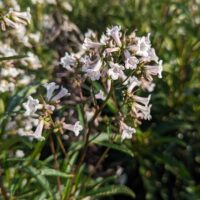
Eriodictyon californicum
Uncommon in the nursery trade, this aromatic, evergreen shrub is native to dry habitats of chaparral and mixed evergreen forest plant communities in North and Central California and into Oregon. An opportunist, this shrub stump sprouts after fires and grows with renewed vigor after any soil disturbance. The dark green, leathery leaves are covered in a shiny, fragrant, resin and are sticky to touch. The common name means, holy herb, and the pungent leaves have a long history of medicinal uses. Grows 3 - 5 ft. tall and spreads by underground roots to form a colony. Late spring brings clusters of small, trumpet-shaped flowers of pale lavender, sometimes white or pale blue, which are highly attractive to butterflies, hummingbirds and bees. Plant in full sun with good drainage and little water once established. Deer resistant.
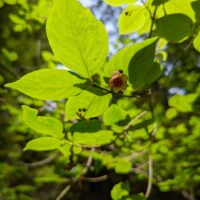
Euonymus occidentalis
Native to moist canyons, the uncommon western burning bush features small, burgundy flowers in the spring followed by dangling orangey-red fruits. The subtle appeal of this medium sized, deciduous shrub will please those native plant enthusiasts looking for a rare find. Reaches a height and width of about 8 ft. in most garden settings and is amenable to pruning. Plant in part shade to full shade. Enjoys moist situations but may become tolerant of drought in shadier locations. Needs good drainage.
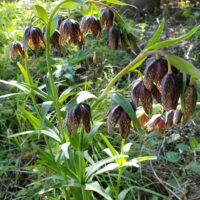
Fritillaria affinis
Charming, spring blooming, bulbous plant in the lily family, with beautiful, pendulous, bell-shaped flowers. This is California's most common fritillary and the most variable, in both size and flower color. Flowers vary greatly and can be yellow-green to purple-brown and may be beautifully checkered with brown and green, sometimes red-purple patterns. Can grow 12 inches - 3 ft tall depending on the habitat and substrate. Native to grasslands, woodlands and chaparral plant communities including serpentine soils. The easiest of the fritillaries to grow, preferring light, well drained soils, sun along the coast to light shade in hotter areas. Plants accept water in their growing season, but should be allowed to go dry once dormant. Protect from gophers, slugs and deer.
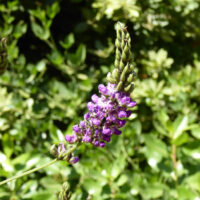
Hoita macrostachya
Leather root is a robust perennial, native to California’s coastal and inland valleys. It forms dense clumps of trailing or ascending stems with trifoliate leaves and showy clusters of purple-to-lavender, pea-like flowers that bloom from late spring through summer. It thrives in full sun to light shade, and prefers well-drained soils, though it tolerates clay. While somewhat drought tolerant, it enjoys deep summer irrigation. This species is ideal for slope stabilization and habitat restoration. It attracts bees and butterflies while fixing nitrogen in the soil, creating a resilient, ecologically-supportive landscape.
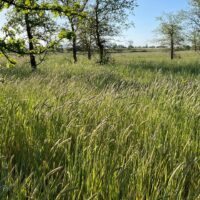
Hordeum brachyantherum
Native to a wide range of vernally wet plant communities throughout California and beyond. Once abundant throughout the Santa Rosa Valley where it could be found in grasslands, seasonal flood plains, moist meadow and open riparian areas. Forms perennial clumps with blades 6-10 inches tall, flower stalks to 30 inches are topped with narrow spikes of purple tinged upward facing bristles, looking like a small version of a classic cereal grain seedhead. Tolerant of heavy clay, alkaline or saline soils. Doesn't make a big impact standing alone, best used in mass or in a blend of other native meadow grasses where its slender flower heads make a pleasing effect. Plant in full sun with vernally wet soils. Deer resistant.
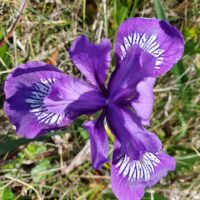
Iris douglasiana
Native to the California coast from Santa Barbara to Oregon. Grows both on the edge of coastal forests and on bluffs and prairies along the ocean. Clumps of evergreen, sword-shaped leaves increase readily and are topped with violet-purple blossoms early to mid spring. Important nectar producer for native bees. An adaptable garden subject for cool full sun to light shade. Drought tolerant once established, but occasional summer water will help keep foliage fresher. Deer resistant.
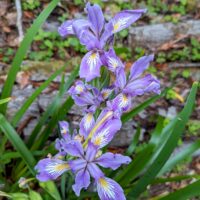
Iris douglasiana – Robust Form
We discovered this incredibly striking form of the popular Douglas iris near Tannery Gulch, outside of Occidental. The dark, evergreen leaves reach up to an astounding three feet in height, and are exceptionally broad. Even though these are grown by seed, the flowers are a dependable lavender-blue, with sprays of white and yellow, held on tall stalks reaching up to a foot above the foliage! Grows well in dappled shade in hotter areas, but can take full sun where there is coastal influence. While drought tolerant, occasional deep soaks keep them looking verdant and vigorous. Deer and gopher resistant.
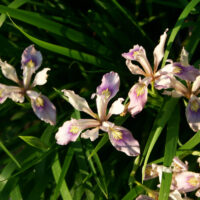
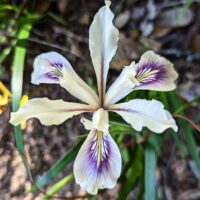
Iris douglasiana v. major
This rare form of the Douglas iris occurs throughout Marin County, offering a rainbow of possible flower colors, including blue-purple, mauve, creamy yellow and white, with all sorts of gradations in between. Since these are seed grown, the color will be a surprise when they bloom. The spring blossoms often have striking venation, and are held on stalks 1’ – 2’ high. Foliage clumps generally reach about a foot tall and spread to form extensive colonies of evergreen, strap like leaves. Plant in full sun in cooler areas, but provide some shade in hotter zones. Plants require little water once established, and are perhaps a little more drought and heat tolerant than the straight species. Deer and gopher resistant.

Iris innominata
A choice iris with slender, glossy, dark-green leaves and dainty flowers in late spring. Flower color can be from brilliant yellows to shades of purple. Native to the Siskiyou Mountains in Del Norte County, California, into southern Oregon where it forms low, dense, evergreen clumps in openings of woodlands or coniferous forests. This species does better in hot, inland areas than the Douglas iris. Requires good drainage and some summer water. This Del Norte County iris has been used in hybridization programs to produce the popular Pacific Coast Hybrid Iris. Deer resistant.
Iris longipetala
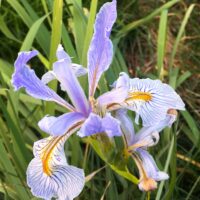
Restricted to swales and moist areas in coastal grasslands from San Francisco to Monterey, this uncommon native is well worth growing. Bluish-green evergreen blades form erect clumps one foot to 20 inches tall. Early spring brings beautiful lavender-blue flowers with dark purple venation. Full sun in coastal areas, a little shade inland with regular water through the bloom period. Can go dryer once flowering is finished. Deer resistant.
Iris macrosiphon
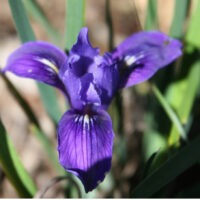
A widespread and variable species growing throughout Northern California’s coast ranges and Sierra Nevada foothills. Our crop is grown from seed collected in western Sonoma County which has lovely lavender-blue blossoms April through May. Forms small clumps of narrow and slightly arching blades under 18 inches tall. Often found on wooded slopes, in openings or edges of forests where it will form small patches. Prefers good drainage, drought tolerant, or just a little summer moisture. Deer resistant.
Iris Pacific Coast hybrid
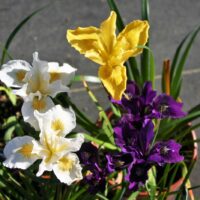
A diverse group bred from the native irises with wonderful coloration, patterning, flower form variation....ranging from soft pastels to mahogany, maroon and midnight purple. Evergreen foliage, about 1 to 2 ft. high. Can eventually form sizable clumps. Full sun to light shade. Often do well as an understory for oaks that needs no summer water. Drought tolerant, moderate to little water when established. Deer don’t seem to eat flowers or foliage.
Iris Pacific Coast hybrid – lavender
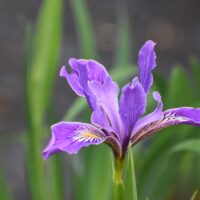
A native iris hybrid thought to be a cross with Iris douglasiana. Flowers are a deep lavender in color, with purple-veined petals and yellow throats. Evergreen foliage is 12-18 inches tall and spreads to form 2-3 foot-wide clumps. Tolerates full sun on the coast but does best with afternoon shade inland. Occasional water keeps it looking good in summer. Like other Pacific Coast iris hybrids, it can be planted in the understory of oaks, where it will require little irrigation once established. Drought tolerant and deer resistant.
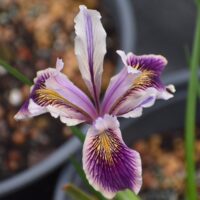
Iris Pacific Coast hybrid ‘Purple & White’
A Pacific Coast hybrid iris with thick purple veins and a splash of yellow at the center of white flowers. The evergreen foliage gets 12-18 inches tall and spreads by rhizomes to form clumps up to 3 feet wide. Does well in full sun in cooler, coastal areas, but needs afternoon shade inland. Occasional water keeps it looking good in summer. A suitable plant for the understory of oaks, where it will require little irrigation once established. Drought tolerant and deer resistant.