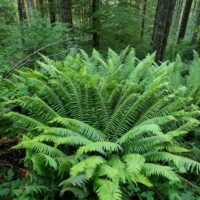
Polystichum munitum
The versatile western sword fern is an evergreen native fern from California to Alaska. In most gardens it will reach about three feet tall and wide. In prime areas near the coast where moisture is readily available and cool temperatures prevail, this fern can get up to 5 feet tall and wide. Excellent for shady beds, along walls, as a large scale groundcover and mixed woodland planting. Best with humusy soil and regular to moderate water, but drought tolerant once established and tolerant of most soil types. Actually quite adaptable and deer resistant.
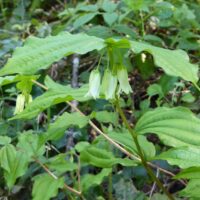
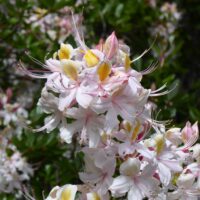
Rhododendron occidentale
A much sought after and admired native deciduous shrub found in moist places and stream banks in many plant communities throughout California. Leafs out in the spring with bright green foliage on a shrubby framework 3-6 ft. or more tall and wide. Glorious displays of fragrant azalea flowers in dense terminal clusters appear in late spring and can be pure white to pale pink often with yellow or orange markings. Needs decent light to bloom well but appreciates light shade, acid soils and regular water. Deer resistant
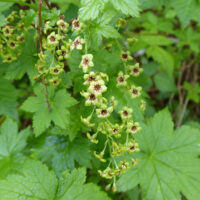
Ribes bracteosum
Native from Mendocino County northwards, this deciduous shrub is distinctive for its long, upright inflorescences and large, shiny leaves up to eight inches wide. As many as fifty of the soft orange, saucer-shaped flowers can occur on a single stem in the spring followed by small blue fruits in late summer. In shaded, moist conditions the blue currant can reach a height and width of about six feet but can get larger in cool, wet areas along the coast. Combine with other plants of the redwood forest such as ferns, sorrel and wild ginger.
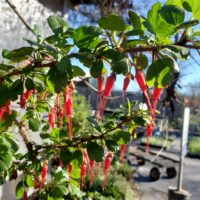
Ribes speciosum
One of California’s showiest gooseberry, blooming in late winter - early spring with charming bright red, pendant, fuchsia-like flowers. The thorny branches are arching and grow 4 - 6 ft. tall and wide. Best with light shade and needs no irrigation once established. Occasional summer water keeps most of the leaves green through the summer, but will go summer dormant with dry conditions. An excellent choice for under native oaks. The flowers attract hummingbirds and the spiny fruits attract many birds including grosbeak and mockingbirds. Deer resistant.
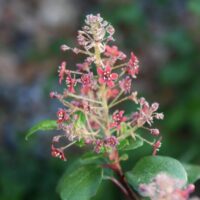
Ribes viburnifolium
Native to Santa Catalina Island, this Ribes is unique for the genus, being evergreen and low growing. Leathery, dark green, glossy leaves with a spicy fragrance on red stems forms a spreading shrubby groundcover to 2- 3 ft. tall. Small clusters of interesting, star-shaped, salmon-pink flowers decorate the arching branches in late winter to early spring, followed by little, red fruits. Requires part shade and is drought tolerant once established. Adaptable to a variety of soil types including heavy clay. Tip pruning is recommended to encourage a dense growth habit. Deer resistant.
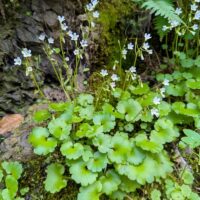
Romanzoffia californica
The California mistmaiden is diminutive, reaching a bit over a foot tall when its dainty white flowers are in bloom. The bell-shaped blossoms appear in winter, perched in clusters on tall, thin stems above lush foliage. Summer dormant until the first autumn rains, this plant is often the first garden greenery to return after a hot, dry summer. At home in the Coast Range from the Santa Cruz Mountains north to Oregon, it requires light shade and decent moisture during the growing season. Allow to go dry when the rains stop. Great for rock gardens and small nooks with excellent drainage.
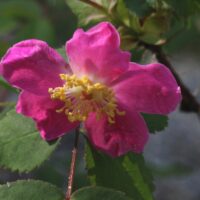
Rosa gymnocarpa
Delicate, native rose of woodlands, growing 3 - 4 ft. tall. Sprinkled with sweetly fragrant single pink flowers followed by small red rose hips. Best in woodsy shade where it tolerates drought. Bees, butterflies and other pollinators are attracted to rose blossoms and the fruits are enjoyed by birds.
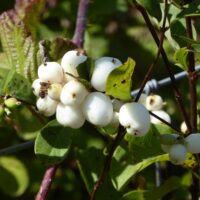
Symphoricarpos albus var. laevigatus
Snowberry is a deciduous, native shrub for dry or moist shade. Reaches about 4 - 6 ft. tall and spreading. Clusters of tiny, pinkish, urn-shaped flowers are followed by showy white berries on arching branches. Responds well to shearing. A good choice for under native oaks. Fruit may be toxic to humans. Hummingbirds like the flowers. Berries are palatable to hermit thrush, Swainson’s thrush, robins and other birds. Also creates good cover for birds.
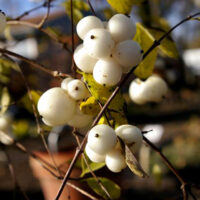
Symphoricarpos albus var. laevigatus ‘Bartlett Springs’
Snowberry is a deciduous, native shrub for dry or moist shade. Our own selection from Lake County, has particularly large oval leaves on graceful arching branches with exceptionally big fruits. Reaches about 4 ft. tall and spreading. Clusters of tiny, pinkish, urn-shaped flowers are followed by showy white berries on the branch tips. Responds well to shearing. A good choice for under native oaks. Fruit may be toxic to humans. Hummingbirds and bees like the flowers. Berries are palatable to hermit thrush, Swainson’s thrush, robins and other birds. Also creates good cover for birds.
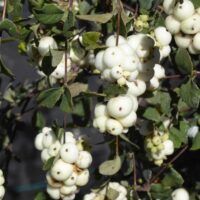
Symphoricarpos albus var. laevigatus ‘Tilden Park’
Here is a particularly fine selection of the native snowberry, notable for its dependable crop of showy white berries on arching branches. A deciduous shrub, snowberry grows to about 4 ft. tall and spreads to form drifts. A good choice for a shady bank, woodland edge, or under oaks. Appreciates and responds to moisture, but once established will tolerate dry conditions. Fruit may be toxic to humans. Hummingbirds like the flowers. Berries are palatable to hermit thrush, Swainson’s thrush, robins and other birds. Also creates good cover for birds.
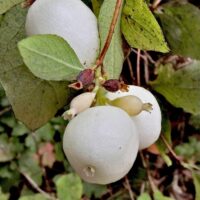
Symphoricarpos mollis
Low growing, spreading groundcover, usually staying around a foot tall by 3-6 feet wide. Rounded blue-green leaves on arching stems makes an excellent low growing thicket which competes well with tree roots. An amenable plant, able to grow in full sun in coastal areas and different depths of shade elsewhere, even fairly deep shade. The tiny, pink, bell shaped flowers are attractive to bees and hummingbirds and the white fruits that follow are eaten by birds. Good for erosion control and does well under oaks. Offers excellent habitat value with its flowers and fruits and provides cover for ground nesting birds. Drought tolerant once established. Deer often leave it alone.
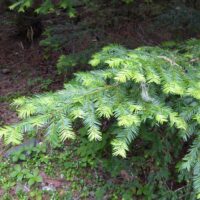

Tellima grandiflora
Fringe cups is a sweet native perennial for the shade garden. Slender flower stalks rise above the soft mounds of foliage 18 inches to 2 ft. The small, urn-shaped flowers have tiny fringed petals which open green and then age to pink. Seeds about in a nice way. Tolerates dry shade. Deer resistant.
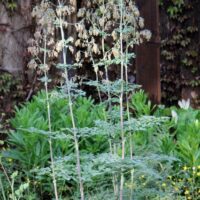
Thalictrum fendleri v. polycarpum
This native meadowrue has charm and adds a delicate, graceful quality to a woodland setting. Finely cut bluish-green foliage unfurls from purplish shoots. The tiny unisexual flowers are produced atop 2 - 5 ft. tall stalks on separate plants. The male flowers are showier with dangling cream-colored stamens; the females are clusters of greenish pistils. Useful in the woodland garden where it will thrive with some summer water or manage on winter rainfall. One way or the other it goes dormant in late summer where it can be allowed to go dry. Group several plants for best effect.
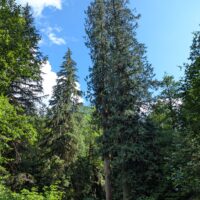
Thuja plicata
This stately conifer with deep green, scale-like needles and cinnamon-red bark, makes its home on the northern coast of California all the way up to Alaska. A large tree over time, eventually reaching up to 90 ft. tall in the garden and higher in its native habitat. The needle-covered branches hang gracefully in fern-like cascades. Looks best when the branches are allowed to touch the ground when young, allowing its elegant conical shape to be fully utilized. One of the most shade tolerant of our native conifers, but will be happy in full sun, except in hot, interior climates. Needs moderate to occasional irrigation. Tolerates moist soil. One way to identify this species from the other native cedars is by the white butterfly shape on the back of the needles, created by stomatal bloom.
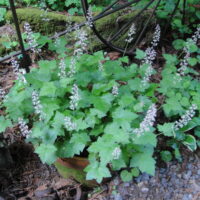
Tiarella trifoliata v. unifoliata
The native sugar-scoop makes an attractive groundcover in a shady spot with some moisture. Blooms in early summer with spikes of little white stars; seed pods are shaped like little scoops. Removing spent flower stalks often prompts reblooming. Native to the dark and damp forest floor of northern California. A sweet addition to the woodland garden where there is summer moisture.
Tolmiea menziesii
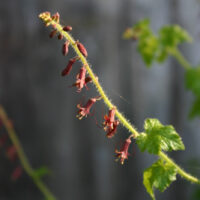
This western native of house plant fame, makes an attractive addition to the woodland garden. Lush looking, deep green leaves produce new plantlets at the junction of the leaf stalk and blade giving it its common name of piggyback plant. Tiny reddish-brown flowers are produced on 1 ft. stems are interesting though not terribly showy. Looks great as a small scale ground cover, in walls or containers. Needs filtered light and regular moisture.
Torreya californica
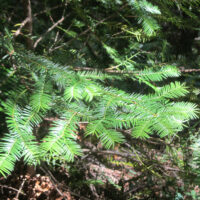
Rarely seen in cultivation, this unusual conifer is endemic to California. Found in the coast ranges and foothills of the Sierra Nevada, where it is scattered here and there, usually in cool habitats of canyons and steep ravines. Growing at a leisurely pace 15 to 40 ft. tall with dark- green, stiff, rather broad needles. Male and female flowers occur on separate trees, with cream colored pollen cones on the males and unusual plum-like fruits on the females, which become purplish with age. Does well in part shade with moderate to little watering. Useful as a specimen tree or pruned into a hedge. An excellent container plant too.
Trautvetteria caroliniensis
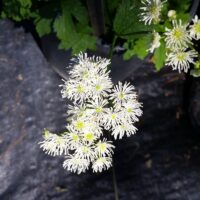
From moist woodlands in mountainous areas of northern California comes this lush and verdant buttercup relative. Large, serrated, palmate leaves up to 8 inches wide spread densely across the ground on slender stems. In summer through early fall, icy white flowers made up of thin filaments form flat topped clusters up to 5 inches wide. These delicate flowers sit atop stems reaching up to 3 ft. high. Plant in moist areas with part to full shade. The leaves will die down in winter only to re-emerge in spring. While very rare in California, false bugbane is more common in other parts of the country. Our form comes from the Siskiyou Mountains of northern California.
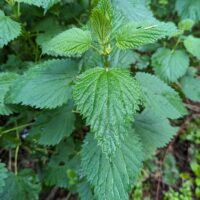
Urtica dioica
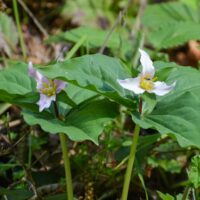
Found in moist woodlands and meadows throughout the state, stinging nettle is a habitat powerhouse. Growing at least 3 ft. tall and spreading vigorously to form large colonies, it's a great addition to any shady habitat garden or swale, where it stays moist throughout the year. Plant away from high traffic areas, as both the stems and foliage have small, stinging hairs that can cause skin irritation upon contact. This nettle has distinctive gray stalks, serrated leaves, and produces white, firework-like inflorescences that grow on stems in clusters throughout summer and early fall. Not only has it been used for centuries for a multitude of edible and medicinal purposes by indigenous tribes, it is also a larval host to several native butterflies including the painted lady and red admiral. Good cover for birds and small mammals.
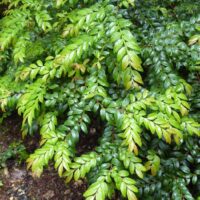
Vaccinium ovatum
A handsome evergreen shrub native to moist forests of the Pacific Coast. Leathery dark green leaves with new growth flushed bronzy-red. Small pinkish flowers in the spring are followed by delectable black berries prized in pies and jams. A slow growing shrub for shady situations or cool sun along the coast with moderate to regular water. Grows 4 - 5 ft. tall and wide or as much as 8 ft. in especially prime locations given time. Flowers provide nectar for hummingbirds and bees, fruit for many species including humans. Fire resistant. Deer resistant.

Vaccinium ovatum ‘Scarlet Ovation’
A round of applause for this cultivar of the evergreen huckleberry, featuring an especially compact habit and stand out bronzy-red new growth. Forms a small, dense shrub, 3 -4 ft. tall and wide. The new growth in the spring is dependably fiery-red, contrasting beautifully with the neat, dark-green older foliage. Small, urn-shaped, pinkish-white flowers are rich in nectar and attract an array of pollinators, including hummingbirds. The small, dark-blue berries are tasty and enjoyed by wildlife and humans. Huckleberries can grow in full sun along the coast, but require some shade in hot areas. Moderate to regular summer water. Fire and deer resistant.
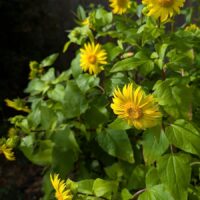
Venegasia carpesioides
Native to coastal areas of central and southern California, the canyon sunflower brightens the garden with abundant blooms from spring into late summer. The daisy-like, golden-yellow blossoms are 2 in. wide and set against light-green, almost heart-shaped leaves. This 3 – 5 ft.-tall-and-wide, showy shrub is particularly useful for its pop of color in dry shade under oaks. It will also accept quite a bit of moisture, and full sun in warmer areas! Rarely offered in Northern California nurseries, it does well in our area, but may retreat back to the ground after hard frosts, only to re-emerge in spring. If kept dry through the summer, plants may go dormant until moisture returns.
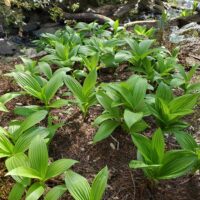
Veratrum fimbriatum
From moist, coastal areas of Sonoma and Mendocino County comes this very rare lily relative. A cousin of the high mountain cornlily, this threatened species features large, pleated leaves which emerge in late winter and are followed in the autumn by icy-white flowers with fringed edges. After its long bloom period is over, the plant will go dormant through the winter. Surprisingly tolerant of shade, but will accept full sun along the coast with ample moisture. A choice plant for woodland gardens and will also thrive in a container. This plant is POISONOUS when consumed. Deer and gopher resistant.
Whipplea modesta
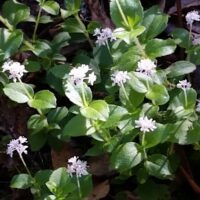
The common name “modesty” fits this unassuming evergreen creeper. Though not super showy, one has to admire its ability to thrive on difficult sites. A good stabilizer native to forests of the Coast Ranges where it tolerates dry shady situations. Will appreciate a little summer water, but it is drought tolerant once established. Numerous tiny white flowers in late spring. Deer seem to leave it alone.
Woodwardia fimbriata
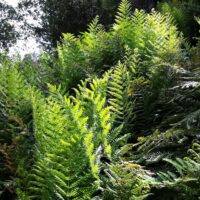
The evergreen giant chain fern is the largest American fern, with striking fronds 4 - 6 ft. tall. Prefers part shade but will accept darker conditions. Will grow in open, somewhat sunny areas within the fog belt, as long as it has access to moisture. Great in moist woodland gardens near a stream or against a shady wall. Keep in mind, this fern likes some moisture but does not want to be kept wet. Allowing it to dry out just a little between waterings can be beneficial. To keep it looking fresh and vigorous, cut back to the ground in late winter just before the new fiddleheads begin to emerge. Deer resistant.