
Acer circinatum
Deciduous shrub or tree 5 to 20 ft. tall, native to moist woods and streambanks in the coastal mountains of northern California to British Columbia. Attractive in all seasons: bare reddish twigs in winter, delicate lobed leaves in spring and summer, and good color in autumn. Wonderful in the woodland setting, under tall conifers where its fall color will stand out. A natural with ferns and other woodland plants that receive dappled to part shade and regular to moderate summer water. Can be espaliered too.

Achillea millefolium ‘Red Velvet’
This yarrow is getting rave reviews for its deep-red flowers produced atop grey-green ferny foliage. Spreading 2 foot or so wide with flowers rising 2 – 2 ½ feet tall. Best in full sun with moderate to occasional watering. Popular with bees and butterflies. Often deer resistant.

Acmispon (Lotus) glaber (scoparius)
Bees go nuts over the bright-yellow flowers of this California native. From spring and into summer you can find this plant covered in blooms at the edges of chaparral throughout much of California. The intricate, pea-shaped flowers, often colored burnished red as they are pollinated, emerge along wand-like stems. Deerweed usually reaches a height and width of about 2 – 3 ft. Plant in full sun to light shade. Needs good drainage and no summer water once established. A remarkable number of butterflies use this species as a larval host plant, including the bramble hairstreak, orange sulphur, funeral duskywing, silvery blue, acmon blue and the avalon hairstreak.

Agastache ‘Coronado Red’
Agastaches are rewarding perennials with fragrant foliage and abundant flowers, which are highly attractive to hummingbirds and butterflies. ‘Coronado Red’ has a vertical growth habit with silvery foliage to 2.5 ft. tall and 2 ft. wide. Spikes of orangy-red flowers bloom over a long period in the summer delighting the hummingbirds. Requires good drainage and full sun with moderate to occasional summer water. Deer resistant.
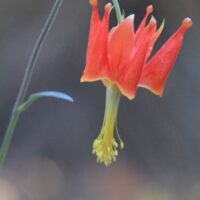
Aquilegia eximia
Large, orangey-red flowers with yellow stamens adorn this beautiful and uncommon native columbine. The pendant, brightly colored blossoms are larger than those of the western columbine but just as attractive to hummingbirds. Forms a 1 ft. high mound of foliage with flowering stalks reaching up to 5 ft. tall. Native to the Coast Ranges from Mendocino to Ventura Counties often on serpentine soils. Provide full sun to part shade and only water enough to prevent the soil from drying out completely. In areas far away from the coast provide a little shade from the hot afternoon sun. This species is a little more drought tolerant than the more common Western columbine.
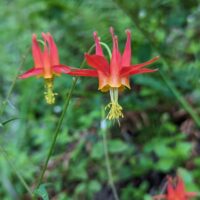
Aquilegia formosa
A popular native perennial with fern-like foliage and wonderful, nodding, spurred blossoms of red and yellow. Best with a little shade and moderate to regular moisture, but will tolerate full sun in somewhat cooler climates. The flower stalks reach 1 1/2’ to 3’ tall, with the grey-green foliage forming a mound of about 1 ft tall and wide. Flowers attract hummingbirds, while the seeds are relished by small birds such as sparrows and Juncos. If seed pods are left on the plants, you may get volunteer seedlings in the fall.
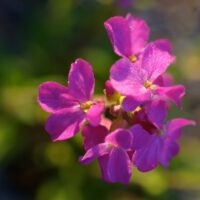
Arabis blepharophylla
A charming spring blooming perennial, native to rocky places of coastal scrub, Santa Cruz to Sonoma counties. The neat foliage grows in tight low rosettes and are topped with vibrant rose-purple mustard-like flowers 8 to 10 inches tall. A natural for coastal areas, it requires some relief from the hot sun and additional water inland. Perfect with other non rampant plants of similar requirements on a slope, rock garden, or along a border. Excellent container plant. Good nectar source for butterflies.

Aristolochia californica
Dutchman’s pipe vine is an interesting vine native to river, stream side and woodland habitats. Soft heart-shaped leaves and unusual purplish pipe-shaped flowers bloom in early spring. This deciduous twining plant will need some support if you wish it to grow upwards. Adaptable, but best with a little shade and moderate water. Slow to establish, we offer this adage to encourage patience: “The first year it sleeps, the second year it creeps and the third year it leaps”. Once established it will put on ample growth, easily covering a trellis or chain link fence. THE larval food source for the pipevine swallowtail butterfly. Deer resistant.
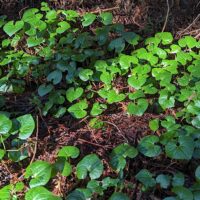
Asarum caudatum
Native to the deep shade of forest floors, this evergreen perennial forms a handsome low groundcover. The large, deep green, heart-shaped leaves appear to hover over the ground, creating a lush, almost tropical effect. The unusual flowers which nestle under the leaves are normally maroon, but occasionally white, with long spidery tails. Thrives in the deep shade under redwoods, competing well with the aggressive roots and dense duff. The ginger scented leaves are deer resistant.

Calliandra californica
Clusters of bright red flower filaments, resembling little dusters, adorn this Baja California native for much of the year. The dainty, fern-like leaves are generally evergreen, though they are less ubiquitous in the winter. This mid-sized shrub reaches up to about 5 ft tall over time and spreads to 5 ft wide, forming a loose, rounded mound. Hummingbirds and butterflies favor the flowers on this unusual member of the pea family. Hardy to around 25 degrees. Plant in full sun to light shade and provide occasional to no irrigation once established. Said to be tolerant of clay soils, but will not like flooding.
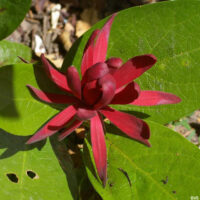
Calycanthus occidentalis
Native along streams, rivers and moist places in California. This attractive deciduous shrub is well worth growing. Bright green aromatic foliage with interesting maroon-red flowers in spring-summer that resemble small waterlilies and have a wine-like fragrance. Can be grown as a multi-stemmed small tree, trimmed hedge or left alone to become a large background shrub. 5 - 12 ft. tall and wide. Part-shade is ideal. Tolerates full sun with lots of moisture in somewhat cooler areas. Accepts full shade but will grow more slowly with a more open habit. Regular to moderate water. Somewhat deer resistant.
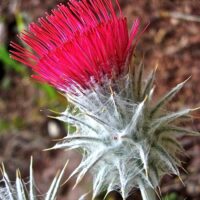
Cirsium occidentale
A beautiful NATIVE and NON-WEEDY thistle. Forms a rosette of gray woolly and spiny leaves the first year. A BIENNIAL, flowering occurs the second year with tall, narrow spikes of showy maroon-red to dark pink flowers with cobweb hairs on the bracts. A striking plant, usually reaching 3 - 6 ft tall when blooming, for sunny areas with good drainage and low to no irrigation. An excellent addition to the habitat garden where it attracts bees, butterflies and hummingbirds. Butterflies such as the painted lady and the mylitta crescent depend on cobweb thistle as a larval food source. Deer resistant.
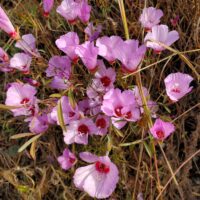
Clarkia rubicunda
Showy and floriferous, with gorgeous, cup shaped blossoms of silky, pink-purple petals featuring a dark red center with a long bloom from late spring into summer. This endemic, ANNUAL wildflower grows in openings of woodlands and chaparral near the coast, mostly in the central part of state. Grows 2-ft. tall or more in full sun with low water needs. Tolerant of heavy soils, the exuberant blossoms attract bees, butterflies and moths, including Sphinx moth species. Performs well in containers and is an excellent cut flower too. Deer resistant.
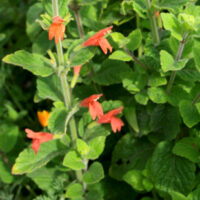
Clinopodium (Satureja) mimuloides
Native to creeksides in the mountains of southern California, this clump forming perennial is rarely seen in cultivation. Growing 2 - 3 ft. tall and wide with soft, fragrant foliage. Orangy-red tubular flowers bloom late spring to early summer and are hummingbird favorites. Plant in sun to light shade with regular moisture.
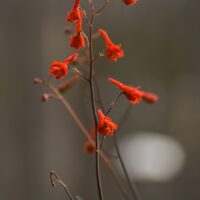
Delphinium nudicaule
In late winter and spring, scarlet flowers with elongated tails perch on upright stalks, usually not more than 3 ft tall. The green, lobed leaves which form a low mound above the ground have a distinctive pale patch in their centers. This native makes its home on summer-dry slopes throughout much of Northern California and parts of Central Ca., inhabiting bright, open woodlands and rocky road cuts. Needs good drainage and little to no irrigation in the summer. While it can grow in a fair amount of shade, it blooms best under a bright, dappled canopy. A favorite of hummingbirds and butterflies. All parts are poisonous if ingested.

Dichelostemma ida-maia
Blooming firecracker flowers are a sight to behold. Native to grassy slopes and woodland edges from Mendocino County to Southern Oregon, this distinctive native bulb is truly unique. Long, strap-shaped leaves give rise to tall, naked stems, 20 - 25 inches in height. Generous clusters of pendulous, one inch floral tubes of striking crimson with reflexed green tips reveal protruding little fringes of white. Bloom in late spring to early summer. Prefers lightly shaded areas that will go dry in summer after flowering. Does well in containers, as long as it is allowed to go dry once dormant. Flowers are custom built for hummingbirds and butterflies.
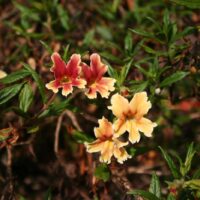
Diplacus (Mimulus) ‘Changeling’
This charming hybrid monkeyflower offers a beautiful blend of soft orange, red, and cream hues on ruffly-edged, trumpet-shaped blossoms. As the mottled colors mellow with age, each bloom looks a little different from the next, adding to the appealing "changeling" effect. Foliage is evergreen and grows to 3 ft. tall and wide. Plant in full sun on the coast to light shade inland and give it well drained soil. Drought tolerant once established, but some occasional summer water is helpful. Bees, butterflies and hummingbirds work the flowers and the painted lady and checkerspot butterflies use it as a larval food source. Deer resistant.
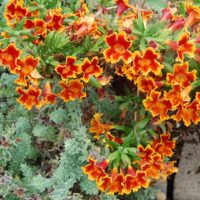
Diplacus (Mimulus) ‘Fiesta Marigold’
Selected for its large, frilly, brick-red blossoms with orange edging, this striking monkeyflower hybrid comes from horticulturalist Richard Persoff. It is also a relatively compact form at 18 inches to 2 feet tall and wide. Valued for their long bloom season, monkeyflowers perform best with good drainage and sun to light shade. Drought tolerant, but some occasional summer water is helpful. Monkeyflowers benefit from pinching to produce a nice shape and strong structure to hold the abundant blossoms. Highly attractive to bees and hummingbirds. Deer resistant.
Diplacus (Mimulus) ‘Georgie Red’
This hybrid monkey flower has large, brick-red flowers that have an apricot edge to the frilly petals. The result of a breeding program by Ball Horticultural Co. using both wild and commercial material, it has a compact habit, growing 1-2 ft. tall and wide . Monkeyflowers prefer good drainage in sun to light shade with occasional deep watering. Humming bird favorites and deer resistant.
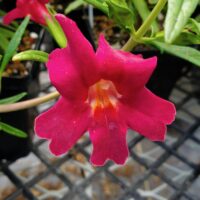
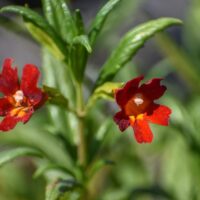
Diplacus (Mimulus) ‘Vibrant Red’
This monkeyflower hybrid sports large, tubular flowers in a vibrant dark red with yellow nectar guides, a color combination highly attractive to hummingbirds and pollinators. The glossy green foliage grows 2 ft. or more tall and wide and is the perfect foil for the showy, late spring and summer blossoms. Pinch back older stems to keep it looking fresh and dense. Monkeyflowers can be planted in full sun to light shade, but prefer afternoon shade inland. Needs good drainage and occasional summer water. A larval food source for buckeye and checkerspot butterflies. Deer resistant.
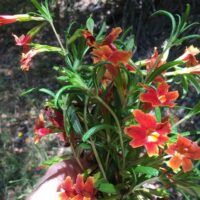
Diplacus (Mimulus) aurantiacus ‘Freezeout Creek’
This stand-out form of our local native monkeyflower was found growing on a slope near a lush redwood forest in western Sonoma County. Instead of the more typical yellow-orange, the trumpet-shaped flowers of 'Freezeout Creek' are larger and boast velvety red petals edged with gold. Monkeyflowers are evergreen sub-shrubs, that grow 2 -4 ft. tall, and bloom profusely in the late spring and into summer. Plant in full sun on the coast to light shade inland and give it decent drainage. Drought tolerant once established but responds to occasional summer water, especially when blooming. Benefits from annual pruning and pinching. The flowers are pollinated by bees and hummingbirds and are a host plant for checkerspot and buckeye butterflies. Deer resistant.
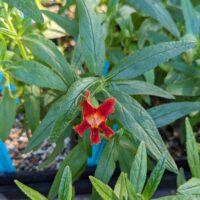
Diplacus (Mimulus) longiflorus
Hummingbirds love the abundant deep red flowers of this stand-out monkeyflower. Hailing from Southern California and growing 2 -3 ft. tall, and at least as wide, this drought-tolerant, floriferous shrublet blooms late spring into fall. Plant in sun to light shade with good drainage and occasional summer water. Besides hummingbirds, other pollinators will be attracted to the flowers, and the foliage is used by checkerspot and painted lady butterfly larvae. Deer resistant.
Dudleya pulverulenta
Large, broad, chalky-white leaves forming rosettes up to two ft. wide make this Dudleya one of our most sought-after native succulents. A multitude of tubular red flowers appear in late spring and early summer on stalks reaching from 1.5 to 3 ft. tall. Fleshy, heart-shaped bracts line the stems. Plant in bright shade or provide morning sun and afternoon shade. Needs excellent drainage and infrequent irrigation. Plant at an angle to prevent water from gathering around the base in winter. A gravel mulch around the plant can help stabilize soil temperature and prevent excessive dehydration. Good container plant.
Epilobium ‘Bert’s Bluff’
A Las Pilitas Nursery selection, named for the founder, Bert Wilson. This California fuchsia sports grey foliage, growing 2 -3 foot tall and spreading. Blooming in late summer, the bright orange-red, tubular flowers are beloved by hummingbirds, but visited by bees as well. This cultivar is reputed as being particularly tolerant of a wide range of soil conditions and growing environments. Plant in full sun with occasional deep summer watering.
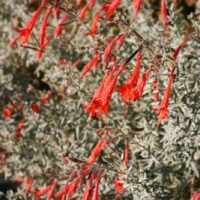
Epilobium ‘Chaparral Silver’
This California fuchsia that we obtained from another grower appears to be identical to our ‘Roger’s U. C. Hybrid’ - same lovely gray foliage 12 -18 inches tall, spreading, with narrow red tubular flowers that the hummingbirds love. Provide full sun to bright shade. Flowers best with occasional deep watering. Pruning plants down to a few inches in late autumn helps to rejuvenate them for the following year.
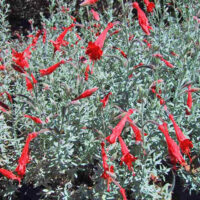
Epilobium ‘Roger’s U.C. Hybrid’
A California fuchsia that is upright in habit with narrow silver-gray foliage and slender trumpet-shaped blossoms of orange-red. Reaches a height of about 1 1/2 ft. and spreads easily. Very similar to the selections ‘Carman’s Gray’ and ‘Chaparral Silver’. Flowers best with occasional deep watering. Hummingbird favorite. Pruning plants down to a few inches in late autumn helps to rejuvenate them for the following year.
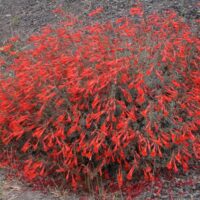
Epilobium ‘Schieffelin’s Choice’
This California fuchsia grows close to the ground - 10 - 12 inches tall with arching flower stalks. Gray foliage makes a wonderful foil for the bright orangey-red tubular flowers which appear summer through fall. Believed to be a cross between E. septentrionale and E. canum. Provide full sun to very light shade. One of the more drought tolerant selections but flowers best with occasional deep watering. Hummingbird favorite. Pruning plants down to a few inches in late autumn helps to rejuvenate them for the following year. Perhaps more deer resistant than other California fuchsias.
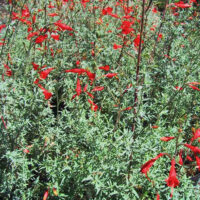
Epilobium canum ‘Bowman’s Hybrid’
This California fuchsia has distinctive narrow, olive-green foliage and an upright habit about 2-3 ft. tall and spreading widely. The orange-red tubular flowers are petite but profuse. Plant in sunny areas. Flowers best with occasional deep watering. Pruning plants down to a few inches in late autumn helps to rejuvinate them for the following year. Hummingbird favorite.
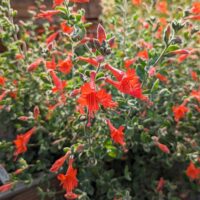
Epilobium canum ‘Calistoga’
Phil Van Soelen’s selection of California fuchsia from the Palisades east of Calistoga. Forms a spreading mat of unusually wide, fuzzy, gray leaves. The flowers are the typical hummingbird attracting orange-red trumpet shape and appear on stalks reaching up to 18 inches high. For sunny areas. Flowers best with occasional deep watering. Pruning plants down to a few inches in late autumn helps to rejuvenate them for the following year.