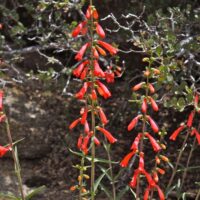
Penstemon centranthifolius
Custom made for hummingbirds, this Penstemon sports an abundance of bright-red to orange-red tubular flowers from late spring into summer. Native to dry habitats in the North Coast Ranges south to Mexico and east to the Southern Sierra, growing in chaparral and openings in woodlands below 6000 ft. Thick, blue-green leaves form a rosette 1 – 2 ft. tall and wide. Long flower spikes rise 2 – 4 ft. above the waxy leaves with many narrow, tubular, scarlet blossoms. Likes full sun, lean soils and good drainage. Drought and cold tolerant. Hummingbird and butterfly favorite.
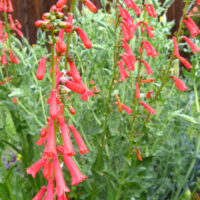
Penstemon eatonii
Adaptable and beautiful perennial native to the western United States including southeastern California. Narrow, leathery leaves form an evergreen rosette of foliage. Flower stalks rise 2-3 ft above the foliage. This form has brilliant red tubular flowers lining the erect stems in early summer. Requires good drainage, full sun to light shade and occasional to little summer water. Tolerates winter cold to 18 degrees and drought once established. Hummingbird favorite.
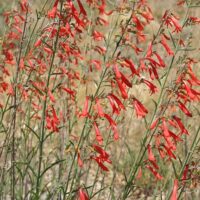
Penstemon rostriflorus
A wonderful addition to the dry garden, bringing late summer color through abundant, bright red, tubular flowers. Growing 2 - 4 feet tall and wide, with attractive, glossy foliage, that takes on red and bronze tones in winter. A late blooming Penstemon, beginning in July, provides copious nectar for hummingbirds as well as bees, butterflies, and moths. Tolerant of wide range of soils and conditions, plant in full sun to light shade with occasional water. Drought tolerant once established.
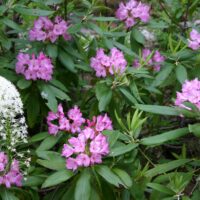
Rhododendron macrophyllum
One of the glories of our coastal redwoods forests, this evergreen rhododendron features clusters of large flowers in the spring which can range in color from deep rose to pale pink. Native from the Big Sur Coast north to Washington. In the wild, this open branched, big leaved shrub can reach a height of 13 feet. Plants in the garden tend to be much smaller, not usually exceeding 8 feet with a slightly narrower width. While somewhat temperamental in cultivation, success can be achieved with dappled shade, well draining soil rich in organic matter and moderate to regular water. Deer resistant.
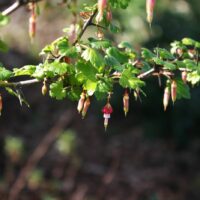
Ribes californicum
Undemanding, winter blooming, deciduous shrub, native to Coast Range mountains of California, from Mendocino County south to Orange County. Excellent choice for habitat gardens, where it provides abundant flowers and fruits plus thorny, protective cover. Variable in size, this spiny shrub can grow 4 - 6 ft. tall and wide. The pendant flowers are tiny but numerous and charming on close inspection. The tubular flower parts are white and extend beyond the reflexed red sepals, and are highly attractive to hummingbirds and other pollinators. Red, bristly, globular fruits follow and are adored by birds. The bright green leaves often take on striking crimson colors in the late summer before going dormant with drought. Host plant to several butterfly species as well as the white-lined sphinx moth. Best with light shade and a little irrigation, though once established it is completely drought tolerant.
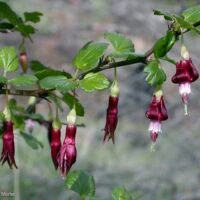
Ribes roezlii
The Sierra gooseberry's natural range is far beyond the Sierras, with varieties growing in the mountains of northern, southern and central California. Forms an arching shrub of thorny branches with pretty, little scalloped leaves, 2 - 4 ft. tall and wide. Pendant flowers are made up of burgundy-red sepals and small white to pink petals with protruding stamens, looking something like miniature fuchsias. Custom built for hummingbirds. In spring, showy, rounded fruits covered with prickles follow the flowers, starting out green and ripening to red, spiny globes which are relished by birds. This charming shrub is a lovely addition to the woodland garden where they receive light to moderate shade and are drought tolerant once established. Needs good drainage.
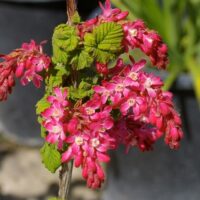
Ribes sanguineum v. sanguineum ‘Barrie Coate’
This selection of red flowering currant is a knock out in bloom. An early bloomer often starting in February with short racemes of nodding clusters of very deep rosy-pink, nearly red blossoms. Clusters of blue-black fruits follow and are enjoyed by birds. This deciduous shrub will grow 6 foot tall by 4 foot wide. Plant in sun to light shade with afternoon shade in hot regions and moderate to occasional summer water. An excellent early source of nectar for hummingbirds.
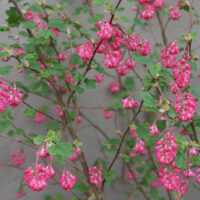
Ribes sanguineum v. sanguineum ‘Elk River Red’
This selection of the red flowering currant is from the Pacific Northwest. A deciduous shrub growing 6 ft. or more tall. Early spring brings eye catching bright rosy-red blossoms in drooping clusters. A wonderful early nectar source for hummingbirds. Plant in cool sun or light shade inland with occasional to moderate summer water. Berries attract many birds including grosbeak and mockingbirds.
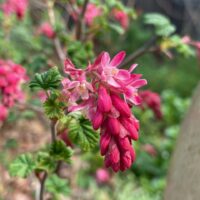
Ribes sanguineum v. sanguineum ‘King Edward VII’
Deep pink flower tassels adorn this native deciduous currant in early spring, providing a vivid splash of color to an awakening landscape. The pendulous flower clusters are followed by scalloped, deep green leaves, creating a useful texture to pair with Iris, Ceanothus and ferns. ‘King Edward VII’ has a very upright vase shape, reaching between 5 to 7 ft. tall and 4 to 5 ft. wide. Provide full sun in coastal climates and bright shade elsewhere, especially in the afternoon. Needs moderate to occasional irrigation. The flowers provide an excellent nectar source for bees, butterflies and hummingbirds while the deep purple fruits are enjoyed by birds. A sturdy selection.
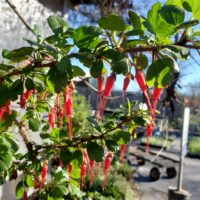
Ribes speciosum
One of California’s showiest gooseberry, blooming in late winter - early spring with charming bright red, pendant, fuchsia-like flowers. The thorny branches are arching and grow 4 - 6 ft. tall and wide. Best with light shade and needs no irrigation once established. Occasional summer water keeps most of the leaves green through the summer, but will go summer dormant with dry conditions. An excellent choice for under native oaks. The flowers attract hummingbirds and the spiny fruits attract many birds including grosbeak and mockingbirds. Deer resistant.
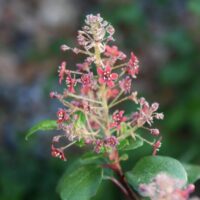
Ribes viburnifolium
Native to Santa Catalina Island, this Ribes is unique for the genus, being evergreen and low growing. Leathery, dark green, glossy leaves with a spicy fragrance on red stems forms a spreading shrubby groundcover to 2- 3 ft. tall. Small clusters of interesting, star-shaped, salmon-pink flowers decorate the arching branches in late winter to early spring, followed by little, red fruits. Requires part shade and is drought tolerant once established. Adaptable to a variety of soil types including heavy clay. Tip pruning is recommended to encourage a dense growth habit. Deer resistant.
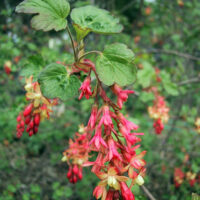
Ribes x gordonianum
A special hybrid flowering currant created in England by Donald Beaton in 1837 between our western U.S. Ribes sanguineum and the central U.S. Ribes odoratum. The fragrant flowers hang in dense dangling clusters in late spring and produce a dazzling color display with warm coppery red on the outside and yellow on the inside. The green maple-like leaves are deciduous. Robust and spreading, this currant grows to about 6 ft. tall and 8 ft. wide. Provide full sun to light shade and give moderate water.

Salvia greggii ‘Furman’s Red’
Selected in the 1970’s and a Plant Select winner in 2005, this dependable selection persists in the trade for its profuse displays of dark-red flowers and cold tolerance. Growing 3 to 4 feet tall and 2 to 3 ft. wide with light-green, aromatic foliage. The magenta blossoms can bloom spring through fall and attract hummingbirds, butterflies and other pollinators. Prefers full sun with decent drainage and is drought tolerant once established. Deer resistant.
Salvia greggii ‘Radio Red’
This new cultivar of autumn sage offers larger, vivid red flowers and a more compact habit. Despite it's common name, autumn sage blooms over a long period, beginning in late spring, into summer and through autumn. Well branched shrubby habit with neat, fragrant foliage growing 2 - 3 foot tall and wide. Can be grown as a single specimen, lightly clipped as a low, informal hedge or in a container. Plant in full sun with moderate to occasional summer watering. The true, bright red flowers are highly attractive to hummingbirds as well as bees and butterflies. Deer resistant.
Salvia microphylla ‘Heatwave Blaze’
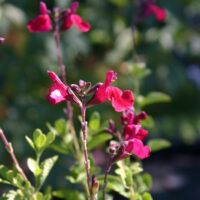
The Salvia ‘Heatwave Series’ are selections from Salvia greggii / microphylla crosses. ‘Heatwave Blaze’ offers displays of dark crimson flowers over a long period from summer into fall. Compact, rounded habit, growing up to 3 feet tall and wide. Plant in full sun to light shade. Drought tolerant but best with an occasional deep watering during the growing season. Attractive to bees, butterflies and hummingbirds. Deer resistant.
Salvia spathacea
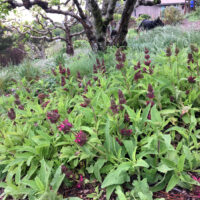
A wonderful native sage, endemic to California where it is found at low elevations of the Coast Ranges from San Bruno Mountain in the north to Orange County in the south. Fragrant, fruity foliage spreads by creeping rhizomes to form handsome mats. Flower stems rise 2 - 3 ft. above the leaves carrying many large ball-like clusters of magenta flowers that the hummingbirds adore. Does best in cool sun or part shade in hot areas. Drought tolerant, but looks best with occasional summer water. This species attracts hummingbirds. Deer resistant.
Scrophularia californica
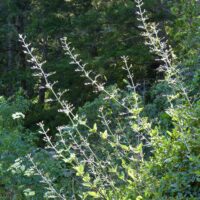
Native to open places of the coastal scrub and woodlands where it can form large colonies in moist areas. Grows 3 to 6 ft. tall and wide in cool full sun to light shade. Pretty purplish-red new growth matures to deep green. The flower spikes carry many small open-mouthed maroon-red flowers followed by attractive seed stalks which are nice in dried flower arrangements. This prolific nectar producer attracts all sorts of pollinators including bees and hummingbirds. Larval food source for the Chalcedon Checkerspot and Common Buckeye butterfly.
Silene laciniata ssp. californica
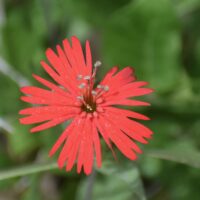
Native to open woods from Southern California north to Oregon, this native perennial is a knock out in bloom. Late spring and early summer bring brilliant, deeply lobed scarlet petals over the low growing mound of foliage 1-2 feet tall and about as wide. Best suited for well drained soils in lightly shaded settings where water can be withheld once plants begin to go dormant. A top notch rock garden subject and hummingbird favorite.
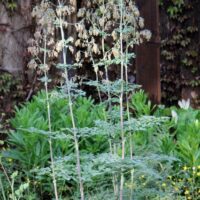
Thalictrum fendleri v. polycarpum
This native meadowrue has charm and adds a delicate, graceful quality to a woodland setting. Finely cut bluish-green foliage unfurls from purplish shoots. The tiny unisexual flowers are produced atop 2 - 5 ft. tall stalks on separate plants. The male flowers are showier with dangling cream-colored stamens; the females are clusters of greenish pistils. Useful in the woodland garden where it will thrive with some summer water or manage on winter rainfall. One way or the other it goes dormant in late summer where it can be allowed to go dry. Group several plants for best effect.
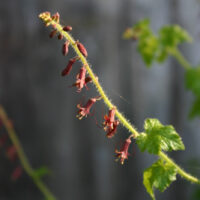
Tolmiea menziesii
This western native of house plant fame, makes an attractive addition to the woodland garden. Lush looking, deep green leaves produce new plantlets at the junction of the leaf stalk and blade giving it its common name of piggyback plant. Tiny reddish-brown flowers are produced on 1 ft. stems are interesting though not terribly showy. Looks great as a small scale ground cover, in walls or containers. Needs filtered light and regular moisture.
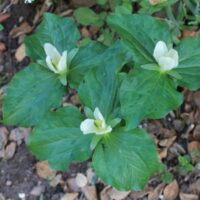
Trillium chloropetalum
The beautiful and distinctive giant Trillium is an elegant addition to the woodland garden. Native to coastal and interior open forests and woodlands of the San Francisco Bay Area and North Coast Ranges.Emerges in February with three broad leaves surrounding a leafless stem 10-18 inches tall. A single large flower arises directly from the whorl of leaves and can vary from white, pink, to maroon red. The leaves often have green or maroon mottling. After flowering it dies back to the ground. Prefers the dappled light of a woodland setting with humusy well drained soil and some summer moisture.