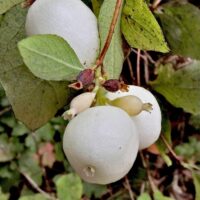
Symphoricarpos mollis
Low growing, spreading groundcover, usually staying around a foot tall by 3-6 feet wide. Rounded blue-green leaves on arching stems makes an excellent low growing thicket which competes well with tree roots. An amenable plant, able to grow in full sun in coastal areas and different depths of shade elsewhere, even fairly deep shade. The tiny, pink, bell shaped flowers are attractive to bees and hummingbirds and the white fruits that follow are eaten by birds. Good for erosion control and does well under oaks. Offers excellent habitat value with its flowers and fruits and provides cover for ground nesting birds. Drought tolerant once established. Deer often leave it alone.
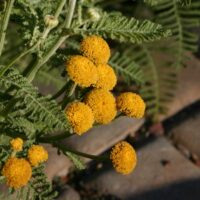
Tanacetum bipinnatum (camphoratum)
Native to sand dunes from the Bay Area north, this shrubby evergreen groundcover spreads quickly to create drifts of soft fern-like foliage. Yellow, button-shaped flowers form small clusters atop stalks up to 2 ft. tall. Enjoys full sun to light shade. Tolerant of clay soils and excessive moisture but will thrive with only occasional water once established. Reducing irrigation can temper this tansy's somewhat aggressive nature. Dune tansy has a strong scent of camphor and is valued for its medicinal uses. Beautiful when combined with ceanothus, Douglas iris and other plants from our coastal areas. Good for erosion control.

Tellima grandiflora
Fringe cups is a sweet native perennial for the shade garden. Slender flower stalks rise above the soft mounds of foliage 18 inches to 2 ft. The small, urn-shaped flowers have tiny fringed petals which open green and then age to pink. Seeds about in a nice way. Tolerates dry shade. Deer resistant.
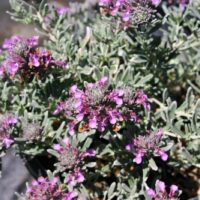
Teucrium cossonii (majoricum)
A beautiful little shrublet that hugs the ground to 2 ft. or more wide. Narrow gray-green foiage is topped with dense clusters of rosy-lavender flowers, nearly the entire growing season. Requires decent drainage with moderate to occasional summer water once established. Great rock garden plant. Pollinator friendly and deer resistant.
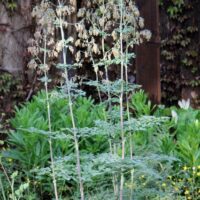
Thalictrum fendleri v. polycarpum
This native meadowrue has charm and adds a delicate, graceful quality to a woodland setting. Finely cut bluish-green foliage unfurls from purplish shoots. The tiny unisexual flowers are produced atop 2 - 5 ft. tall stalks on separate plants. The male flowers are showier with dangling cream-colored stamens; the females are clusters of greenish pistils. Useful in the woodland garden where it will thrive with some summer water or manage on winter rainfall. One way or the other it goes dormant in late summer where it can be allowed to go dry. Group several plants for best effect.
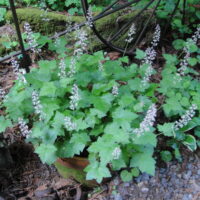
Tiarella trifoliata v. unifoliata
The native sugar-scoop makes an attractive groundcover in a shady spot with some moisture. Blooms in early summer with spikes of little white stars; seed pods are shaped like little scoops. Removing spent flower stalks often prompts reblooming. Native to the dark and damp forest floor of northern California. A sweet addition to the woodland garden where there is summer moisture.
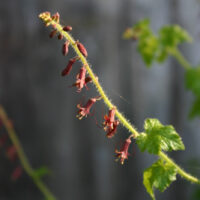
Tolmiea menziesii
This western native of house plant fame, makes an attractive addition to the woodland garden. Lush looking, deep green leaves produce new plantlets at the junction of the leaf stalk and blade giving it its common name of piggyback plant. Tiny reddish-brown flowers are produced on 1 ft. stems are interesting though not terribly showy. Looks great as a small scale ground cover, in walls or containers. Needs filtered light and regular moisture.
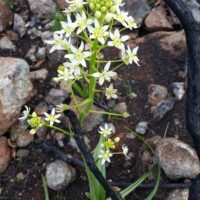
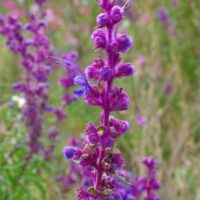
Trichostema lanatum
Woolly blue curls is a much sought after evergreen shrub with pungent, dark green, narrow leaves and spectacular flower spikes. Grows up to 5 ft tall and often wider, and blooms over a long period. Blue-purple to pink flowers, covered in purple hairs with protruding, long, curving stamens are a sight to behold. Native to coastal scrub and chaparral communities from Monterey county to northern Baja. Requires full sun, good drainage and is drought tolerant once established. Avoid regular irrigation, fertilizer and organic mulches. Pollinated by hummingbirds and visited by bumblebees and butterflies. Deer resistant.
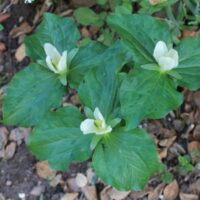
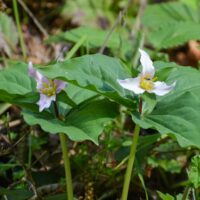
Trillium chloropetalum
The beautiful and distinctive giant Trillium is an elegant addition to the woodland garden. Native to coastal and interior open forests and woodlands of the San Francisco Bay Area and North Coast Ranges.Emerges in February with three broad leaves surrounding a leafless stem 10-18 inches tall. A single large flower arises directly from the whorl of leaves and can vary from white, pink, to maroon red. The leaves often have green or maroon mottling. After flowering it dies back to the ground. Prefers the dappled light of a woodland setting with humusy well drained soil and some summer moisture.
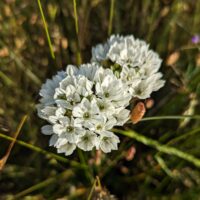
Triteleia hyacinthina
One of the easier to grow native bulbs that adapts well to garden conditions. Native to vernally moist areas that become summer dry in the Coast Ranges, Central Valley and Sierra Nevada into southwestern Oregon. Slender flowering stems rise one to two feet above the narrow leaves, with umbels of white, star-shaped flowers with green centers. If happy, the corms will multiply, forming drifts among grasses and shrubs and in open woodland settings. Easy to grow in containers, where they can be stashed in the shade once they go dormant. Bee and butterfly favorite.
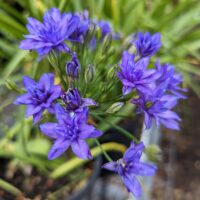

Triteleia laxa ‘Corrina’
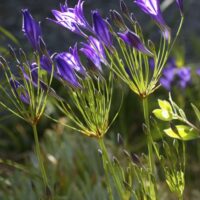
A beautifully dark flowered form of our Ithuriel’s spear, with flowers a darker blue-purple than the more common ‘Queen Fabiola’. The trumpet-shaped flowers form circular clusters at the top of slender stalks 12 to 18 inches high. This easy to grow bulb sends up slender, grass-like leaves in late winter followed by the striking flowers in late spring. Multiplies readily forming colorful drifts which mix well with grasses and smaller perennials. Tolerant of pretty much all soil types and can be allowed to dry out completely in summer when it goes dormant. Unlike most grassland bulbs, this species will also tolerate moderate irrigation. Plant in full sun to light shade. Attracts bees, butterflies and hummingbirds.
Triteleia laxa ‘Queen Fabiola’
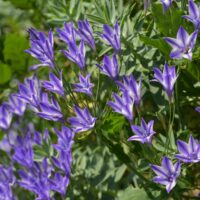
Trumpets of bluish-purple blossoms make a dazzling display at the height of spring on this easily grown lily relative. The showy flowers rise up to 18 inches tall in dense whorls on slender stalks above grasslike leaves. The small bulbs increase rapidly to form small, colorful drifts. Give full sun to light shade. Tolerant of dry conditions but accepts occasional irrigation. Will go dormant by mid-summer but reemerges in early winter. Attracts bees, butterflies and hummingbirds. Plant in openings between low, evergreen plants or in meadows with yarrow, California fuchsia and grasses.
Triteleia laxa ‘Rudy’
An interesting flower color variation of this easy to grow native bulb. Grasslike blades 12 - 18 inches tall produce flower stems with large clusters of showy, funnel-shaped, pale blue-lavender blossoms with a vivid violet stripe down the center of each petal. An eye catching addition to a naturalistic planting, in sun to light shade. A willing grower which will multiply if happy. Enjoys dry conditions once done flowering, but will accept some moisture. Good container subject. Attracts bees, hummingbirds and butterflies.
Triteleia laxa ‘Silver Queen’
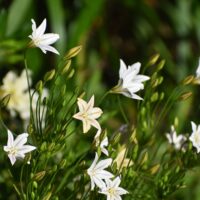
A white form of Ithuriel’s spear! We kid you not. You may be familiar with this species and its traditionally blue-purple, trumpet-shaped flowers perched in whorls atop stalks a foot or more tall. We now have a selection featuring soft white flowers. This native bulb sends up grass-like foliage in the winter followed by the charming flowers in spring and early summer. The bulbs multiply readily, forming small colonies over time. While it tolerates dry conditions in summer, it will also accept occasional irrigation, making it very useful in the garden. Enjoys full sun to light shade and will tolerate clay soil.
Urtica dioica
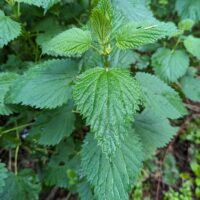
Found in moist woodlands and meadows throughout the state, stinging nettle is a habitat powerhouse. Growing at least 3 ft. tall and spreading vigorously to form large colonies, it's a great addition to any shady habitat garden or swale, where it stays moist throughout the year. Plant away from high traffic areas, as both the stems and foliage have small, stinging hairs that can cause skin irritation upon contact. This nettle has distinctive gray stalks, serrated leaves, and produces white, firework-like inflorescences that grow on stems in clusters throughout summer and early fall. Not only has it been used for centuries for a multitude of edible and medicinal purposes by indigenous tribes, it is also a larval host to several native butterflies including the painted lady and red admiral. Good cover for birds and small mammals.
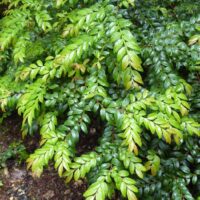
Vaccinium ovatum
A handsome evergreen shrub native to moist forests of the Pacific Coast. Leathery dark green leaves with new growth flushed bronzy-red. Small pinkish flowers in the spring are followed by delectable black berries prized in pies and jams. A slow growing shrub for shady situations or cool sun along the coast with moderate to regular water. Grows 4 - 5 ft. tall and wide or as much as 8 ft. in especially prime locations given time. Flowers provide nectar for hummingbirds and bees, fruit for many species including humans. Fire resistant. Deer resistant.
Vaccinium ovatum ‘Scarlet Ovation’
A round of applause for this cultivar of the evergreen huckleberry, featuring an especially compact habit and stand out bronzy-red new growth. Forms a small, dense shrub, 3 -4 ft. tall and wide. The new growth in the spring is dependably fiery-red, contrasting beautifully with the neat, dark-green older foliage. Small, urn-shaped, pinkish-white flowers are rich in nectar and attract an array of pollinators, including hummingbirds. The small, dark-blue berries are tasty and enjoyed by wildlife and humans. Huckleberries can grow in full sun along the coast, but require some shade in hot areas. Moderate to regular summer water. Fire and deer resistant.
Vaccinium ovatum (Inverness)
This Marin County selection of the evergreen huckleberry was chosen by landscape architect Ron Lutsko for its dense and compact habit. The leaves appear to us to be smaller than usual for this species and spaced more closely together. It has the classic, tasty huckleberries and blooms and fruits readily. Plant in part shade and provide regular to moderate irrigation. Will grow in full sun near the coast. While tolerant of somewhat shadier locations, evergreen huckleberries fruit best with adequate light. Fire resistant. Deer resistant.
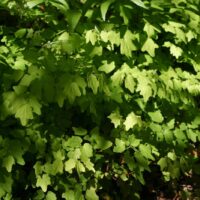
Vancouveria hexandra
A useful ground cover for shady areas with delicate apple green, fern-like foliage and creeping rootstocks. Grows 6 to 12 inches tall and spreads slowly by underground rhizomes. Dainty, nodding, white flowers with reflexed petals give the impression of being turned inside out and can appear over a long period from April through June. This western native grows profusely in moist woodland conditions but tolerates dryish conditions once established. Competes well with tree roots too.
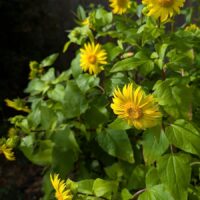
Venegasia carpesioides
Native to coastal areas of central and southern California, the canyon sunflower brightens the garden with abundant blooms from spring into late summer. The daisy-like, golden-yellow blossoms are 2 in. wide and set against light-green, almost heart-shaped leaves. This 3 – 5 ft.-tall-and-wide, showy shrub is particularly useful for its pop of color in dry shade under oaks. It will also accept quite a bit of moisture, and full sun in warmer areas! Rarely offered in Northern California nurseries, it does well in our area, but may retreat back to the ground after hard frosts, only to re-emerge in spring. If kept dry through the summer, plants may go dormant until moisture returns.
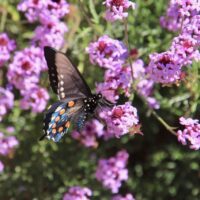
Verbena lilacina ‘De La Mina’
Verbena lilacina ‘De La Mina’ delights with dense clusters of rich lavender blossoms that are highly attractive to butterflies. Can bloom nearly year round along the coast, spring through fall elsewhere. Native to Cedros Island off of Baja, Mexico, ‘De La Mina’ was selected by the Santa Barbara Botanic Garden for its darker shade of lavender flowers. Generally cold-hardy to 25°F, the deliciously aromatic, evergreen foliage may need light trimming when subject to winter frost or extreme heat. Forms a lacy mound 1-2 ft. tall and 2-4 ft. wide. Plant in full sun with moderate to occasional summer water. Makes for an excellent border or container plant, and is reportedly deer resistant.
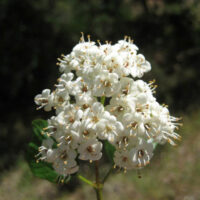
Viburnum ellipticum
Loosely branched deciduous shrub 6-10 feet tall. Common in Washington and Oregon and rare in California where it can be found in chaparral and coniferous forests generally on north facing slopes. Soft reddish new growth makes way for the neat deep green oval leaves with a serrated edge. Small white flowers in terminal clusters followed by shiny black fruits which are enjoyed by birds. Attractive reddish fall color. Best with some shade and a little summer water. A candidate for the high banks of creeks, margins of wetlands or edges of forests.
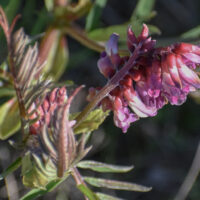
Vicia gigantea
This native pea-relative is a climbing perennial with delicate, arching clusters of magenta flowers. Leaves are dense rows of narrow leaflets culminating in tendrils that help it vine over shrubs, fences or up trellises. With its slender but vigorous stems, giant vetch can spread or climb 3 to 7 feet. This species has a primarily coastal range from San Luis Obispo up to Alaska and does best in temperate or moist areas with moderate water. Grows in full sun but prefers part shade inland. Its rich reddish-purple blooms attract butterflies and other pollinators, and roots fix nitrogen in the soil. A host for a number of butterfly and moth species that use plants in the pea family.
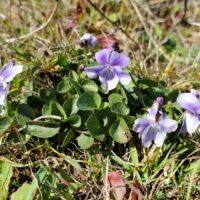
Viola adunca
Native to both coastal and mountain plant communities, this violet can be seen locally blooming in coastal meadows and bluffs. Forms low-growing, slowly creeping, neat clumps of heart-shaped leaves. Sweetly fragrant, nodding, blue to purple flowers with white interiors and purple nectar guides bloom in the spring. This pretty little wildflower is visited by bees and other pollinators and is a host plant for a number of butterflies, some of which are rare and endangered. Grows in sun along the coast and light shade inland with moderate summer water. Can reseed if happy.
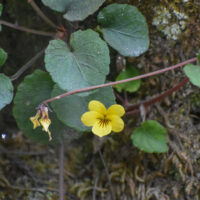
Viola palustris
Native to moist environments in both coast and mountain plant communities of N. America and Eurasia. Rare in California, where it is found in the northern counties of Mendocino, Humboldt and Del Norte. Rounded to heart shaped leaves with shallow scalloped edges grow from basal rosettes and spread by slender rhizomes. The charming flowers bloom April through July and range from white through lavender in color with dark-purple nectar guides. Used by Fritillary butterflies as a larval food source. Easy to grow, this is not a violet for heavy shade, but prefers brighter locations with light shade and moist, but well drained soils.

Vitis californica
California wild grape is a vigorous deciduous vine, native to watercourses in California and Oregon. Lush foliage on woody vines create leafy draperies in riparian areas. Useful in the garden for trellises, arbors, fences or to spill down a bank. Round green leaves take on nice yellow tones in the autumn. Flowers are very attractive to bees.Fruits are small and seedy but tasty. Excellent habitat value providing food and cover for wildlife.