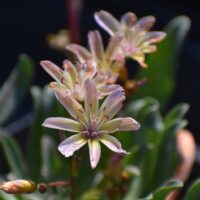
Lewisia longipetala ‘Little Peach’
Large flowers with long petals colored peachy apricot make this selection of our native cliff maids a knockout in the garden. Round clusters of narrow, succulent leaves form patches up to about 8 inches wide. The irresistible flowers emerge en masse from between the leaves on slender stalks up to about 10 inches high. A very long bloomer, beginning in spring and often re-blooming in summer. Works really well in a container with lean, fast draining soil, placed in bright partial shade. Water sparingly. For best results, mulch with granite chips and fertilize occasionally. Lewisias are native to the mountains of California and beyond, where they grow in rock cliffs. An excellent choice for the rock garden.

Lewisia longipetala ‘Little Raspberry’
The parent of this strain of Lewisias is found in rocky outcroppings of the Sierra Nevada Mts. Forms low, fleshy rosettes of tough evergreen leaves. Raspberry-red flowers bloom on short stems above the leathery foliage in the spring into summer and often again in the autumn. Requires good sharp drainage and rock mulch, but appreciates partial shade in hot summer areas. Perfect for rock walls, rock garden, containers and troughs. Water as you would any succulent, sparingly, and keep crown high and dry. This is not the plant for your perennial border, but it is easy to make happy in containers.
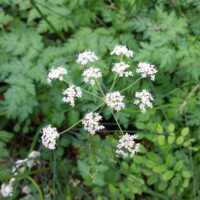
Ligusticum apiifolium
We love members of the carrot family, with their flat-topped clusters of star-like flowers and excellent habitat value. This species is no exception, though it is rarely grown in nurseries. In spring the clear-white flowers appear in delicate umbels on slender stalks 2 - 4 ft. high. The ferny, bright-green foliage stays close to the ground, rarely reaching more than a foot tall. Occurs in the Coast Range from the San Francisco Bay Area northwards. You may find this species in full sun near the coast or in bright woodlands further inland. Needs decent drainage and occasional to infrequent summer water.
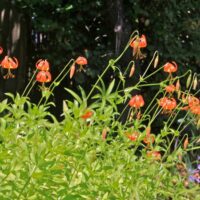
Lilium pardalinum
An elegant and beautiful native from moist places and along stream banks in many plant communities from southern Oregon to southern California. A reliable species easily growing 4 ft. tall or more, slowly increasing its width over time. The Turk’s cap style flowers bloom in summer and are orange with red tips and maroon spots. Dies back to the ground in winter. Prefers fertile, well drained soils. Where summers are cool you can plant in full sun. Elsewhere plant in filtered sun, light shade or afternoon shade. Requires moderate summer water.
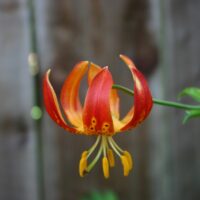
Lilium pardalinum ‘Giganteum’
A towering lily reaching up to 7 feet tall with orange and crimson flowers 3 to 4 inches wide. Who can resist that! Believed to have been discovered along the Van Duzen River in Northern California and thought to be a natural cross between L. humboldtii and L. pardalinum. The large stalks are crowned in summer by layers of flowers up to 30 in number with whorls of large leaves ascending up the base. Forms colonies over time to dramatic effect. Plant in full sun near the coast but protect from the hot afternoon sun, inland. Needs moderate water but is intolerant of soggy soils. Tolerates drier soil than the typical leopard lily.
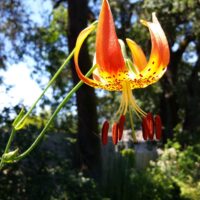
Lilium pardalinum (Gualala River)
An elegant and beautiful native from moist places and along stream banks in many plant communities from southern Oregon to southern California. A reliable species easily growing 4 ft. tall or more, slowly increasing its width over time. The Turk’s cap style flowers bloom in summer and are orange with red tips and maroon spots. Dies back to the ground in winter. Prefers fertile, well drained soils. Where summers are cool you can plant in full sun. Elsewhere plant in filtered sun, light shade or afternoon shade. Requires moderate summer water.
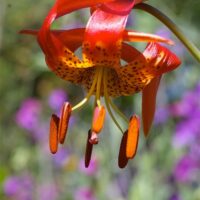
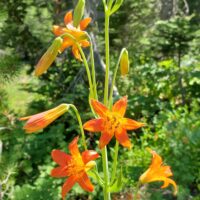
Lilium pardalinum ssp. pitkinense
This is the local rare subspecies of the leopard lily, threatened by habitat loss, grazing, competition with Himalayan blackberries, and collecting. Ours are responsibly grown by scale division from seed grown parent plants. A beautiful turks cap lily with intense orange-red reflexed petals revealing maroon spots. Needs moisture until it's through flowering and protection from gophers. Bright shade or morning sun with afternoon shade is best. This species attracts hummingbirds and butterflies.
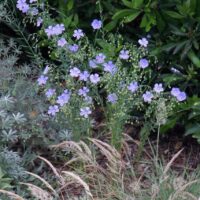
Linum lewisii
A profusion of sky-blue, five petaled, shallowly cupped blossoms flower in late spring and into summer. Growing 12 to 18 inches tall with slender stems and narrow leaves. Can be short lived but often reseeds. A lovely filler, whose true blue flower color seems to go with everything, and the fine foliage contrasts nicely with a variety of leaf colors and shapes. Plant in full sun with moderate to infrequent summer water. Deer resistant.

Lomatium californicum
Native to lightly shaded banks or brushy slopes, this interesting native forms clumps of beautiful, ferny, blue-green leaves. The foliage has a pungent celery flavor and grows 1 ft. or so tall. The yellow-green flowers form broad umbels that reach up to 4 ft. high. Good for brightly lit woodlands that go summer dry. Plant with Heucheras, California fescue and Iris. A larval food source for the Anise Swallowtail butterfly.
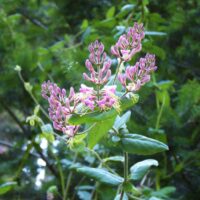
Lonicera hispidula
This native honeysuckle is often seen climbing over shrubs on the edge of woodlands where its roots are shaded and its foliage is sun drenched. The trumpet-shaped flowers range in color from rosy-pink to pink and white and feature prominent yellow stamens emerging from their mouths. They form clusters which decorate the tips of the vining branches and are attractive to bees and hummingbirds. The high point is the drooping clusters of luminous red berries in late summer which are beautiful to behold and provide a feast for birds, especially orioles. A drought tolerant vine but would appreciate occasional deep summer watering. Considered by some to be deer resistant.
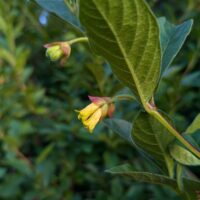
Lonicera involucrata
An interesting native shrub that grows along streams and other moist places. The tubular, red and yellow flowers are borne in pairs on bright red bracts and are hummingbird favorites. Two black shiny fruits follow the flower and are very showy set against the red bracts, making them attractive to birds. Reaches 6 - 10 ft. tall and wide, this neatly branched shrub loses its leaves in the winter. A great addition to the habitat garden in full sun to light shade with regular to occasional deep summer water. Orioles love the fruits. Needs afternoon shade in hot, inland areas. Deer resistant.
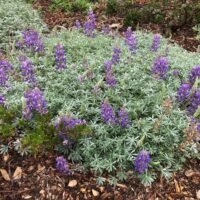
Lupinus albifrons var. collinus
A beautiful low growing form of the silver bush lupine. Forms a mat of gorgeous silvery foliage 12 inches or so wide with spires of rich blue flowers rising 12-18 inches tall in the spring. Plant in full sun to very light shade with well drained soil. Flowers attract a wide array of beneficial insects, especially bees of all types. Drought and deer resistant.
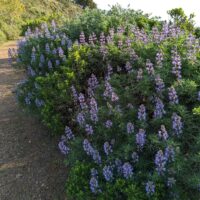
Lupinus arboreus – blue flowered form
Native to coastal areas from Sonoma Co. down to Southern California, the blue bush lupine is distinctive for its grand size (reaching up to 6 ft. tall) and racemes of scented, blue and white flowers. The showy blooms which appear in spring and continue into summer are an excellent nectar source for native bees and hummingbirds. Various butterflies use this species as a larval host plant. The seeds are enjoyed by birds. Grow in full sun with good drainage and occasional to no irrigation once established. Not suitable for areas which get very cold in the winter. Not suitable for Mendocino Co. northwards where it can invade natural areas. Deer resistant.
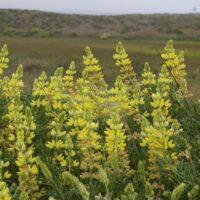
Lupinus arboreus – yellow flowered form
Native to coastal plant communities from Sonoma County south to Ventura County. Showy, fragrant, clear-yellow flowers in long, dense spikes in mid spring and into summer. A fast-growing, floriferous shrub, 3-6 ft. tall and wide. Excellent choice for coastal areas in full sun with good drainage. Not suggested for gardens in coastal Mendocino County due to its ability to quickly naturalize and take over fragile plant communities. Drought and wind tolerant. Lupines have great habitat value, offering nectar for pollinators and nourishing seeds for birds. Great for hummingbirds and a larval food source for various butterflies. Deer resistant.
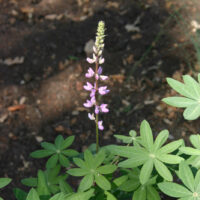
Lupinus latifolius var. parishii
A moisture loving lupine that grows along streambanks and throughout woodlands in central and southern California. A lush perennial, growing 3-4 feet tall and wide, with foot long flower spikes of scented, pink to lavender flowers in late spring-early summer. The large, dark green leaves create a bold texture beneath the slender flower stalks. Plant in lightly shaded conditions with some summer water. Dies back to the ground in winter. Attractive to bees and hummingbirds. Deer resistant.
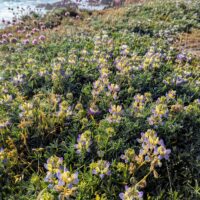
Lupinus littoralis var. variicolor
Often found nestled amid rocks and sand, this low-growing, perennial lupine is native to the beaches and dunes of coastal California. Forms a clump or mat of silver-green foliage under 18 inches tall, with jewel-like flower spikes. Blooms in a subtle range of colors, typically shades of purple-blue with white to pale yellow banners. Makes for an excellent addition to a rock garden. Formerly known as Lupinus variicolor, it is currently considered a variety of bluff lupine that is endemic to the Bay Area from Sonoma County down to the Peninsula. It attracts pollinators, and is one of the few hosts for the rare Mission Blue butterfly. Accepts various watering regimens from regular to occasional so long as it gets excellent drainage. Drought tolerant once established.
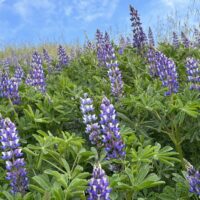
Lupinus succulentus
One of the easier-to-grow lupines, this long-blooming ANNUAL is low maintenance and thrives in heavier soils. Bright-green, palmate leaves topped by purple-blue spires quickly reach 2-3 feet tall and wide—or more, if happy. Reseeds easily and returns with winter rains, or whenever conditions are moist and fertile. Although it enjoys moderate to occasional water, it will tolerate both wet and dry areas. Arroyo lupine is found in diverse habitats with a broad native range in California, but prefers full sun and clay-rich soil. Looks splendid planted en masse and can serve as a nitrogen-fixing, seasonal groundcover. All parts of the plant are toxic if eaten, but it's an important butterfly larval host and a food source for native bees. Deer resistant.
Lupinus succulentus
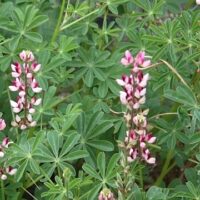
A pretty, pink selection of an easy-to-grow species of ANNUAL lupine. Arroyo lupines have lush, bright-green foliage and attractive flower spikes that typically come in shades of pink or purple. On 'Rodeo Rose', these eye-catching blooms combine rosy-pink wings with banners that turn a dark maroon. Grows quickly to 2-3 feet tall and wide, and reseeds readily at the end of its season. This adaptable species has an affinity for moist, heavy soils, and does well in irrigated gardens, but tolerates drier conditions as well. It is native to diverse habitats and has a broad range in California. Prefers full sun and occasional water. Plant en masse for a gorgeous, seasonal groundcover. All parts of the plant are toxic if eaten, but it's an important butterfly larval host and a food source for native bees. Deer resistant.
Luzula parviflora
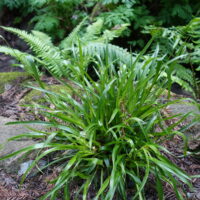
This tidy native woodrush forms grass-like clumps 8 - 10 inches tall and a little wider with broad, bright green leaf blades. The small yellowish flowers occur on the tips of arching flowering stems in late spring. Occurs over a wide range of the Western U.S. and up into Canada, across and down into the northeastern states. Perfect for the woodland garden with moderate moisture. Will seed around if the conditions are right, but we have not found it to be weedy. Deer resistant.
Lyonothamnus floribundus ssp. aspleniifolius
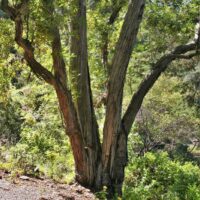
A rare and beautiful evergreen tree from Santa Cruz Island off of the Southern California coast. Fernlike, pinnately divided, shiny, dark-green leaves adorn this fast growing tree which can reach 20 to 50 ft. tall and 15 to 20 ft. wide. Late spring brings large flat-topped clusters of creamy-white flowers on this unusual rose family member. Peeling, reddish-brown bark adds to the interest of this single or multi-trunked tree, which can be used in small groves or as a striking specimen. Plant in full sun to partial shade with moderate to infrequent water. Cold hardy to about 15 degrees. Pollinating insects and birds are attracted to the flowers.
Madia elegans
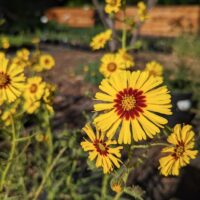
Native ANNUAL growing 3-4 ft. tall with multi branching aromatic stems. Cheerful bright yellow daisies top the stems in the summer and can be solid yellow or may have a maroon spot at the base of each petal. Tarweeds are an important late nectar source for butterflies, bees and other beneficial insects. The seeds are relished by small mammals and birds, especially finches. Native to grasslands and open forests, well adapted to clay soils and full sun, perfectly adapted to our long, dry summers.
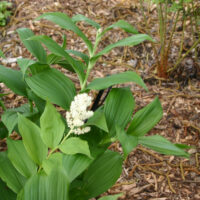
Maianthemum (Smilacina) racemosum
Choice herbaceous perennial native to moist woodlands in California and throughout North America. Forms robust clumps of arching branches 2-3 ft. tall. The branch tips carry dense panicles of sweetly fragrant, white, star-shaped flowers in late spring. Clusters of red berries follow in summer and fall. A lovely addition to the shade garden where it thrives in well drained, woodsy soil with some summer moisture. In cooler coastal environments can go summer dry once established. This lily family member slowly spreads to form striking clumps which die back to the ground in the winter. An elegant and long lived beauty.
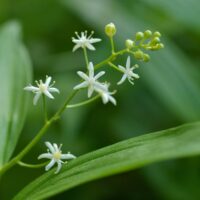
Maianthemum (Smilacina) stellatum
Native to California and much of North America, this woodlander makes a worthy and useful addition to the shade garden. Spreading by stout rhizomes forming colonies of lush, green foliage one foot to 18 inches tall. Small, white, star-shaped flowers top the slender stems in the spring and early summer. Berries follow that are often striped with purple or black, eventually turning red. Thrives in shade with moisture but tolerates dryish conditions once established. Can grow in quite a bit of light as long as there is moisture. A variety of insects seek nectar or pollen from the flowers and woodland song birds love the berries.
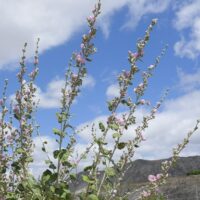
Malacothamnus fasciculatus
Native to western Southern California, this fast growing, evergreen shrub grows to 6 + feet tall and spreads to form colonies. A multi-branched mallow with hairy, gray-green, leaves often shaped like those of maples. The pale pink, cup-shaped flowers held in clusters along the stem, bloom from spring into summer. A native bee magnet. Useful as an evergreen screen for full sun. Occasional irrigation to drought tolerant once established. A larval food source for the west coast lady and the northern white-skipper butterflies. Reported to be deer resistant.
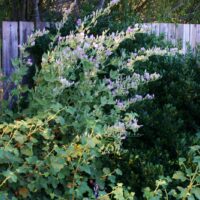
Malacothamnus fremontii
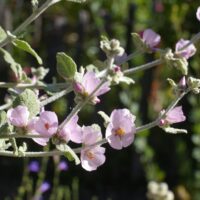
A fast growing, thicket forming, native shrub with silvery white, felted foliage 4 - 6 ft. tall and spreading. A profusion of pale-pink, cup-shaped flowers decorate the branch tips in summer. A tough and adaptable shrub for sunny dry areas, appreciating occasional summer water once established. Useful on banks or other challenging sites. Host plant for the Painted Lady and West Coast Lady butterfly. An excellent nectar source for orioles. Deer often seem to leave it alone.
Malacothamnus jonesii
A rare endemic from southern Monterey and San Luis Obispo counties, growing in foothill woodland and chaparral plant communities. Fast growing shrub, often coming in after fires or disturbance. Growing 4 - 6 ft. tall and wide with beautiful gray foliage, covered in white, velvety hairs. Lovely, soft pink, cup-shaped flowers appear in profusion on the slender branch tips, late spring into summer. Nectar is highly attractive to a myriad of insects, hummingbirds (who seek both nectar and insects), bees and butterflies. Larval food source for the West Coast Lady and Northern White Skipper butterflies. Plant in full sun to ight shade, where it will be drought tolerant once established.
Malacothamnus palmeri var. lucianus
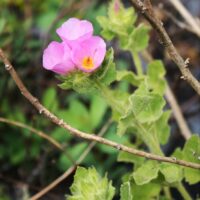
From the hot valleys of the Santa Lucia mountains in central California comes this rare form of the native bush-mallow. Deep pink, cup-shaped flowers appear in late spring and early summer above the fuzzy, light green leaves. Reaches a height of about 6 ft and slowly spreads to form colonies. Give full sun to light shade and provide little to no water once established. A good choice for hot, dry banks with Toyon, Ceanothus and Manzanita. An excellent nectar source for orioles. Deer seem to leave it alone.