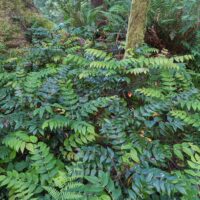
Berberis (Mahonia) nervosa
A handsome species with especially long, leathery, evergreen leaves. Grows to around 2 or more feet tall and spreads by underground stems. Yellow flowers in spring are born in upright clusters, followed by blue berries. Great woodland groundcover for full or partial shade with occasional to regular summer water. Deer resistant. Fruits eaten by robins, finches and towhees. The flowers have nectar for hummingbirds and bees.
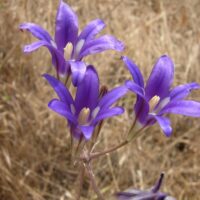
Brodiaea elegans
From grassy meadows and open woodlands comes this drought tolerant and colorful wildflower. Open clusters of dainty violet flowers sit atop stems reaching 8 to 20 inches in height. Plant in full sun to bright shade and provide decent drainage. As the name suggests, the harvest Brodiaea is the latest blooming of the Brodiaeas, sometimes not flowering until the end of summer after the grass-like leaves have gone dormant. It spreads rapidly but not invasively to form broad drifts. After blooming, this bulb will sleep until the return of winter rains. Do not irrigate. An excellent candidate for the rock garden where its graceful form will contrast wonderfully with the rigid stone.
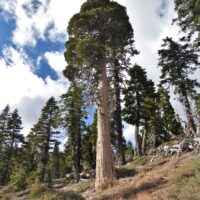
Calocedrus decurrens
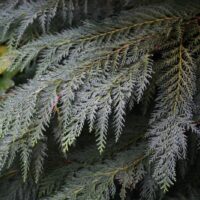
Cinnamon colored bark and a distinctly conical form distinguish this lovely conifer known for its appealing woodsy scent. Bright green, scale-like leaves drape from the ends of branches in dense clusters with small, flattened cones.Native to rocky areas throughout California. Slowly grows to become a large tree not suitable for a small garden. Requires decent drainage and occasional deep waterings when young. Enjoys full to part sun.Striking when planted as a single specimen or when combined with broadleaved trees such as maples and oaks. Deer resistant.
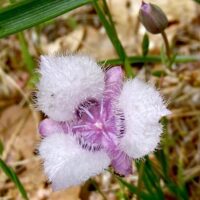
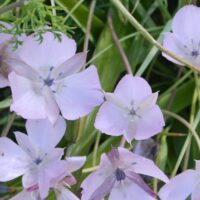
Calochortus uniflorus ‘Cupido’
While many Calochortus are known to be challenging in the garden, this selection is quite easy and blooms in abundance! Blue-grey, iris-like leaves emerge in the winter, followed by soft lavender-pink, tulip-like flowers in late spring. After flowering they will go dormant. Plant in full sun to light shade. Very drought tolerant but will tolerate occasional irrigation. This rare species has a surprisingly wide-ranging distribution, from the coast to the mountains of Northern California. Attracts native pollinators.
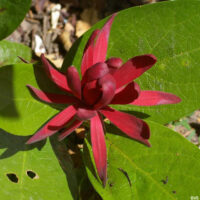
Calycanthus occidentalis
Native along streams, rivers and moist places in California. This attractive deciduous shrub is well worth growing. Bright green aromatic foliage with interesting maroon-red flowers in spring-summer that resemble small waterlilies and have a wine-like fragrance. Can be grown as a multi-stemmed small tree, trimmed hedge or left alone to become a large background shrub. 5 - 12 ft. tall and wide. Part-shade is ideal. Tolerates full sun with lots of moisture in somewhat cooler areas. Accepts full shade but will grow more slowly with a more open habit. Regular to moderate water. Somewhat deer resistant.
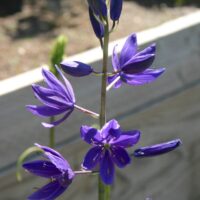
Camassia leichtlinii ssp. suksdorfii
Similar to the common camas, but with larger, star-shaped flowers ranging in color from soft to dark violet-blue on stems up to 3 ft tall. Native to grasslands and moist meadows that dry out in the summer. Also found in open, well lit woodlands. Easy to grow in full sun to light shade in a variety of soil types, including heavy clay. Allow to go dry after seed is set, where it will go completely dormant. This eye catching beauty is appealing to bees, butterflies and hummingbirds. An excellent container plant and cut flower. Deer resistant.
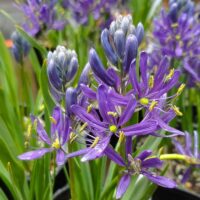
Camassia quamash
Camas lily is a beautiful native bulb, producing stunning displays of sky blue to violet-purple, star-shaped flowers. Found throughout much of the western United States, growing in moist meadows and grasslands that dry out in the summer. Important species to native peoples, who encouraged the bulb through fire management. Historical accounts describe fields of blue from the massive floral displays. Easy to grow in full sun to very light shade and tolerant of a wide variety of soils, including heavy clay. Long, slender leaves give way to erect racemes of blossoms, to 2 ft. tall in late spring. Allow to go dry once seed set commences. Dormant in the winter. An excellent container plant and cut flower. A favorite of bees, butterflies and hummingbirds. Deer resistant.
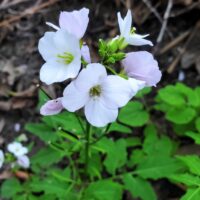
Cardamine californica
One of California's most widespread and earliest spring wildflowers, often beginning to bloom in the winter. Found in somewhat shady locations in a number of plant communities, this slender perennial has rounded basal leaves. Flower stems 10 inches to 20 inches tall are topped with four petaled flowers of pure white to soft pink. This sweet harbinger of spring is easy to grow given a little shade and winter rain. After flowering and setting seed it dies back to its roots where it goes dormant until next year's rains awaken it. Good under oaks.
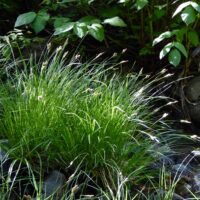
Carex nudata
Native to below the high water mark along perennial water courses. Forms a bright green, dense, arching mound with interesting black flowers in spring. Best in moist soils, full sun to light shade. 1 - 2 1/2 ft. tall and wide. Lovely yellow fall color in colder locations. Winter deciduous. Beautiful in containers too. Deer resistant.
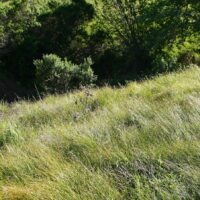
Carex praegracilis
Similar to Carex pansa but growing taller. The fine textured grass-like blades can reach a foot or more tall and spreads freely by rhizomes to form a thick weed smothering groundcover. Useful for meadows, green roofs, bio-swales, erosion control and as a lawn substitute. Can be left natural where it has a lush tousled appearance or trimmed occasionally for a low turf-like appearance. Tolerates drought, inundation, poor soils, salt spray, heat, cold, shade and foot traffic. Plant in sun to light shade where it requires some summer moisture but far less than a conventional lawn. Will go summer dormant if allowed to get too dry. Deer resistant.
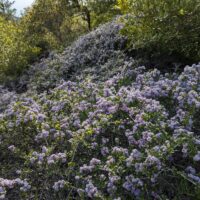
Ceanothus cuneatus
One of California's most widespread species offering a variety of forms. Typically buckbrush grows as an arching shrub growing 5 - 8 ft. or more tall and wide with small, thick, leathery leaves. Flowers can range from white to lavender to purple and are produced in small tight clusters in early spring. When in full bloom, the powerfully sweet scent of the flowers engulfs the visiting hiker. An excellent choice for hot dry conditions and difficult sites where it will grow in full sun with little to no water once established. Valuable addition to the habitat garden where it provides food and cover for a wide array of wildlife, birds, bees and butterflies. Said to be deer resistant.
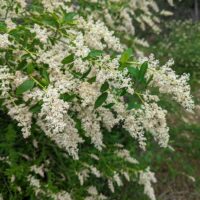
Ceanothus integerrimus
Deer brush is an excellent addition to the dry garden, featuring an abundance of blue, white or even pink flower plumes in late spring. One of the few deciduous species, displaying soft flat leaves which fall in autumn and reemerge in spring. Deer brush is an open upright shrub, growing 5 - 12 feet tall and wide with many different growth habits. A variable species found in a wide range of habitats throughout the state. Often used in restoration for its rugged qualities and ability to deal with summer heat and winter cold. This crop, grown from seed collected near Lake Sonoma has white flowers. Plant in full sun to light shade with good drainage. Little to no summer water once established.
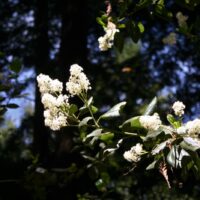
Ceanothus velutinus
Found primarily in the northern half of the state in the Coast Ranges, Sierras, Klamath and Modoc regions, in coniferous forests, chaparral, and various woodland environments up to 11,000 ft in elevation, the resinous floral scent and plumes of soft white flowers from spring to early summer make tobacco brush a choice evergreen shrub for dry, sunny to part-shade garden sites that drain well. Grows to 6-10 ft tall, and has large, sticky dark-green, aromatic, leathery foliage. A larval host for many native butterfly species such as the ceanothus silk moth, California tortoiseshell butterfly, and the hedgerow hairstreak butterfly. The flowers are also attractive to native bee and butterfly pollinators. Drought-tolerant once established.
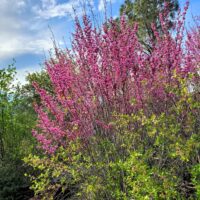
Cercis occidentalis
Beautiful in all its seasons, the native redbud is well worth growing. Highly ornamental multi-trunked shrub or small tree 6 - 20 ft. tall and wide. Masses of brilliant rose-purple blossoms in early spring followed by conspicuous long seed pods that start out lime green and age to purple-brown. The rounded heart-shaped leaves emerge apple green and develop to bluish-green. In colder areas, the leaves take a nice fall color of yellow or red. The smooth silvery-gray branches are picturesque in the winter landscape. Plant in full sun to light shade with good drainage. Drought tolerant. Important nectar and pollen source for bees. Attracts hummingbirds too.
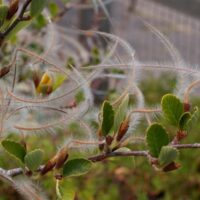
Cercocarpus betuloides
Mountain mahogany is an adaptable, semi-evergreen native shrub (8 to 12 ft. high and wide) or small tree with charming birch-like leaves set against silver-grey bark. Small, honey-scented flowers appear in spring followed by seeds with intriguing silky, curled, feather-like tails. The open habit contrasts nicely with evergreen shrubs or rock walls where its pleasing silhouette can be seen. Flowers are attractive to bees. Mountain mahogany is one of those rare native shrubs which can easily be pruned for narrow garden beds. Grows on dry slopes in chaparral or at the edges of woodlands. Provide full sun to light shade. It is surprisingly adaptable to diferent water regimes, from moderate irrigation to no water once established. Somewhat deer resistant.
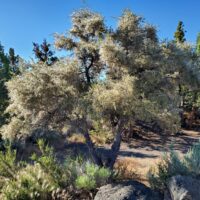
Cercocarpus ledifolius
Large shrub or small, multitrunked, evergreen tree, 6 - 30 ft. tall, native to arid mountains of the western US. Often takes on a gnarled, picturesque form depending on the conditions it is growing in. Adapted to dry, rocky slopes where it weathers drought, extreme heat and cold, wind and snow. Slow growing, densely branching, with dark green, leathery leaves with curled under edges and silvery undersides. Trunks develop beautiful, red-brown bark with silvery new growth. The flowers are similar to our local mt. mahogany species, small, greenish- yellow, smelling of honey, and attractive to pollinators. The fruits are long, silvery, plumes that glow when back lit. Plant in full sun to light shade with good drainage where it will blend well with other dryland shrubs and perennials and requires little input. Fixes nitrogen. Interesting container or bonsai subject.
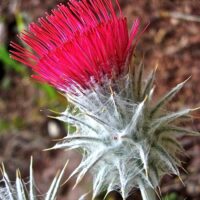
Cirsium occidentale
A beautiful NATIVE and NON-WEEDY thistle. Forms a rosette of gray woolly and spiny leaves the first year. A BIENNIAL, flowering occurs the second year with tall, narrow spikes of showy maroon-red to dark pink flowers with cobweb hairs on the bracts. A striking plant, usually reaching 3 - 6 ft tall when blooming, for sunny areas with good drainage and low to no irrigation. An excellent addition to the habitat garden where it attracts bees, butterflies and hummingbirds. Butterflies such as the painted lady and the mylitta crescent depend on cobweb thistle as a larval food source. Deer resistant.
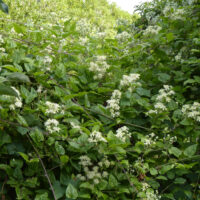
Clematis ligusticifolia
Native to riparian areas where the vining stems will climb and weave their way up and over shrubs and trees. Large masses of fragrant, small creamy-white flowers bloom in summer. Beautiful, silvery, feather-like fruits follow and are as attractive as the blossoms. The intricately divided leaves on long stems can climb 20 - 30 ft. Full sun to light shade with regular to moderate summer water. Deciduous. Generally deer resistant.
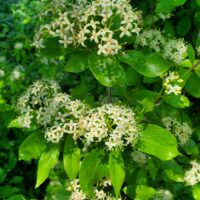
Cornus glabrata
The bluish-white fruits of this species are reputed to be especially good for attracting birds. Small creamy white flowers appear in spring on subtly beautiful arching branches. A type of stream dogwood, it forms thickets with time, 6 - 10 ft. tall. Deciduous. Prefers moisture and some shade. Western tanager and warblers eat the flowers. Grosbeak, Northern oriole, flickers, spotted towhee, Western bluebird, robins, mockingbirds, bandtailed pigeon, waxwing and quail eat the fruits. A great plant for stream restoration.
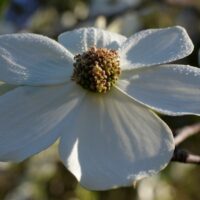
Cornus nuttallii
Spectacular native tree with pleasing horizontal branching, gorgeous white flowers, handsome fruits and good fall color. An elegant specimen tree though notoriously challenging in cultivation. Easiest to grow within its native range. Dislikes poor drainage, fertilizing, pruning, and injury to the tender bark. Drought tolerant in shady, cool situations but enjoys occasional to moderate water in fast draining soils. Once established it can become a show stopping specimen in a wooded garden, under high branching trees, along stream courses and slopes with eastern or northern exposure. Birds relish the red fruits.
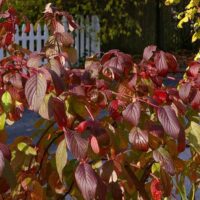
Cornus sericea
Redtwig dogwood is a spreading shrub growing 6 ft. or more tall and at least as wide, forming broad thickets along creeks and rivers. The beautiful red stems stand out in the winter landscape once they loose their leaves in the fall. Flat topped flower clusters are creamy white and are followed by clusters of white fruits. Often takes on nice fall color before loosing its leaves. Plant in full sun to light shade with regular to moderate watering. Does great on heavy clay soils and is a very good soil stabilizer. An excellent habitat plant where it provides food and cover. The fruits are very popular with birds. At the nursery, bluebirds and mockingbirds compete aggressively for the fleshy white fruits.

Cornus sessilis
Native to moist ravines and stream banks of the coast ranges and the Sierra Nevada Mts, this deciduous shrub or small tree grows 5-10 ft. or more tall and wide. Beautiful shiny, jade green leaves with prominent lateral veining decorate the graceful green barked stems. Small, yellow flowers appear early as it leafs out in the spring and are followed by oval fruits. Fruit color changes as it matures from greenish-white to yellow, red and finally shiny black which attract a wide range of fruit eating birds. Foliage can take on pretty tones of yellow and red in the autumn. Thrives in moist shady locations, but will grow well with just part shade and moderate to occasional summer water once established.
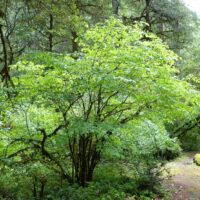
Corylus cornuta ssp. californica
Western hazelnut is a handsome, open, multi-stemmed shrub native to forests from Santa Cruz northwards in the Coast Range, and from Sequoia northwards in the Sierra foothills. Winter deciduous with decorative dangling catkins in winter. The soft, somewhat hairy leaves turn yellow in the fall. Small amounts of tasty nuts are produced in late summer and are relished by wildlife and people. Part shade with some moisture, but will tolerate fairly dry conditions once established. Usually grows 6 - 10 ft. tall. Somewhat deer resistant.
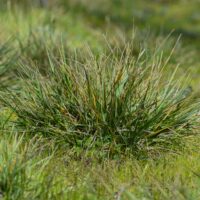
Danthonia californica
California oatgrass is a native bunchgrass found throughout mountains and coast ranges in both open and partly shaded areas. Forms dense leafy tufts with flower stalks of nodding spikelets to 1 1/2 ft. tall. Not to be confused with the invasive alien wild oats, this native makes a good basic grass for a meadow planting. Withstands trampling and traffic. Good for soil stabilization. Sun to very light shade. Little to no summer water once established. Deer resistant.
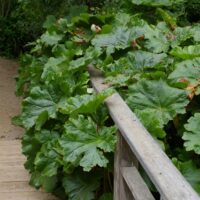
Darmera peltata
Native to mountain streamsides of Northern California and Oregon. A spectacular plant for pond, stream, moist woodland, or anywhere there is regular moisture and lightly shaded conditions. The lovely pink flower clusters on tall naked stems are the first to emerge in the spring. Next the very large bright green round leaves on sturdy stalks unfurl, reaching a height of up to 4 ft.. The foliage turns yellow in the fall and dies back to chunky rhizomes in the winter. A bold and beautiful flowering and foliage plant. Does well in containers too.
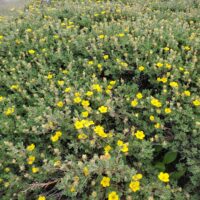
Dasiphora (Potentilla) fruticosa
A popular landscape subject, valued for its long bloom period, hardiness and carefree nature. A member of the rose family, this deciduous shrub can be found across the northern hemisphere, often growing at higher elevations. Here in California, it ocurrs in the Sierras, the Klamath Mountains and the Warners. Grows 2 -3 ft tall and wide with handsome, pinnately compound leaves. Cheerful, rich-yellow, saucer-shaped flowers bloom over a long period, summer into fall. Plant in full sun to light shade with moderate watering. Drought tolerant once established. Attracts bees and butterflies. Great in a pot. Deer resistant.
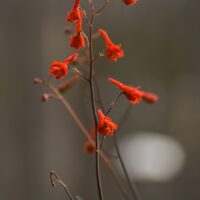
Delphinium nudicaule
In late winter and spring, scarlet flowers with elongated tails perch on upright stalks, usually not more than 3 ft tall. The green, lobed leaves which form a low mound above the ground have a distinctive pale patch in their centers. This native makes its home on summer-dry slopes throughout much of Northern California and parts of Central Ca., inhabiting bright, open woodlands and rocky road cuts. Needs good drainage and little to no irrigation in the summer. While it can grow in a fair amount of shade, it blooms best under a bright, dappled canopy. A favorite of hummingbirds and butterflies. All parts are poisonous if ingested.
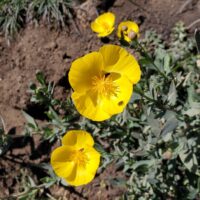
Dendromecon rigida
This is our local bush poppy, growing 4 - 8 ft. tall with bluish-gray foliage and a showy display of brilliant yellow poppy blossoms from spring into early summer. Scattered flowers may be seen throughout the year in mild climates. The leaves are narrower than those of the island bush poppy and the plant has a more open form. Requires full sun, good drainage, and little to no irrigation once established.