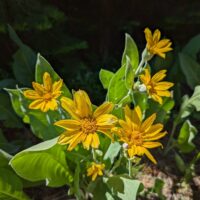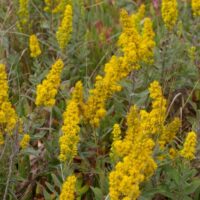
Solidago velutina ssp. californica
A showy and easy to grow late blooming native perennial. Spreads by creeping rootstocks where it can form a good-sized colony. Has spread slowly in our heavy clay soils with minimal water, but has the potential to spread aggressively in lighter soils especially with regular water. Late summer through fall brings slender wand-like flower stalks of golden yellow daisies 2 - 3 ft. tall which are visited by bees, butterflies and other insects. Plant in a sunny area where it is drought tolerant, but some supplemental summer water keeps it blooming longer.
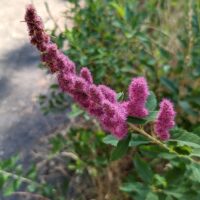
Spiraea douglasii
In summer, wands of violet-pink flower clusters decorate the branch tips of this deciduous shrub. Forms broad thickets 3 - 6 ft. tall with bluish-green leaves. Enjoys regular moisture and full sun to light shade. Great for a naturalistic planting in a woodland garden or along streams. Attracts bees and butterflies and is a larval host for various butterflies and moths in its native range. Native to the coast and into the mountains from northern California to Alaska.
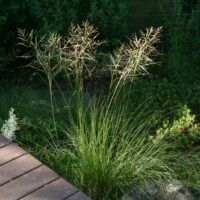
Sporobolus airoides
A robust, warm season bunchgrass, which was common in California’s Central Valley prior to agricultural conversion. This western native is found in the Sierra foothills, South Coast Ranges as well as deserts from eastern Washington to Mexico. Forms a dense bunch of fine textured, grey-green blades, on average 3 foot tall and wide. Graceful flowering stems carry airy, pinkish flower heads that produce a pink-hued haze, which age to tan. The abundant seeds are relished by birds, but do not tend to reseed in gardens. Tolerant of many soil types and water regimes. Best with full sun to light shade. This grass will be drought tolerant, but does best with some summer water in dryer inland sites. Leaves turn butter-yellow in autumn prior to winter dormancy. Deer resistant.

Stachys bullata
A native perennial from the mint family, found primarily near the coast from San Francisco southward, where it inhabits oak, pine and fir woodlands. Medium-green leaves are softly fuzzy with scalloped edges, growing around 2 ft. or more tall and spreading by underground rhizomes to form a colony. Blooming spring through summer, with lavender-pink tubular flowers in whorls, which attract bees, butterflies and hummingbirds. Tends to grow in somewhat drier areas, but responds well to moisture and also tolerates inundation. A natural with rushes, ferns and snowberries. Useful for partly shaded bioswales and oak/mixed conifer woodlands. The underground rhizomes make it a good choice for erosion control. Deer resistant.
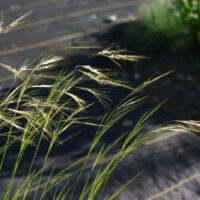
Stipa (Nassella) cernua
A beautiful native grass said to be a more impressive horticultural subject than the tough and useful Stipa pulchra. Forms a tufted bunch of foliage with elegant flower stems to about 2-3 ft. tall. The panicles of thin, fine, nodding awns have a silky aspect and are purplish at first drying silver. They glimmer when backlit. Prefers full sun (but will tolerate light shade) and well drained soils, but has proven adaptable. Drought tolerant. Often self sows. Deer resistant.
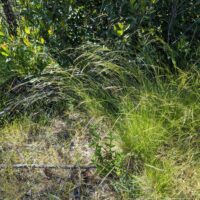
Stipa (Nassella) lepida
The native foothill needlegrass is a fine-bladed, medium-sized, perennial bunchgrass perfectly adapted to our Mediterranean climate. Growing vegetatively during the cool season and flowering in mid to late spring, going dormant with the dry of summer. Tufts of fine-textured blades 8 - 12 inches tall, give rise to slender, graceful flowering stems, 2 ft or more tall with panicles of silky awns which shimmer when back lit. Well suited for the dry garden, open woods, meadows and rocky slopes. Easy to grow, disease and pest resistant, tolerating more shade than other Stipa species. A strong re-seeder and deer resistant. Host plant for a number of butterflies. Deer resistant.
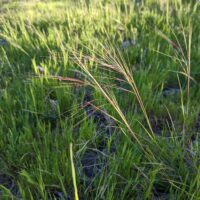
Stipa (Nassella) pulchra
Purple needlegrass is a major species in California grasslands. An excellent choice for naturalistic settings, native plantings, meadows or dry slopes in full sun. Handsome in mass where its purple awns shimmer. The entire plant turns golden come summer then goes dormant, reviving with the rainy season. Very drought tolerant. Can reseed vigorously. Deer resistant.
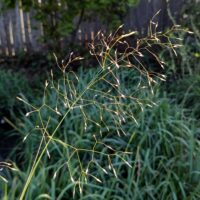
Stipa hymenoides
This rugged, incredibly drought tolerant bunchgrass hails from hot, sunny locations in desert areas and juniper woodlands of California. The inflorescences which emerge above the green foliage in spring and summer, are incredible airy and delicate. By the end of summer, plants take on an ivory color, appearing like billowing little clouds which create a wonderfully soft texture for the late season garden. Plants reach to about 2’ around. In winter, plants will go dormant. Little to no water once established. Needs decent drainage. Deer resistant.
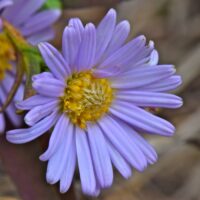
Symphyotrichum (Aster) chilense
This native aster is found throughout much of Sonoma County, usually in moist soils. More slender in form than the burly Point St. George selection. Spreads vigorously but with a lighter touch, integrating itself well with native grasses and bulbs. Its summer-to-fall blossoms are white to lavender blue and provide excellent nectar for butterflies and beneficial insects. 1-3 ft. tall and spreading. Thrives in sun to light shade with moderate to little summer irrigation.
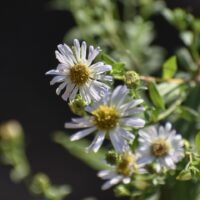
Symphyotrichum (Aster) chilense ‘Olema White’
Clear white flowers replace the class purple ones in this unusual selection of California aster that we found near the town of Olema in Marin County. In summer and into fall, a profusion of flowers bursts forth on this VIGOROUSLY spreading native perennial. An extremely adaptable groundcover reaching up to 3 ft. tall. Accepts regular to very little irrigation and full sun to light shade. This prolific bloomer is a bee magnet and also enjoyed by butterflies. Tolerant of clay and periodic flooding. Looks best when sheared to the ground after blooming.
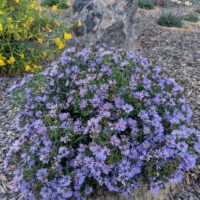
Symphyotrichum (Aster) chilense ‘Plumas Purple’
This form of the California aster is remarkably compact and refined, featuring blue-purple daisies which are darker than any other selection we have seen. Grows to a height of under a foot and so far has been much less likely to spread aggressively, though it should get to at least 3’ wide. In late summer and early autumn, the dense blooms turn plants into bonbons of flowers. Grow in full sun, where they will be drought tolerant once established, but will enjoy an occasional soak. California asters provide an important late nectar and pollen source for bees, while butterflies enjoy the nectar and are reported to utilize them as a larval hosts. Thank you to Pete Veilleux for giving us this stellar selection! It’s thought to have been found in Plumas County, so should be quite heat and cold tolerant.
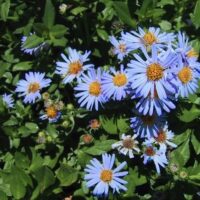
Symphyotrichum (Aster) chilense ‘Point Saint George’
A low-growing native perennial, reaching up to 1.5 feet in height and spreading widely and vigorously. Covered with soft lavender daisies over a long period, summer through fall and often into winter. Careful thought should be given to its placement as this plant really spreads. Far too vigorous for many settings, perhaps best used in planters, garden boxes or other contained areas or in large, naturalistic plantings. For sunny areas with at least a little summer water. Will tolerate flooding and periodic inundation. An excellent nectar source for bees and butterflies and seeds for birds.
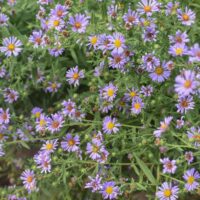
Symphyotrichum (Aster) chilense ‘Purple Haze’
A wonderful selection of our native Pacific aster, chosen by the Santa Barbara Botanical Garden for its deep lavender blossoms. Blooms late summer through fall and often into winter with one-inch daisies opening from dark purple buds. This plant SPREADS VIGOROUSLY by underground rhizomes, so works best when constrained by a planter or garden box or in a meadow planting. Excellent for areas needing soil stablization. The dense foliage grows quickly to 2-3 feet tall each spring, and can be annually pruned to the ground in winter. Tolerates many soil types and full sun to part shade. Requires minimal water, but occasional deep soaks keep it blooming longer. This easy to grow habitat plant will delight bees and butterflies.
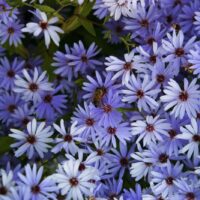
Symphyotrichum (Aster) cordifolium ‘Little Carlow’
Quickly becoming a favorite, this aster has rich lavender-blue daisies starting in late summer and continuing through fall. Known to be a Symphyotrichum cordifolium hybrid hailing from the East Coast of North America. More constrained than our native Pacific aster, it is prolific bloomer with an upright habit that reaches 2-4 feet tall and wide. Best with regular to moderate water in full sun to part shade. It is highly attractive to all sorts of pollinators, especially butterflies.
Symphyotrichum (Aster) cordifolium ‘Little Carlow’
Quickly becoming a favorite, this aster has rich lavender-blue daisies starting in late summer and continuing through fall. Known to be a Symphyotrichum cordifolium hybrid hailing from the East Coast of North America. More constrained than our native Pacific aster, it is prolific bloomer with an upright habit that reaches 2-4 feet tall and wide. Best with regular to moderate water in full sun to part shade. It is highly attractive to all sorts of pollinators, especially butterflies.
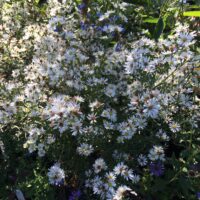
Symphyotrichum (Aster) ericoides ‘Monte Cassino’
Eye-catching, cheerful, and easy to grow, 'Monte Cassino' is a particularly stunning selection of a species of American aster with a wide native range east of the Rockies. In late summer and early fall, this vigorous aster dazzles with dense sprays of delicate, white, daisy-shaped blooms. The lacy foliage remains low, but the cloud-like flower-stalks can shoot up 3-4 feet tall and wide. Makes for gorgeous cut flowers. Thrives in full sun to part shade with moderate water. Irresistable to bees and butterflies.
Symphyotrichum (Aster) foliaceum
Native to the western United States where it grows in open woods, mountain meadows and along streams at mid to high elevations. The erect flower stems hold daisies of light blue to violet blue with yellow centers, surrounded by leafy bracts. An important pollinator plant, offering pollen and nectar late in the season to bees, butterflies and other beneficial insects. Grows 1 - 2 ft. tall from a leafy base that slowly increases. Prefers full sun with regular to moderate moisture. Winter deciduous.
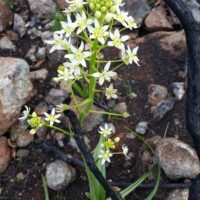
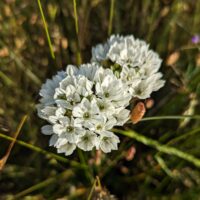
Triteleia hyacinthina
One of the easier to grow native bulbs that adapts well to garden conditions. Native to vernally moist areas that become summer dry in the Coast Ranges, Central Valley and Sierra Nevada into southwestern Oregon. Slender flowering stems rise one to two feet above the narrow leaves, with umbels of white, star-shaped flowers with green centers. If happy, the corms will multiply, forming drifts among grasses and shrubs and in open woodland settings. Easy to grow in containers, where they can be stashed in the shade once they go dormant. Bee and butterfly favorite.
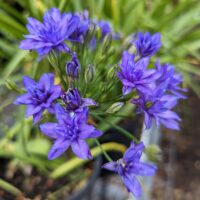
Triteleia laxa ‘Corrina’
A beautifully dark flowered form of our Ithuriel’s spear, with flowers a darker blue-purple than the more common ‘Queen Fabiola’. The trumpet-shaped flowers form circular clusters at the top of slender stalks 12 to 18 inches high. This easy to grow bulb sends up slender, grass-like leaves in late winter followed by the striking flowers in late spring. Multiplies readily forming colorful drifts which mix well with grasses and smaller perennials. Tolerant of pretty much all soil types and can be allowed to dry out completely in summer when it goes dormant. Unlike most grassland bulbs, this species will also tolerate moderate irrigation. Plant in full sun to light shade. Attracts bees, butterflies and hummingbirds.
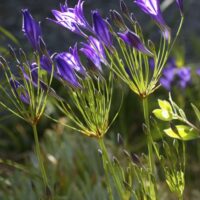
Triteleia laxa ‘Queen Fabiola’
Trumpets of bluish-purple blossoms make a dazzling display at the height of spring on this easily grown lily relative. The showy flowers rise up to 18 inches tall in dense whorls on slender stalks above grasslike leaves. The small bulbs increase rapidly to form small, colorful drifts. Give full sun to light shade. Tolerant of dry conditions but accepts occasional irrigation. Will go dormant by mid-summer but reemerges in early winter. Attracts bees, butterflies and hummingbirds. Plant in openings between low, evergreen plants or in meadows with yarrow, California fuchsia and grasses.
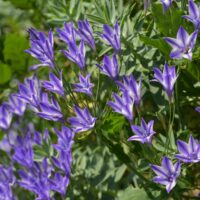
Triteleia laxa ‘Rudy’
An interesting flower color variation of this easy to grow native bulb. Grasslike blades 12 - 18 inches tall produce flower stems with large clusters of showy, funnel-shaped, pale blue-lavender blossoms with a vivid violet stripe down the center of each petal. An eye catching addition to a naturalistic planting, in sun to light shade. A willing grower which will multiply if happy. Enjoys dry conditions once done flowering, but will accept some moisture. Good container subject. Attracts bees, hummingbirds and butterflies.
Triteleia laxa ‘Silver Queen’
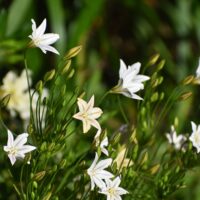
A white form of Ithuriel’s spear! We kid you not. You may be familiar with this species and its traditionally blue-purple, trumpet-shaped flowers perched in whorls atop stalks a foot or more tall. We now have a selection featuring soft white flowers. This native bulb sends up grass-like foliage in the winter followed by the charming flowers in spring and early summer. The bulbs multiply readily, forming small colonies over time. While it tolerates dry conditions in summer, it will also accept occasional irrigation, making it very useful in the garden. Enjoys full sun to light shade and will tolerate clay soil.
Urtica dioica
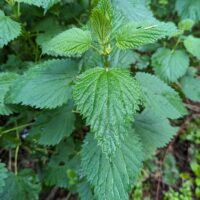
Found in moist woodlands and meadows throughout the state, stinging nettle is a habitat powerhouse. Growing at least 3 ft. tall and spreading vigorously to form large colonies, it's a great addition to any shady habitat garden or swale, where it stays moist throughout the year. Plant away from high traffic areas, as both the stems and foliage have small, stinging hairs that can cause skin irritation upon contact. This nettle has distinctive gray stalks, serrated leaves, and produces white, firework-like inflorescences that grow on stems in clusters throughout summer and early fall. Not only has it been used for centuries for a multitude of edible and medicinal purposes by indigenous tribes, it is also a larval host to several native butterflies including the painted lady and red admiral. Good cover for birds and small mammals.
Wyethia angustifolia
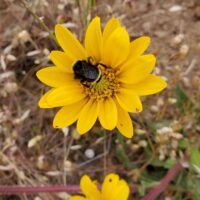
Few hikers can resist the bright, golden-yellow flowers of this showy native sunflower relative. The large, 2” - 3” wide flowers perch atop stems 1.5 - 3 ft. tall in the spring. Bright green, lance-shaped leaves form low rosettes at the base of the flower stalks. This mule ears grows in sunny meadows and at the edges of woodlands. Perhaps the most garden tolerant of all of the mule’s ears, accepting occasional irrigation once established but not requiring it. Does not mind soils with poor drainage. A great plant for bees, butterflies and birds. Will go dormant once it finishes flowering but will re-emerge after the rain returns.
Wyethia helenioides
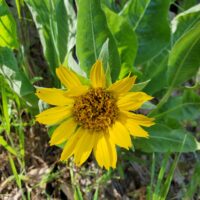
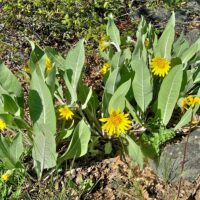
One of our less common native Wyethia, gray mule ears is a special find in nurseries. Strikingly large, upright leaves frame flower stalks that resemble little sunflowers with their wide golden discs and halo of yellow ray petals. Endemic to California, this radiant perennial wildflower is a welcome sight in woodland meadows of the Northern and Central Coast Ranges. A covering of silvery hairs on the broad, erect leaves gives the species its name. Lush, gray-green foliage emerges mid-winter followed by a spring floral display from March through early summer. Low-growing at up-to 2 feet tall and wide, it makes an impression greater than its stature. Eventually goes dormant as fall approaches. Does well in the garden if given decent drainage, good light, and minimal water once established. Bees and butterflies adore the flowers.