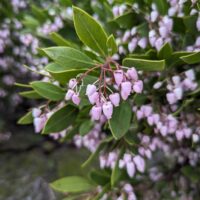
Arctostaphylos stanfordiana
One of the most beautiful of manzanitas with handsome dark mahogany bark, dense shiny green leaves and flowers ranging in color from intense pink to white. Its upright form ranges in height from 4 to 8 ft with a somewhat narrower width. Native to warmer areas of northern California's Coast Range, this species requires excellent drainage, full sun and NO water once established.
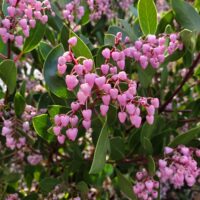
Arctostaphylos stanfordiana ‘Sonoma’
Masses of deep pink flowers and glossy, deep green leaves are an enticing feature of this uncommon selection. But what really distinguishes this cultivar from other Stanford manzanitas is the fact that it actually survives in the garden! Most other selections of this species are notoriously challenging to keep alive in cultivation. While fairly slow growing, the dense foliage mounds up over time to reach a height and width of about 5 ft. The striking burgundy-red trunks contrast nicely with the green leaves. Needs full sun and excellent drainage. No summer water once established.

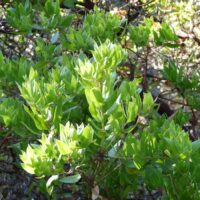
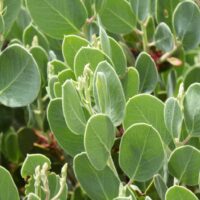
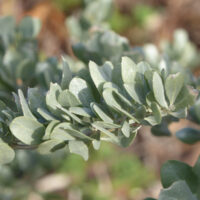
Atriplex lentiformis
This native bird favorite is a tough and useful shrub with beautiful silvery gray foliage. Growing 5 ft. or more tall and spreading widely, quail bush is valued for its ability to deal with difficult sites where it tolerates wind, salt spray, saline and alkaline soils. A terrific habitat plant, providing food and cover for a wide array of birds and mammals. Native from the coast to the desert. Excellent for erosion control and is fire resistant. Benefits from annual shearing and occasional aggressive pruning to rejuvenate. Plant in full sun with occasional to little summer water.
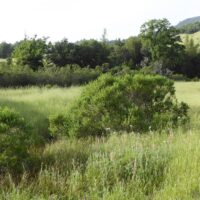
Baccharis pilularis
This is the upright form of coyote bush, growing 4 - 8 ft. tall and wide. Valued for its ability to flourish in a wide range of conditions. Also valued as an excellent habitat plant offering food and cover to a wide variety of wildlife. Flowers are not showy and the male and female flowers are borne on separate shrubs. This crop of plants are a mix of males and females and one can’t tell until they bloom. Plant in sunn or light shade. Not fussy about soils. Quite drought tolerant once established. Responds well to pruning or shearing, working well as a screen. Deer resistant.
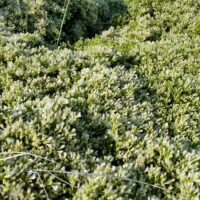
Baccharis pilularis – female
Upright form of coyote brush, growing 4 - 8 ft. tall and wide. Valued for its ability to flourish in a wide range of conditions. Also valued as an excellent habitat plant offering food and cover to a wide variety of wildlife. Flowers are not showy and the male and female flowers are borne on separate shrubs. Theses plants are FEMALE and will produce seed (when male plants are present). An abundance of pollinators and beneficial insects use Baccharis flowers and birds love their seeds. Plant in sun to light shade. Not fussy about soils. Quite drought tolerant once established. Responds well to pruning or shearing and is useful as a screen. Deer resistant.
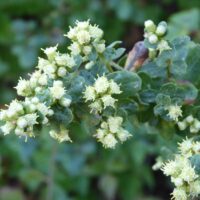
Baccharis pilularis – male
Upright form of coyote brush, growing 4 - 8 ft. tall and wide. Valued for its ability to flourish in a wide range of conditions. Also valued as an excellent habitat plant offering food and cover to a wide variety of wildlife. Flowers are not showy and the male and female flowers are borne on separate shrubs. These plants are MALE and produce ivory colored flowers with pollen and nectar. An abundance of pollinators and beneficial insects use Baccharis flowers. Plant in sun to light shade. Not fussy about soils. Quite drought tolerant once established. Responds well to pruning or shearing and is useful as a screen. Deer resistant.
Baccharis salicifolia
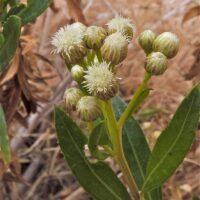
This native shrub looks something like a willow in foliage and is found in similar habitats in California and the southwest US. Not a willow at all, but a member of the aster family, this evergreen shrub blooms nearly year round, making it a powerhouse for pollinators. The profusion of small, creamy white, fuzzy flowers, tinged with pink or red are highly attractive to butterflies, bees and other beneficial insects. Extremely tough and easy to grow in full sun with summer water, where it will grow 6 - 10 feet tall and wide with rich, green foliage. Able to survive drier conditions than a willow could handle, but it will look rough if it gets too dry. Responds well to pruning and can be cut down to six inches to refresh. Excellent screen, windbreak and for soil stabilization. Stellar for attracting pollinators.
Berberis (Mahonia) aquifolium
This attractive, western native evergreen has a long history in cultivation for good reason. Erect stems rise 4 to 7 feet or more tall and wide, spreading slowly by underground rhizomes to form dense clumps. Bronzy-red new growth gives way to dark-green, glossy leaves with spiny margins that are prickly to the touch. Cold winters can darken the foliage with purple-red tones. Late spring brings clusters of bright yellow, sweetly scented flowers. Edible blue-black fruits follow and are pretty and tasty. A useful and adaptable shrub in a hedge or a shrubby border. Takes full sun to part shade. Performs best with some afternoon shade in hot areas and moderate to infrequent water. A great habitat plant which provides cover, nectar rich flowers and fruits relished by all. Deer resistant.
Berberis (Mahonia) nevinii
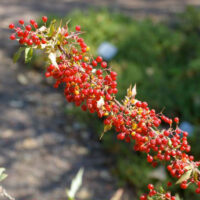
Nevin's barberry is a very rare southern California shrub with rigidly arching stems densely clothed in pointy silver gray leaflets. Heavy blooming with clear yellow flowers followed by heavy fruiting with bright red translucent fruit. 8 ft. by 8 ft. Does well in sunny well drained locations in the Bay Area. Great companion to matilija poppy and Salvia clevelandii. Very drought tolerant but best with occasional water. Deer resistant.
Calycanthus occidentalis
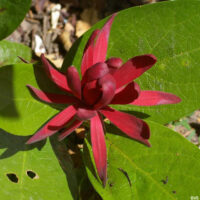
Native along streams, rivers and moist places in California. This attractive deciduous shrub is well worth growing. Bright green aromatic foliage with interesting maroon-red flowers in spring-summer that resemble small waterlilies and have a wine-like fragrance. Can be grown as a multi-stemmed small tree, trimmed hedge or left alone to become a large background shrub. 5 - 12 ft. tall and wide. Part-shade is ideal. Tolerates full sun with lots of moisture in somewhat cooler areas. Accepts full shade but will grow more slowly with a more open habit. Regular to moderate water. Somewhat deer resistant.
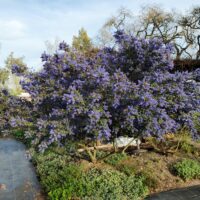
Ceanothus ‘Antonette’
An exciting introduction by Native Sons Nursery which was discovered in their landscape. ‘Antonette’ is believed to be a cross between Ceanothus arboreus and Ceanothus ‘Cynthia Postan’ with unusual elongated leaves which remind us of a rockrose. Grows 8 – 10 feet tall and 6 – 8 feet wide with spectacular displays of frosted, violet-blue flowers in early spring. Before they fully emerge, the flower buds display a pleasing rosy color. Plant in full sun with occasional to little summer water once established. Valuable habitat plant, providing food and cover for birds, bees and butterflies.
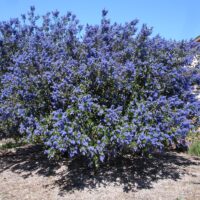
Ceanothus ‘Better Than Ray Hartman’
A friend of ours, Eric Nelson, discovered this spectacular selection growing on a property near where he lived. Masses of rich, blue-purple flowers held in large sprays cover the plant in spring, attracting bees and butterflies. The seeds which follow feed an array of birds. Reaches 10 – 15 ft. tall and wide with larger, deep-green, rounded leaves. We believe this plant is an existing cultivar, but none of the Ceanothus experts have been able to reach a consensus on exactly which one, hence the peculiar name referencing a selection which it resembles. Plant in full sun to light shade and water occasionally or less once established.
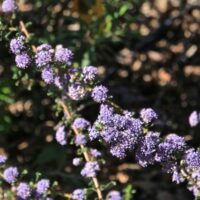
Ceanothus ‘Blue Jeans’
Not the color of denim exactly, the profuse springtime blossoms of 'Blue Jeans' are a rich lavender-purple. Erect evergreen shrub 6 ft. tall and wide with small shiny green leaves. Vigorous and fast growing. Best in full sun with little to no water once established. Tolerates heavy soils. Shrubby Ceanothus provide seeds eaten by bushtits, mockingbirds, quail and finches, as well as cover for birds.
Ceanothus ‘Blue Ray’
A Suncrest Nursery introduction, this is a cross between two popular cultivars, Ceanothus 'Ray Hartman' and Ceanothus 'Dark Star'. Grows 10 feet tall by 15 ft. wide with deep green textured leaves on sturdy stems forming a large mound. Deep vivid blue flowers in dense clusters cover the shrub in spring. Plant in full sun with occasional to no summer water once established. Ceanothus, when in flower, are highly attractive to pollinators of all sorts.
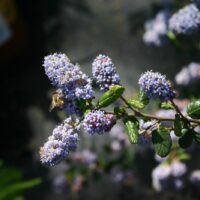
Ceanothus ‘Celestial Blue’
A beautiful hybrid California lilac selected and introduced by Las Pilitas Nursery. Luminous, rich blue flowers, in tight, conical clusters put on a massive display in spring with the added bonus of sporadic blooming through summer and into fall. Growing 6-8 ft. tall and wide with a mounding habit. Useful as an accent, informal hedge or screen shrub where it grows in full sun to light shade with little to no water once established. Ceanothus are an excellent addition to the habitat garden attracting a myriad of insects and birds.
Ceanothus ‘Concha’
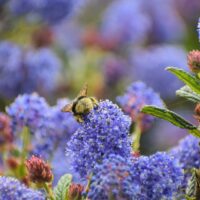
An adaptable shrub growing 6 ft. tall and wide, with a dazzling display of glowing purple-blue flowers in the spring. The gracefully arching branches carry dark green shiny leaves and are tolerant of light pruning. Thrives in full sun with little or no water once established. More tolerant of heavy soils and summer watering than most ceanothus. Shrubby Ceanothus provide seeds eaten by bushtits, mockingbirds, quail and finches, as well as cover for birds.
Ceanothus ‘Dark Star’
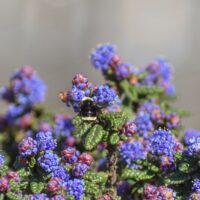
This popular small leaved shrub reaches 4 - 6 ft. high by 6 - 10 ft. wide. The electric cobalt-blue flowers cover the plant in spring and are very popular with bees and butterflies. Plant in full sun and provide decent drainage. Not a good choice for hot, inland areas. Drought tolerant. 'Dark Star' is VERY similar to 'Julia Phelps' but differs mainly in size. 'Dark Star' tends to stay a little smaller. Shrubby Ceanothus provide seeds eaten by bushtits, mockingbirds, quail and finches, as well as cover for birds.
Ceanothus ‘Frosty Blue’
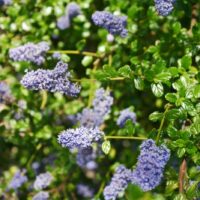
A Rancho Santa Ana introduction from the mid 1970's. This upright evergreen shrub reaches 8 to 12 feet tall and 10 to 15 feet wide with glossy green, textured foliage. Flowers in late spring with 2-4 inch panicles of beautiful blue flowers with a frosted appearance due to the white bracts on the buds. Useful as a specimen or screen due to its rapid growth. Amenable to pruning and can be trained into a small tree or espaliered subject. This reliable cultivar tolerates heavy soils better than most upright Ceanothus. Does best in full sun and will be drought tolerant once established. California lilac are valuable additions to the habitat garden.
Ceanothus ‘Julia Phelps’
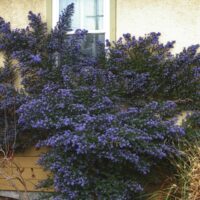
This much admired hybrid Ceanothus features a compact and bushy form, about 6 to 8 ft. tall and 8 to 10 ft. wide. Spectacular in spring when glowing dark indigo flowers cover the plant, accented by reddish buds. Small and crinkled dark green leaves provide an excellent backdrop for the richly colored flowers. Plant in full sun. Needs good drainage and summer drought once established. Does not do well in hot, interior climates. Very hard to distinguish from 'Dark Star', 'Julia Phelps' is somewhat larger. Shrubby Ceanothus provide seeds eaten by bushtits, mockingbirds, quail and finches, as well as cover for birds.
Ceanothus ‘Ray Hartman’
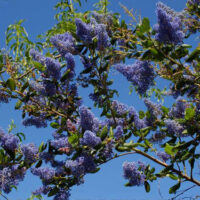
Beautiful large shrub rapidly grows 12 - 20 ft. tall and wide. Dark, shiny green foliage with large, medium blue spike-like flower clusters in the spring. Tolerates pruning and can be trained as a small tree or sheared to create a tall hedge. This selection is especially adaptable, tolerating heat, some summer water and drought. Plant in sun or very light shade. 'Ray Hartman' is a cross between the species C. arboreus and C. thyrsiflorus var. griseus. Ceanothus provide habitat and forage for a wide variety of birds, bees and butterflies.
Ceanothus arboreus ‘Cliff Schmidt’
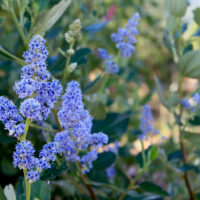
Selected from Santa Cruz Island by Native Son's Nursery, this handsome cultivar has a strong upright habit, growing into a tall and spreading shrub as much as 15-20 ft. tall and wide. Large dark green glossy leaves have white felted undersides. Medium blue flower spikes blossom in late winter to early spring and often again in fall. Excellent for coastal gardens in full sun, give some afternoon shade and a little summer water in warmer inland sites. This large shrub can be pruned into a lovely small tree. Ceanothus are excellent additions to habitat gardens where they provide food, cover and nesting sites for birds and beneficial insects.
Ceanothus papillosus – upright Baja form
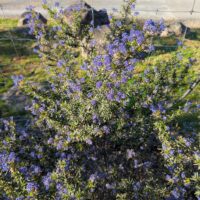
This cold hardy selection from Baja California is highly useful in the garden setting thanks to its tall, upright form and narrow, vaselike shape. Many customers ask us for a big but narrow form of ceanothus. This is one of the few selections that fits the bill. Plants reach 8 – 10 ft tall, but only reach 3 – 4 ft wide, making it ideal for a privacy screen in a small area. Indigo blue flowers cover plants in spring, followed by little seed capsules which are relished by birds. The crinkly, dark-green leaves are elongated and create a nice foil for brighter green plants, such as Salvia and Artemisia. As with all ceanothus, the flowers are loved by a large array of pollinators. Plant in full sun to very light shade and water infrequently once established. Needs decent drainage. This is the variety papillosus.
Ceanothus parryi
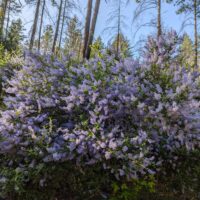
Nicknamed ladybloom, this ceanothus is underused in California gardens. Native to chaparral plant communities in the coast ranges of California and Oregon. Upright habit with arching branches growing 8-12 ft tall and wide with dark green, narrow leaves. Long, narrow flower clusters of medium to deep blue blossoms in the spring. A useful screen, specimen or informal hedge in full sun with little to no water once established. Tolerant of inland heat and conditions. Ceanothus are great additions to the habitat garden offering food and cover for birds and nectar for bees and butterflies.
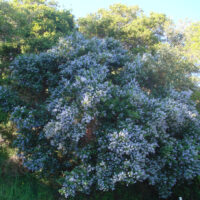
Ceanothus thyrsiflorus
One of the larger ceanothus, forming a good sized shrub or small tree 6-25 ft. tall. Shiny, bright green leaves and good sized clusters of flowers which can range from pure white to pale blue, sky blue through rich darker shades of blue in the spring. Easy, fast growing. Can be trained into a single trunk if desired. Useful as a specimen tree, background shrub or informal hedge. Drought tolerant when established. Ceanothus are fantastic habitat plants providing food and cover for a wide range of creatures. Bees and other pollinators frequent the flowers as do butterflies. Several butterflies and moths use it as a larvel food source. Bushtits, mockingbirds, quail and finches eat the seeds.
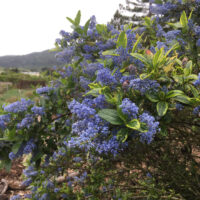
Ceanothus thyrsiflorus ‘El Dorado’
Fast growing upright evergreen shrub 6 - 10 ft. tall and wide. Dark green foliage with golden yellow variegation is a nice foil for the medium blue flowers in spring. Plant in full sun along the coast, some shade for hot interior sites. Drought tolerant once established. Occasional summer irrigation can be helpful, but allow soil to dry between waterings. Good for an informal hedge. An excellent habitat plant.
Ceanothus thyrsiflorus ‘Snow Flurry’
A beautiful large shrub or small tree 12 ft. (or more) tall and wide. Rich deep green foliage and profuse clusters of radiant pure white flowers in the spring. Adaptable, dependable and garden tolerant. Does well in coastal and inland situations. Best in full sun. 'Snow Flurry' is drought tolerant, but would appreciate a little summer water in hot regions. Not tolerant of very cold winter conditions. Selected from the Big Sur coast. Shrubby ceanothus provide seeds eaten by bushtits, mockingbirds, quail and finches, as well as cover for birds.