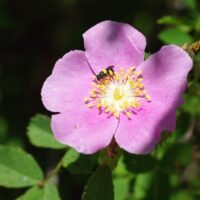
Rosa californica
A thicket forming, deciduous shrub native to riparian zones throughout the state. Fragrant, pink blossoms with yellow centers are followed by attractive red fruits or rosehips. The stems are lined with little thorns and gray-green, pinnately divided leaves. A good screen or living fence, where it will grows at least 5 ft. tall and usually spread wider. Very important for erosion control along streams. This is one of our most popular hedgerow plants due to the cover it provides for foraging wildlife and the value it offers to pollinators and birds. Prefers full sun to light shade and seasonally moist soils, but can go a little drier in the summer. A larval host to several butterflies.
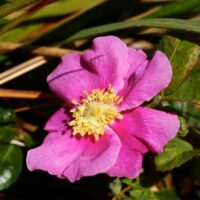
Rosa nutkana
Named for the Nootka Sound in Alaska where it was originally described, this shrub's range runs all the way south into California. Forms prickly thickets at least 6 feet tall with light green foliage. Super fragrant, 2-3 inch single pink flowers appear in summer followed by showy red hips.Favors moist sites in full sun to light shade. Rose thickets provide excellent habitat value, offering food and cover for birds and small mammals, pollen and nectar for many beneficial insects as well as a larval food source for a number of butterflies.
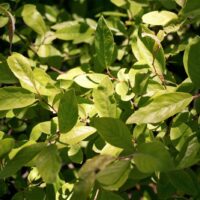
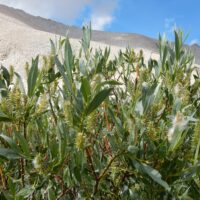
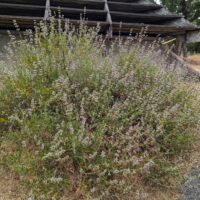
Salvia mellifera
California’s most common sage occurring in coastal scrub and chaparral communities from the San Francisco Bay Area south into Baja. Grows about 3 - 5 ft. tall and wide with textured, highly aromatic foliage. Flowers in late spring with tight whorls of small whitish to pale lavender blossoms. Flowers are not super showy, but renowned as an excellent source of nectar for bees and hummingbirds. Plant in full sun to light shade where it is tough, drought tolerant and deer resistant. No additional water is required once established.
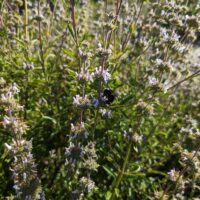
Salvia mellifera ‘Big Rock’
California's most common sage, growing in coastal scrub and chaparral communities from SF Bay Area south to Baja. The selection 'Big Rock' hails from the most northerly population, on Big Rock Ridge in Marin County. This sage is considered one of the best sources of nectar for bees and attracts a wide array of pollinators, including solitary native bees, butterflies and hummingbirds. The seeds are relished by quail and other birds. This selection is particularly fast growing and disease resistant, sporting highly fragrant, dark green foliage, growing 5 - 6 ft tall and somewhat wider. Late spring brings spikes of bluish-white flowers arranged in tight whorls. Plant in full sun where it will be extremely drought tolerant once established. Deer resistant.