
Acmispon (Lotus) glaber (scoparius)
Bees go nuts over the bright-yellow flowers of this California native. From spring and into summer you can find this plant covered in blooms at the edges of chaparral throughout much of California. The intricate, pea-shaped flowers, often colored burnished red as they are pollinated, emerge along wand-like stems. Deerweed usually reaches a height and width of about 2 – 3 ft. Plant in full sun to light shade. Needs good drainage and no summer water once established. A remarkable number of butterflies use this species as a larval host plant, including the bramble hairstreak, orange sulphur, funeral duskywing, silvery blue, acmon blue and the avalon hairstreak.

Adelinia (Cynoglossum) grandis
From woodlands throughout Northern and Central California comes this alluring bluebells relative. Dainty flower clusters ranging in color from periwinkle blue to lavender appear on slender stalks in the spring. The leaves are what gives this plant its name: grey-green and tongue-shaped, emerging in the winter from basal roots. Plant in bright shade and don’t water once established. Needs decent drainage. Once this plant goes to seed it will go dormant, re-emerging in late winter. A great accent plant for under the dry shade of deciduous oaks.

Agrostis pallens
A fine textured, drought tolerant, spreading, perennial grass that forms an undulating, naturalistic, meadow look, or can be mowed and used as a lawn substitute. Native to meadows, open woodlands and forests in many plant communities in California north to British Columbia. Grows 1 -2 ft. tall with airy flower stems in late spring to early summer. May be shy to flower in shady areas. Plant in sun to light shade, with decent drainage, where it will accept both water and drought. Will go dormant in summer without irrigation. If using as a lawn substitute, it will need summer irrigation, though requiring far less than a traditional lawn. Excellent understory among trees or shrubs, for rain gardens, bio-swales, meadows or mowed as a lawn substitute. Host plant for a number of butterflies. Deer resistant.
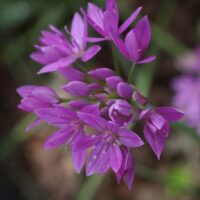
Allium unifolium
An adaptable and easy to grow native onion with handsome blue-green foliage. Late spring brings beautiful lavender-pink flowers on short stems 6 - 8 inches tall. Native in the Coast Range from the Central Coast, northwards. The flowers on this form have a particularly appealing saturated color. The original plants were given to us by the internationally known bulb expert and native plant horticulturist, Wayne Roderick. Fairly water tolerant, often found on seasonally moist and heavy soils. Spreads vigorously by seeds or bulb offsets. Goes dormant after bloom and will tolerate dry conditions at that time. Attractive to bees and butterflies. Reported to be gopher resistant. Deer resistant.
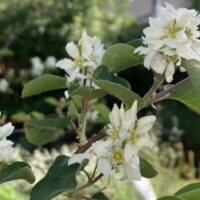
Amelanchier alnifolia
A common native shrub or small multi-trunked tree often found growing along seasonal streams. Serviceberries provide a touch of autumn color where the leaves turn a lovely butterscotch yellow. The white spring flowers are followed by dark blue-purple fruits coveted by band-tailed pigeons in the wild. Sun to partial shade. Moderate to infrequent water. Many butterflies use this species as a larval host, such as the California hairstreak and the Ceanothus silkmoth. Grows well in a large container.
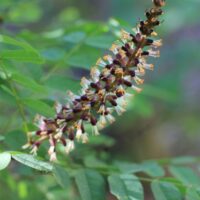
Amorpha californica var. napensis
A lovely and rare native shrub of the pea family, occasionally seen in woodland and chaparral communities in the coast ranges around the San Francisco Bay Area. Offering a delicate, airy quality, this deciduous shrub grows to around 6 ft. tall and wide, though can get bigger in the wild. Intricate flowers are closely set on slender spikes and are made up of tiny, intense indigo-purple petals with protruding bright orange stamens, charming on close inspection. This rare and threatened shrub is the larval food source for the California dogface butterfly, our state insect! Bees and butterflies nectar on the flowers as well. Best in lightly shaded areas with occasional to no summer water needed once established. Deer resistant.
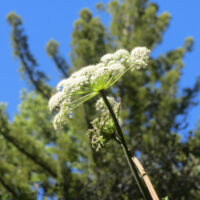
Angelica californica
Striking stalks up to 6 or more feet tall hold flat topped clusters of white flowers above low growing emerald-green leaves. This uncommon member of the carrot family needs only occasional water once established. Naturally occurs under the dappled shade of oaks where it cohabitates with ferns, hound's tongue, yerba buena and woodland strawberries. Excellent for attracting beneficial insects and is a larval food source for the anise swallowtail butterfly. May go summer dormant when allowed to dry out.
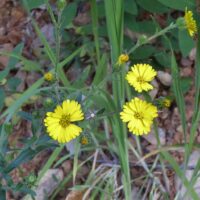
Anisocarpus (Madia) madioides
A quiet perennial, native to woods and coniferous forests of California from sea level to 4000 ft. Dark green, narrow leaves are covered with soft hairs and form a sturdy, low, perennial clump. The bright yellow daisies top 8-10 inch flower stems over a long period, from late spring into summer. Able to thrive in dry shady conditions.May seed about in a friendly way.
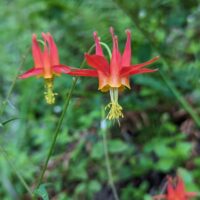
Aquilegia formosa
A popular native perennial with fern-like foliage and wonderful, nodding, spurred blossoms of red and yellow. Best with a little shade and moderate to regular moisture, but will tolerate full sun in somewhat cooler climates. The flower stalks reach 1 1/2’ to 3’ tall, with the grey-green foliage forming a mound of about 1 ft tall and wide. Flowers attract hummingbirds, while the seeds are relished by small birds such as sparrows and Juncos. If seed pods are left on the plants, you may get volunteer seedlings in the fall.

Aristolochia californica
Dutchman’s pipe vine is an interesting vine native to river, stream side and woodland habitats. Soft heart-shaped leaves and unusual purplish pipe-shaped flowers bloom in early spring. This deciduous twining plant will need some support if you wish it to grow upwards. Adaptable, but best with a little shade and moderate water. Slow to establish, we offer this adage to encourage patience: “The first year it sleeps, the second year it creeps and the third year it leaps”. Once established it will put on ample growth, easily covering a trellis or chain link fence. THE larval food source for the pipevine swallowtail butterfly. Deer resistant.
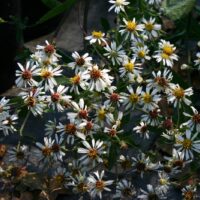
Aster (Eurybia) radulinus ‘Gilliam Creek’
This charming woodland aster makes its home in bright, dryish woods from the Channel Islands all the way up to the Oregon border and into the northern Sierras. Normally a shy, dainty little forest dweller, this selection from Sonoma County is far more robust, featuring large clusters of white-petaled daisies with white centers which turn yellow with age, and finally a deep maroon. Flower stalks reach up to 2 ft. high, much taller than is typical for the species. Serrated, deep green leaves form a high mat on this slowly spreading ground cover. An excellent plant for dry, woodland gardens, but will also tolerate moderate irrigation. One of the few excellent pollinator plants for the lightly shaded garden.

Berberis (Mahonia) aquifolium
This attractive, western native evergreen has a long history in cultivation for good reason. Erect stems rise 4 to 7 feet or more tall and wide, spreading slowly by underground rhizomes to form dense clumps. Bronzy-red new growth gives way to dark-green, glossy leaves with spiny margins that are prickly to the touch. Cold winters can darken the foliage with purple-red tones. Late spring brings clusters of bright yellow, sweetly scented flowers. Edible blue-black fruits follow and are pretty and tasty. A useful and adaptable shrub in a hedge or a shrubby border. Takes full sun to part shade. Performs best with some afternoon shade in hot areas and moderate to infrequent water. A great habitat plant which provides cover, nectar rich flowers and fruits relished by all. Deer resistant.
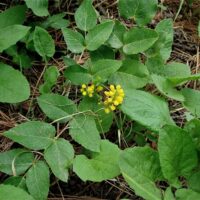
Berberis (Mahonia) aquifolium var. repens
This little cousin of the much larger Oregon grape only gets 1 - 3 ft. tall and spreads underground to create dense, evergreen drifts. The divided leaves have a matte finish with a grey-green color which turns purple-red with frost. Clusters of bright yellow flowers open in spring and are followed by deep blue "grapes" much loved by birds. The sweet-scented flowers are enjoyed by bees and butterflies. Provide full sun to shade and moderate to infrequent irrigation. Deer resistant.
Brodiaea elegans
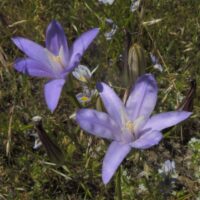
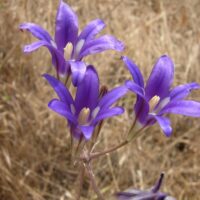
From grassy meadows and open woodlands comes this drought tolerant and colorful wildflower. Open clusters of dainty violet flowers sit atop stems reaching 8 to 20 inches in height. Plant in full sun to bright shade and provide decent drainage. As the name suggests, the harvest Brodiaea is the latest blooming of the Brodiaeas, sometimes not flowering until the end of summer after the grass-like leaves have gone dormant. It spreads rapidly but not invasively to form broad drifts. After blooming, this bulb will sleep until the return of winter rains. Do not irrigate. An excellent candidate for the rock garden where its graceful form will contrast wonderfully with the rigid stone.
Calamagrostis rubescens
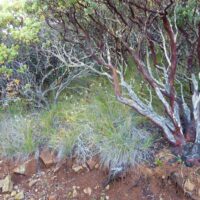
Native to wooded areas throughout the West, this slowly spreading grass forms dense drifts excellent for naturalizing in bright shade. The foliage reaches a height of about 12 inches with narrow inflorescences rising another 12 inches or so. While drought tolerant, it enjoys an occasional watering. Works well under oaks. Deer resistant.
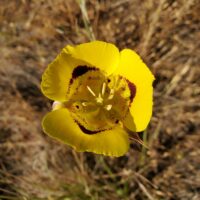
Calochortus luteus
This showy mariposa lily offers vibrant, golden-yellow flowers, often with reddish brown markings at the base of each of the three petals. The upward facing, bowl-shaped flowers seem to hover over grasslands on stems reaching one to two feet tall. In early winter, grass like leaves emerge from the soil, followed by the butterfly-favored blossoms in late spring and early summer. Once the flowers are done, this native bulb will go dormant. Plant in full sun to light shade with well-draining soil. Allow to go completely dry in the summer. Said to be one of the easiest of the mariposa lilies to grow in gardens.
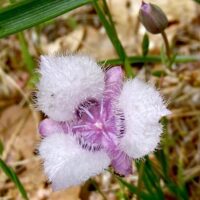
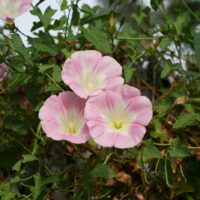
Calystegia purpurata ssp. purpurata
Lush, slender-stemmed vine with gray-green heart-shaped leaves scrambles up, over, or through any support provided. From late spring through early summer the plant is decorated with trumpet-shaped blossoms ranging in color from white to pink to purple. This deciduous vine can grow up to 10 ft. tall and wide. Sun to light shade, most soils, moderate to occasional watering for best appearance. Native throughout the Coast Range of California.
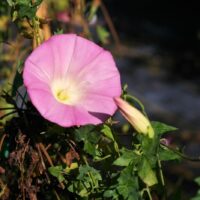
Calystegia purpurata ssp. purpurata ‘Palomarin’
Large flowers which open pinkish-white and darken to a rich lavender distinguish this selection which we discovered near Bolinas in Marin County. This vigorous, deciduous vine spreads quickly to climb over fences and shrubs with clasping stems and grey-green, arrow-shaped leaves. Reaches a height of up to 10 ft. or so and can spread at least as wide. In late spring and early summer, the morning glory flowers put on quite the display, opening at dawn and then closing at dusk. Does great in full sun but also enjoys a little shade, especially in hot, inland areas. Likes moderate irrigation but will become somewhat drought tolerant once established. Hummingbirds and native pollinators are drawn to the flowers.
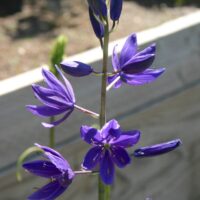
Camassia leichtlinii ssp. suksdorfii
Similar to the common camas, but with larger, star-shaped flowers ranging in color from soft to dark violet-blue on stems up to 3 ft tall. Native to grasslands and moist meadows that dry out in the summer. Also found in open, well lit woodlands. Easy to grow in full sun to light shade in a variety of soil types, including heavy clay. Allow to go dry after seed is set, where it will go completely dormant. This eye catching beauty is appealing to bees, butterflies and hummingbirds. An excellent container plant and cut flower. Deer resistant.
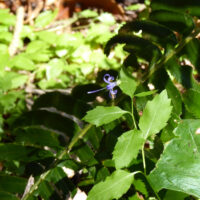
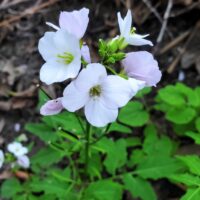
Cardamine californica
One of California's most widespread and earliest spring wildflowers, often beginning to bloom in the winter. Found in somewhat shady locations in a number of plant communities, this slender perennial has rounded basal leaves. Flower stems 10 inches to 20 inches tall are topped with four petaled flowers of pure white to soft pink. This sweet harbinger of spring is easy to grow given a little shade and winter rain. After flowering and setting seed it dies back to its roots where it goes dormant until next year's rains awaken it. Good under oaks.
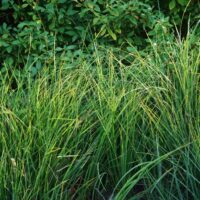
Carex barbarae
Widely distributed native sedge that is an important traditional basket fiber plant. Bright green sharp blades in clumps 1 - 3 ft. tall and spreading. Oval-shaped tufts of small reddish-brown flowers on spikes at the tip of the flowering stems. An attractive sedge, though it can be invasive. For sunny or partly shaded areas with regular to moderate moisture. Drought tolerant in clay soils or with some shade. Handsome container plant too. Often used in bio swales and riparian restoration. Deer resistant.
Carex densa
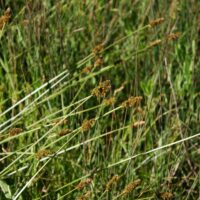
While uncommon in nurseries, this semi-evergreen sedge forms green tussocks which are very useful in seasonally moist meadows and open woodlands. Elongated, chunky seed heads rise above the dense leaf blades on slender stalks up to 2 ½ ft. tall. The foliage reaches 1 to 2 ft. high and slowly spreads to form small clumps. Useful for smaller gardens where you want a sedge that doesn’t spread super vigorously. Tolerates summer drought in somewhat heavier soils. A little extra irrigation will keep this sedge more evergreen. Native to much of California and north to Washington. Deer resistant.
Carex globosa
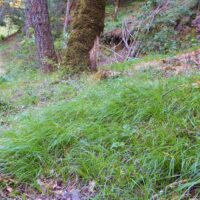
Here is a sturdy and useful woodland sedge native to well-drained soils in wooded areas. Grows 6 - 12 inches tall and spreads slowly to form bright green tussocks. Useful as a filler among shrubs or trees in filtered shade where it tolerates drought; but some summer water will keep it looking fresh for longer. Great under oaks. Deer resistant.
Carex pansa
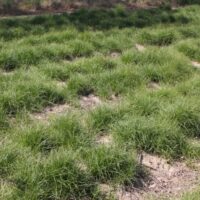
A durable spreading sedge which can be used as a lawn substitute or unmowed meadow. Growing 8 -12 inches tall and spreading by rhizomes to form dense colonies of curling dark green foliage. The foliage is evergreen in mild climates and grows well in full sun to partial shade with regular to occasional water. Too much drought causes summer dormancy. Flowers appear in early spring but are not real showy. Deer resistant.
Carex praegracilis
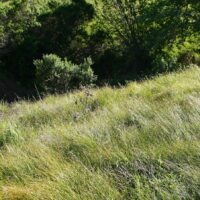
Similar to Carex pansa but growing taller. The fine textured grass-like blades can reach a foot or more tall and spreads freely by rhizomes to form a thick weed smothering groundcover. Useful for meadows, green roofs, bio-swales, erosion control and as a lawn substitute. Can be left natural where it has a lush tousled appearance or trimmed occasionally for a low turf-like appearance. Tolerates drought, inundation, poor soils, salt spray, heat, cold, shade and foot traffic. Plant in sun to light shade where it requires some summer moisture but far less than a conventional lawn. Will go summer dormant if allowed to get too dry. Deer resistant.
Carex praegracilis ‘Chisai’
An excellent cultivar of the native field sedge, selected for it's compact form and slower spreading habit. Increases by short rhizomes to form a sturdy, dark-green carpet, 6 -8 inches tall and 1 - 2 ft wide. Grows more clumping and significantly tighter than the rapidly spreading forms more typical of the species. Still, it will form a solid, small scale ground cover or turf substitute, between stepping stones or mixed with bulbs and perennials for a meadow affect. Plant in full sun to light shade with occasional to moderate water. Tolerates light foot traffic. Deer resistant.