
Erythronium ‘Pagoda’
This delightful woodland bulb offers soft yellow, lily flowers in early spring, held on delicate stems up to a foot high above broad, speckled leaves. The charming flowers point gently downwards with stamens protruding from the reflexed petals. Creates a beautiful accent in the shade garden where it can form small drifts overtime, mingling with ferns, bleeding hearts and fringecups. The leaves emerge in late winter when the soil is moist and disappear shortly after flowering. Needs well-draining soil with a little organic matter and only occasional irrigation after it goes dormant in summer. A cross between 2 rare native fawn lilies: E. tuolumnense and E. revolutum.
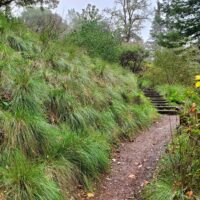
Festuca californica
California fescue is a beautiful native bunchgrass often seen cascading down oak studded slopes. Blue-green leaf blades 1 1/2 ft. tall with graceful, airy flower stalks rising another 2 ft. above the foliage. A natural for under native oaks where they receive light shade and little summer water. Accepts full sun near the coast. They are drought tolerant once established. Deer resistant.
Festuca californica ‘Long Canyon’
We selected this unusual form of California fescue from the Trinity Mountains in Northern California. Features remarkably broad, stiff leaves colored an appealing silvery-grey reaching up to about 18 inches in height. In late spring, slender, airy grass flowers rise another 2 ft. above the foliage. Grows naturally in partial shade under oaks where it can be very drought tolerant once established. Similar to ‘Scott Mountain’, but with taller, more silvery foliage. Deer resistant.
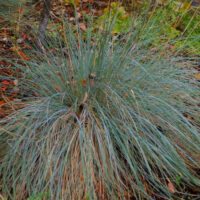
Festuca californica ‘Phil’s Silver’
A bunch grass selected from seedlings grown from seed collected almost within sight of the ocean (Shell Beach area, Sonoma Coast). Gray-green in spring, it turns more silver-gray as the dry season progresses. Relatively dense (2 ft. X 2 ft.) foliage with unusually stout and heavy grass-flowers, this robust clone holds up well throughout the season. Its cultivar name is a pun for baby boomers that watched the 50’s show The Phil Silver’s Show, starring Phil Silvers. It prefers good drainage and bright shade inland with little to occasional summer water. Deer resistant.
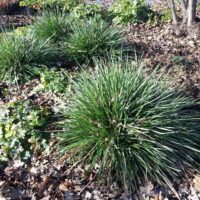
Festuca californica ‘Scott Mountain’
A Native Sons Nursery selection from Siskiyou County. A good choice for gardens with limited space where the typical California fescue may prove too large. Smaller, stiff. blue-green blades to 1 foot tall with airy flower stems rising to 3 ft. tall. Will accept full sun along the coast but best with light shade. Wonderful understory grass among trees and shrubs or other partly shaded areas. Can stand alone or use in drifts for a wonderful textural effect. Drought tolerant but appreciates a little supplemental summer water. Deer resistant.
Festuca californica ‘Willits Giant’
Living up to its name, this selection is extremely robust, growing twice the size of typical California fescue. Wide gray blades grow in mounds about 3 ft. tall and wide. The grass flowers rise 5-6 feet tall with loose inflorescences dangling from the arching stems. Useful as a specimen or in drifts, this grass serves as a sturdy ground cover in deciduous oak woodlands or other lightly shaded areas. Drought tolerant once established but thrives with occasional summer water. We selected this cultivar from a seed crop collected near Willits, Mendocino County. Deer resistant.
Festuca occidentalis
Western fescue has a wide distribution in western north America, largely found in low to mid elevations of Central California north to British Columbia. Native to conifer, oak and mixed evergreen woodlands where it grows in light shade. Forms dense tufts of fine evergreen foliage 6-12 inches tall. Delicate flower panicles on stems rise 2 ft. or so above the blades in early spring or summer. A nice accent in lightly shaded areas with decent drainage and some summer moisture. Deer resistant.
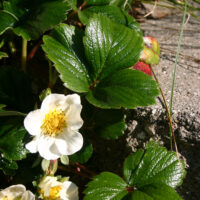
Fragaria chiloensis ‘Green Pastures’
Beach strawberry is native to Pacific coast beaches and bluffs of North and South America. A popular and adaptable groundcover growing well in a wide range of climates and conditions. This selection forms lush carpets of shiny dark green foliage. The five-petaled white flowers are particularly large, showy and profuse in the spring. A great colonizer and stabilizer, this vigorous perennial spreads by runners to form dense carpets. Plant in sun to light shade with moderate to occasional summer water. Drought tolerant along the coast. This ia a male selection and will not fruit. Deer resistant.
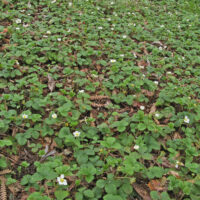
Fragaria vesca
This native woodland strawberry is a great colonizer and can cover a lot of ground in a hurry. Pretty little white flowers are followed by small, tasty, red berries. Tolerates drought but best with a little summer water. Well suited for under oaks and conifers. Said to be deer resistant.
Fragaria vesca ‘Montana de Oro’
A vigorous, heavy blooming selection of woodland strawberry from a coastal canyon at Montana de Oro in San Luis Obisbo County. This easy to grow, carpet forming, ground cover is a great colonizer and stabilizer for lightly shaded areas. Deals well with root competition and thin soils. Pretty little white flowers are followed by small, tasty, red fruits. Often deer resistant.
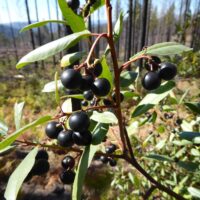
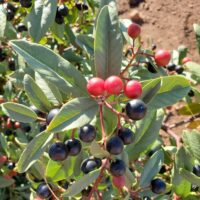
Frangula (Rhamnus) californica – large, inland form
Handsome native evergreen shrub with small greenish-yellow flowers followed by showy dark-colored berries. The propagation material for this this crop was collected from tall, upright shrubs on a hot inland site. Growing 8 ft. or more tall, coffeeberries thrive in full sun to light shade. They are drought tolerant once established, but would appreciate occasional deep summer waterings. A good choice for hedgerows and habitat gardens, coffeeberry provides food and nectar for a wide array of beneficial insects, birds and wildlife.
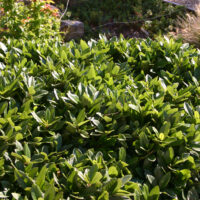
Frangula (Rhamnus) californica ‘Ed Holm’
Prized by gardeners for its low, dense habit and shiny, leathery leaves, this special selection of coffeeberry was discovered along Skyline Dr. in the northern Santa Cruz Mountains. Clusters of small, creamy-yellow flowers are produced from spring through fall and are followed by penny-sized, deep purple fruits. Over time, 'Ed Holm' will reach a height of up to 3 ft. and a width up to 6 ft.. Plant in full sun to light shade. Protect from the hot afternoon sun in hot areas and give moderate to infrequent irrigation. The blossoms are a favorite of bees.
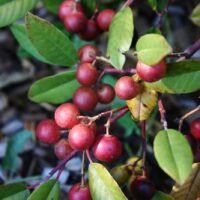
Frangula (Rhamnus) californica ‘Eve Case’
This well-known cultivar of coffeeberry was introduced to the trade in 1975 by the Saratoga Horticultural Foundation. Coffeeberry is a handsome evergreen shrub with broad leathery leaves. This selection grows to 6 ft. tall and wide, though mature specimens can reach 8 ft. or more tall under ideal circumstances. The small yellow-green flowers are not showy but attract an array of pollinators. The berries start out green and age to burgundy-black and are attractive to small mammals and birds. A larval food source for pale swallowtail butterfly. Adaptable, grows in sun to light shade. Drought tolerant but appreciates occasional summer water.
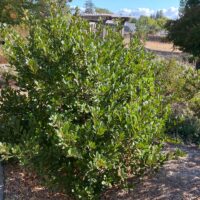
Frangula (Rhamnus) californica ‘Gumdrop’
This somewhat diminutive selection of our native coffeeberry was discovered as a seedling from a plant found on Montara Mountain, south of San Francisco. We thought the dense form and evocative, gumdrop shape was deserving of this sweet moniker. Only reaches to about 5 - 6 ft. tall and wide and offers attractive, slightly-concave, dark green, leathery leaves, not unlike its close relation ‘Leatherleaf’. Will accept full sun in somewhat cooler locations but enjoys a little shade in hotter regions. Occasional to infrequent irrigation once established. The small, yellowish flowers which appear in spring and summer are extremely popular with bees, and the juicy, purple fruits which follow are enjoyed by birds.
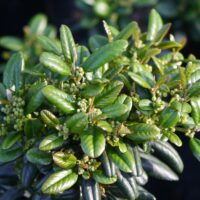
Frangula (Rhamnus) californica ‘Leatherleaf’
Another fine Roger Raiche selection, this coffeeberry cultivar is well worth growing. The evergreen leaves are particularly dark and broad with a mounding habit growing 5 - 6 ft. tall and wide. The tiny flowers attract a wide array of pollinators. Larval food source for pale swallowtail butterfly. The handsome fruits go green to red to black and are enjoyed by small mammals and birds. Plant in sun to light shade. Drought tolerant once established though occasional summer watering is helpful. An adaptable and useful shrub for both formal and naturalistic plantings.
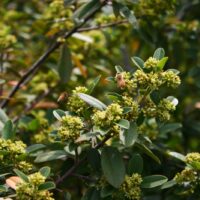
Frangula (Rhamnus) californica ‘Mound San Bruno’
Selected by Roger Raiche on San Bruno Mountain in San Mateo County, this is one of the most reliable coffeeberries. Grows 6 ft tall and wide, with narrow, evergreen leaves and a compact habit. For full sun on the coast to part shade inland. Will tolerate irrigation, but needs only occasional summer water once established. Flowers are loved by pollinators, especially bees. A larval food source for the pale swallowtail butterfly. Provides black juicy fruit in the fall for thrushes, jays, mockingbirds, and robins. May grow to as much as 8 ft. tall with moderate water and good drainage in cooler areas.
Frangula (Rhamnus) californica ‘Olema’
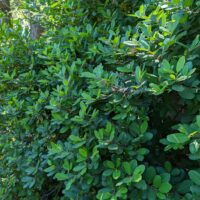
We discovered this large, dense form of our native coffeeberry near the town of Olema in coastal Marin County. While it reached up to around 15 ft. tall and wide in nature, it has been a little slow to do so in the ground here at the nursery. After about 4 years, it’s reached a height of about 9 ft. This selection of coffeeberry is ideal for a tall hedge or screen where an evergreen shrub is needed to create privacy. Grows well in full sun somewhat near the coast but will need a little shade in hot, inland sites. Occasional to infrequent irrigation once established. Coffeeberries are some of the best habitat plants. The small, yellowish flowers are adored by bees in spring and summer, while the plump, purple fruits that follow are relished by birds.
Frangula (Rhamnus) californica ‘Seaview’
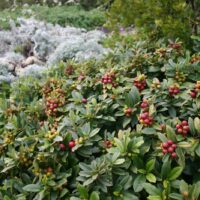
This highly sought after selection of our native coffeeberry stays low and compact only reaching 2 – 3 ft tall and up to 6 ft wide. The tidy, deep green leaves form dense rosettes with small cream-colored flowers appearing from spring through summer. Deep purple “berries” form dense clusters in the summer and fall. Enjoys full sun to moderate shade and moderate to occasional water once established. An excellent habitat plant for bees and birds.
Frangula (Rhamnus) californica ssp. occidentalis
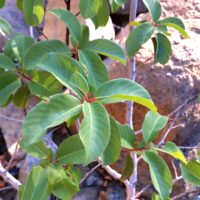
Description coming soon!
Fritillaria affinis
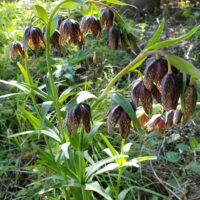
Charming, spring blooming, bulbous plant in the lily family, with beautiful, pendulous, bell-shaped flowers. This is California's most common fritillary and the most variable, in both size and flower color. Flowers vary greatly and can be yellow-green to purple-brown and may be beautifully checkered with brown and green, sometimes red-purple patterns. Can grow 12 inches - 3 ft tall depending on the habitat and substrate. Native to grasslands, woodlands and chaparral plant communities including serpentine soils. The easiest of the fritillaries to grow, preferring light, well drained soils, sun along the coast to light shade in hotter areas. Plants accept water in their growing season, but should be allowed to go dry once dormant. Protect from gophers, slugs and deer.
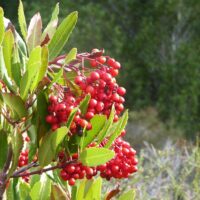
Heteromeles arbutifolia
Toyon is a handsome native evergreen shrub 6 - 10 ft. tall and wide. Sun to part shade, drought tolerant. Clusters of lacy white flowers bloom in summer and areattractive to pollinators. Spectacular bundles of red berries are relished by birds and are a great winter decoration. Valuable as a specimen, screen, hedge or bank plant. Birds attracted to the fruit include the following species: Cedar waxwing, California towhee, spotted towhee, Western bluebird, robins, mockingbirds, bandtailed pigeon, waxwing and quail.
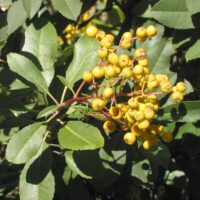
Heteromeles arbutifolia ‘Davis Gold’
An interesting cultivar of the native toyon which bears bright golden yellow berries rather than the more common red-colored fruits. A handsome evergreen shrub 8 - 12 ft. tall and wide (or more). Sun to part shade, drought tolerant. Clusters of lacy white flowers bloom in summer and are attractive to pollinators. The showy clusters of orange-yellow berries are relished by birds and are great winter decoration. Valuable as a specimen, screen, hedge or bank plant. This selection is considered more disease resistant than most toyon.
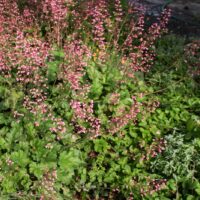
Heuchera ‘Old La Rochette’
Here is a wonderful, often hard to find Heuchera hybrid. Grows into robust clumps of rounded leaves to around 1 ft. tall and 1 - 2 ft. wide. 2 ft. tall flower stalks carry hundreds of soft pink blossoms in the spring, and often intermittently through the summer. Sturdy perennial for part shade and a little summer water. This species attracts hummingbirds.
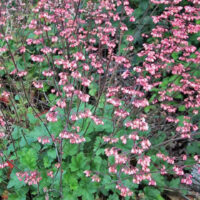
Heuchera ‘Rosada’
Listed as one of U.C. Davis Arboretum’s “All Stars”, this heuchera hybrid is tough and dependable. Forms an attractive mound of evergreen foliage 10 - 12 inches tall. A long display of tall flower stems covered with creamy-pink dainty bells begin in the spring and often continue into the summer. Best with part shade and moderate to occasional summer water. Attracts hummingbirds.
Heuchera ‘Santa Ana Cardinal’
An outstanding hybrid that is vigorous and free flowering. Compact clumps of foliage topped with 2 ft. tall flowering stems with vibrant rose-red blossoms over a long period. Plant in cool full sun to light shade with moderate to occassional summer water once established. This species attracts hummingbirds.
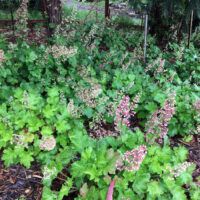
Heuchera maxima
Native to the Channel Islands, this is one of the most adaptable and vigorous of the alum roots, forming broad evergreen mounds of bright green folilage 1 - 1 1/2 ft. high. Maroon flower stems are 3 ft. high topped with pink blushed creamy flowers that have a slight green haze. Best with part shade and a little summer water, but will tolerate full sun close to the coast. Good for use under oaks. This species attracts hummingbirds.
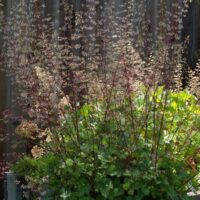
Heuchera micrantha
This is our common alum root which is usually seen on shady cliffs and roadbanks adjacent to forests. Easy to grow in garden situations. Forms low mounds of foliage topped with dainty white flowers on long stems. Likes moisture, but tolerates considerable drought and takes deeper shade than most Heuchera species. This species attracts hummingbirds.
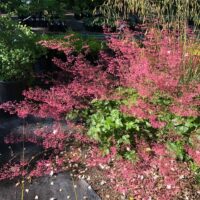
Heuchera micrantha ‘Martha Roderick’
Here’s a pink flowered form of the normally white flowered native alum root. Foliage forms handsome clumps topped with slender stalks 1 - 1 1/2 ft. tall of tiny pink flowers. Excellent in woodland setting for border, slope or rock garden. Drought tolerant but best with a little water. This species attracts hummingbirds.