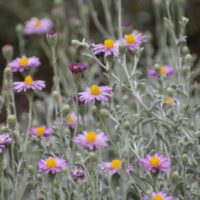
Lessingia (Corethrogyne) filaginifolia ‘Silver Carpet’
A variable species, this selection hails from the Big Sur Coast and was discovered by Carol Bornstein. Forms an attractive ground hugging mat 4 ft. or more wide. The gorgeous silver foliage is the perfect foil for the 1 inch lavender-pink daisies with yellow centers. Tolerates a wide range of conditions including full sun to light shade, drought and wind. Useful groundcover, meadow plant or spiller where its flowers are enjoyed by bees and butterflies. Best with some summer water inland. Deer resistant.
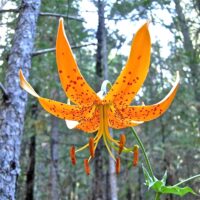
Lilium humboldtii ‘ssp. humboldtii’
From the mountains of northern California comes this dramatic, drought tolerant lily, reaching upwards of 10 feet tall in its native habitat of chaparral and open forest. Lowland gardeners can expect a height of 6 feet or so. Large, orange flowers with magenta spots form many stately tiers around the robust stalks with lance-shaped leaves climbing up the base in tidy whorls. Give this rare lily excellent drainage and withhold summer water. Plant in dappled shade.
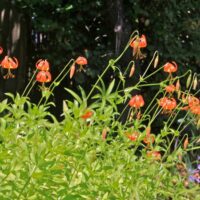
Lilium pardalinum
An elegant and beautiful native from moist places and along stream banks in many plant communities from southern Oregon to southern California. A reliable species easily growing 4 ft. tall or more, slowly increasing its width over time. The Turk’s cap style flowers bloom in summer and are orange with red tips and maroon spots. Dies back to the ground in winter. Prefers fertile, well drained soils. Where summers are cool you can plant in full sun. Elsewhere plant in filtered sun, light shade or afternoon shade. Requires moderate summer water.
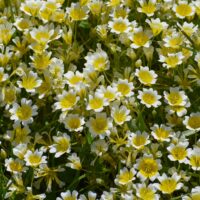
Limnanthes douglasii
California native ANNUAL occurring in grasslands and vernal pools throughout California. Low growing, shiny green foliage is topped with a profusion of sweetly fragrant, cup shaped, bright yellow blossoms with white tips. An excellent choice for low, winter wet areas, drainage swales, retention basins or seasonally dry stream beds. Thrives in heavy soils where it often naturalizes. Plant in full sun to part shade with regular water through the growing season. Fabulous container plant too. Meadowfoam is excellent for encouraging native pollinators, bees and butterflies.
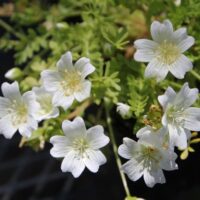
Limnanthes douglasii ssp. nivea
California native ANNUAL occurring in grasslands and vernal pools throughout California. Low growing foliage is topped with a profusion of sweetly fragrant, small white flowers with purple-pink veins on the petals. An excellent choice for low, winter wet areas, drainage swales, retention basins or seasonally dry streambeds. Thrives in heavy soils where it often naturalizes. Plant in full sun to part shade with regular water through the growing season. Good in containers too. Native wildflowers are excellent for encouraging native pollinators.
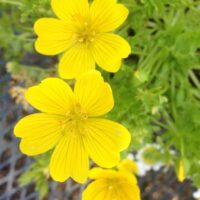
Limnanthes douglasii ssp. sulphurea
Pure yellow flowering form of meadowfoam, rare in the wild but easy to grow in the garden. This native ANNUAL favors seasonally moist areas in full sun. Low growing foliage is topped with a profusion of pure yellow, cup-shaped, fragrant flowers. Useful in low areas, drainage swales, retention basins or seasonally dry stream beds. Thrives in heavy, water retentive soils. Wonderful in containers too. Meadowfoam is excellent for encouraging pollinators and other beneficial insects.
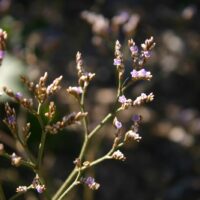
Limonium californicum
Native to coastal areas throughout much of the state, this beautiful statice relative produces clusters of small, lavender-purple flowers on slender stalks up to 18 inches tall. Low rosettes of semi-succulent, dark green leaves provide an excellent contrast to the airy inflorescences. Plant this marsh native in full sun with regular to moderate water. Thrives in wet conditions with poor drainage. Excellent for bees and butterflies. Makes a wonderful dried flower.
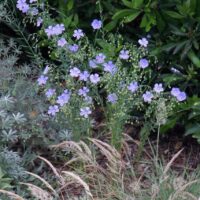
Linum lewisii
A profusion of sky-blue, five petaled, shallowly cupped blossoms flower in late spring and into summer. Growing 12 to 18 inches tall with slender stems and narrow leaves. Can be short lived but often reseeds. A lovely filler, whose true blue flower color seems to go with everything, and the fine foliage contrasts nicely with a variety of leaf colors and shapes. Plant in full sun with moderate to infrequent summer water. Deer resistant.
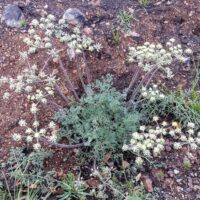
Lomatium dasycarpum
Native to chaparral, grassland and open woodland throughout much of California, this dainty little member of the carrot family produces flat-topped clusters of fuzzy flowers, yellow in bud and creamy-white when open. The fern-like leaves are gray-green and hairy. Blooms in early spring. A larval food source for the Anise Swallowtail butterfly. Needs well-drained soil and full sun to part shade. Do not water once established. Summer dormant.
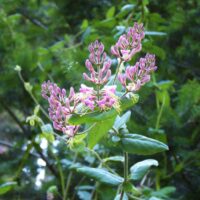
Lonicera hispidula
This native honeysuckle is often seen climbing over shrubs on the edge of woodlands where its roots are shaded and its foliage is sun drenched. The trumpet-shaped flowers range in color from rosy-pink to pink and white and feature prominent yellow stamens emerging from their mouths. They form clusters which decorate the tips of the vining branches and are attractive to bees and hummingbirds. The high point is the drooping clusters of luminous red berries in late summer which are beautiful to behold and provide a feast for birds, especially orioles. A drought tolerant vine but would appreciate occasional deep summer watering. Considered by some to be deer resistant.
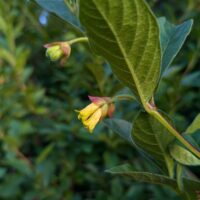
Lonicera involucrata
An interesting native shrub that grows along streams and other moist places. The tubular, red and yellow flowers are borne in pairs on bright red bracts and are hummingbird favorites. Two black shiny fruits follow the flower and are very showy set against the red bracts, making them attractive to birds. Reaches 6 - 10 ft. tall and wide, this neatly branched shrub loses its leaves in the winter. A great addition to the habitat garden in full sun to light shade with regular to occasional deep summer water. Orioles love the fruits. Needs afternoon shade in hot, inland areas. Deer resistant.
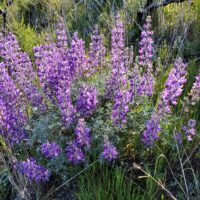
Lupinus albifrons var. albifrons
A popular California native lupine growing to around 3 ft. tall and wide. Beautiful silver foliage with intense blue-purple flower spikes in the spring. To thrive, this lupine needs full sun to very light shade and excellent drainage. Little to no water once established. Vulnerable to snail and slug predation. An excellent species for native pollinators and a larval host for several species of butterflies. Deer resistant.
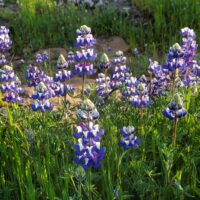
Lupinus nanus
This beautiful ANNUAL lupine can be seen on grassy hills, open slopes and fields, often casting a blue haze of color from a distance in the spring. Low growing, 6 - 20 inches tall and wide, with wonderfully fragrant, rich blue flowers with white markings. Prefers full sun, lean and well drained soils with minimal supplemental watering. Contrasts beautifully with California poppies, providing the classic, blue and gold displays of spring. Attractive to a myriad of pollinators and a larval food source for a number of butterfly and moth species. Deer resistant.
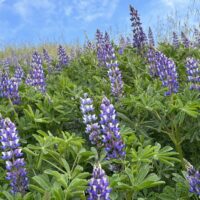
Lupinus succulentus
One of the easier-to-grow lupines, this long-blooming ANNUAL is low maintenance and thrives in heavier soils. Bright-green, palmate leaves topped by purple-blue spires quickly reach 2-3 feet tall and wide—or more, if happy. Reseeds easily and returns with winter rains, or whenever conditions are moist and fertile. Although it enjoys moderate to occasional water, it will tolerate both wet and dry areas. Arroyo lupine is found in diverse habitats with a broad native range in California, but prefers full sun and clay-rich soil. Looks splendid planted en masse and can serve as a nitrogen-fixing, seasonal groundcover. All parts of the plant are toxic if eaten, but it's an important butterfly larval host and a food source for native bees. Deer resistant.
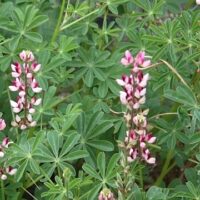
Lupinus succulentus
A pretty, pink selection of an easy-to-grow species of ANNUAL lupine. Arroyo lupines have lush, bright-green foliage and attractive flower spikes that typically come in shades of pink or purple. On 'Rodeo Rose', these eye-catching blooms combine rosy-pink wings with banners that turn a dark maroon. Grows quickly to 2-3 feet tall and wide, and reseeds readily at the end of its season. This adaptable species has an affinity for moist, heavy soils, and does well in irrigated gardens, but tolerates drier conditions as well. It is native to diverse habitats and has a broad range in California. Prefers full sun and occasional water. Plant en masse for a gorgeous, seasonal groundcover. All parts of the plant are toxic if eaten, but it's an important butterfly larval host and a food source for native bees. Deer resistant.
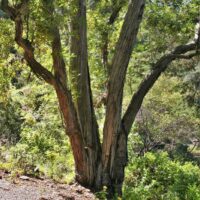
Lyonothamnus floribundus ssp. aspleniifolius
A rare and beautiful evergreen tree from Santa Cruz Island off of the Southern California coast. Fernlike, pinnately divided, shiny, dark-green leaves adorn this fast growing tree which can reach 20 to 50 ft. tall and 15 to 20 ft. wide. Late spring brings large flat-topped clusters of creamy-white flowers on this unusual rose family member. Peeling, reddish-brown bark adds to the interest of this single or multi-trunked tree, which can be used in small groves or as a striking specimen. Plant in full sun to partial shade with moderate to infrequent water. Cold hardy to about 15 degrees. Pollinating insects and birds are attracted to the flowers.
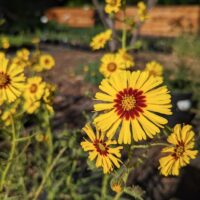
Madia elegans
Native ANNUAL growing 3-4 ft. tall with multi branching aromatic stems. Cheerful bright yellow daisies top the stems in the summer and can be solid yellow or may have a maroon spot at the base of each petal. Tarweeds are an important late nectar source for butterflies, bees and other beneficial insects. The seeds are relished by small mammals and birds, especially finches. Native to grasslands and open forests, well adapted to clay soils and full sun, perfectly adapted to our long, dry summers.
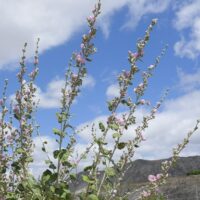
Malacothamnus fasciculatus
Native to western Southern California, this fast growing, evergreen shrub grows to 6 + feet tall and spreads to form colonies. A multi-branched mallow with hairy, gray-green, leaves often shaped like those of maples. The pale pink, cup-shaped flowers held in clusters along the stem, bloom from spring into summer. A native bee magnet. Useful as an evergreen screen for full sun. Occasional irrigation to drought tolerant once established. A larval food source for the west coast lady and the northern white-skipper butterflies. Reported to be deer resistant.
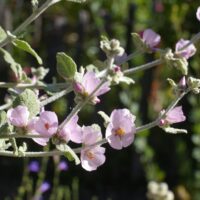
Malacothamnus fremontii
A fast growing, thicket forming, native shrub with silvery white, felted foliage 4 - 6 ft. tall and spreading. A profusion of pale-pink, cup-shaped flowers decorate the branch tips in summer. A tough and adaptable shrub for sunny dry areas, appreciating occasional summer water once established. Useful on banks or other challenging sites. Host plant for the Painted Lady and West Coast Lady butterfly. An excellent nectar source for orioles. Deer often seem to leave it alone.
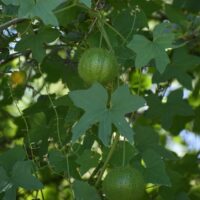
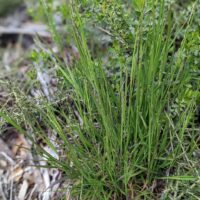
Melica californica
Here is a tough and handsome bunchgrass native to the grasslands and oak woodlands of northern and central coast ranges and the Sierra Nevada foothills. Bright green blades grow about one foot tall. The flower spikes are made up of glistening papery bracts and grow 2 - 4 ft. tall. The ornamental flowering culms remain attractive even after this grass has gone dormant, and is also useful as a “cut” in floral arrangements. Tolerant of many soil types, though it requires good drainage. Plant in full sun to light shade where it is very drought tolerant. Deer resistant.
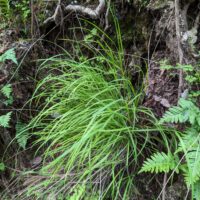
Melica torreyana
At its best in winter and early spring, this little northern California bunchgrass is a perfect mound of soft green blades. In full bloom it can reach 1 - 3 ft. tall, followed by typical melic fruit resembling small brown rice grains held close to the stem. Grows in sun and shade in nature, but performs best/longest in the garden in part shade. Will go semi-summer dormant with drought, but will be evergreen with some moisture. Deer resistant.
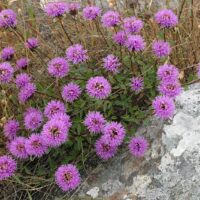
Monardella purpurea
A locally rare and more refined version of our common coyote mint, often with darker flowers, colored purple. Mature plants typically stay under a foot tall, but will get a little wider. Leaves are narrow and dark green, lining burgundy-tinged stems. While native to serpentine soils, it does well in most soils with good drainage. Plant in full sun to part shade and water infrequently. A great, rarely offered native for rock gardens or smaller areas, where butterflies and bees will enjoy the summer blossoms. Deer resistant.

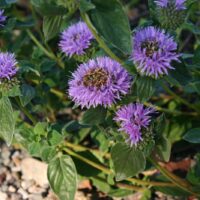
Monardella villosa ssp. franciscana ‘Russian River’
Our own selection of coyote mint from a rocky slope along the lower Russian River. Although Monardella is sometimes difficult in cultivation, this plant has proven to be vigorous. Grows 12 to 18 inches tall with ball-like clusters of pinkish-purple above the fragrant evergreen foliage. Good for a dry sunny site. Attracts bees and butterflies. Deer resistant.
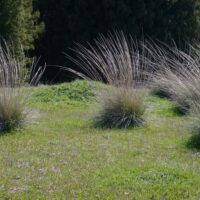
Muhlenbergia rigens
With its graceful, arching habit and tall, attractive seed stalk, this versatile, adaptable native grass is a striking addition to any garden. Forms a tidy, dense clump 3 ft. tall and 3-4 feet wide, making it useful as a specimen and also wonderful planted in mass. Remains mostly evergreen with occasional summer water, but can be periodically chopped down to spur fresh growth. Plant in full sun to light shade. Tolerates moist or dry soils and performs well in clay. Its extensive root system makes it an excellent for soil stabilization. Good habitat value offering seeds for songbirds and is a larval food source for a number of butterflies species. Deer resistant.
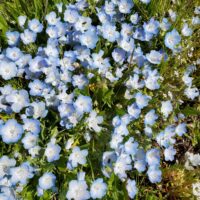
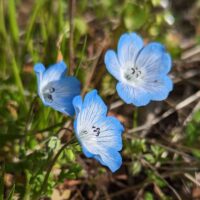
Nemophila menziesii – Frosty Blue
An interesting seed strain of the charming, ANNUAL baby blue eyes. Found in many habitat types throughout California, this beauty has long been in cultivation. The slender, succulent, lobed leaves grow 4 - 6 inches tall, spreading and spilling about 1 ft wide. The "Frosty" in the name refers to the silvery color to the foliage, which contrast nicely with the profusion of gorgeous, bright, baby-blue blossoms. Spectacular in drifts, where it can spill and cascade, at the front of a garden bed, in meadow plantings, rock gardens or in containers. Plant in full sun to light shade where it is early to bloom during the cool of spring. Hot weather triggers seed production. The large black seeds are relished by birds. Reseeds readily.
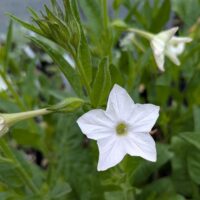
Nicotiana quadrivalvis
This late-blooming annual can be found in dry, sunny, well-drained slopes and washes throughout much of California. Often referred to as sacred tobacco by the Northern California indigenous tribes, it has been intentionally cultivated for thousands of years. Slightly fuzzy, 6-inch long lanceolate leaves give rise to stalks 1- 6’ tall that are topped with long, white, tubular flowers from May-October. Provide full sun, good soil drainage, and little to no water. Dead-heading will prolong the bloom period. Often a fire follower. Drought tolerant. Deer may eat the flowers.
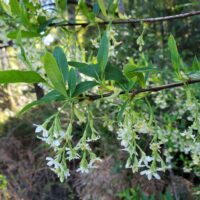
Oemleria cerasiformis
A charming native shrub which grows in moist areas along the coast or when inland on forest edges. Blooms in early spring just as the new leaves are beginning to expand with drooping clusters of fragrant white flowers. Male and female plants are separate and you'll need both to get the small blue-black fruits that birds enjoy. A suckering shrub growing 5 - 6 ft. tall or more. Plant in part shade with regular to occasional water. Can grow in cool full sun such as you find along the coast.