Trientalis latifolia
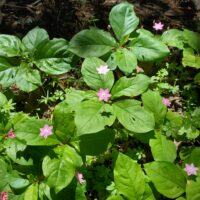
Shade loving native perennial, inhabiting open woods from San Luis Obispo County to British Columbia. Forming small colonies from underground tuberous rootstock. Slender stems rise 6 inches tall with a whorl of neat leaves at the top of the erect stems. Dainty pink star-shaped flowers are suspended above the leaves on thread-like pedicels. Flourishes in loose, woodsy, acidic soils in lightly shaded areas. Thrives with the spring rains, then goes dormant in the summer dry period. A charming addition to the shade garden.
Trillium chloropetalum
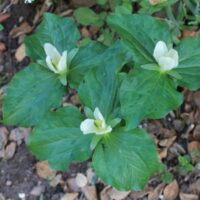
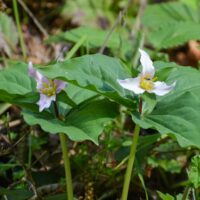
The beautiful and distinctive giant Trillium is an elegant addition to the woodland garden. Native to coastal and interior open forests and woodlands of the San Francisco Bay Area and North Coast Ranges.Emerges in February with three broad leaves surrounding a leafless stem 10-18 inches tall. A single large flower arises directly from the whorl of leaves and can vary from white, pink, to maroon red. The leaves often have green or maroon mottling. After flowering it dies back to the ground. Prefers the dappled light of a woodland setting with humusy well drained soil and some summer moisture.
Urtica dioica
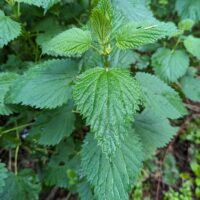
Found in moist woodlands and meadows throughout the state, stinging nettle is a habitat powerhouse. Growing at least 3 ft. tall and spreading vigorously to form large colonies, it's a great addition to any shady habitat garden or swale, where it stays moist throughout the year. Plant away from high traffic areas, as both the stems and foliage have small, stinging hairs that can cause skin irritation upon contact. This nettle has distinctive gray stalks, serrated leaves, and produces white, firework-like inflorescences that grow on stems in clusters throughout summer and early fall. Not only has it been used for centuries for a multitude of edible and medicinal purposes by indigenous tribes, it is also a larval host to several native butterflies including the painted lady and red admiral. Good cover for birds and small mammals.
Vancouveria hexandra
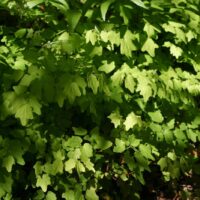
A useful ground cover for shady areas with delicate apple green, fern-like foliage and creeping rootstocks. Grows 6 to 12 inches tall and spreads slowly by underground rhizomes. Dainty, nodding, white flowers with reflexed petals give the impression of being turned inside out and can appear over a long period from April through June. This western native grows profusely in moist woodland conditions but tolerates dryish conditions once established. Competes well with tree roots too.
Veratrum fimbriatum
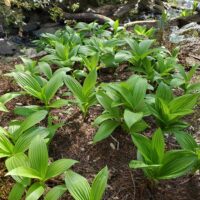
From moist, coastal areas of Sonoma and Mendocino County comes this very rare lily relative. A cousin of the high mountain cornlily, this threatened species features large, pleated leaves which emerge in late winter and are followed in the autumn by icy-white flowers with fringed edges. After its long bloom period is over, the plant will go dormant through the winter. Surprisingly tolerant of shade, but will accept full sun along the coast with ample moisture. A choice plant for woodland gardens and will also thrive in a container. This plant is POISONOUS when consumed. Deer and gopher resistant.
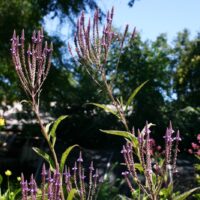
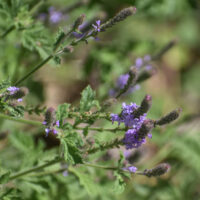
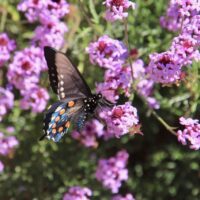
Verbena lilacina ‘De La Mina’
Verbena lilacina ‘De La Mina’ delights with dense clusters of rich lavender blossoms that are highly attractive to butterflies. Can bloom nearly year round along the coast, spring through fall elsewhere. Native to Cedros Island off of Baja, Mexico, ‘De La Mina’ was selected by the Santa Barbara Botanic Garden for its darker shade of lavender flowers. Generally cold-hardy to 25°F, the deliciously aromatic, evergreen foliage may need light trimming when subject to winter frost or extreme heat. Forms a lacy mound 1-2 ft. tall and 2-4 ft. wide. Plant in full sun with moderate to occasional summer water. Makes for an excellent border or container plant, and is reportedly deer resistant.

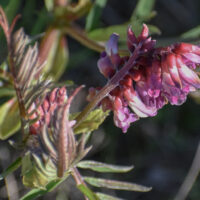
Vicia gigantea
This native pea-relative is a climbing perennial with delicate, arching clusters of magenta flowers. Leaves are dense rows of narrow leaflets culminating in tendrils that help it vine over shrubs, fences or up trellises. With its slender but vigorous stems, giant vetch can spread or climb 3 to 7 feet. This species has a primarily coastal range from San Luis Obispo up to Alaska and does best in temperate or moist areas with moderate water. Grows in full sun but prefers part shade inland. Its rich reddish-purple blooms attract butterflies and other pollinators, and roots fix nitrogen in the soil. A host for a number of butterfly and moth species that use plants in the pea family.
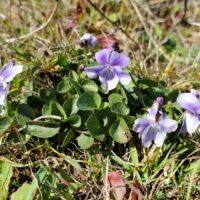
Viola adunca
Native to both coastal and mountain plant communities, this violet can be seen locally blooming in coastal meadows and bluffs. Forms low-growing, slowly creeping, neat clumps of heart-shaped leaves. Sweetly fragrant, nodding, blue to purple flowers with white interiors and purple nectar guides bloom in the spring. This pretty little wildflower is visited by bees and other pollinators and is a host plant for a number of butterflies, some of which are rare and endangered. Grows in sun along the coast and light shade inland with moderate summer water. Can reseed if happy.
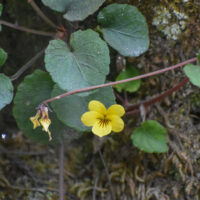
Viola palustris
Native to moist environments in both coast and mountain plant communities of N. America and Eurasia. Rare in California, where it is found in the northern counties of Mendocino, Humboldt and Del Norte. Rounded to heart shaped leaves with shallow scalloped edges grow from basal rosettes and spread by slender rhizomes. The charming flowers bloom April through July and range from white through lavender in color with dark-purple nectar guides. Used by Fritillary butterflies as a larval food source. Easy to grow, this is not a violet for heavy shade, but prefers brighter locations with light shade and moist, but well drained soils.
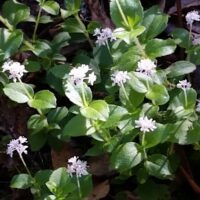
Whipplea modesta
The common name “modesty” fits this unassuming evergreen creeper. Though not super showy, one has to admire its ability to thrive on difficult sites. A good stabilizer native to forests of the Coast Ranges where it tolerates dry shady situations. Will appreciate a little summer water, but it is drought tolerant once established. Numerous tiny white flowers in late spring. Deer seem to leave it alone.
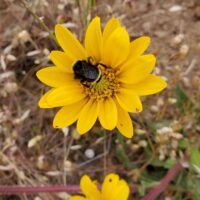
Wyethia angustifolia
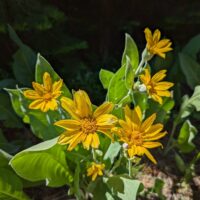
Few hikers can resist the bright, golden-yellow flowers of this showy native sunflower relative. The large, 2” - 3” wide flowers perch atop stems 1.5 - 3 ft. tall in the spring. Bright green, lance-shaped leaves form low rosettes at the base of the flower stalks. This mule ears grows in sunny meadows and at the edges of woodlands. Perhaps the most garden tolerant of all of the mule’s ears, accepting occasional irrigation once established but not requiring it. Does not mind soils with poor drainage. A great plant for bees, butterflies and birds. Will go dormant once it finishes flowering but will re-emerge after the rain returns.
Wyethia helenioides
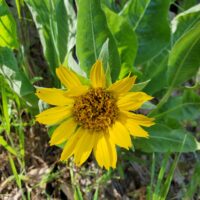
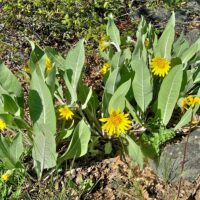
One of our less common native Wyethia, gray mule ears is a special find in nurseries. Strikingly large, upright leaves frame flower stalks that resemble little sunflowers with their wide golden discs and halo of yellow ray petals. Endemic to California, this radiant perennial wildflower is a welcome sight in woodland meadows of the Northern and Central Coast Ranges. A covering of silvery hairs on the broad, erect leaves gives the species its name. Lush, gray-green foliage emerges mid-winter followed by a spring floral display from March through early summer. Low-growing at up-to 2 feet tall and wide, it makes an impression greater than its stature. Eventually goes dormant as fall approaches. Does well in the garden if given decent drainage, good light, and minimal water once established. Bees and butterflies adore the flowers.