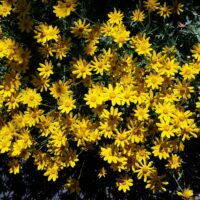
Eriophyllum lanatum ‘Siskiyou’
An extremely variable species ranging from the immediate coast to the high mountains of California and into Oregon. The cultivar 'Siskiyou' is a Siskiyou Rare Plant Nursery selection. Lush gray-green woolly foliage forms low mats up to 10 inches and 3-4 feet wide. Blooms over a long period, spring into fall with cheery 2 inch golden-yellow daisies. This tough perennial will thrive in full sun to light shade, decent drainage and moderate to infrequent summer water once established. The open-faced daisies are an excellent sources of pollen and nectar and make good platforms for insects to perch, attracting butterflies, bees and other insects.
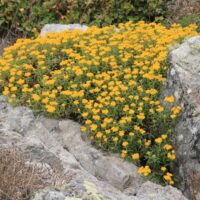
Eriophyllum staechadifolium
This native perennial is perfect for coastal environments where it tolerates full sun, wind, salt spray and drought. Forms leafy mounds 2 - 3 ft. tall and at least as wide. The foliage is grey-green above and silvery beneath with flower heads densley packed with tiny golden-yellow daisies from May through August. Drought tolerant but appreciates occasional summer waterings, especially when grown away from the coast. Excellent for pollinators. Tip pruning helps keep the mounds tidy. Annual pruning back will refresh.
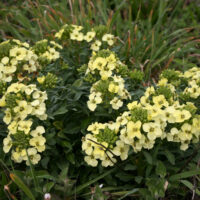
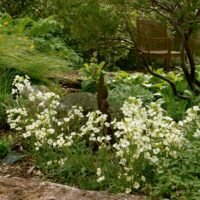
Erysimum franciscanum
This rare and threatened species makes its home in the sand dunes and hills of the San Francisco Bay area. Development has seriously impacted its native habitat. Fragrant, four-petaled flowers ranging in color from creamy white to yellow rise up to 18” above dark green foliage in the spring and early summer. Thrives with good drainage and occasional water once established. Plant this special wallflower in full sun with other small perennials such as buckwheats, checkermallows and coyote mint. Attractive to butterflies.
Erysimum menziesii
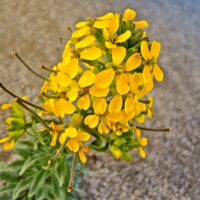
A rare species native to sand dunes along the north coast of California. Forms tight mounds of narrow leaves 8-12 inches tall and wide. Bright-yellow fragrant flowers bloom in late spring and will continue into summer with a little additional summer watering. The fragrant flowers are butterfly favorites. Adaptable and can seed about if happy, though not weedy. Requires good drainage, full sun, to light shade inland, with moderate to occasional summer water. Said to be deer tolerant.
Euthamia occidentalis
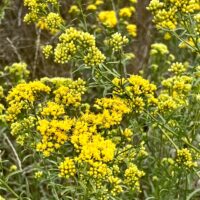
This little known, native goldenrod is a pollinator powerhouse, supporting bees, as well as a wide array of butterflies, including the Monarch, who are drawn to the nectar. In late summer and autumn, small, golden-yellow flowers form rounded clusters at the tops of tall, vertical branches, 4’ to 6’ high, clothed in long, slender, leaves. Grows naturally in sunny, low-lying areas which stay at least somewhat moist into early summer, but may be dry later in the year. Spreads quickly by underground rhizomes, especially in areas with perennial moisture, making it good for erosion control, but not suitable for small gardens. In two years, plants should reach about 4’ wide. Great in containers in smaller spaces.
Fritillaria affinis
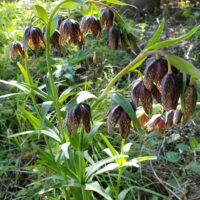
Charming, spring blooming, bulbous plant in the lily family, with beautiful, pendulous, bell-shaped flowers. This is California's most common fritillary and the most variable, in both size and flower color. Flowers vary greatly and can be yellow-green to purple-brown and may be beautifully checkered with brown and green, sometimes red-purple patterns. Can grow 12 inches - 3 ft tall depending on the habitat and substrate. Native to grasslands, woodlands and chaparral plant communities including serpentine soils. The easiest of the fritillaries to grow, preferring light, well drained soils, sun along the coast to light shade in hotter areas. Plants accept water in their growing season, but should be allowed to go dry once dormant. Protect from gophers, slugs and deer.
Grindelia camporum
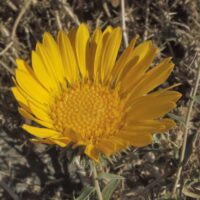
A tough and attractive native perennial found in valleys and lowlands of California. An upright grower, 18-24 inches tall, with resinous foliage and stiff leaves and flower stems. Thick green flower buds hold bright yellow daisies summer through fall which are attractive to bees and butterflies. Best in full sun where it is drought tolerant once established. Tolerates heavy soils and is said to be deer resistant.
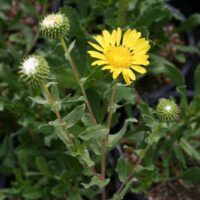
Grindelia hirsutula
Easy to grow, vigorous native perennial that is adaptable to a variety of soils and watering regimes. Grows 1 - 2 ft. tall with good-sized bright yellow daisies over a long period from spring into summer. An excellent nectar plant to add to a habitat garden. With a little grooming and dead heading this sometimes rough looking perennial can look quite handsome in a garden setting. Requires full sun and little to no summer water. Said to be deer resistant.
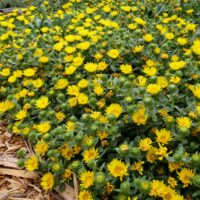
Grindelia stricta var. platyphylla ‘Mendocino’
This selection features particularly large bright yellow 2 1/2 inch daisies over a long period in the summer. Each fat green flower bud holds a dollop of gummy white resin which protects the blooms from predators, hence the name “gum plant”. 'Mendocino' is a particularly prostrate form under 8 inches tall and spreading to at least 6' wide. Native to dunes, marshes and bluffs in coastal scrub throughout coastal California. Excellent pollinator plant. Useful in a meadow planting or with other low groundcovers and shrubs. Looks nice draping over a wall too. An adaptable plant for sun to light shade, moderate to occasional water. A natural along the coast where it tolerates wind and salt spray. Deer resistant.
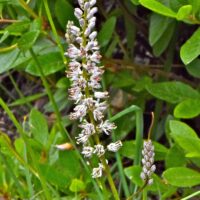
Hastingsia alba
This hard-to-find native bulb features elegant, branched stalks, 3 ft or more high, supporting racemes of sparkling white flowers. The dense blossoms display narrow petals and protruding stamens, giving them a delicate and soft appearance. Grey-green, strap-like leaves grow radially from base of the stalk, creating a tidy rosette 12" - 18" wide. Grows happily in most soils in full sun with regular water, where the bulbs may multiply. In part shade, this lily relative will be a little more drought tolerant. Plants emerge in late winter and go dormant by the end of summer. Hails from the mountains of Northern California, where it makes its home in meadows and open woodlands.

Hazardia squarrosa v. squarrosa
For a splash of color in late summer and fall, this goldenbush is a great choice, providing clusters of cheery, golden flowers at the height of the dry season, which supply food for butterflies. Birds enjoy the seeds which follow. Rounded leaves with sawtooth margins line the stems and emit a wonderfully sweet scent. This seed strain comes from a hot area in Big Sur and is remarkably compact and rounded, reaching about 3 ft. tall and wide. We’ve found it to be very adaptable, tolerant of clay soils and zero to occasional irrigation. Likes full sun but will accept a little shade. Plant with buckwheats, Salvias, and California fuchsias. Not usually available in Northern California nurseries.
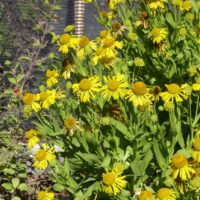
Helenium autumnale
This desirable autumn bloomer is known for its masses of bright yellow daisies up to three inches wide, perched atop stems two to three feet high. Lance-shaped leaves of light green create dense mats six inches high. Native to Northern California and much of North America where it grows in moist meadows. Will slowly increase to form small colonies. Plant in full to part sun and provide regular water. Attracts bees and butterflies. Deer resistant. Despite the common name, this plant is insect pollinated and isn't known to cause hay fever. It was originally used to make snuff, hence the name sneezeweed.
Helenium bigelovii
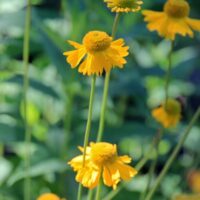
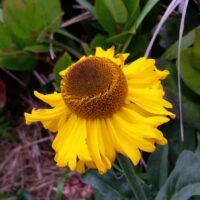
Native to moist meadows of California and S. Oregon, this summer flowering perennial makes a lovely addition to the garden. The cheerful golden-yellow petals turn down slightly from the rounded dome-like center. The golden daisy-like blossoms are held above the rosette of smooth green leaves on 2 - 3 ft. tall stems and attract a wide variety of insects including bees and butterflies. Despite the common name this plant does not cause allergies. It was originally used for snuff, hence the name sneezeweed. Plant in full sun to light shade with regular water. The seed for this crop is from the Pitkin Marsh in Sonoma County.
Helenium puberulum
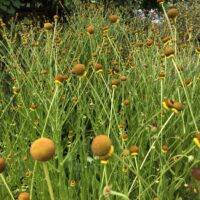
Summer brings clouds of yellow pom-poms which age to brown on this native member of the sunflower family. The round flower clusters sit atop rings of small, down-turned petals, held up on flat stems lined with lanceolate leaves. The flower stalks reach 3 to 5 ft. in height and can be cut down once blooming has finished. Plant in full sun to light shade. Rosilla grows naturally by creeks and seeps and enjoys regular moisture, but will tolerate some drier periods. Attracts a wide variety of insects including bees and butterflies. Goldfinches love the seed. Reseeds readily.
Helianthella californica
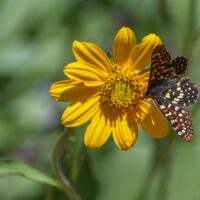
Native perennial sunflower growing in chaparral and woodland communities throughout much of California. Forms clumps of dark green, lance shaped leaves under a foot tall. Blooms April through June with small, golden-yellow sunflower heads which rise above foliage 18 inches to 2 ft. tall. Plant in full sun to light shade where it will be quite drought tolerant once established. The flowers attract a wide array of pollinators and beneficial insects.
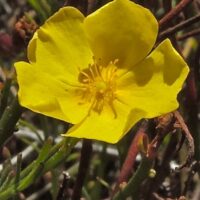
Helianthemum (Crocanthemum) scoparium
An interesting and little known member of the rockrose family, found in disturbed areas of chaparral, especially abundant after fires. Smooth, rush-like, green stems, lacking obvious leaves with age, grow 6 - 20 inches tall and wide. Summer brings an abundance of little, cheerful, bright-yellow blossoms. Perfect rock garden item or planted with other dryland species such as manzanita, California lilac or native sages. Plant in full sun with good drainage, where it will be very drought tolerant once established. Tolerant of serpentine soils too.
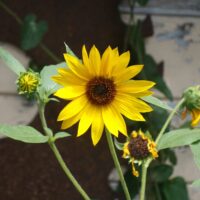
Helianthus annuus
Native to much of North America, this is a wild California selection from the Central Valley just east of Lake Berryessa. A fast growing annual with coarse heart-shaped leaves and topped with an abundance of 3 inch flowers, with bright yellow petals and brown centers on branched stalks. An excellent habitat plant, providing nectar and pollen for a wide array of bees and butterflies as well as seed relished by birds. A highly variable species with a long history of uses and domestication. Plant in full sun where it is adaptable to soil types and watering regimes. Can manage in dryish conditions but best with moderate water, especially early in its growth.
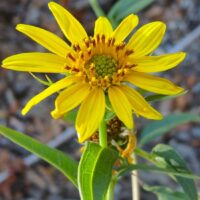
Helianthus californicus
This giant, perennial sunflower is native to riparian habitats in openings with decent light. Dormant in the winter, spring brings rapid growth, with narrow, bright green leaves on tall stalks rising 7 feet or more above a root system which spreads widely. Summer brings many small, golden-yellow sunflowers on the branch tips which are quite dramatic in full bloom. Flowers attract bees and butterflies and the seeds are relished by birds. Perfect for stabilizing soil where there is some summer water and plenty of space. Once established it can take it dryish, but will flower better with water. An excellent cut flower.
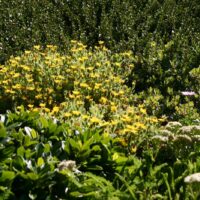
Heterotheca sessiliflora ssp. bolanderi ‘San Bruno Mountain’
Versatile and tough native perennial well suited for the rock garden front of the border or container plantings. Evergreen foliage forms low mats topped with bright yellow daisies in summer - fall. For sunny sites and dryish conditions. Flowers are appealing to bees and butterflies.
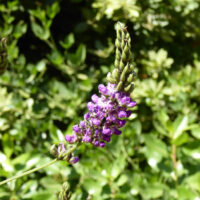
Hoita macrostachya
Leather root is a robust perennial, native to California’s coastal and inland valleys. It forms dense clumps of trailing or ascending stems with trifoliate leaves and showy clusters of purple-to-lavender, pea-like flowers that bloom from late spring through summer. It thrives in full sun to light shade, and prefers well-drained soils, though it tolerates clay. While somewhat drought tolerant, it enjoys deep summer irrigation. This species is ideal for slope stabilization and habitat restoration. It attracts bees and butterflies while fixing nitrogen in the soil, creating a resilient, ecologically-supportive landscape.
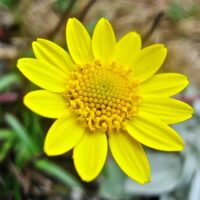
Lasthenia californica ssp. macrantha
Native along the immediate coast of California and just into Oregon, where it forms low, tight mounds of deep green succulent foliage. Cheerful, bright yellow daisies bloom over a long period. Best in full sun with some summer water and good drainage. Long blooming, open faced flowers are excellent sources of nectar and pollen for butterflies, bees and other pollinators.
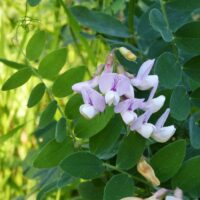
Lathyrus vestitus
From woodland to chaparral throughout much of the California coast ranges comes this charming sweet pea relative. Clusters of dainty flowers ranging in color from white to pink and lavender grace this evergreen vine in the spring, followed by clusters of small peapods. Plant along a fence or amongst shrubs where it will climb up to 8 ft. tall and wide. Provide light shade inland but will tolerate full sun near the coast. Drought tolerant once established but will also accept occasional irrigation. This vine is a host plant to the silvery blue butterfly and the arrowhead blue butterfly.
Layia platyglossa
Easy to grow native ANNUAL for open sunny areas. Cheerful lemon-yellow daisies with pure white tipped petals entice bees and butterflies. Foliage grows 6-12 inches tall in lean soils and taller with more fertility. Wide distribution, from the coast to inland valleys, Mendocino County to Baja. Birds love the seeds. A knock-out mixed with blues and purples of lupines or baby blue eyes. Does not need water once established.
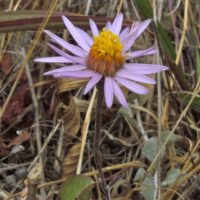
Lessingia (Corethrogyne) filaginifolia
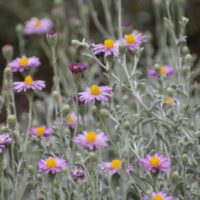
This California native perennial often hugs the ground, spreading widely, it threads its silvery foliage decoratively among other plants. Bright lavender, yellow centered aster-like flowers give a summer long season of bloom. Provide full sun to light shade, some summer water and reasonable drainage. A nectar and larval food source for butterflies. Deer resistant.
Lessingia (Corethrogyne) filaginifolia ‘Silver Carpet’
A variable species, this selection hails from the Big Sur Coast and was discovered by Carol Bornstein. Forms an attractive ground hugging mat 4 ft. or more wide. The gorgeous silver foliage is the perfect foil for the 1 inch lavender-pink daisies with yellow centers. Tolerates a wide range of conditions including full sun to light shade, drought and wind. Useful groundcover, meadow plant or spiller where its flowers are enjoyed by bees and butterflies. Best with some summer water inland. Deer resistant.
Ligusticum apiifolium
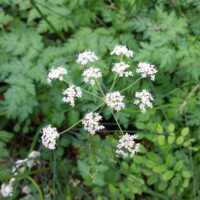
We love members of the carrot family, with their flat-topped clusters of star-like flowers and excellent habitat value. This species is no exception, though it is rarely grown in nurseries. In spring the clear-white flowers appear in delicate umbels on slender stalks 2 - 4 ft. high. The ferny, bright-green foliage stays close to the ground, rarely reaching more than a foot tall. Occurs in the Coast Range from the San Francisco Bay Area northwards. You may find this species in full sun near the coast or in bright woodlands further inland. Needs decent drainage and occasional to infrequent summer water.
Lilium humboldtii ‘ssp. humboldtii’
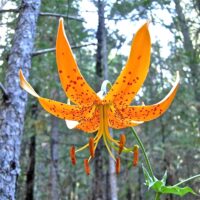
From the mountains of northern California comes this dramatic, drought tolerant lily, reaching upwards of 10 feet tall in its native habitat of chaparral and open forest. Lowland gardeners can expect a height of 6 feet or so. Large, orange flowers with magenta spots form many stately tiers around the robust stalks with lance-shaped leaves climbing up the base in tidy whorls. Give this rare lily excellent drainage and withhold summer water. Plant in dappled shade.