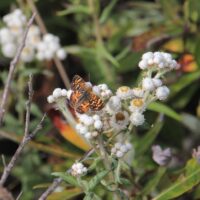
Anaphalis margaritacea
An adaptable plant with silver-green leaves that are densely white and woolly beneath. The flowers appear in summer and are made up of pearly white papery bracts surrounding yellow centers. The “straw flowers” retain their shape and color and are often used in dried arrangements. Tolerant of almost any soil type, it prefers full sun where it will grow in moist to somewhat dry conditions. Can spread vigorously, perhaps best used in meadow plantings or other naturalistic settings. Grows 1 - 3 ft. tall and spreading. Dies back to the ground in the winter. Larval food source for the painted lady and American lady butterflies. Deer resistant.

Angelica arguta
A remarkable form of this native mountain Angelica with striking bluish-gray foliage. Umbrella-shaped clusters of white flowers sit on stalks up to 6 feet in height. Needs moderate irrigation and dappled shade inland. Combine with native Heleniums, lilies and columbines to create a beautiful woodland flower patch. Great for native pollinators. A larval food source for the anise swallowtail butterfly.
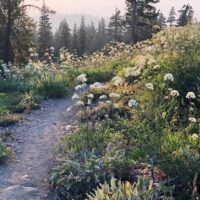
Angelica breweri
From the Sierras and the Klamath mountains comes this elegant member of the carrot family. Clear white flowers perch like little stars in flat-topped clusters up to 10 inches wide. Flower stalks can reach 6 feet in height with green serrated leaves forming 2 foot tall mounds at the base. Enjoys dappled shade away from the coast and moderate water. Great for native bees and butterflies. A larval food source for the anise swallowtail butterfly.
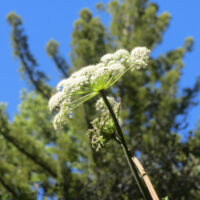
Angelica californica
Striking stalks up to 6 or more feet tall hold flat topped clusters of white flowers above low growing emerald-green leaves. This uncommon member of the carrot family needs only occasional water once established. Naturally occurs under the dappled shade of oaks where it cohabitates with ferns, hound's tongue, yerba buena and woodland strawberries. Excellent for attracting beneficial insects and is a larval food source for the anise swallowtail butterfly. May go summer dormant when allowed to dry out.
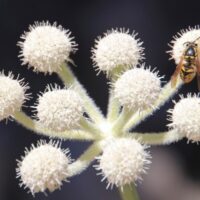
Angelica capitellata
We are excited to offer this denizen of mountain meadows and forests known for its clusters of white flowers or “buttons” on tall stalks reaching up to 5 feet in height. Lance-shaped leaves of bright green form upright mounds at the base of the stalks. Ranger buttons are easily identified by the hairy stems within the inflorescences. Provide regular water and dappled shade. This unusual member of the carrot family combines beautifully with ferns, lilies and other forest dwellers.
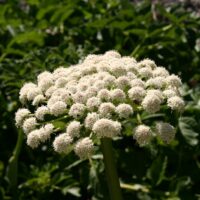
Angelica hendersonii
Found in nature on the immediate coast, though well adapted to the watered inland garden. It has the overall look of a stout cow parsnip with creamy white flowers in umbels and pinnately compound leaves of a deep green. Like many umbels, it is a good nectar source for beneficial insects. 4 - 6 ft. tall. Full sun to light shade. Good drainage with moderate summer water.
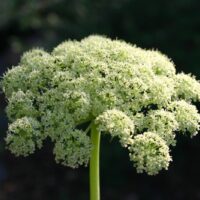
Angelica lucida
Large white flower clusters up to one foot across are held on stalks up to 5 feet tall above coarsely dissected leaves. Greener leaves and a more refined character distinguish this species from the more common Angelica hendersonii. While it is rare on the sea cliffs of northern California, sea-watch has a large distribution along coasts throughout the northern hemisphere. Give regular moisture and part shade in areas away from the coast. Attracts bees and butterflies.
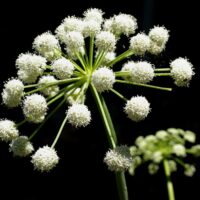
Angelica tomentosa
This species offers striking, flat-topped clusters of white flowers held up dramatically on stalks reaching up to around 5 ft. tall. Handsome, pinnately compound, gray-green leaves mass at their base. A generally inland angelica found in more or less moist, lightly shaded places, usually on serpentine. It can grow in full sun as long as it has plenty of moisture during the growing season. An important plant for the Pomo for its many medicinal and shamanistic uses. Diverse pollinators utilize the flowers, while the anise swallowtail butterfly uses the stems and leaves as a host plant for the catterpillars. Enjoys moderate water in the garden with a late summer rest (low water).
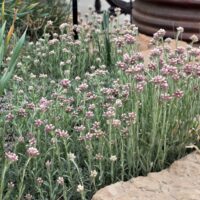
Antennaria rosea
A charming, native, mountain dweller which grows among rocks and onto boulders at meadow edges. Forms low mats only a couple of inches high of woolly, gray leaves that creep and cascade. Short flower stems with small, creamy-white and rosy-pink papery bracts, bloom summer into fall. Plant in full sun to very light shade with good drainage and a little summer water. Good addition for the pollinator garden and is the larval food source for a number of butterflies including the American lady. This is one of the few natives which is so low growing you can plant it between stepping stones.
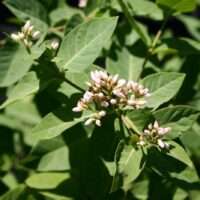
Apocynum cannabinum
Native throughout much of North America, California and our own Santa Rosa Valley. Grows 3 ft. tall and spreads vigorously by roots to form large patches. Small white flowers in summer. Turns beautiful shades of yellow in the autumn then dies back to the ground in the winter. Good for wild meadow or ethnobotanical garden. Important to Native Americans who used the stems for cordage, rope, twine nets etc. Sun to light shade with some moisture. Will tolerate dry conditions after blooming. Very attractive to butterflies. BEWARE! SPREADS VIGOROUSLY!
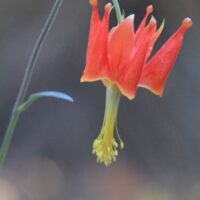
Aquilegia eximia
Large, orangey-red flowers with yellow stamens adorn this beautiful and uncommon native columbine. The pendant, brightly colored blossoms are larger than those of the western columbine but just as attractive to hummingbirds. Forms a 1 ft. high mound of foliage with flowering stalks reaching up to 5 ft. tall. Native to the Coast Ranges from Mendocino to Ventura Counties often on serpentine soils. Provide full sun to part shade and only water enough to prevent the soil from drying out completely. In areas far away from the coast provide a little shade from the hot afternoon sun. This species is a little more drought tolerant than the more common Western columbine.
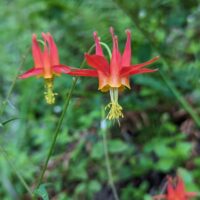
Aquilegia formosa
A popular native perennial with fern-like foliage and wonderful, nodding, spurred blossoms of red and yellow. Best with a little shade and moderate to regular moisture, but will tolerate full sun in somewhat cooler climates. The flower stalks reach 1 1/2’ to 3’ tall, with the grey-green foliage forming a mound of about 1 ft tall and wide. Flowers attract hummingbirds, while the seeds are relished by small birds such as sparrows and Juncos. If seed pods are left on the plants, you may get volunteer seedlings in the fall.
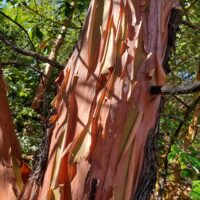
Arbutus menziesii
A beautiful native evergreen tree which features handsome, smooth, reddish bark that peels in thin flakes. Leaves are leathery and shiny dark green. Large clusters of white flowers give way to red-orange berries that can remain into winter if the birds don't get them. It can be tricky to establish, necessitating planting in the fall. MUST have good drainage and just enough water to establish. Once established give only infrequent deep waterings or no water at all. Bees and hummingbirds love the flowers.
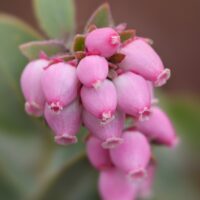
Arctostaphylos auriculata
From the rocky slopes of Mount Diablo comes this rare and delightful manzanita. Smallish, fuzzy, grey leaves densely cover the branches over mahogany-red trunks. Late winter brings flowers ranging in color from pink to white. This species grows slowly and densely to about 5 or 6 ft. tall and at least as wide. Needs full sun. Make sure to provide excellent drainage and little to no irrigation once established.
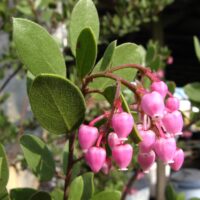
Arctostaphylos bakeri ssp. bakeri ‘Louis Edmunds’
A beautiful and durable upright manzanita reaching 5 - 7 ft. tall and nearly as wide. This species is native to Sonoma Co. where it is considered very rare and threatened by development. Handsome gray-green foliage with wonderful purplish-brown trunks contrast nicely with showy clusters of pink urn-shaped flowers in spring. Great for sunny areas where it endures heat and drought but enjoys an occasional deep watering. The manzanita berries can attract mockingbirds, robins, and cedar waxwings. It provides low shrubby cover for quail and wrentits and its flowers provide nectar for hummingbirds.
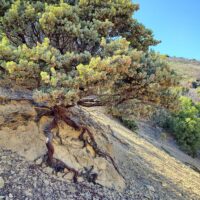
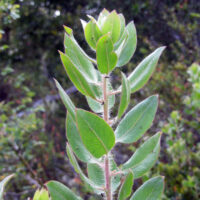
Arctostaphylos columbiana
From Northern California’s coastline and outer Coast Ranges comes one of the larger species of manzanitas. This stately shrub can grow 8 feet to over 15 ft. tall, often developing a contorted shape with age. The large, gray-green leaves contrast well with the burnished, rust-red trunks. Clusters of white flowers emerge in spring followed by matte-red fruits. This is THE upright manzanita for coastal areas with good drainage. Provide full sun and no irrigation once established.
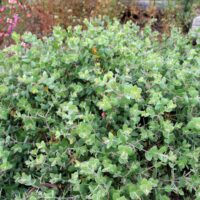
Arctostaphylos cruzensis
This rare, low-growing manzanita comes from the San Luis Obispo coast. Features grey-green, wedge-shaped leaves and soft pink flowers in the winter. Its distinctive creeping habit makes it ideal for crawling over walls or lining walkways. Provide full sun to light shade and moderate to infrequent irrigation once established. Good in containers.
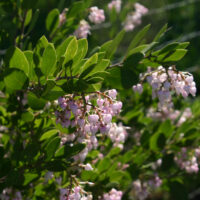
Arctostaphylos densiflora
One of California's rarest natives, this is the pure, true species. Exists only in a very small preserve in western Sonoma Co.. Distinctive for the profusion of beautiful pink to white urn-shaped blossoms they produce in winter and small, shiny bright green leaves. Variable in height but typically grows 3 ft. tall by 6 ft. wide. Does best in its native Sebastopol sandy soils with full sun to light shade and occasional to no summer irrigation.
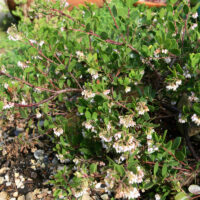
Arctostaphylos densiflora ‘James West’
This wonderful, drought tolerant, low growing manzanita from Sonoma County appears in form and other details to be a selection of the pure species of the very rare Vine Hill Manzanita. It is a very choice cultivar, seldom available in the trade. Grows 18 - 24 inches by 6 ft. in ten years and flowers from January through March with thick heads of shell pink flowers. Good drainage, as with all manzanitas and occasional to no irrigation once established. Full sun.
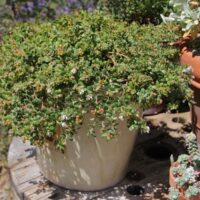
Arctostaphylos edmundsii ‘Bert Johnson’
Choice, low growing manzanita introduced by the Tilden Botanic Garden. Dense, mounding or cascading habit growing to around a foot tall by 6 ft. wide with small dark green leaves and bronzy new growth. Not as fast growing as 'Carmel Sur'. Clusters of tiny pink to white urn-shaped flowers in winter attract hummingbirds and are followed by handsome cinnamon colored little apple-shaped fruits. Excellent cascading over walls, rocks, or containers in sun to light shade. This manzanita has proven adaptable and fairly garden tolerant putting up with heavy soils and more summer water than many. Full sun along the coast with light shade in hot inland sites. Drought tolerant once established but appreciates occasional summer water.
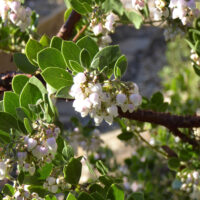
Arctostaphylos edmundsii ‘Big Sur’
Prized for its compact size and clean, rich green foliage, this selection from the Central Coast is a great addition to smaller gardens, where a rounded, upright manzanita is called for, that doesn’t get too big. Reaches 3’ – 5’ tall and 4- 6’ wide, with a somewhat open habit that shows off its beautifully sculpted, burnished red trunk. The winter blossoms are larger than those on many manzanitas, and are a soft, pinkish-white. ‘Big Sur’ enjoys average soil and is tolerant of garden conditions, being quite disease resistant. Plant in full sun or very light shade with little to no water once established. We’ve found it to be very amenable to pruning for small spaces. Gopher resistant.
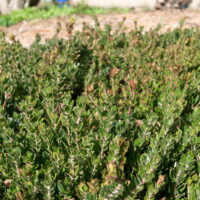
Arctostaphylos edmundsii ‘Carmel Sur’
Perhaps the fastest growing variety of this species. Attractive gray-green foliage with a dense, spreading habit under 1 ft. tall and 6 ft. across. Light pink flowers appear in winter but are few and infrequent. A handsome alternative to other groundcover manzanitas. More drought and heat tolerant than the bearberries and 'Emerald Carpet'. Likes full sun but may enjoy a little afternoon shade in especially hot inland sites.
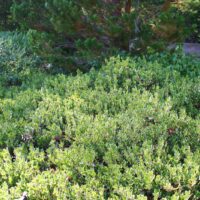
Arctostaphylos franciscana
This distinctive clone of the very rare franciscan manzanita displays luxuriant growth of shiny, dark green leaves spreading fairly quickly to form a dense drift up to eight ft wide and 2 - 3 ft tall. An excellent groundcover similar in appearance to A. uva-ursi but more drought tolerant and somewhat taller. A good manzanita for serpentine but still does well in other soils. Produces a modest display of pinkish white flowers in winter. Plant in full sun but light shade is fine especially in hotter climates. Requires moderate to occasional irrigation once established.
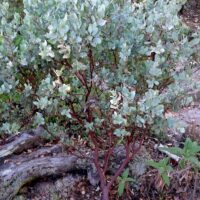
Arctostaphylos gabilanensis
This extremely rare and threatened species wasn’t discovered until the early part of the 21st century, making it the newest species of manzanita to be identified. Not only is it very rare, but it is also extremely beautiful, featuring large, wedge-shaped, fuzzy, grey leaves and new growth flushed rosy-pink. Smooth, burgundy bark clothes the contoured branches which support clusters of whitish flowers in mid-winter, followed by red fruits in the summer. This slow growing shrub will eventually reach a height of 6 ft. or more with a broader width. Provide full sun. Needs decent drainage and will be very drought tolerant once established.
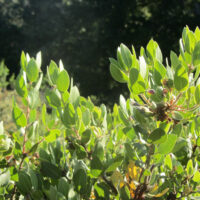
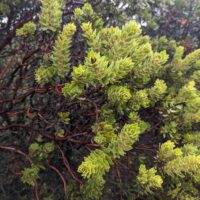
Arctostaphylos glandulosa ‘Super Freak’
This unusual Cal Flora introduction hails from Carson Ridge in Marin County, Arctostaphylos glandulosa ‘Super Freak’ is a wild twist on the classic Eastwood manzanita. Unlike most glandulosa types, ‘Super Freak’ grows in a tight, upright, branched habit that gives it a distinctive candelabra-like silhouette, lending sculptural drama to native landscapes. The typical smooth red bark of this species gleams against clusters of pale pink winter flowers. The leaves are narrow and dense, giving the impression of a confused feather boa. Reaching an ultimate size of 6-plus feet tall, it thrives on neglect while adding personality to dry slopes and sunny borders.
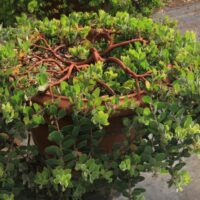
Arctostaphylos glandulosa f. repens ‘Mount Vision’
Found only in the Bishop pine forest of the Point Reyes Peninsula, the repens form has a low and mounding habit. This particular selection was picked for its exceptionally compact and creeping nature and large, gray-green leaves. Clusters of white flowers hang from branch tips in early winter. While slower growing than most other groundcover manzanitas, this cultivar will eventually reach about 6 ft wide with a height of about 1 ft. 'Mount Vision' is best planted as a specimen rather than in mass plantings. Very drought tolerant once established with full sun to light shade. An excellent container plant.
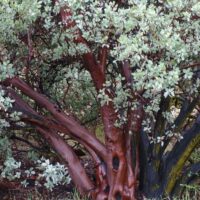
Arctostaphylos hookeri ‘Harry Roberts’
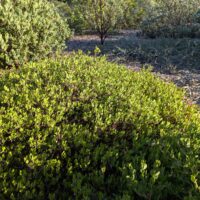
A dense and low selection of this hardy and adaptable species, reaching to about 1 foot tall and around 6 ft wide. Not quite as short as ‘Monterey Carpet’, but a little faster growing. The deep green, pointed leaves create a verdant groundcover, suitable for drier spots. The small, white flowers in winter are not particularly abundant. Plant in full sun to light shade and water infrequently. Clay soil tolerant. A great, low growing manzanita for hotter areas. This species is a rare native from coastal Monterey and Santa Cruz Counties.