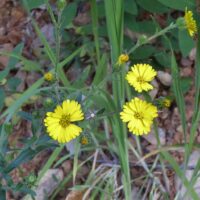
Anisocarpus (Madia) madioides
A quiet perennial, native to woods and coniferous forests of California from sea level to 4000 ft. Dark green, narrow leaves are covered with soft hairs and form a sturdy, low, perennial clump. The bright yellow daisies top 8-10 inch flower stems over a long period, from late spring into summer. Able to thrive in dry shady conditions.May seed about in a friendly way.
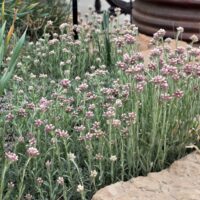
Antennaria rosea
A charming, native, mountain dweller which grows among rocks and onto boulders at meadow edges. Forms low mats only a couple of inches high of woolly, gray leaves that creep and cascade. Short flower stems with small, creamy-white and rosy-pink papery bracts, bloom summer into fall. Plant in full sun to very light shade with good drainage and a little summer water. Good addition for the pollinator garden and is the larval food source for a number of butterflies including the American lady. This is one of the few natives which is so low growing you can plant it between stepping stones.
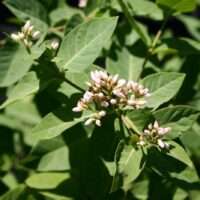
Apocynum cannabinum
Native throughout much of North America, California and our own Santa Rosa Valley. Grows 3 ft. tall and spreads vigorously by roots to form large patches. Small white flowers in summer. Turns beautiful shades of yellow in the autumn then dies back to the ground in the winter. Good for wild meadow or ethnobotanical garden. Important to Native Americans who used the stems for cordage, rope, twine nets etc. Sun to light shade with some moisture. Will tolerate dry conditions after blooming. Very attractive to butterflies. BEWARE! SPREADS VIGOROUSLY!
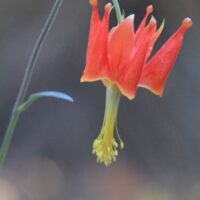
Aquilegia eximia
Large, orangey-red flowers with yellow stamens adorn this beautiful and uncommon native columbine. The pendant, brightly colored blossoms are larger than those of the western columbine but just as attractive to hummingbirds. Forms a 1 ft. high mound of foliage with flowering stalks reaching up to 5 ft. tall. Native to the Coast Ranges from Mendocino to Ventura Counties often on serpentine soils. Provide full sun to part shade and only water enough to prevent the soil from drying out completely. In areas far away from the coast provide a little shade from the hot afternoon sun. This species is a little more drought tolerant than the more common Western columbine.
Aquilegia formosa
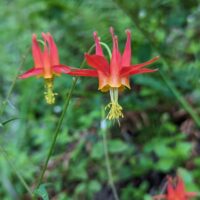
A popular native perennial with fern-like foliage and wonderful, nodding, spurred blossoms of red and yellow. Best with a little shade and moderate to regular moisture, but will tolerate full sun in somewhat cooler climates. The flower stalks reach 1 1/2’ to 3’ tall, with the grey-green foliage forming a mound of about 1 ft tall and wide. Flowers attract hummingbirds, while the seeds are relished by small birds such as sparrows and Juncos. If seed pods are left on the plants, you may get volunteer seedlings in the fall.
Aquilegia pubescens
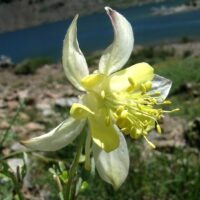
Found on open, rocky slopes in the southern Sierra Nevadas in sub-alpine and alpine plant communities. Low rosettes of divided, blue-green foliage, sprout from a taproot. Flower stems rise 10 - 20 inches above the fragrant foliage and carry upward facing, nectar rich, long spurred flowers, perfectly positioned for pollinating hawk moths, hummingbirds and butterflies. The flower color is variable and runs the gamut from cream to yellow to pink, often in delicate hues rather than solid colors, except for an occasional pure white. Hybridizes freely with the native red columbine, which invites various shades of red to the flower color possibilities. Grows well in low elevation gardens, given light shade and summer water.
Aralia californica
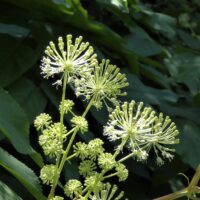
A striking and dramatic native perennial for shady areas with regular water. The elk clover boasts tropical looking foliage 4 - 8 ft. tall with stalks of white, ball-like flower clusters followed by purple berries. In the autumn the foliage turns yellow and dies to the ground, returning with exuberance in the spring. Birds relish the fruits. Deer resistant.

Arnica chamissonis
Native to moist meadows in mountainous regions of California and western North America. This delighful perennial grows 1 - 2 feet tall and wide with cheerful, bright golden-yellow daisies in early summer. The bright green, lance-shaped leaves sit in opposite pairs along them stems. Grow in full sun to light shade with decent draining soils and regular moisture. Said to have the same medicinal properties of its European cousin, but easier to grow. Flowers support bees, bumblebees and butterflies. Winter deciduous. Deer resistant.
Artemisia californica
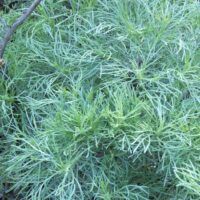
Native to coastal regions from Northern California to Baja. Densely branched shrub with finely divided gray-green scented foliage. Grows 2 - 6 ft. tall and wide. Light pruning or pinching help keep it dense. Grown for its wonderful texture and foliage color, flowers are inconspicuous. Requires decent drainage and full sun. Thrives in coastal environments, but has performed well inland, especially on slopes where cold air and winter wet drains away. Drought and deer tolerant.
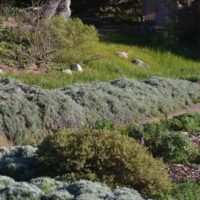
Artemisia californica ‘Canyon Gray’
An unusual prostrate form of our coastal native sagebrush, forming a loose, nearly flat mat of finely cut, silvery, fragrant foliage around 4 ft. wide. Useful as a bank cover or for the top of a retaining wall where it can cascade over the edge. Combines beatifully with ceanothus, buckwheats and iris. Should be cut back from time to time to keep dense. Enjoys full sun to light shade and is very drought tolerant once established. Deer resistant.
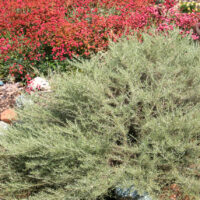
Artemisia californica ‘Montara’
Selected by Roger Raiche at Montara Ridge in San Mateo County. Forms a mound of finely cut fragrant foliage to around 2 ft. tall by 3 ft. (or more) wide. Requires full sun with decent drainage and is drought tolerant once established. Occasional summer water helps retain fresh look. Thrives in coastal environments. Deer resistant.
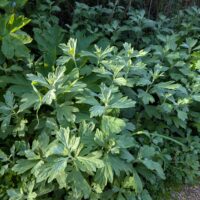
Artemisia douglasiana
Mugwort is native to many plant communities where there is at least some year round moisture: streams and riverbanks, road cuts, ditches, and moist meadows. A stout, rhizomatous perennial with aromatic foliage that is green on top and silvery beneath. The flowers are small and not particularly showy. The foliage is beautiful and fragrant with a long history of medicinal uses. Plant in sun to light shade where it will grow 3 ft. tall and spreading to form a colony. Well watered plants can grow even taller. Provides excellent cover and seeds for birds. Deer resistant.
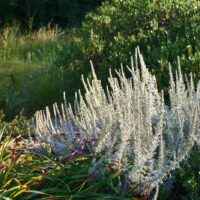
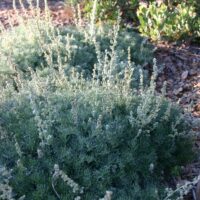
Artemisia pycnocephala ‘David’s Choice’
An exceptionally fine selection of a coastal native. Forms a dense silky mound of silvery foliage 4 - 6 inches tall and up to 2 ft. wide. The floppy flowering stems rise a foot above the foliage and are interesting but not real showy. Shear back for longer life. Sun and drought tolerant. Deer resistant.
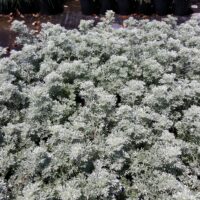
Artemisia pycnocephala ‘Dr. Seuss’
In deference to this selection’s whimsical form, we have named it in honor of the children’s author who truly embodies “whimsical”. Soft, silvery, ferny foliage slowly spreads across the ground on woody branches with unusually tall flower stalks reaching up to 2 feet in height. As the stalks arise, the base is thickly covered in the showy foliage, getting narrower as it approaches the flower buds, giving the plant its unusual form. The small flowers are pale yellow and open in late spring and into summer. Provide good drainage and plant in full sun to light shade. Deer resistant.
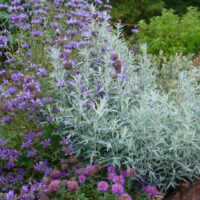
Artemisia suksdorfii
Rhizomatous perennial with sturdy upright stems of whitish-gray felted foliage. Native to coastal California where it grows in seasonal drainages near the ocean. Growing 1 1/2 ft. to 3 ft. tall and spreading to form colonies of beautiful wooly foliage with a pleasant sage scent. The tiny flowers are not particularly showy but are attractive to pollinators. Useful in informal gardens for sunny areas with some summer moisture. Probably best in areas with some coastal influence. Cut to the ground annually to freshen and make room for new spring growth. Deer resistant.
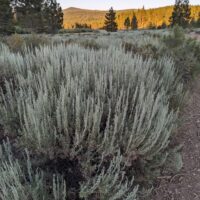
Artemisia tridentata
This long-lived, highly-aromatic shrub is emblematic of the American West, dominating high-desert landscapes east of the Sierras and along the Southern California and Baja coast. Its evergreen foliage is dense, silvery and held on tall stems that are woodier and more upright than the more coastal California sagebrush. In late summer, long flower stalks bear clusters of inconspicuous yellow blooms. Essential to wildlife in sagebrush ecosystems of the eastern Sierras and Great Basin, it also supports birds and bees in the garden setting. Although it can get quite statuesque, it averages 4-6 feet, with a rounded habit and architecturally twisty trunk. It thrives in well-draining soils with minimal water once established. This drought-tolerant species is excellent for erosion control and is nitrogen-fixing. Its fragrant leaves are deer resistant.
Aruncus dioicus
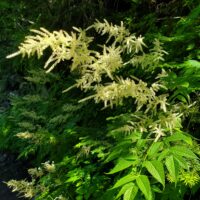
Native to stream sides and moist woods from Mendocino County, California north to Alaska. A bold and showy perennial looking like a giant astilbe. Forms dense clumps of finely divided foliage with arching, feathery plumes of white flowers 3-5 ft. tall in summer. Requires regular moisture and part shade where it makes a striking specimen or accent plant in the woodland garden. Dies back to its roots in winter. The frothy flower plumes attract an array of tiny little pollinators and the seed heads on female plants are an important food source for birds. Said to be deer resistant.
Asclepias eriocarpa
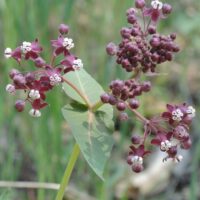
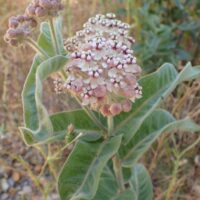
More diminutive than showy milkweed at 1-3 feet, this long-blooming species has similar broad, greyish leaves and creamy, pink-accented flower clusters. Like other milkweeds, it is a larval host for the monarch butterfly. A great choice for habitat gardens in dry, sunny areas, providing nectar for a wide array of pollinators from late spring into fall. Usually found in rocky soils throughout parts of Southern California and in foothill areas north of the San Francisco Bay. Spreads to form colonies with minimal supplemental water. Deer resistant.
Asclepias fascicularis
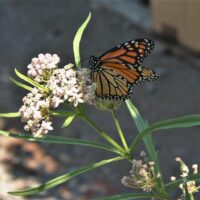
Our most common native milkweed is found in meadows and on the banks above ponds. Its flowers are held in umbels of a pale mauve color. They form at the top of 1 - 3 ft. tall slender stems that die back in winter to a perennial rootstock. Its wandering roots form small colonies. Drought tolerant, it prefers seasonally moist soils and likes moderate water in the garden. The narrow leaves are the preferred larval food for the Monarch Butterfly. Full sun to part shade. Unlikely to be bothered by deer.
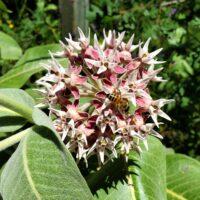
Asclepias speciosa
Bold and beautiful native milkweed that forms a large patch of tall stems with broad pale green leaves. Fragrant clusters of pinkish-purple flowers, followed by interesting seed pods. Spreads by underground shoots. Great in semi-dry naturalistic plantings. Host to Monarch butterflies. Deer resistant.
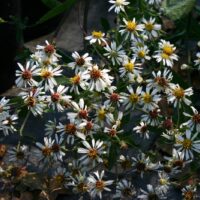
Aster (Eurybia) radulinus ‘Gilliam Creek’
This charming woodland aster makes its home in bright, dryish woods from the Channel Islands all the way up to the Oregon border and into the northern Sierras. Normally a shy, dainty little forest dweller, this selection from Sonoma County is far more robust, featuring large clusters of white-petaled daisies with white centers which turn yellow with age, and finally a deep maroon. Flower stalks reach up to 2 ft. high, much taller than is typical for the species. Serrated, deep green leaves form a high mat on this slowly spreading ground cover. An excellent plant for dry, woodland gardens, but will also tolerate moderate irrigation. One of the few excellent pollinator plants for the lightly shaded garden.
Aster x frikartii ‘Monch’
A particularly fine hybrid from the 1920’s, valued for its long display of clear lavender-blue daisies on stout, upright foliage, to around 2 ft. tall and wide. Easy to grow in full sun with good drainage and regular to moderate water. A wide variety of bee species visit this perennial, foraging for nectar and pollen. Attractive to butterflies too. Its long bloom period, May through October, make it a wonderful color accent and a powerhouse in the pollinator garden.
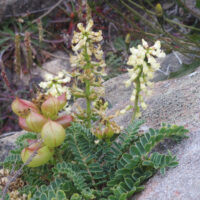
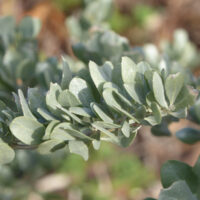
Atriplex lentiformis
This native bird favorite is a tough and useful shrub with beautiful silvery gray foliage. Growing 5 ft. or more tall and spreading widely, quail bush is valued for its ability to deal with difficult sites where it tolerates wind, salt spray, saline and alkaline soils. A terrific habitat plant, providing food and cover for a wide array of birds and mammals. Native from the coast to the desert. Excellent for erosion control and is fire resistant. Benefits from annual shearing and occasional aggressive pruning to rejuvenate. Plant in full sun with occasional to little summer water.
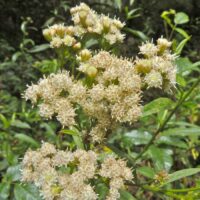
Baccharis glutinosa (douglasii)
This native perennial is a powerhouse for pollinators, luring small butterflies, predatory wasps and other beneficial insects to its dense, white, flat-topped, nectar rich flower heads. Found in wetland and riparian habitats such as salt marshes and stream edges along the coast and interior valleys of California. An erect perennial, growing 3 ft. or more tall, with long, lance-shaped, resinous, leaves and spreading by rhizomes. Blooming in late summer to early fall, the flowers lack petals and are dioecious, with male and female disc flowers occurring on separate plants. Plant in full sun to light shade with moderate to regular water. Deer resistant.
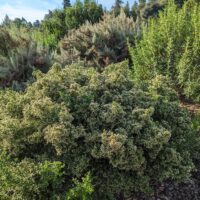
Baccharis pilularis ‘Mayacama Mound’
This dense, bright green, gumdrop-shaped coyote bush only reaches about 3 ft tall and spreads a wider. We discovered this heat and drought tolerant selection in a batch of seedlings from inland Sonoma Co.. A great alternative for the ubiquitous ‘Twin Peaks’, which is a coastal selection and less suitable for hot, dry sites. Plant in full sun to light shade where mature plants won’t need supplemental water, but an infrequent deep soak will keep them looking fresh. The small, whitish flowers are relished by pollinators in the early autumn. This selection is female, so the late autumn seeds provide an important food source for birds. A sturdy, low, evergreen shrub for tough situations.
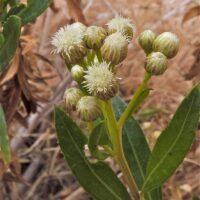
Baccharis salicifolia
This native shrub looks something like a willow in foliage and is found in similar habitats in California and the southwest US. Not a willow at all, but a member of the aster family, this evergreen shrub blooms nearly year round, making it a powerhouse for pollinators. The profusion of small, creamy white, fuzzy flowers, tinged with pink or red are highly attractive to butterflies, bees and other beneficial insects. Extremely tough and easy to grow in full sun with summer water, where it will grow 6 - 10 feet tall and wide with rich, green foliage. Able to survive drier conditions than a willow could handle, but it will look rough if it gets too dry. Responds well to pruning and can be cut down to six inches to refresh. Excellent screen, windbreak and for soil stabilization. Stellar for attracting pollinators.
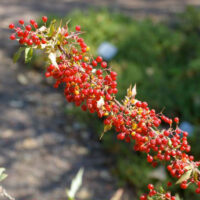
Berberis (Mahonia) nevinii
Nevin's barberry is a very rare southern California shrub with rigidly arching stems densely clothed in pointy silver gray leaflets. Heavy blooming with clear yellow flowers followed by heavy fruiting with bright red translucent fruit. 8 ft. by 8 ft. Does well in sunny well drained locations in the Bay Area. Great companion to matilija poppy and Salvia clevelandii. Very drought tolerant but best with occasional water. Deer resistant.