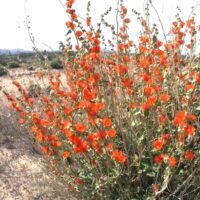
Sphaeralcea ambigua
Native to desert plant communities, apricot mallow is a showy evergreen shrublet growing 2-4 foot tall and wide. Soft-green, woolly, scalloped leaves provide the foil for long wands with an abundance of small hollyhock-like flowers in delicious shades of orange. Plant in full sun with good drainage and occasional summer water. Adaptable, tolerating cold, dry conditions but not heavy wet soils. When happy can bloom for months- trim back flowering stems after bloom for repeat performance. A beautiful addition to the dry sunny garden, ideal for inland gardens. Relatively short lived but grows rapidly and occasionally reseeds. Honeybees, native bees and hummingbirds are attracted to its flowers.
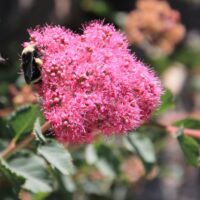
Spiraea densiflora ‘Trinity Rose’
This cultivar hails from the Trinity Alps in northwestern California. A neat looking deciduous shrub growing 2-3 foot tall and a bit wider with a compact habit and pretty bluish-green leaves. Early summer brings flat topped clusters of rosy-pink flowers on the branch tips. Foliage often takes on nice yellow tones in the autumn before losing its leaves. Plant in sun to light shade with regular water. Flowers attract butterflies.
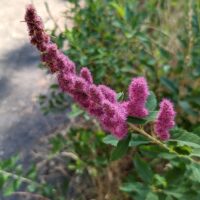
Spiraea douglasii
In summer, wands of violet-pink flower clusters decorate the branch tips of this deciduous shrub. Forms broad thickets 3 - 6 ft. tall with bluish-green leaves. Enjoys regular moisture and full sun to light shade. Great for a naturalistic planting in a woodland garden or along streams. Attracts bees and butterflies and is a larval host for various butterflies and moths in its native range. Native to the coast and into the mountains from northern California to Alaska.
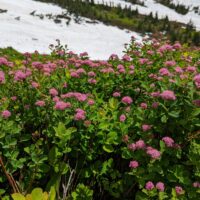
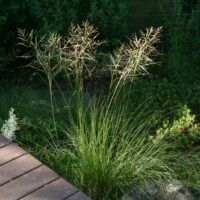
Sporobolus airoides
A robust, warm season bunchgrass, which was common in California’s Central Valley prior to agricultural conversion. This western native is found in the Sierra foothills, South Coast Ranges as well as deserts from eastern Washington to Mexico. Forms a dense bunch of fine textured, grey-green blades, on average 3 foot tall and wide. Graceful flowering stems carry airy, pinkish flower heads that produce a pink-hued haze, which age to tan. The abundant seeds are relished by birds, but do not tend to reseed in gardens. Tolerant of many soil types and water regimes. Best with full sun to light shade. This grass will be drought tolerant, but does best with some summer water in dryer inland sites. Leaves turn butter-yellow in autumn prior to winter dormancy. Deer resistant.

Stachys bullata
A native perennial from the mint family, found primarily near the coast from San Francisco southward, where it inhabits oak, pine and fir woodlands. Medium-green leaves are softly fuzzy with scalloped edges, growing around 2 ft. or more tall and spreading by underground rhizomes to form a colony. Blooming spring through summer, with lavender-pink tubular flowers in whorls, which attract bees, butterflies and hummingbirds. Tends to grow in somewhat drier areas, but responds well to moisture and also tolerates inundation. A natural with rushes, ferns and snowberries. Useful for partly shaded bioswales and oak/mixed conifer woodlands. The underground rhizomes make it a good choice for erosion control. Deer resistant.
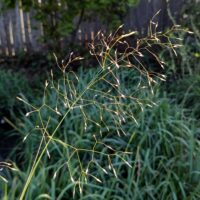
Stipa hymenoides
This rugged, incredibly drought tolerant bunchgrass hails from hot, sunny locations in desert areas and juniper woodlands of California. The inflorescences which emerge above the green foliage in spring and summer, are incredible airy and delicate. By the end of summer, plants take on an ivory color, appearing like billowing little clouds which create a wonderfully soft texture for the late season garden. Plants reach to about 2’ around. In winter, plants will go dormant. Little to no water once established. Needs decent drainage. Deer resistant.
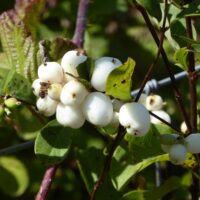
Symphoricarpos albus var. laevigatus
Snowberry is a deciduous, native shrub for dry or moist shade. Reaches about 4 - 6 ft. tall and spreading. Clusters of tiny, pinkish, urn-shaped flowers are followed by showy white berries on arching branches. Responds well to shearing. A good choice for under native oaks. Fruit may be toxic to humans. Hummingbirds like the flowers. Berries are palatable to hermit thrush, Swainson’s thrush, robins and other birds. Also creates good cover for birds.
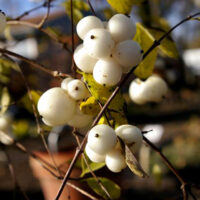
Symphoricarpos albus var. laevigatus ‘Bartlett Springs’
Snowberry is a deciduous, native shrub for dry or moist shade. Our own selection from Lake County, has particularly large oval leaves on graceful arching branches with exceptionally big fruits. Reaches about 4 ft. tall and spreading. Clusters of tiny, pinkish, urn-shaped flowers are followed by showy white berries on the branch tips. Responds well to shearing. A good choice for under native oaks. Fruit may be toxic to humans. Hummingbirds and bees like the flowers. Berries are palatable to hermit thrush, Swainson’s thrush, robins and other birds. Also creates good cover for birds.
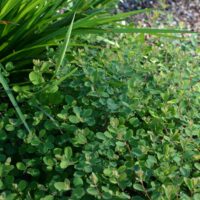
Symphoricarpos albus var. laevigatus ‘San Bruno Mountain’
This attractive low-growing form of our native snowberry is a Cal Flora Nursery selection from San Bruno Mountain. Its dimensions are about 8 inches tall and spreading. Indeed the spreading nature of this plant is robust and it should be included in areas where that is an asset rather than a liability. The wiry arching branches hold light green rounded leaves and the effect of the new growth is delicate and appealing. Tiny pink urn-shaped flowers decorate the branch tips, followed by small white fruits. Perfect for a lightly shaded bank or the light shade of a tree where it will be very drought tolerant. With total drought it may go summer deciduous but occasional summer water will keep it looking fresh. The flowers attract bees and hummingbirds.
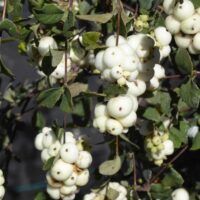
Symphoricarpos albus var. laevigatus ‘Tilden Park’
Here is a particularly fine selection of the native snowberry, notable for its dependable crop of showy white berries on arching branches. A deciduous shrub, snowberry grows to about 4 ft. tall and spreads to form drifts. A good choice for a shady bank, woodland edge, or under oaks. Appreciates and responds to moisture, but once established will tolerate dry conditions. Fruit may be toxic to humans. Hummingbirds like the flowers. Berries are palatable to hermit thrush, Swainson’s thrush, robins and other birds. Also creates good cover for birds.
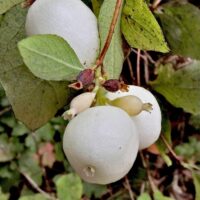
Symphoricarpos mollis
Low growing, spreading groundcover, usually staying around a foot tall by 3-6 feet wide. Rounded blue-green leaves on arching stems makes an excellent low growing thicket which competes well with tree roots. An amenable plant, able to grow in full sun in coastal areas and different depths of shade elsewhere, even fairly deep shade. The tiny, pink, bell shaped flowers are attractive to bees and hummingbirds and the white fruits that follow are eaten by birds. Good for erosion control and does well under oaks. Offers excellent habitat value with its flowers and fruits and provides cover for ground nesting birds. Drought tolerant once established. Deer often leave it alone.
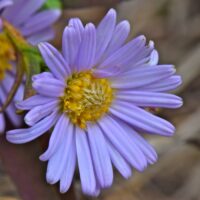
Symphyotrichum (Aster) chilense
This native aster is found throughout much of Sonoma County, usually in moist soils. More slender in form than the burly Point St. George selection. Spreads vigorously but with a lighter touch, integrating itself well with native grasses and bulbs. Its summer-to-fall blossoms are white to lavender blue and provide excellent nectar for butterflies and beneficial insects. 1-3 ft. tall and spreading. Thrives in sun to light shade with moderate to little summer irrigation.
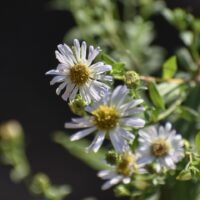
Symphyotrichum (Aster) chilense ‘Olema White’
Clear white flowers replace the class purple ones in this unusual selection of California aster that we found near the town of Olema in Marin County. In summer and into fall, a profusion of flowers bursts forth on this VIGOROUSLY spreading native perennial. An extremely adaptable groundcover reaching up to 3 ft. tall. Accepts regular to very little irrigation and full sun to light shade. This prolific bloomer is a bee magnet and also enjoyed by butterflies. Tolerant of clay and periodic flooding. Looks best when sheared to the ground after blooming.
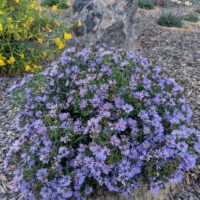
Symphyotrichum (Aster) chilense ‘Plumas Purple’
This form of the California aster is remarkably compact and refined, featuring blue-purple daisies which are darker than any other selection we have seen. Grows to a height of under a foot and so far has been much less likely to spread aggressively, though it should get to at least 3’ wide. In late summer and early autumn, the dense blooms turn plants into bonbons of flowers. Grow in full sun, where they will be drought tolerant once established, but will enjoy an occasional soak. California asters provide an important late nectar and pollen source for bees, while butterflies enjoy the nectar and are reported to utilize them as a larval hosts. Thank you to Pete Veilleux for giving us this stellar selection! It’s thought to have been found in Plumas County, so should be quite heat and cold tolerant.
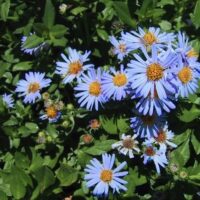
Symphyotrichum (Aster) chilense ‘Point Saint George’
A low-growing native perennial, reaching up to 1.5 feet in height and spreading widely and vigorously. Covered with soft lavender daisies over a long period, summer through fall and often into winter. Careful thought should be given to its placement as this plant really spreads. Far too vigorous for many settings, perhaps best used in planters, garden boxes or other contained areas or in large, naturalistic plantings. For sunny areas with at least a little summer water. Will tolerate flooding and periodic inundation. An excellent nectar source for bees and butterflies and seeds for birds.
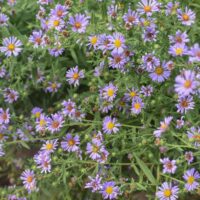
Symphyotrichum (Aster) chilense ‘Purple Haze’
A wonderful selection of our native Pacific aster, chosen by the Santa Barbara Botanical Garden for its deep lavender blossoms. Blooms late summer through fall and often into winter with one-inch daisies opening from dark purple buds. This plant SPREADS VIGOROUSLY by underground rhizomes, so works best when constrained by a planter or garden box or in a meadow planting. Excellent for areas needing soil stablization. The dense foliage grows quickly to 2-3 feet tall each spring, and can be annually pruned to the ground in winter. Tolerates many soil types and full sun to part shade. Requires minimal water, but occasional deep soaks keep it blooming longer. This easy to grow habitat plant will delight bees and butterflies.
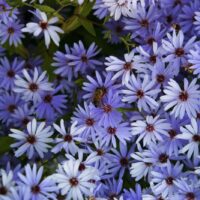
Symphyotrichum (Aster) cordifolium ‘Little Carlow’
Quickly becoming a favorite, this aster has rich lavender-blue daisies starting in late summer and continuing through fall. Known to be a Symphyotrichum cordifolium hybrid hailing from the East Coast of North America. More constrained than our native Pacific aster, it is prolific bloomer with an upright habit that reaches 2-4 feet tall and wide. Best with regular to moderate water in full sun to part shade. It is highly attractive to all sorts of pollinators, especially butterflies.
Symphyotrichum (Aster) cordifolium ‘Little Carlow’
Quickly becoming a favorite, this aster has rich lavender-blue daisies starting in late summer and continuing through fall. Known to be a Symphyotrichum cordifolium hybrid hailing from the East Coast of North America. More constrained than our native Pacific aster, it is prolific bloomer with an upright habit that reaches 2-4 feet tall and wide. Best with regular to moderate water in full sun to part shade. It is highly attractive to all sorts of pollinators, especially butterflies.
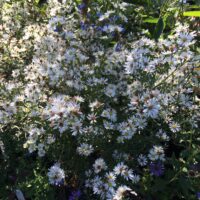
Symphyotrichum (Aster) ericoides ‘Monte Cassino’
Eye-catching, cheerful, and easy to grow, 'Monte Cassino' is a particularly stunning selection of a species of American aster with a wide native range east of the Rockies. In late summer and early fall, this vigorous aster dazzles with dense sprays of delicate, white, daisy-shaped blooms. The lacy foliage remains low, but the cloud-like flower-stalks can shoot up 3-4 feet tall and wide. Makes for gorgeous cut flowers. Thrives in full sun to part shade with moderate water. Irresistable to bees and butterflies.
Symphyotrichum (Aster) foliaceum
Native to the western United States where it grows in open woods, mountain meadows and along streams at mid to high elevations. The erect flower stems hold daisies of light blue to violet blue with yellow centers, surrounded by leafy bracts. An important pollinator plant, offering pollen and nectar late in the season to bees, butterflies and other beneficial insects. Grows 1 - 2 ft. tall from a leafy base that slowly increases. Prefers full sun with regular to moderate moisture. Winter deciduous.
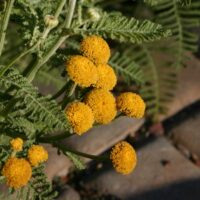
Tanacetum bipinnatum (camphoratum)
Native to sand dunes from the Bay Area north, this shrubby evergreen groundcover spreads quickly to create drifts of soft fern-like foliage. Yellow, button-shaped flowers form small clusters atop stalks up to 2 ft. tall. Enjoys full sun to light shade. Tolerant of clay soils and excessive moisture but will thrive with only occasional water once established. Reducing irrigation can temper this tansy's somewhat aggressive nature. Dune tansy has a strong scent of camphor and is valued for its medicinal uses. Beautiful when combined with ceanothus, Douglas iris and other plants from our coastal areas. Good for erosion control.
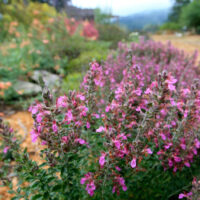
Teucrium chamaedrys
Tough, neat looking evergreen shrublet-good for hot dry places. Excellent edging for herb gardens. Grows 1 ft. tall by 2 ft. wide. Dark green foliage topped with light magenta flowers in spikes. Shear after blooming. Deer seem to leave it alone. Bee favorite.
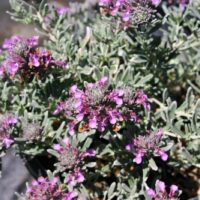
Teucrium cossonii (majoricum)
A beautiful little shrublet that hugs the ground to 2 ft. or more wide. Narrow gray-green foiage is topped with dense clusters of rosy-lavender flowers, nearly the entire growing season. Requires decent drainage with moderate to occasional summer water once established. Great rock garden plant. Pollinator friendly and deer resistant.
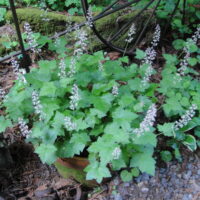
Tiarella trifoliata v. unifoliata
The native sugar-scoop makes an attractive groundcover in a shady spot with some moisture. Blooms in early summer with spikes of little white stars; seed pods are shaped like little scoops. Removing spent flower stalks often prompts reblooming. Native to the dark and damp forest floor of northern California. A sweet addition to the woodland garden where there is summer moisture.
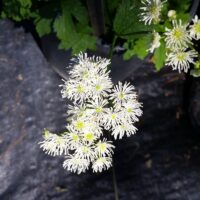
Trautvetteria caroliniensis
From moist woodlands in mountainous areas of northern California comes this lush and verdant buttercup relative. Large, serrated, palmate leaves up to 8 inches wide spread densely across the ground on slender stems. In summer through early fall, icy white flowers made up of thin filaments form flat topped clusters up to 5 inches wide. These delicate flowers sit atop stems reaching up to 3 ft. high. Plant in moist areas with part to full shade. The leaves will die down in winter only to re-emerge in spring. While very rare in California, false bugbane is more common in other parts of the country. Our form comes from the Siskiyou Mountains of northern California.
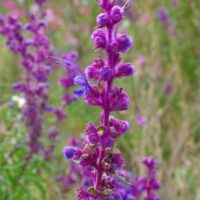
Trichostema lanatum
Woolly blue curls is a much sought after evergreen shrub with pungent, dark green, narrow leaves and spectacular flower spikes. Grows up to 5 ft tall and often wider, and blooms over a long period. Blue-purple to pink flowers, covered in purple hairs with protruding, long, curving stamens are a sight to behold. Native to coastal scrub and chaparral communities from Monterey county to northern Baja. Requires full sun, good drainage and is drought tolerant once established. Avoid regular irrigation, fertilizer and organic mulches. Pollinated by hummingbirds and visited by bumblebees and butterflies. Deer resistant.
Urtica dioica
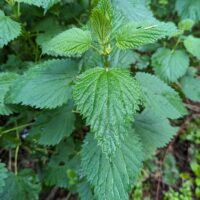
Found in moist woodlands and meadows throughout the state, stinging nettle is a habitat powerhouse. Growing at least 3 ft. tall and spreading vigorously to form large colonies, it's a great addition to any shady habitat garden or swale, where it stays moist throughout the year. Plant away from high traffic areas, as both the stems and foliage have small, stinging hairs that can cause skin irritation upon contact. This nettle has distinctive gray stalks, serrated leaves, and produces white, firework-like inflorescences that grow on stems in clusters throughout summer and early fall. Not only has it been used for centuries for a multitude of edible and medicinal purposes by indigenous tribes, it is also a larval host to several native butterflies including the painted lady and red admiral. Good cover for birds and small mammals.
Vaccinium ovatum
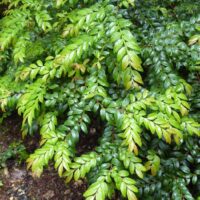
A handsome evergreen shrub native to moist forests of the Pacific Coast. Leathery dark green leaves with new growth flushed bronzy-red. Small pinkish flowers in the spring are followed by delectable black berries prized in pies and jams. A slow growing shrub for shady situations or cool sun along the coast with moderate to regular water. Grows 4 - 5 ft. tall and wide or as much as 8 ft. in especially prime locations given time. Flowers provide nectar for hummingbirds and bees, fruit for many species including humans. Fire resistant. Deer resistant.