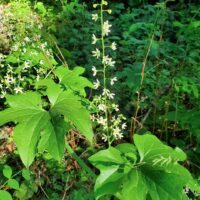
Marah oregana
A native perennial vine found in coastal counties from Santa Clara, California to British Columbia. Growing from a massive, enlarged tuber in forest edges and riparian habitats. The lush-green, palmate leaves with spiraling tendrils clamber along the ground and climb and sprawl over shrubs and trees. White, star-like flowers bloom in the spring and are favored by native bees as well as honeybees. The flowers lead to showy, inflated, bright-green, fruits with soft spines. The generic name Marah comes from the Hebrew word for bitter, in reference to all parts of the plants being extremely bitter to taste. Completely herbaceous, dying back to the woody root in late summer or fall, returning in the spring. Best with part shade. Quite drought tolerant but will accept moderate irrigation. Probably deer resistant.
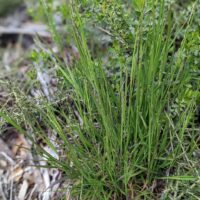
Melica californica
Here is a tough and handsome bunchgrass native to the grasslands and oak woodlands of northern and central coast ranges and the Sierra Nevada foothills. Bright green blades grow about one foot tall. The flower spikes are made up of glistening papery bracts and grow 2 - 4 ft. tall. The ornamental flowering culms remain attractive even after this grass has gone dormant, and is also useful as a “cut” in floral arrangements. Tolerant of many soil types, though it requires good drainage. Plant in full sun to light shade where it is very drought tolerant. Deer resistant.
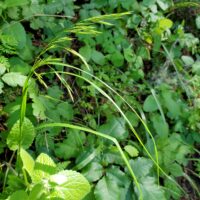
Melica geyeri
This perennial bunch grass is native to many types of habitat in seasonally moist forests and hillsides throughout much of California. Forms a lush, dense bunch of deep-green, broad blades, spreading slowly by rhizomes. The common name refers to the swollen, onion-like corms at the base of the stems. The inflorescence rises 3 ft. tall or more is made up of long, green, narrow spikelets with purple banding. A perfect grass for dappled shade under oaks and firs. Tolerant of some summer irrigation, but can survive the dry season once established. Goes dormant by early autumn. A host plant of the rural skipper and the white-lined sphinx moth. Deer resistant.
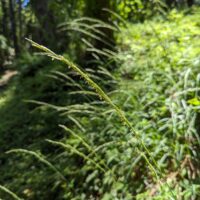
Melica harfordii
A lovely and useful grass native to dryish slopes and canyons of coniferous forests from central California to British Columbia. Forms a loose vertical clump with slightly arching stems 2 to 4 ft. tall. The delicate, narrow flower spikes add a sparkling effect to the woodland garden. Useful in lightly shaded plantings, where it is drought tolerant especially in cooler areas like western Sonoma County. It would benefit from occasional water during the dry season in warmer regions. Adds a nice vertical touch, as a specimen or in mass. Deer resistant.

Melica imperfecta
Native to dry hillsides, chaparral and open woodlands of southern and central California. This dainty native perennial grass grows 1 - 3 ft. tall in flower with narrow, glossy leaves at its base. The slender flower panicles provide a delicate effect, starting out cream and aging to beige. Grows best in cool sun or part shade and responds to some irrigation. Goes dormant if allowed to go summer dry once established, turning green with the winter rains. Useful for lightly shaded meadow plantings and stabilizing slopes. Deer resistant.
Melica torreyana
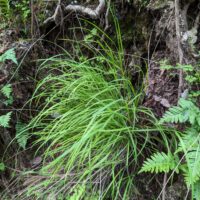
At its best in winter and early spring, this little northern California bunchgrass is a perfect mound of soft green blades. In full bloom it can reach 1 - 3 ft. tall, followed by typical melic fruit resembling small brown rice grains held close to the stem. Grows in sun and shade in nature, but performs best/longest in the garden in part shade. Will go semi-summer dormant with drought, but will be evergreen with some moisture. Deer resistant.
Monardella macrantha ‘Marian Sampson’
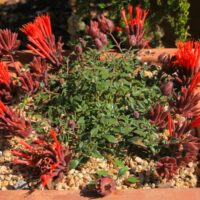
A choice native perennial forming low mats of fragrant dark green shiny leaves. Mid to late spring brings spectacular heads of scarlet tubular flowers which are hummingbird magnets. Well suited for rock garden or container use where good drainage can be provided along with occasional summer water. Appreciates light shade in hot regions. The cultivar ‘Marian Sampson’ is a vigorous and disease resistant selection, but still likely to be short lived, lasting 2 to 4 years. Fantastic accent plant which is deer resistant and attractive to butterflies and hummingbirds.
Monardella purpurea
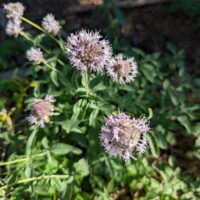
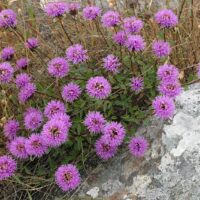
A locally rare and more refined version of our common coyote mint, often with darker flowers, colored purple. Mature plants typically stay under a foot tall, but will get a little wider. Leaves are narrow and dark green, lining burgundy-tinged stems. While native to serpentine soils, it does well in most soils with good drainage. Plant in full sun to part shade and water infrequently. A great, rarely offered native for rock gardens or smaller areas, where butterflies and bees will enjoy the summer blossoms. Deer resistant.
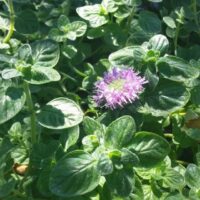
Monardella villosa ssp. franciscana ‘Pomo Canyon’
This low growing, dense selection of our native coyote mint was discovered near the mouth of the Russian River. Large, round, deeply veined leaves colored dark blue-green give this groundcover a lush appearance. In summer, soft lavender flowers which look like pincushions cover the plant. Reaches a height of up to 12 inches and spreads fairly quickly to form drifts. Provide full sun to light shade and moderate to infrequent irrigation. A stellar plant for bees, butterflies and hummingbirds. Coyote mint is not a true mint and won’t spread invasively by roots. Deer resistant.
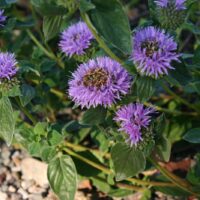
Monardella villosa ssp. franciscana ‘Russian River’
Our own selection of coyote mint from a rocky slope along the lower Russian River. Although Monardella is sometimes difficult in cultivation, this plant has proven to be vigorous. Grows 12 to 18 inches tall with ball-like clusters of pinkish-purple above the fragrant evergreen foliage. Good for a dry sunny site. Attracts bees and butterflies. Deer resistant.
Monardella villosa ssp. villosa – Mark West seed strain
This sweet little coyote mint hails from the dry, inland hills above the Mark West watershed in North East Santa Rosa. It is more compact than the ‘Russian River’ selection, mounding to about 1’ high and spreading to 3’ across. The aromatic foliage is a light minty green, and the round lavender-pink flower heads bloom from late spring through summer. Best with a bit of protection from the hot afternoon sun, this coyote mint is great to tuck under a large, upright, drought tolerant shrub, such as manzanita or Ceanothus. Drought tolerant once established, but blooms best with occasional deep soaks. Needs good drainage. Like other coyote mints, it is a butterfly and native bee magnet. Deer resistant.
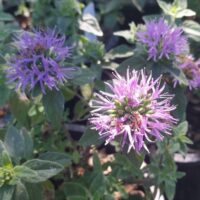
Monardella villosa ssp. villosa – Mark West seed strain ‘Mark West’
This sweet little coyote mint hails from the dry, inland hills above the Mark West watershed in North East Santa Rosa. It is more compact than the ‘Russian River’ selection, mounding to about 1’ high and spreading to 3’ across. The aromatic foliage is a light minty green, and the round lavender-pink flower heads bloom from late spring through summer. Best with a bit of protection from the hot afternoon sun, this coyote mint is great to tuck under a large, upright, drought tolerant shrub, such as manzanita or Ceanothus. Drought tolerant once established, but blooms best with occasional deep soaks. Needs good drainage. Like other coyote mints, it is a butterfly and native bee magnet. Deer resistant.
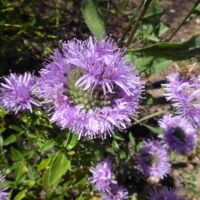
Monardella viridis
A pollinator magnet! Found in inland Sonoma County, and in Lake and Napa Counties, on hot, dry, rocky slopes, green coyote mint entices the senses with its minty, sage-like aroma, small, pointed, ovate, green-gray foliage, and its saturated lavender inflorescences that bloom in summer. Growing to 4’ across, this low mounding woody perennial prefers decent drainage and a bit of relief from afternoon sun in hotter, inland sites. The flowers are especially attractive to native bees and butterflies. Deer resistant and drought-tolerant once established.
Muhlenbergia dubia
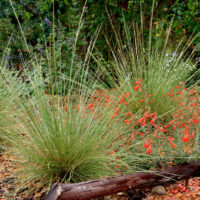
A half size version of the popular deer grass, Muhlenbergia rigens, with many of its attributes - only smaller. Evergreen foliage 12 - 18 inches tall. Narrow flower spikes on erect stems to 3 ft. tall. Adaptable, plant in full sun to light shade, little to moderate summer water. Heat and drought tolerant. Deer resistant too.
Muhlenbergia rigens
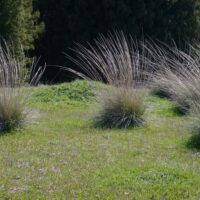
With its graceful, arching habit and tall, attractive seed stalk, this versatile, adaptable native grass is a striking addition to any garden. Forms a tidy, dense clump 3 ft. tall and 3-4 feet wide, making it useful as a specimen and also wonderful planted in mass. Remains mostly evergreen with occasional summer water, but can be periodically chopped down to spur fresh growth. Plant in full sun to light shade. Tolerates moist or dry soils and performs well in clay. Its extensive root system makes it an excellent for soil stabilization. Good habitat value offering seeds for songbirds and is a larval food source for a number of butterflies species. Deer resistant.
Nemophila menziesii – Frosty Blue
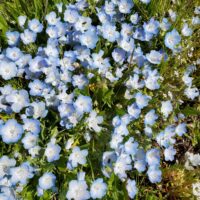
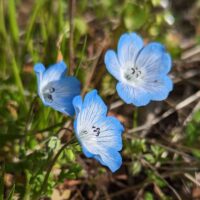
An interesting seed strain of the charming, ANNUAL baby blue eyes. Found in many habitat types throughout California, this beauty has long been in cultivation. The slender, succulent, lobed leaves grow 4 - 6 inches tall, spreading and spilling about 1 ft wide. The "Frosty" in the name refers to the silvery color to the foliage, which contrast nicely with the profusion of gorgeous, bright, baby-blue blossoms. Spectacular in drifts, where it can spill and cascade, at the front of a garden bed, in meadow plantings, rock gardens or in containers. Plant in full sun to light shade where it is early to bloom during the cool of spring. Hot weather triggers seed production. The large black seeds are relished by birds. Reseeds readily.
Oemleria cerasiformis
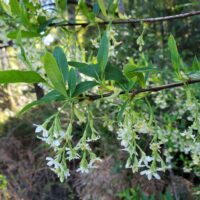
A charming native shrub which grows in moist areas along the coast or when inland on forest edges. Blooms in early spring just as the new leaves are beginning to expand with drooping clusters of fragrant white flowers. Male and female plants are separate and you'll need both to get the small blue-black fruits that birds enjoy. A suckering shrub growing 5 - 6 ft. tall or more. Plant in part shade with regular to occasional water. Can grow in cool full sun such as you find along the coast.
Oenothera californica
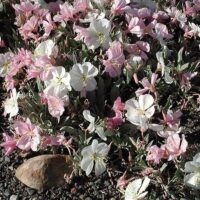
California primrose forms low mats of gorgeous, grey foliage, up to 2 to 3 ft. across. The soft leaves, covered with dense hairs, becomes nearly hidden by large, white, sweetly fragrant flowers. The long succession of blooms pop open in early evening from drooping flower buds and last just one night, becoming pink with age. Native to sandy or gravely soils of southern California, southwestern U.S. and Baja, where it can be found in chaparral, high elevation deserts and open woodland habitats. Perfect for the dry garden with well draining soils in full sun to very light shade. The luscious flower display can last from late spring into early summer. Goes completely dormant by mid-summer, returning the next winter. Pollinated by a number of interesting moth species including the Sphinx moth.
Oxalis oregana
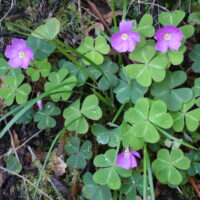
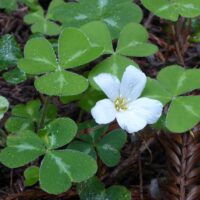
A natural companion of coast redwoods where it forms low carpets of clover-like foliage. Useful ground cover for the woodland garden where it competes well with tree roots and thrives in partial to deep shade. Low and spreading with spring flowers that can range from white through dark pink . Best with humus in the soil and some summer moisture, though it is drought tolerant in coastal zones. Deer resistant.
Oxalis oregana ‘American Beauty’
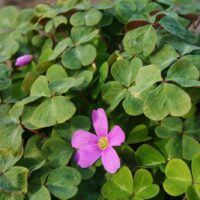
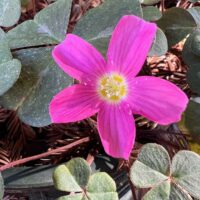
This remarkable selection of our native redwood sorrel has perhaps the largest flowers of any of the forms we've seen. The big pink blooms appear in spring above the lush, green, clover-like foliage. This ground cover competes well with tree roots and thrives in even the shadiest spots. Best with humus in soil and some moisture, though it is drought tolerant in coastal zones. Deer resistant.
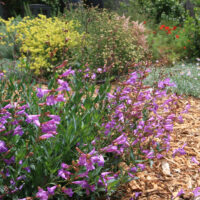
Penstemon azureus
Native to the mountains of California and Oregon where it grows in woodland and chaparral plant communities. Forms a tidy mound of bluish-green leaves 1-2 ft. tall and wide with bright blue tubular flowers late spring into summer. Requires good drainage and sun to light shade. This species is drought tolerant but prefers occasional summer water and is more garden tolerant than most native Penstemons. Attractive to bees and hummingbirds.
Penstemon barbatus
Native to sunny, hot, rocky slopes from Utah and Colorado to Texas and Mexico, this striking penstemon is a willing grower. Forms a low mound of lush foliage, topped with 4 ft. tall, erect flower spikes of brilliant, scarlet, tubular blossoms, providing a bold splash of color in beds, borders, rock garden or meadow planting. Plant in full sun with good drainage where it will be drought tolerant once established. Flowers adored by hummingbirds and butterflies. Deer resistant.
Penstemon barbatus ‘Coral Baby’
This dazzling selection of Penstemon is from the Plant Select program of Colorado. Forms a tidy, compact mound of bright green foliage to around 15 inches tall by 12 inches or so wide. Late spring brings upright spikes of eye catching coral-pink tubular flowers which attract bees, butterflies and hummingbirds. Full sun with good drainage and moderate to occasional summer water.