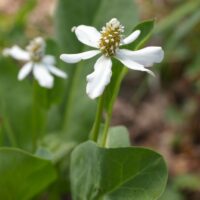
Anemopsis californica
An unusual plant - native to wet areas, but adaptable to regular or moderate garden water. The low rosettes of leaves spread into attractive colonies. The white flowers, or actually, flower bracts, are very showy in late spring. Sun to light shade with moisture. Herbalists use roots and leaves for a topical antibiotic and other uses.
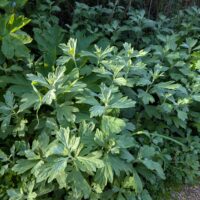
Artemisia douglasiana
Mugwort is native to many plant communities where there is at least some year round moisture: streams and riverbanks, road cuts, ditches, and moist meadows. A stout, rhizomatous perennial with aromatic foliage that is green on top and silvery beneath. The flowers are small and not particularly showy. The foliage is beautiful and fragrant with a long history of medicinal uses. Plant in sun to light shade where it will grow 3 ft. tall and spreading to form a colony. Well watered plants can grow even taller. Provides excellent cover and seeds for birds. Deer resistant.
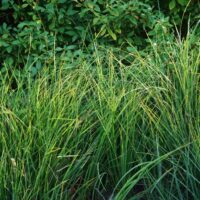
Carex barbarae
Widely distributed native sedge that is an important traditional basket fiber plant. Bright green sharp blades in clumps 1 - 3 ft. tall and spreading. Oval-shaped tufts of small reddish-brown flowers on spikes at the tip of the flowering stems. An attractive sedge, though it can be invasive. For sunny or partly shaded areas with regular to moderate moisture. Drought tolerant in clay soils or with some shade. Handsome container plant too. Often used in bio swales and riparian restoration. Deer resistant.
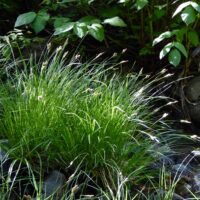
Carex nudata
Native to below the high water mark along perennial water courses. Forms a bright green, dense, arching mound with interesting black flowers in spring. Best in moist soils, full sun to light shade. 1 - 2 1/2 ft. tall and wide. Lovely yellow fall color in colder locations. Winter deciduous. Beautiful in containers too. Deer resistant.
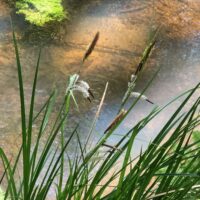
Carex obnupta
From moist coastal sites to shady redwood forests comes this tall sedge, one of the tallest of our native sedges. Spreads vigorously to form dense drifts up to 4 feet in height. One of the more shade tolerant sedges, the slough sedge can grow under the darkness of a redwood canopy but will also accept full sun as long as it has access to moisture. A great plant for naturalizing in moist areas. Used by native peoples for basket making.
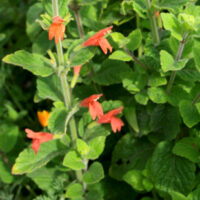
Clinopodium (Satureja) mimuloides
Native to creeksides in the mountains of southern California, this clump forming perennial is rarely seen in cultivation. Growing 2 - 3 ft. tall and wide with soft, fragrant foliage. Orangy-red tubular flowers bloom late spring to early summer and are hummingbird favorites. Plant in sun to light shade with regular moisture.
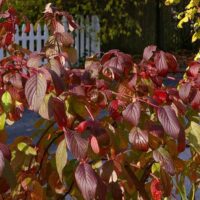
Cornus sericea
Redtwig dogwood is a spreading shrub growing 6 ft. or more tall and at least as wide, forming broad thickets along creeks and rivers. The beautiful red stems stand out in the winter landscape once they loose their leaves in the fall. Flat topped flower clusters are creamy white and are followed by clusters of white fruits. Often takes on nice fall color before loosing its leaves. Plant in full sun to light shade with regular to moderate watering. Does great on heavy clay soils and is a very good soil stabilizer. An excellent habitat plant where it provides food and cover. The fruits are very popular with birds. At the nursery, bluebirds and mockingbirds compete aggressively for the fleshy white fruits.
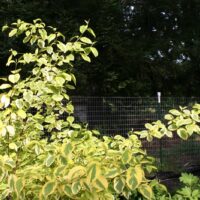
Cornus sericea ‘Hedgerow’s Gold’
A striking selection of redtwig dogwood, discovered near the Deschutes River in Eastern Oregon and introduced by Hedgerows Nursery. The large leaves of soft green have a broad, irregular, bright golden edge. In autumn the leaves turn an attractive ruby color. Forms a thicket that easily reaches 6 ft. tall by 6 ft. wide. The red stems stand out in the winter landscape after the leaves have fallen. Flat topped cluster of white flowers appear in spring and are followed by small white fruits enjoyed by birds. Best with regular water, good light and protection from the hot afternoon sun.
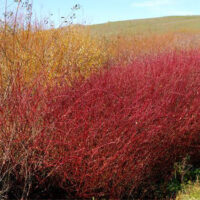
Cornus sericea ssp. occidentalis ‘Tomales Bay’
This selection of the native creek dogwood is from Tomales Bay, Marin County, where it forms broad clumps 6 ft. or more tall and wide. The beautiful red stems stand out in the winter landscape. Flat topped flower clusters are creamy white followed by small white fruits. Good fall color. Plant in full sun to light shade and give regular irrigation. Western tanager and warblers eat the flowers. Grosbeak, Northern oriole, flickers, spotted towhee, Western bluebird, robins, mockingbirds, bandtailed pigeon, waxwing and quail eat the fruits.
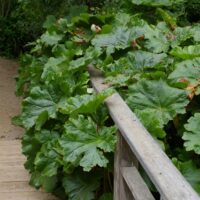
Darmera peltata
Native to mountain streamsides of Northern California and Oregon. A spectacular plant for pond, stream, moist woodland, or anywhere there is regular moisture and lightly shaded conditions. The lovely pink flower clusters on tall naked stems are the first to emerge in the spring. Next the very large bright green round leaves on sturdy stalks unfurl, reaching a height of up to 4 ft.. The foliage turns yellow in the fall and dies back to chunky rhizomes in the winter. A bold and beautiful flowering and foliage plant. Does well in containers too.
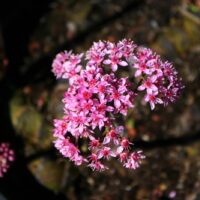
Darmera peltata – dwarf form
This is a surprising dwarf form of the moisture loving umbrella plant. The normally large round leaves of this species are dramatically reduced in height and width in this novel selection. Only about 1 1/2 ft. tall with leaves 8 - 10 inches wide. Deep pink flower clusters, unusually dark for the species, emerge on slender stems in spring and are soon followed by the bright green leaves. The foliage turns yellow in the fall and dies back to chunky rhizomes in the winter. A nice compact alternative for the smaller garden with part shade and regular moisture. Does well in containers.

Epipactis gigantea
Here’s a native orchid that’s easy in cultivation. In time it will form a colony producing many flower stems. Each stem holds several interesting orchid blossoms of subtle orange, coral and green tones 12 - 18 inches tall. Dies back to the ground in winter. Best with decent drainage and regular to moderate moisture (NOT soggy soils) and dappled shade part of the day. Wonderful addition to the woodland garden, around pond or near streams. Good in containers too.
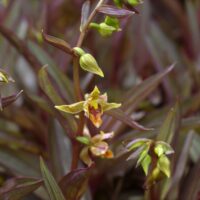
Epipactis gigantea ‘Serpentine Night’
The stream orchid is found in perennial streams, seepages, or other permanently moist places in California. Spreads by runners and will form a colony producing many flower stems. Each stem holds several orchid blosssoms of subtle orange tones 12 - 18 inches tall. The cultivar ‘Serpentine Night’ has wonderful dark purple foliage, emerging in the spring almost black. As the season progresses the color changes to dark bronze then bronzy green. Goes dormant in winter. Best with good light but may need afternoon shade in hot areas. Easy to grow with regular to moderate water. Excellent in containers.
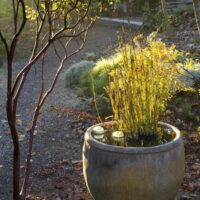
Equisetum hyemale v. robustum
Horsetail’s wonderful, erect form can be very useful in the landscape BUT BEWARE of its invasive nature. Best confined to containers where its slender, hollow, segmented stems can rise 4 ft. tall or more. Provide sun to medium shade and regular water. Deer resistant.
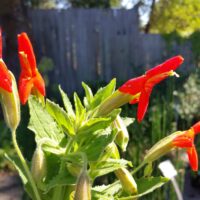
Erythranthe (Mimulus) cardinalis
Native to wet areas throughout the West, this robust perennial can easily grow to more than 2 ft. tall and wide. Tubular scarlet flowers are a hummingbird favorite and are very showy. Plant in sun to part shade with ample water. Perfect beside a pond, stream or water feature. Trim as needed to keep tidy. The flowers provide nectar for hummingbirds.
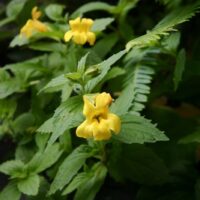
Erythranthe (Mimulus) dentata
Native to coastal streams and wet shady places in Humboldt and Del Norte Counties, north to British Columbia.Handsome bright green leaves with toothed margins,6-15 inches high spreading by slender rhizomes to form perennial patches.Late spring and summer brings funnel shaped bright yellow flowers with tiny red dots in the throat, which bloom over a long period. Excellent for any moist shady spot where the cheerful blossoms brighten. A good container plant too.
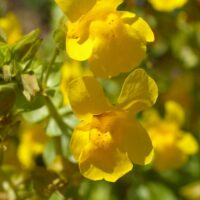
Erythranthe (Mimulus) guttata
This charming monkeyflower is native to wet places throughout the west. Forms mats of bright green foliage topped with flowering stems of cheerful, bright yellow, tubular flower. Needs regular moisture and full sun to light shade. Seeds about when happy. The flowers provide nectar for hummingbirds. Works great in a swale, combined with rushes, Helenium and bee plant.
Helenium bigelovii
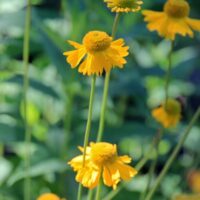
Native to moist meadows of California and S. Oregon, this summer flowering perennial makes a lovely addition to the garden. The cheerful golden-yellow petals turn down slightly from the rounded dome-like center. The golden daisy-like blossoms are held above the rosette of smooth green leaves on 2 - 3 ft. tall stems and attract a wide variety of insects including bees and butterflies. Despite the common name this plant does not cause allergies. It was originally used for snuff, hence the name sneezeweed. Plant in full sun to light shade with regular water. The seed for this crop is from the Pitkin Marsh in Sonoma County.
Helenium puberulum
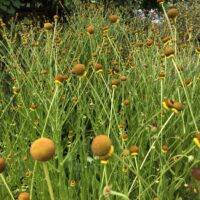
Summer brings clouds of yellow pom-poms which age to brown on this native member of the sunflower family. The round flower clusters sit atop rings of small, down-turned petals, held up on flat stems lined with lanceolate leaves. The flower stalks reach 3 to 5 ft. in height and can be cut down once blooming has finished. Plant in full sun to light shade. Rosilla grows naturally by creeks and seeps and enjoys regular moisture, but will tolerate some drier periods. Attracts a wide variety of insects including bees and butterflies. Goldfinches love the seed. Reseeds readily.
Iris longipetala
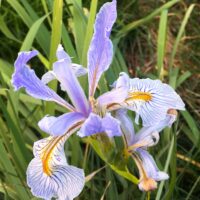
Restricted to swales and moist areas in coastal grasslands from San Francisco to Monterey, this uncommon native is well worth growing. Bluish-green evergreen blades form erect clumps one foot to 20 inches tall. Early spring brings beautiful lavender-blue flowers with dark purple venation. Full sun in coastal areas, a little shade inland with regular water through the bloom period. Can go dryer once flowering is finished. Deer resistant.
Juncus effusus
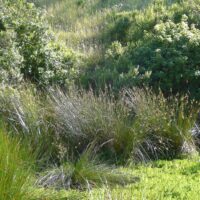
Striking plant with bright green, erect, cylindrical blades that arch somewhat toward the tips. Creamy-gold, tassel-like flowers appear near the tips in spring and early summer. Grows 3 ft. or more tall and wide. Native to moist habitats in temperate regions of the world. Can grow in full sun to light shade with regular to moderate water. A natural for water features, making a great foliage accent for pools, ponds, or streamsides. Can grow in shallow water. Great in containers too. Deer resistant.
Juncus patens
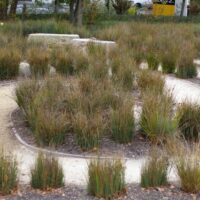
This handsome evergreen rush provides a striking vertical accent 1-1/2 to 2-1/2 ft. tall with grey-green to grey-blue foliage. Brownish-yellow, tassel-like flowers appear in the spring and early summer. Very adaptable, tolerating a wide range of conditions. Enjoys sun with moisture, but will tolerate dry conditions once established. Accepts moderate shade. Robust root systems are excellent for soil stabilization. Deer resistant.
Juncus patens ‘Elk Blue’
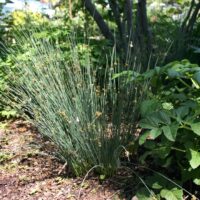
Introduced by San Marcos Growers, this form of Juncus patens was selected from the hills southeast of the town of Elk in Mendocino County. Features exceptionally blue foliage and and a vigorous spreading habit. This selection is shorter than the typical grey rush only reaching about 18 inches tall. An adaptable species, will thrive in moist soils, even shallow water but once established tolerates dry conditions too. Grows in sun to moderate shade. An excellent accent plant with its stiff, vertical foliage. Deer resistant.

Lupinus polyphyllus
The bog lupine is known for its tall flower spikes of blue to purple or sometimes pink, reaching up to almost 5' tall from a bed of large, dark green leaves about 18" in height. Clumps can grow about 3' wide. This species is the dominant parent used in many popular hybrid lupines. Native to moist places from the San Francisco Bay area northward along the coast and in mountainous places in the interior. Prefers full sun along the coast and dappled shade inland. This lupine tends to go winter dormant. Snails and slugs find lupines especially tasty when young. Needs regular water. One can create a wonderful meadow by planting the bog lupine with other moisture loving species such as lady ferns, umbrella plant and seep monkeyflower. Deer resistant.
Sambucus mexicana (nigra ssp. caerulea)
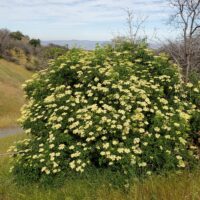
Our native blue elderberry, often seen on banks above rivers and streams, or even on somewhat drier slopes. A fast growing deciduous shrub or small tree 8 to 30 ft. tall with pinnately divided leaves. Creamy yellow flowers appear in late spring in flat-topped clusters, followed by blue berries. High on the birds’ favorite list! Ripe berries feed many species of birds. Moderate to infrequent summer water.
Schoenoplectus (Scirpus) acutus var. occidentalis
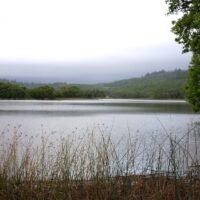
Also called giant bulrush, this large bold plant can form massive colonies on the edges of wet areas. Native to freshwater marshes, lakes and stream banks throughout lower elevations in California and much of North America. Vertical, thick, round, leafless stems grow 10 to 15 ft. tall and spread underground. In large landscapes it can be used as a pond or riparian plant where it will form dense thickets. Can be grown in containers for smaller gardens, set just below water level for a dramatic vertical accent. Plant in full sun with regular water. Provides good habitat for wildlife.