
Agrostis pallens
A fine textured, drought tolerant, spreading, perennial grass that forms an undulating, naturalistic, meadow look, or can be mowed and used as a lawn substitute. Native to meadows, open woodlands and forests in many plant communities in California north to British Columbia. Grows 1 -2 ft. tall with airy flower stems in late spring to early summer. May be shy to flower in shady areas. Plant in sun to light shade, with decent drainage, where it will accept both water and drought. Will go dormant in summer without irrigation. If using as a lawn substitute, it will need summer irrigation, though requiring far less than a traditional lawn. Excellent understory among trees or shrubs, for rain gardens, bio-swales, meadows or mowed as a lawn substitute. Host plant for a number of butterflies. Deer resistant.
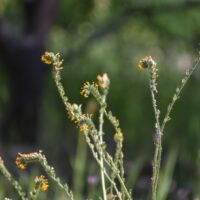
Amsinckia menziesii
A bright, yellow-orange ANNUAL with curled clusters of little trumpet-shaped flowers resembling the scrolled head of a violin. Flower stalks of one-to-three feet tall gradually unfurl with new blooms from mid-spring to early summer. The warmly-colored blossoms are a great nectar source for butterflies and develop into seeds adored by goldfinches and other songbirds. This grassland native adapts to the garden setting, where it prefers full sun and occasional irrigation. Will self-sow.
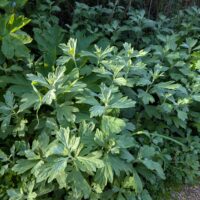
Artemisia douglasiana
Mugwort is native to many plant communities where there is at least some year round moisture: streams and riverbanks, road cuts, ditches, and moist meadows. A stout, rhizomatous perennial with aromatic foliage that is green on top and silvery beneath. The flowers are small and not particularly showy. The foliage is beautiful and fragrant with a long history of medicinal uses. Plant in sun to light shade where it will grow 3 ft. tall and spreading to form a colony. Well watered plants can grow even taller. Provides excellent cover and seeds for birds. Deer resistant.
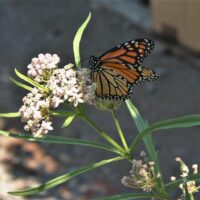
Asclepias fascicularis
Our most common native milkweed is found in meadows and on the banks above ponds. Its flowers are held in umbels of a pale mauve color. They form at the top of 1 - 3 ft. tall slender stems that die back in winter to a perennial rootstock. Its wandering roots form small colonies. Drought tolerant, it prefers seasonally moist soils and likes moderate water in the garden. The narrow leaves are the preferred larval food for the Monarch Butterfly. Full sun to part shade. Unlikely to be bothered by deer.
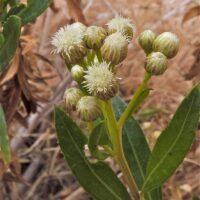
Baccharis salicifolia
This native shrub looks something like a willow in foliage and is found in similar habitats in California and the southwest US. Not a willow at all, but a member of the aster family, this evergreen shrub blooms nearly year round, making it a powerhouse for pollinators. The profusion of small, creamy white, fuzzy flowers, tinged with pink or red are highly attractive to butterflies, bees and other beneficial insects. Extremely tough and easy to grow in full sun with summer water, where it will grow 6 - 10 feet tall and wide with rich, green foliage. Able to survive drier conditions than a willow could handle, but it will look rough if it gets too dry. Responds well to pruning and can be cut down to six inches to refresh. Excellent screen, windbreak and for soil stabilization. Stellar for attracting pollinators.
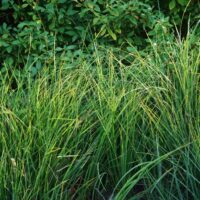
Carex barbarae
Widely distributed native sedge that is an important traditional basket fiber plant. Bright green sharp blades in clumps 1 - 3 ft. tall and spreading. Oval-shaped tufts of small reddish-brown flowers on spikes at the tip of the flowering stems. An attractive sedge, though it can be invasive. For sunny or partly shaded areas with regular to moderate moisture. Drought tolerant in clay soils or with some shade. Handsome container plant too. Often used in bio swales and riparian restoration. Deer resistant.
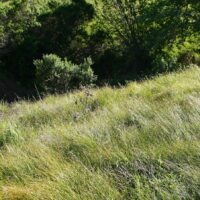
Carex praegracilis
Similar to Carex pansa but growing taller. The fine textured grass-like blades can reach a foot or more tall and spreads freely by rhizomes to form a thick weed smothering groundcover. Useful for meadows, green roofs, bio-swales, erosion control and as a lawn substitute. Can be left natural where it has a lush tousled appearance or trimmed occasionally for a low turf-like appearance. Tolerates drought, inundation, poor soils, salt spray, heat, cold, shade and foot traffic. Plant in sun to light shade where it requires some summer moisture but far less than a conventional lawn. Will go summer dormant if allowed to get too dry. Deer resistant.
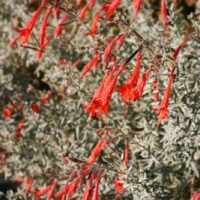
Epilobium ‘Chaparral Silver’
This California fuchsia that we obtained from another grower appears to be identical to our ‘Roger’s U. C. Hybrid’ - same lovely gray foliage 12 -18 inches tall, spreading, with narrow red tubular flowers that the hummingbirds love. Provide full sun to bright shade. Flowers best with occasional deep watering. Pruning plants down to a few inches in late autumn helps to rejuvenate them for the following year.
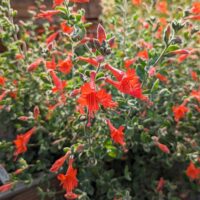
Epilobium canum ‘Calistoga’
Phil Van Soelen’s selection of California fuchsia from the Palisades east of Calistoga. Forms a spreading mat of unusually wide, fuzzy, gray leaves. The flowers are the typical hummingbird attracting orange-red trumpet shape and appear on stalks reaching up to 18 inches high. For sunny areas. Flowers best with occasional deep watering. Pruning plants down to a few inches in late autumn helps to rejuvenate them for the following year.
Epilobium canum ‘Liz’s Choice’
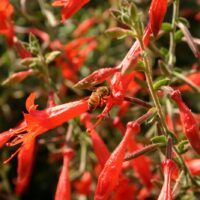
This selection of California fuchsia features particularly large, trumpet-shaped, scarlet flowers atop stems reaching 3 ft. tall. The flowers, blooming from summer into fall, are a favorite of hummingbirds and bees. The lance-shaped leaves are a pewter green, providing a striking contrast to the brilliant flowers. It spreads over time to create small colonies. Trim plants down to about 4 inches in winter for vigorous, tidy growth the next year. Provide moderate to infrequent irrigation and full sun. This beautiful cultivar was selected by Milo Baker Chapter CNPS Fellow Liz Parsons.
Epilobium canum ‘Marin Pink’
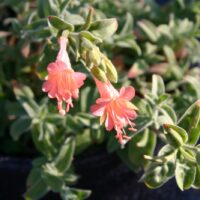
California fuchsias are appreciated for their abundant tubular flowers that bloom in late summer and fall, predominantly in different shades of orange-red. This unusual selection has beautiful PINK tubular flowers produced on sage green mounds of foliage to about 2 ft. tall and spreading by underground rhizomes. Vigorous and easy to grow in full sun to very light shade. Touted as drought tolerant, they will survive dry conditions but will thrive with occasional summer water. Beautiful against a rock wall, in dry stream beds, or naturalistic plantings where they have some room to spread. Hummingbird favorite. Pruning plants down to a few inches in late autumn helps to rejuvenate them for the following year.
Epilobium canum ‘Sierra Salmon’
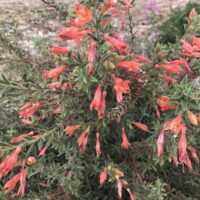
California fuchsias have many charms, blooming in late summer into fall with hummingbird attracting, tubular flowers, mostly in shades of red and orange. 'Sierra Salmon' offers unusual salmon-colored blossoms on soft blue-green foliage. This cultivar doesn't tend to wander like some can and forms dense clumps of erect stems 12 - 24 inches tall and wide. Looks wonderful amongst rocks or boulders, in perennial borders or to add pizazz with grass and shrub plantings. Plant in full sun with occasional summer water. Prune down to a few inches after blooms are done.
Euthamia occidentalis
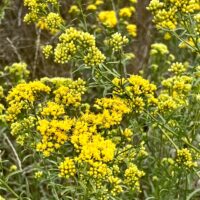
This little known, native goldenrod is a pollinator powerhouse, supporting bees, as well as a wide array of butterflies, including the Monarch, who are drawn to the nectar. In late summer and autumn, small, golden-yellow flowers form rounded clusters at the tops of tall, vertical branches, 4’ to 6’ high, clothed in long, slender, leaves. Grows naturally in sunny, low-lying areas which stay at least somewhat moist into early summer, but may be dry later in the year. Spreads quickly by underground rhizomes, especially in areas with perennial moisture, making it good for erosion control, but not suitable for small gardens. In two years, plants should reach about 4’ wide. Great in containers in smaller spaces.
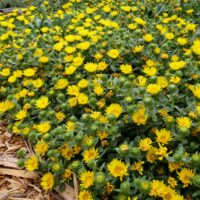
Grindelia stricta var. platyphylla ‘Mendocino’
This selection features particularly large bright yellow 2 1/2 inch daisies over a long period in the summer. Each fat green flower bud holds a dollop of gummy white resin which protects the blooms from predators, hence the name “gum plant”. 'Mendocino' is a particularly prostrate form under 8 inches tall and spreading to at least 6' wide. Native to dunes, marshes and bluffs in coastal scrub throughout coastal California. Excellent pollinator plant. Useful in a meadow planting or with other low groundcovers and shrubs. Looks nice draping over a wall too. An adaptable plant for sun to light shade, moderate to occasional water. A natural along the coast where it tolerates wind and salt spray. Deer resistant.
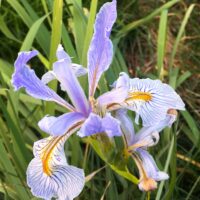
Iris longipetala
Restricted to swales and moist areas in coastal grasslands from San Francisco to Monterey, this uncommon native is well worth growing. Bluish-green evergreen blades form erect clumps one foot to 20 inches tall. Early spring brings beautiful lavender-blue flowers with dark purple venation. Full sun in coastal areas, a little shade inland with regular water through the bloom period. Can go dryer once flowering is finished. Deer resistant.
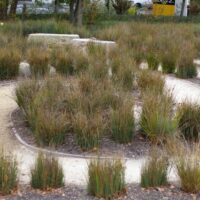
Juncus patens
This handsome evergreen rush provides a striking vertical accent 1-1/2 to 2-1/2 ft. tall with grey-green to grey-blue foliage. Brownish-yellow, tassel-like flowers appear in the spring and early summer. Very adaptable, tolerating a wide range of conditions. Enjoys sun with moisture, but will tolerate dry conditions once established. Accepts moderate shade. Robust root systems are excellent for soil stabilization. Deer resistant.
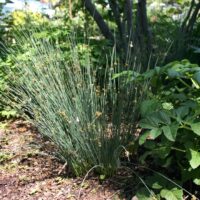
Juncus patens ‘Elk Blue’
Introduced by San Marcos Growers, this form of Juncus patens was selected from the hills southeast of the town of Elk in Mendocino County. Features exceptionally blue foliage and and a vigorous spreading habit. This selection is shorter than the typical grey rush only reaching about 18 inches tall. An adaptable species, will thrive in moist soils, even shallow water but once established tolerates dry conditions too. Grows in sun to moderate shade. An excellent accent plant with its stiff, vertical foliage. Deer resistant.
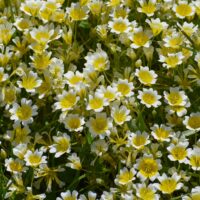
Limnanthes douglasii
California native ANNUAL occurring in grasslands and vernal pools throughout California. Low growing, shiny green foliage is topped with a profusion of sweetly fragrant, cup shaped, bright yellow blossoms with white tips. An excellent choice for low, winter wet areas, drainage swales, retention basins or seasonally dry stream beds. Thrives in heavy soils where it often naturalizes. Plant in full sun to part shade with regular water through the growing season. Fabulous container plant too. Meadowfoam is excellent for encouraging native pollinators, bees and butterflies.
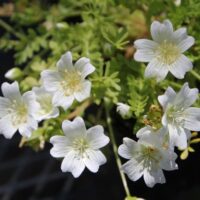
Limnanthes douglasii ssp. nivea
California native ANNUAL occurring in grasslands and vernal pools throughout California. Low growing foliage is topped with a profusion of sweetly fragrant, small white flowers with purple-pink veins on the petals. An excellent choice for low, winter wet areas, drainage swales, retention basins or seasonally dry streambeds. Thrives in heavy soils where it often naturalizes. Plant in full sun to part shade with regular water through the growing season. Good in containers too. Native wildflowers are excellent for encouraging native pollinators.
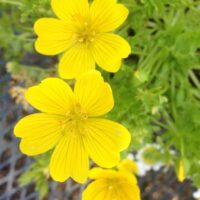
Limnanthes douglasii ssp. sulphurea
Pure yellow flowering form of meadowfoam, rare in the wild but easy to grow in the garden. This native ANNUAL favors seasonally moist areas in full sun. Low growing foliage is topped with a profusion of pure yellow, cup-shaped, fragrant flowers. Useful in low areas, drainage swales, retention basins or seasonally dry stream beds. Thrives in heavy, water retentive soils. Wonderful in containers too. Meadowfoam is excellent for encouraging pollinators and other beneficial insects.
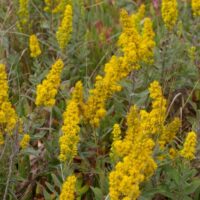
Solidago velutina ssp. californica
A showy and easy to grow late blooming native perennial. Spreads by creeping rootstocks where it can form a good-sized colony. Has spread slowly in our heavy clay soils with minimal water, but has the potential to spread aggressively in lighter soils especially with regular water. Late summer through fall brings slender wand-like flower stalks of golden yellow daisies 2 - 3 ft. tall which are visited by bees, butterflies and other insects. Plant in a sunny area where it is drought tolerant, but some supplemental summer water keeps it blooming longer.

Stachys bullata
A native perennial from the mint family, found primarily near the coast from San Francisco southward, where it inhabits oak, pine and fir woodlands. Medium-green leaves are softly fuzzy with scalloped edges, growing around 2 ft. or more tall and spreading by underground rhizomes to form a colony. Blooming spring through summer, with lavender-pink tubular flowers in whorls, which attract bees, butterflies and hummingbirds. Tends to grow in somewhat drier areas, but responds well to moisture and also tolerates inundation. A natural with rushes, ferns and snowberries. Useful for partly shaded bioswales and oak/mixed conifer woodlands. The underground rhizomes make it a good choice for erosion control. Deer resistant.
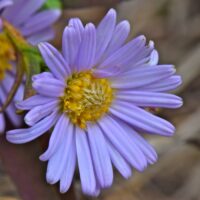
Symphyotrichum (Aster) chilense
This native aster is found throughout much of Sonoma County, usually in moist soils. More slender in form than the burly Point St. George selection. Spreads vigorously but with a lighter touch, integrating itself well with native grasses and bulbs. Its summer-to-fall blossoms are white to lavender blue and provide excellent nectar for butterflies and beneficial insects. 1-3 ft. tall and spreading. Thrives in sun to light shade with moderate to little summer irrigation.
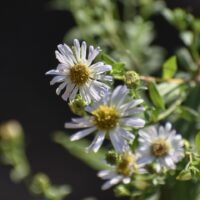
Symphyotrichum (Aster) chilense ‘Olema White’
Clear white flowers replace the class purple ones in this unusual selection of California aster that we found near the town of Olema in Marin County. In summer and into fall, a profusion of flowers bursts forth on this VIGOROUSLY spreading native perennial. An extremely adaptable groundcover reaching up to 3 ft. tall. Accepts regular to very little irrigation and full sun to light shade. This prolific bloomer is a bee magnet and also enjoyed by butterflies. Tolerant of clay and periodic flooding. Looks best when sheared to the ground after blooming.
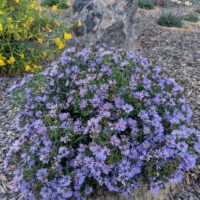
Symphyotrichum (Aster) chilense ‘Plumas Purple’
This form of the California aster is remarkably compact and refined, featuring blue-purple daisies which are darker than any other selection we have seen. Grows to a height of under a foot and so far has been much less likely to spread aggressively, though it should get to at least 3’ wide. In late summer and early autumn, the dense blooms turn plants into bonbons of flowers. Grow in full sun, where they will be drought tolerant once established, but will enjoy an occasional soak. California asters provide an important late nectar and pollen source for bees, while butterflies enjoy the nectar and are reported to utilize them as a larval hosts. Thank you to Pete Veilleux for giving us this stellar selection! It’s thought to have been found in Plumas County, so should be quite heat and cold tolerant.
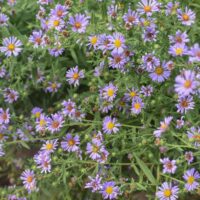
Symphyotrichum (Aster) chilense ‘Purple Haze’
A wonderful selection of our native Pacific aster, chosen by the Santa Barbara Botanical Garden for its deep lavender blossoms. Blooms late summer through fall and often into winter with one-inch daisies opening from dark purple buds. This plant SPREADS VIGOROUSLY by underground rhizomes, so works best when constrained by a planter or garden box or in a meadow planting. Excellent for areas needing soil stablization. The dense foliage grows quickly to 2-3 feet tall each spring, and can be annually pruned to the ground in winter. Tolerates many soil types and full sun to part shade. Requires minimal water, but occasional deep soaks keep it blooming longer. This easy to grow habitat plant will delight bees and butterflies.

Vitis californica
California wild grape is a vigorous deciduous vine, native to watercourses in California and Oregon. Lush foliage on woody vines create leafy draperies in riparian areas. Useful in the garden for trellises, arbors, fences or to spill down a bank. Round green leaves take on nice yellow tones in the autumn. Flowers are very attractive to bees.Fruits are small and seedy but tasty. Excellent habitat value providing food and cover for wildlife.
Vitis californica ‘Russian River’
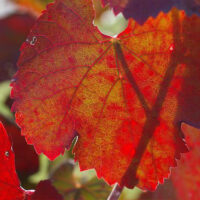
Our own selection of what is likely a hybrid between the native Vitis californica and the European wine grape Vitis vinifera, originating along the Russian River near Rio Nido in Sonoma County. Similar to 'Roger’s Red’ in vigor and heavy fruit production, this cultivar has deeper purple-red fall colored leaves that tend to hold on to the vine longer than the selection 'Roger’s Red'. An adaptable vine, thriving in full sun to light shade with regular to moderate water. Will grow well with far less summer water, though plants in dryish conditions tend to be less rampant. Good habitat plant.
Vitis californica x ‘Roger’s Red’
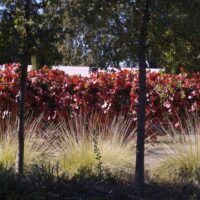
Selected by Roger Raiche, this cultivar is now thought to be a natural hybrid between the native Vitis californica and the European wine grape, Vitis vinifera. A beautiful and vigorous vine used to cover fences, trellises, arbors, or used as a ground cover. This selection has gorgeous warm red fall color and ample fruit clusters that are small (with seeds), but sweet and tasty. An adaptable vine, thriving in full sun to light shade with regular to moderate water. Will grow well with far less summer water, though plants in dryish conditions tend to be less rampant. Good habitat plant.