Pinus muricata
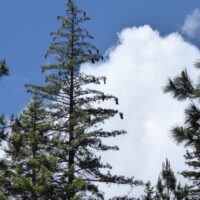
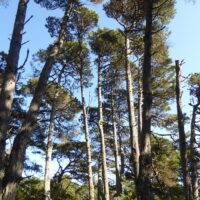
The Bishop pine is native to the northern California coast from Marin to Mendocino. A medium to large sized tree with a beautifully rounded crown and long, gray-green needles. Distinguished from the more southerly Monterey pine by its smaller cones which prick the hand when held. The Bishop pine often cohabitates with redwoods and other coastal conifers. Drought tolerant once established except in interior locations where an occasional deep watering may be required. Generally reaches 40 to 70 feet in height. Deer resistant.
Pinus ponderosa
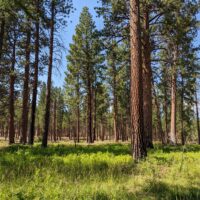
Often associated with the Sierra Nevada mountains, this majestic pine can be found in Sonoma County as well. Long, gray-green needles form bushy clusters at the ends of branches with cantaloupe-sized cones that emerge at the very tips. The bark at maturity is a colorful patchwork of orange-tan plates separated by deep grooves of dark brown. It can grow a couple of feet a year, and averages from 60 to more than 100 feet in height in a garden setting. Provide full sun to light shade with occasional deep waterings when young. Needs decent drainage. Deer resistant.
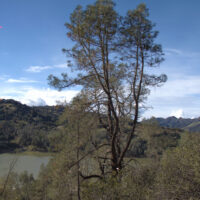
Pinus sabiniana
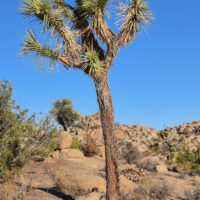
A distinctive pine native to chaparral areas of California’s foothills. Sometimes called ghost pine due to its long gray needles set against dark, furrowed bark. While fairly slow growing, the gray pine can reach a height of 80 ft or more in well-draining sites with ample sunlight. Native Americans prized the big, prickly cones for their large, edible seeds. Prefers full sun and requires minimal water once established
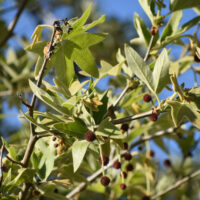
Platanus racemosa
This most Californian of trees from the southern and central parts of our state features stunning bark mottled white and grey on a large, sculptured trunk. The maple-like leaves create an open canopy on this stately tree which can reach up to around 80 ft. tall at maturity. Seeds are produced in fuzzy pom-poms dangling on short stems and are a great food source for birds. In autumn, the leaves can turn orangey-yellow before they drop, adding rare fall color to the California landscape. Makes its home in sunny, low-lying areas and canyons with moderate to occasional irrigation. A great shade tree for the large garden and a larval host for the Western tiger swallowtail butterfly. Deer resistant.
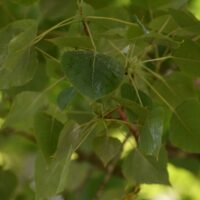
Populus fremontii
Fast growing riparian tree, native to watercourses throughout California. A tall and dramatic tree, 50 - 75 feet tall, with a spreading, open crown. The leaves are shiny, triangular to heart shaped, with coarsely serrated margins and flattened petioles. Turns beautiful shades of brilliant yellow in the autumn. The wind causes the leaves to flutter and rustle, making a whispering sound. Cottonwoods can be either male or female, with the female trees producing masses of cottony seeds. When young, the bark is smooth and silver gray, becoming thick and furrowed with age. They have wide spreading surface roots and sucker sprouts. An important wildlife plant, providing food and cover for a wide array of insects and birds. This major riparian species provides rich habitat value, soil stabilization, and expansive shade. Plant in full sun with plenty of space and regular to occasional irrigation.
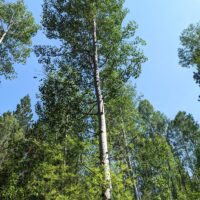
Populus tremuloides
From mountain meadows and hillsides across the Sierra Nevada comes this iconic native poplar. Smooth, white bark and rounded leaves which quake in the wind make this slender tree highly ornamental. Reaches a height of at least 20 ft. and spreads by underground roots to form groves. While the fall color may not be quite as stunning in lower elevation gardens as it is in the mountains, colder parts of our area will still see leaves of yellow, orange and red in the autumn. Easily grown at lower elevations, this form is reported to be particularly disease resistant. Needs full sun to light shade and regular to moderate irrigation once established. Lower irrigation should slow aspen’s ability to multiply.
Pseudotsuga menziesii
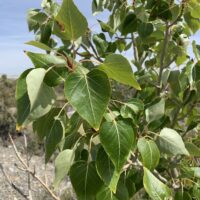
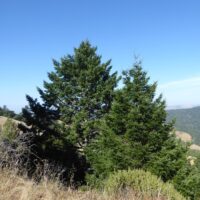
We are not currently growing this plant due to flammability and reduced demand.
Ptelea crenulata
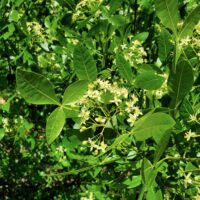
This interesting California endemic deserves wider use in California gardens. Hoptree is a deciduous, large shrub/small tree, growing 6 - 15 ft. tall, in the citrus family. Native to hot, interior coast ranges and the Sierra Nevada foothills, often growing in canyons where residual moisture can be found. Glossy, green, fragrant, trifoliate leaves with panicles of small creamy-white flowers decorate the branch tips in spring. Handsome, circular, flattened, fruits which look like hop seeds, start out green and age to tan and may hold on after the leaves have fallen in the autumn. Plant in full sun to light shade with occasional, deep summer watering. The fragrant flowers are attractive to a variety of pollinators including butterflies. A larval host for the two-tailed swallowtail butterfly.
Quercus agrifolia
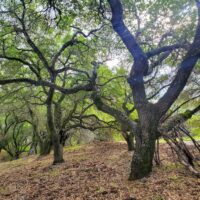
A beautiful and stately evergreen oak, native to many plant communities from Mendocino County south to Baja. One of the fastest growing California oaks and a versatile landscape subject as long as space allows. Young trees have a dense rounded canopy covered with thick, dark green, oval and convex leaves with spiny margins. Smooth gray bark becomes furrowed with age. Flowers are produced on short yellow hanging catkins followed by long tapered acorns. In time, develops a magnificent architecture with broad spreading branches. Planting native oaks provides beauty, shade, food and cover to a dazzling array of wildlife. Plant in sun to light shade. No additional summer water required once established.

Quercus chrysolepis
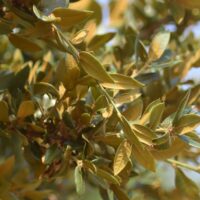
A handsome evergreen oak with a rounded, spreading crown, 20 - 60 ft tall and wide. The leaves of its broad, low canopy are dark-green and shiny with fuzzy gold or silver hairs on the underside. Native from Oregon to Baja, it is the most widely distributed oak in California. Often grows near creeks, but requires only occasional water. Plant in full sun to light shade where it will be drought tolerant once established. A good choice for bank stabilization. Like other oaks, it is habitat powerhouse, offering food and cover for a huge variety of wildlife.
Quercus douglasii
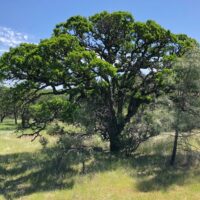
This is the oak of California’s interior, where hot and dry summer conditions prevail. A medium-sized oak, growing 20 to 50 feet tall, The canopy is compact and round with bluish-green lobed leaves. The acorns are oval shaped with shallow caps. Grows slowly but is long lived. A well sited oak is a gift to future generations of humans as well as a myriad of wildlife. Plant in full sun where it will be extremely drought tolerant once established.
Quercus kelloggii
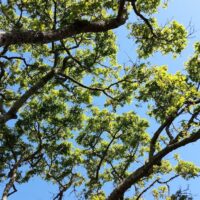
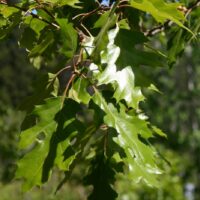
Beautiful in all seasons, the native black oak makes a fine specimen. Found mostly in foothills and low mountains away from the immediate coast, often in association with conifers, from California to Oregon. Growing 35 - 80 ft tall, this graceful, deciduous tree starts the spring with gorgeous, rosy-pink new growth. The soft pink leaves soon mature to a lustrous, shiny, dark green and are deeply lobed with pointed tips. Gold-green catkins dangle from the branch tips in the spring, leading to plump acorns, set deep in their scaly cups. In the autumn, the bold, leathery leaves take on golden hues before they fall. Oak trees are the ultimate habitat plant, offering food and cover for a myriad of species, including invertebrates, mammals and birds. Plant in full sun to light shade where it will be drought tolerant once established.
Quercus lobata
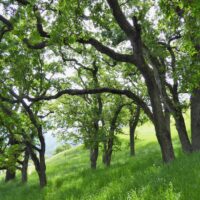
This majestic oak once covered the Santa Rosa Valley and many other fertile valleys throughout the state. Becomes large and picturesque with long drooping branches and beautiful thick, checked bark. Best in deep soils with room to develop. Wonderful planted for wildlife. Deciduous, long lived. Oaks are some of the greatest trees for birds. Oak titmice, acorn woodpeckers, and many other species utilize them for nest sites, cover, insects and acorns.
Quercus tomentella
The rarest of all California oaks, an ancient relict of the mainland, now confined to the Channel Islands, off the coast of southern California. Island oak is a small evergreen tree with a rounded canopy, 25 to 40 foot tall. Beautiful dark-green, shiny, leathery leaves with prominent parallel veins are edged with widely spaced teeth. Whitish woolly hairs cover the growing tips, undersides of leaves, and the caps of the 1 inch long acorns. A natural for gardens with coastal influence where it will be drought tolerant once established. Tolerant of many soil conditions, but attains full stature in deeper soils in sheltered locations. Oaks provide beauty, shade and food and cover for a wide array of wildlife.
Quercus wislizeni
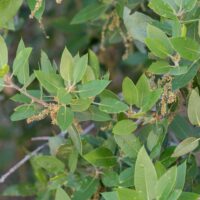
Typically more compact in stature than the coast live oak, this evergreen oak has similar dark-green, leathery leaves, though often narrower and flatter. A native of dry foothills, the interior live oak has a range that extends throughout much California, and is the dominant live oak in the western Sierra-Nevadas. While it can flourish in the shade, it may remain shrublike. In full sun, its densely-foliated canopy has a pleasingly broad, rounded habit. This adaptable oak takes inland heat, and once established is drought tolerant and generally deer resistant. It tolerates clay, but does best in well-draining soils. Like other oaks, it’s a great habitat plant that supports a wide range of wildlife.
Sequoia sempervirens
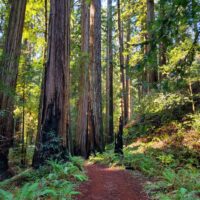
A beautiful and fast growing conifer, famous, as it is the world’s tallest tree. Outside its native range or in a garden setting, it provides a symmetrical pyramid of soft fragrant foliage 70 to 150 ft. The columnar trunks are covered with thick fibrous red-brown bark. Small one inch cones form in clusters at the branch tips. Grows easily in areas with coastal influence and fog but will grow in drier interior sites with regular summer water. Performs well in the regular watering regimes of many urban gardens and lawns. Can be planted as a specimen, in groves, or even pruned as a hedge. As long as its watering requirements are met it has very few pest or disease problems.
Sequoia sempervirens ‘Kelly’s Prostrate’
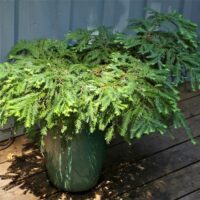
A low growing form of the coast redwood with a flat, spreading habit. Exceptionally low growing, we have never seen any upright growth in this form. The flat sprays of foliage are deep green with light green new growth and spreading to five foot wide or more. Best in moist, well drained soils with light shade. Use where the unique form can be shown off. Makes an excellent container subject.
Sequoiadendron giganteum
This iconic Californian giant hales from the west side of the Sierra Nevada where it forms dramatic cathedrals with its massive, cinnamon-colored trunks. The leaves are gray-green and scale-like, hugging the billowing stems. In nature, this close relative of the coast redwood can be over 3,000 years old and reach over 300 ft. tall with trunks bulging to 56 ft. in diameter. In a garden setting you can expect a more reasonable height of 60 – 90 ft. with a canopy spread of around 40 ft. A stunning specimen tree for a large garden. Needs decent drainage and occasional irrigation when young, though it will become quite drought tolerant once established. Full sun to light shade. More cold hardy and drought tolerant than the coast redwood. Reported to be deer resistant.
Thuja plicata
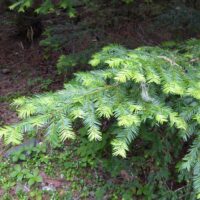
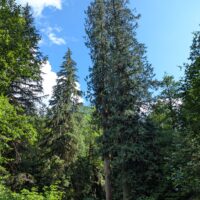
This stately conifer with deep green, scale-like needles and cinnamon-red bark, makes its home on the northern coast of California all the way up to Alaska. A large tree over time, eventually reaching up to 90 ft. tall in the garden and higher in its native habitat. The needle-covered branches hang gracefully in fern-like cascades. Looks best when the branches are allowed to touch the ground when young, allowing its elegant conical shape to be fully utilized. One of the most shade tolerant of our native conifers, but will be happy in full sun, except in hot, interior climates. Needs moderate to occasional irrigation. Tolerates moist soil. One way to identify this species from the other native cedars is by the white butterfly shape on the back of the needles, created by stomatal bloom.
Torreya californica
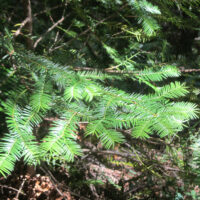
Rarely seen in cultivation, this unusual conifer is endemic to California. Found in the coast ranges and foothills of the Sierra Nevada, where it is scattered here and there, usually in cool habitats of canyons and steep ravines. Growing at a leisurely pace 15 to 40 ft. tall with dark- green, stiff, rather broad needles. Male and female flowers occur on separate trees, with cream colored pollen cones on the males and unusual plum-like fruits on the females, which become purplish with age. Does well in part shade with moderate to little watering. Useful as a specimen tree or pruned into a hedge. An excellent container plant too.