

Abies grandis
Grand indeed. Glossy, dark green needles and a symmetrical form make this native fir one of our choicest conifers. Native from coastal Sonoma County, just south of the Russian River, north to British Columbia and east to the Rockies. Grows up to a foot a year and is not suitable for the small garden. Plant in full sun along the coast but protect from hot afternoon sun in the interior. Occasional deep waterings are required when young. Combines well with redwoods and bigleaf maples. Often used as a Christmas tree.


Acer macrophyllum
This stately and picturesque tree is native to stream banks and moist canyons from Southern Alaska to the foothills of California. A large, round-topped tree with large dark green lobed leaves and smooth silver-gray bark. Fast growing 30 ft or more tall. One of the few native trees to offer good fall color. Sun to partial shade, occasional to regular water. When planting in a sunny location, protect the trunk from sun-scald with a dilute application of white latex paint.
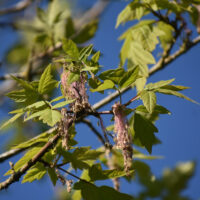
Acer negundo var. californicum
The box elder at maturity features a broad canopy supported by thick branches and a wide, gray trunk. In spring, the silky pink inflorescences hang from the tips of the branches as the leaves begin to emerge. Quickly grows to a height and width of up to 50 ft. Often used as a restoration plant in riparian zones. Full sun to part shade. Enjoys regular moisture. Deer seem to leave it alone once established.

Aesculus californica
Beautiful in all its seasons, this native tree is perfectly adapted to our summer dry climate. Broad headed, deciduous tree rapidly growing to 15 feet or more with smooth grey bark and a rounded shapely habit. Bright green palmate leaves unfurl in the spring. Striking, fragrant white to pink flowers in long spikes are followed by pear shaped fruits that split open to reveal large chestnut-brown shiny seeds dangling from branch tips. Buckeyes lose their leaves in summer to avoid the long dry season. Adaptable and tolerant of a wide range of conditions. Sun to light shade, little to no water once established. Flowers provide nectar for hummingbirds, butterflies and native bees.
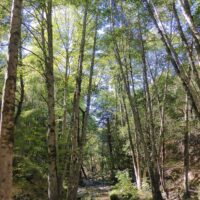
Alnus rhombifolia
From creeks and rivers throughout California, the white alder rapidly grows to become a large tree, reaching to 50 ft. or more at maturity. Serrated green leaves produce an excellent canopy above the straight, silvery-gray trunk. In winter, when the leaves have fallen, the ghostly branches make a striking silhouette with dangling catkins from the branch tips. An excellent plant for creek restoration where its aggressive roots help to stabilize banks. Keep away from irrigation pipes and foundations. Needs regular moisture and sun to light shade.
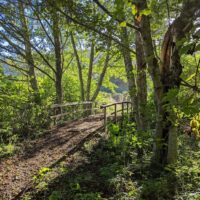
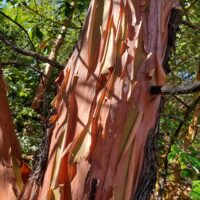
Arbutus menziesii
A beautiful native evergreen tree which features handsome, smooth, reddish bark that peels in thin flakes. Leaves are leathery and shiny dark green. Large clusters of white flowers give way to red-orange berries that can remain into winter if the birds don't get them. It can be tricky to establish, necessitating planting in the fall. MUST have good drainage and just enough water to establish. Once established give only infrequent deep waterings or no water at all. Bees and hummingbirds love the flowers.
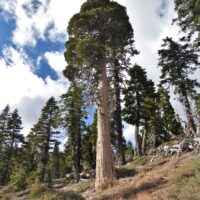
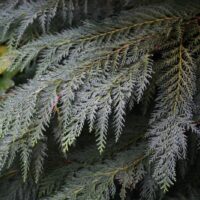
Calocedrus decurrens
Cinnamon colored bark and a distinctly conical form distinguish this lovely conifer known for its appealing woodsy scent. Bright green, scale-like leaves drape from the ends of branches in dense clusters with small, flattened cones.Native to rocky areas throughout California. Slowly grows to become a large tree not suitable for a small garden. Requires decent drainage and occasional deep waterings when young. Enjoys full to part sun.Striking when planted as a single specimen or when combined with broadleaved trees such as maples and oaks. Deer resistant.
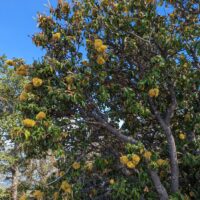
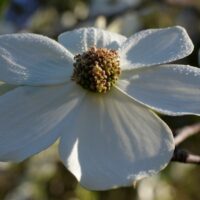
Cornus nuttallii
Spectacular native tree with pleasing horizontal branching, gorgeous white flowers, handsome fruits and good fall color. An elegant specimen tree though notoriously challenging in cultivation. Easiest to grow within its native range. Dislikes poor drainage, fertilizing, pruning, and injury to the tender bark. Drought tolerant in shady, cool situations but enjoys occasional to moderate water in fast draining soils. Once established it can become a show stopping specimen in a wooded garden, under high branching trees, along stream courses and slopes with eastern or northern exposure. Birds relish the red fruits.
Fraxinus dipetala
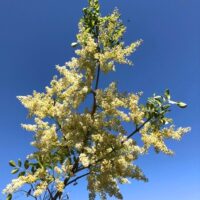
This is our only native ash with showy flowers. A large shrub or multi-trunked tree native to slopes, canyons and stream banks in hot interior regions of the state. Grows 7 to 25 ft. tall with pinnately compound leaves. The creamy white flowers are produced on dangling racemes in mid to late spring, followed by pendulous clusters of samara fruits. Like the California buckeye, it loses its leaves early to evade the long dry summer. Grows in sun to partial shade. Drought tolerant once established.
Fraxinus latifolia
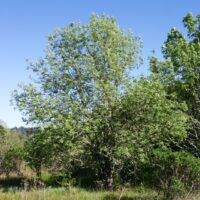
Fast growing hardwood tree, native to stream and river banks or other wetland habitats from San Diego to British Columbia. Growing 30 - 70 ft. tall, this deciduous tree has medium green compound leaves. Male and female flowers occur on separate trees and are not particularly showy. They bloom just as the spring foliage is leafing out. Fruits occur on the female trees and are paddle-shaped, single samara-style fruits in drooping clusters. Birds and mammals eat its seed, but probably used more as a nesting site for birds. Plant in sun to light shade with regular to moderate water.
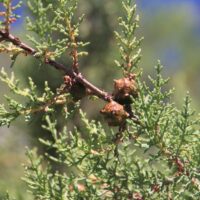
Hesperocyparis macnabiana
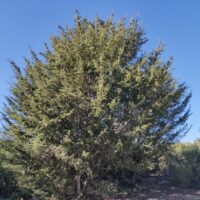
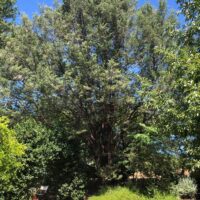
MacNab Cypress is native to dry, open, slopes, usually on serpentine, in chaparral and woodlands of Northern California. Fast growing tree or large shrub, 15 – 40 ft. tall, often with multiple trunks and a spreading crown, growing wider than it is tall. The pleasantly pungent, grey-green, foliage smells like gin and is arranged on flattened branches, giving it a somewhat lacey appearance. The bark is rough and furrowed and the cones are spherical and persistent. Plant in full sun with good drainage and little to no summer water once established. Deer resistant.
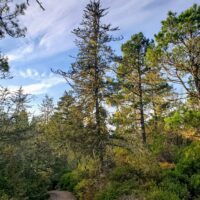
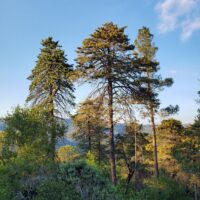
Hesperocyparis sargentii
This cypress makes its home in serpentine pygmy forests from Santa Barbara to Mendocino Counties. While often dwarfed in its native terrain, this species can grow quite happily off of serpentine and may reach up to 60 ft. tall. The small, dark-green, scale-like leaves form a bushy canopy against the gray-brown trunk. A good medium-sized tree for hotter inland areas, but will also tolerate coastal conditions. The sargent cypress can grow fairly rapidly, useful as a high privacy screen or wind break. Plant in full sun to light shade and water occasionally. Will be very drought tolerant once established. Needs good drainage. Deer resistant.
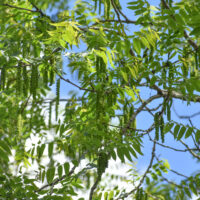
Juglans hindsii
Beautiful, deciduous tree native to riparian areas in Northern California. Canopies of pinnately compound leaves form a round-topped tree 20 - 60 ft. tall. Flowers in early spring are dangling catkins, followed by round nuts in a fleshy husk. The delicious nuts are small and held in thick, hard to crack shells. An important food source for wildlife. Prefers deep soils and is drought tolerant once established. A natural for along the upper slopes of creeks and rivers.
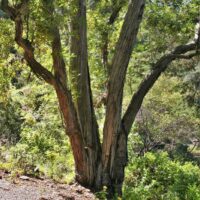
Lyonothamnus floribundus ssp. aspleniifolius
A rare and beautiful evergreen tree from Santa Cruz Island off of the Southern California coast. Fernlike, pinnately divided, shiny, dark-green leaves adorn this fast growing tree which can reach 20 to 50 ft. tall and 15 to 20 ft. wide. Late spring brings large flat-topped clusters of creamy-white flowers on this unusual rose family member. Peeling, reddish-brown bark adds to the interest of this single or multi-trunked tree, which can be used in small groves or as a striking specimen. Plant in full sun to partial shade with moderate to infrequent water. Cold hardy to about 15 degrees. Pollinating insects and birds are attracted to the flowers.
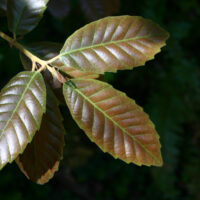
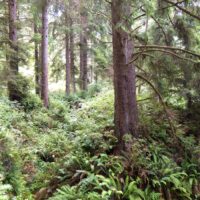
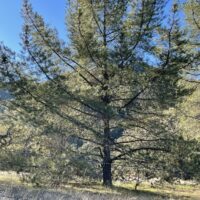
Pinus attenuata
This closed-cone pine is found primarily along the Oregon-California border and in hotter coastal mountains down to Baja. Knobcone pines can reach anywhere from 25 to 80 ft tall, depending on the soil conditions. The conical-shaped, evergreen crown has an open habit with clusters of 4-5” needles on upward-curving branches. Distinctive, asymetrical cones persist on the tree for years, even decades, and add to the tree’s visual appeal. This chaparral and dry-woodland native needs very little water and does best in rocky, well-draining soils with full sun. More tolerant of nutrient-poor soils than most other pines. In very lean soils, trees can develop a stunted and contorted appearance which is quite striking. Deer resistant.
Pinus contorta ssp. bolanderi
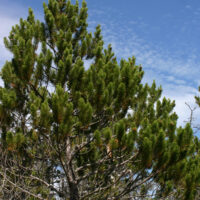
A close relative of the shore pine, the pygmy pine occurs in the coastal pygmy forests of Mendocino Co. This rare and threatened pine only reaches a height of about 6 ft in the acidic soils of its native habitat but acts more like the shore pine in a garden setting, reaching up to about 30 ft in time. The upward reaching stems are clad in short needles with small cones produced on the ends. Provide full sun near the coast and a little afternoon shade inland. Needs moderate to occasional irrigation and decent drainage. Good container plant. Deer resistant.
Pinus contorta ssp. contorta
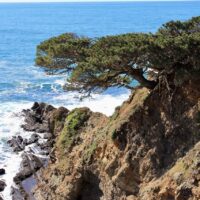
On windswept coastal bluffs from Mendocino Co. northwards resides this dense, picturesque shore pine. While small in stature on the weathered cliffs of our shoreline often reaching only 6-10 ft. in height, in a garden setting the shore pine is a small to medium sized tree, growing to about 30 ft. Short, dark green needles cover the stems with small cones. An excellent compact conifer for the medium sized garden or in a container where it stays more diminutive. Provide full sun and occasional deep irrigation once established. Needs decent drainage. Deer resistant.
Pinus jeffreyi
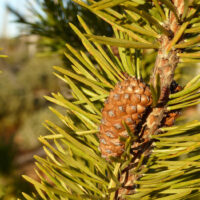
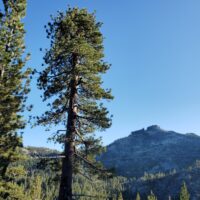
This stately pine hales from many of California’s mountain regions and is the dominant pine of the Tahoe basin. Features long needles and a broad trunk with deeply furrowed bark of orangy-red. Similar to the ponderosa pine but occurs at higher elevations and the bark has a distinctive vanilla scent. The cones are also larger than those of the ponderosa and don’t have sharp, outwardly protruding scales, hence the affectionate name “gentle Jeffrey.” Often reaches heights of over 100 feet with an open canopy. Provide good drainage and full sun to light shade. Drought tolerant and deer resistant.