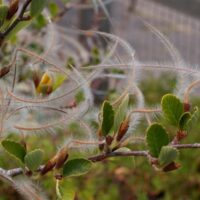
Cercocarpus betuloides
Mountain mahogany is an adaptable, semi-evergreen native shrub (8 to 12 ft. high and wide) or small tree with charming birch-like leaves set against silver-grey bark. Small, honey-scented flowers appear in spring followed by seeds with intriguing silky, curled, feather-like tails. The open habit contrasts nicely with evergreen shrubs or rock walls where its pleasing silhouette can be seen. Flowers are attractive to bees. Mountain mahogany is one of those rare native shrubs which can easily be pruned for narrow garden beds. Grows on dry slopes in chaparral or at the edges of woodlands. Provide full sun to light shade. It is surprisingly adaptable to diferent water regimes, from moderate irrigation to no water once established. Somewhat deer resistant.
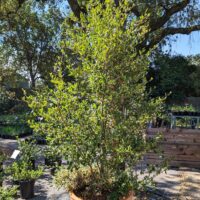
Cercocarpus betuloides var. blancheae
This rare and beautiful variety of our native mountain mahogany offers larger, birch-like leaves with fuzzy and whitish undersides. The highly useful from generally reaches 8 – 15 ft. tall, but only spreads to about 6 ft. wide, making it ideal for narrow locations where a screening, evergreen, fast-growing bush is needed. Small, disk-like, creamy flowers appear in the spring, followed in summer by seed pods with hairy, grey tails which curl upwards, giving the plant a silver halo. Over time, the trunks are covered in a smooth, grey bark. The Island mountain mahogany typically grows much more rapidly than our local variety and is tolerant of moist or dry soils once established and part shade to full sun. Heat isn’t an issue. A great candidate for a container, where it is very amenable to pruning.
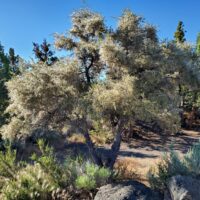
Cercocarpus ledifolius
Large shrub or small, multitrunked, evergreen tree, 6 - 30 ft. tall, native to arid mountains of the western US. Often takes on a gnarled, picturesque form depending on the conditions it is growing in. Adapted to dry, rocky slopes where it weathers drought, extreme heat and cold, wind and snow. Slow growing, densely branching, with dark green, leathery leaves with curled under edges and silvery undersides. Trunks develop beautiful, red-brown bark with silvery new growth. The flowers are similar to our local mt. mahogany species, small, greenish- yellow, smelling of honey, and attractive to pollinators. The fruits are long, silvery, plumes that glow when back lit. Plant in full sun to light shade with good drainage where it will blend well with other dryland shrubs and perennials and requires little input. Fixes nitrogen. Interesting container or bonsai subject.
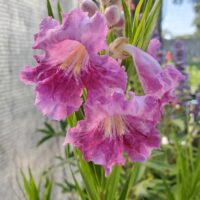
Chilopsis linearis
A graceful, summer-blooming, deciduous shrub, native to desert washes where it grows in gravelly soils and intense heat. Forms a large, multi-branched shrub or small tree reaching up to 15'-20' tall and wide with narrow, willow-like leaves. Terminal clusters of showy, trumpet-shaped flowers in summer come in shades of white, to pink and purple that attract hummingbirds and butterflies. Long, bean-like pods follow and hold on into winter. Enjoys hot climates with plenty of sun, decent drainage and occasional to moderate water. Avoid cool coastal conditions and heavy wet soils. Grows fast when happy with no pest or disease problems, demanding little. A great option for along sidewalks.

Comarostaphylis diversifolia
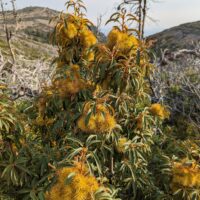
Looking something like a toyon but closely related to manzanita, this handsome evergreen is a useful landscape subject. Native to chaparral communities near the coast in Southern California where it usually grows on north facing slopes. Growing slowly 6-20 ft. tall with shredded red bark and shiny dark green foliage. Creamy-white urn-shaped flowers in racemes bloom March-May are attractive to hummingbirds and pollinators. The dark-red rough textured fruits in summer are enjoyed by many kinds of birds. Grow as an upright shrub or with selective pruning can be trained into a small tree. Useful as a specimen, background screen or informal hedge in full sun to light shade with good drainage. Will except summer water only with good drainage and is drought tolerant once established.
Cornus glabrata
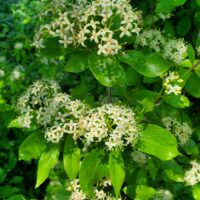
The bluish-white fruits of this species are reputed to be especially good for attracting birds. Small creamy white flowers appear in spring on subtly beautiful arching branches. A type of stream dogwood, it forms thickets with time, 6 - 10 ft. tall. Deciduous. Prefers moisture and some shade. Western tanager and warblers eat the flowers. Grosbeak, Northern oriole, flickers, spotted towhee, Western bluebird, robins, mockingbirds, bandtailed pigeon, waxwing and quail eat the fruits. A great plant for stream restoration.
Cornus sericea
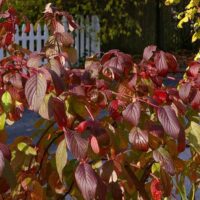
Redtwig dogwood is a spreading shrub growing 6 ft. or more tall and at least as wide, forming broad thickets along creeks and rivers. The beautiful red stems stand out in the winter landscape once they loose their leaves in the fall. Flat topped flower clusters are creamy white and are followed by clusters of white fruits. Often takes on nice fall color before loosing its leaves. Plant in full sun to light shade with regular to moderate watering. Does great on heavy clay soils and is a very good soil stabilizer. An excellent habitat plant where it provides food and cover. The fruits are very popular with birds. At the nursery, bluebirds and mockingbirds compete aggressively for the fleshy white fruits.
Cornus sericea ‘Hedgerow’s Gold’
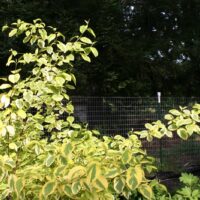
A striking selection of redtwig dogwood, discovered near the Deschutes River in Eastern Oregon and introduced by Hedgerows Nursery. The large leaves of soft green have a broad, irregular, bright golden edge. In autumn the leaves turn an attractive ruby color. Forms a thicket that easily reaches 6 ft. tall by 6 ft. wide. The red stems stand out in the winter landscape after the leaves have fallen. Flat topped cluster of white flowers appear in spring and are followed by small white fruits enjoyed by birds. Best with regular water, good light and protection from the hot afternoon sun.
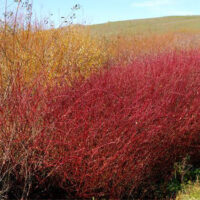
Cornus sericea ssp. occidentalis ‘Tomales Bay’
This selection of the native creek dogwood is from Tomales Bay, Marin County, where it forms broad clumps 6 ft. or more tall and wide. The beautiful red stems stand out in the winter landscape. Flat topped flower clusters are creamy white followed by small white fruits. Good fall color. Plant in full sun to light shade and give regular irrigation. Western tanager and warblers eat the flowers. Grosbeak, Northern oriole, flickers, spotted towhee, Western bluebird, robins, mockingbirds, bandtailed pigeon, waxwing and quail eat the fruits.
Cornus sessilis
Native to moist ravines and stream banks of the coast ranges and the Sierra Nevada Mts, this deciduous shrub or small tree grows 5-10 ft. or more tall and wide. Beautiful shiny, jade green leaves with prominent lateral veining decorate the graceful green barked stems. Small, yellow flowers appear early as it leafs out in the spring and are followed by oval fruits. Fruit color changes as it matures from greenish-white to yellow, red and finally shiny black which attract a wide range of fruit eating birds. Foliage can take on pretty tones of yellow and red in the autumn. Thrives in moist shady locations, but will grow well with just part shade and moderate to occasional summer water once established.
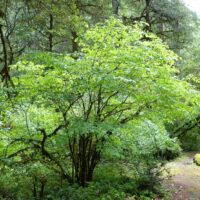
Corylus cornuta ssp. californica
Western hazelnut is a handsome, open, multi-stemmed shrub native to forests from Santa Cruz northwards in the Coast Range, and from Sequoia northwards in the Sierra foothills. Winter deciduous with decorative dangling catkins in winter. The soft, somewhat hairy leaves turn yellow in the fall. Small amounts of tasty nuts are produced in late summer and are relished by wildlife and people. Part shade with some moisture, but will tolerate fairly dry conditions once established. Usually grows 6 - 10 ft. tall. Somewhat deer resistant.
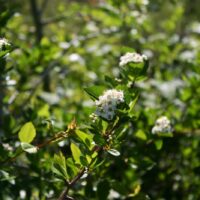
Crataegus gaylussacia
Klamath hawthorn occurs in seasonally wet meadows or borders of forests in northern California. A large deciduous shrub or small tree 6 - 20 ft. tall with reddish-brown bark and formidable thorns. Small, white flowers in flat topped clusters in late spring are followed by red fruits that ripen to black. The fruits are highly attractive to birds. A slight fall/winter chill can turn the leaves a brilliant orangey-red. Plant in full sun to partial shade with regular to moderate water. This shrub tends to sucker and could be encouraged to form a thicket. It is also amenable to pruning, and can be trained into a slender tree. This is our most common, local native hawthorn., and until recently was once thought to be C. douglasii.
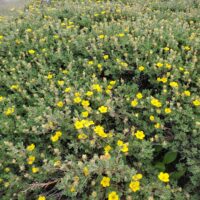
Dasiphora (Potentilla) fruticosa
A popular landscape subject, valued for its long bloom period, hardiness and carefree nature. A member of the rose family, this deciduous shrub can be found across the northern hemisphere, often growing at higher elevations. Here in California, it ocurrs in the Sierras, the Klamath Mountains and the Warners. Grows 2 -3 ft tall and wide with handsome, pinnately compound leaves. Cheerful, rich-yellow, saucer-shaped flowers bloom over a long period, summer into fall. Plant in full sun to light shade with moderate watering. Drought tolerant once established. Attracts bees and butterflies. Great in a pot. Deer resistant.
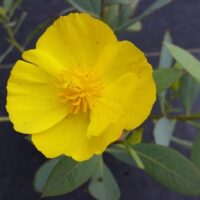
Dendromecon harfordii
A beautiful and much sought after shrub native to California’s Channel Islands. Growing 6 - 10 ft. tall with bluish-gray foliage and a showy display of brilliant yellow poppy blossoms - spring into early summer, with scattered flowers throughout the year in mild climates. Requires full sun, good drainage, and little to no irrigation once established.
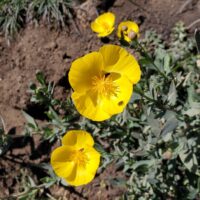
Dendromecon rigida
This is our local bush poppy, growing 4 - 8 ft. tall with bluish-gray foliage and a showy display of brilliant yellow poppy blossoms from spring into early summer. Scattered flowers may be seen throughout the year in mild climates. The leaves are narrower than those of the island bush poppy and the plant has a more open form. Requires full sun, good drainage, and little to no irrigation once established.
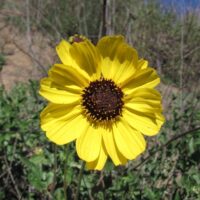
Encelia californica
Cheery yellow daisies with purplish-brown centers cover this sunflower from late winter all the way into summer, making it one of our longest blooming natives. The 2-inch-wide blossoms make for stupendous cut flowers and are loved by bees and butterflies. Goldfinches enjoy the seeds which follow. This somewhat short-lived subshrub features dark green, diamond-shaped leaves and reaches about 3 – 4 ft. tall, spreading a little wider. Should reseed if the spent flowers aren’t removed. Enjoys full sun to light shade and occasional to infrequent irrigation with decent drainage to look its best. Native to generally coastal areas in southern California. While not especially cold sensitive, it will freeze if the temperature gets down to the mid 20s.
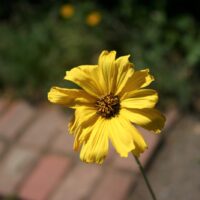
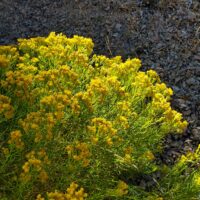
Ericameria arborescens
Native to chaparral regions throughout California, this tall, billowy shrub stands out with its soft and narrow, bright green leaves and, in the summer and early fall, clusters of small yellow flowers. Goldenfleece reaches 6 ft. or more tall with a width of around 4 ft. A wonderful accent plant for the dry garden, especially when combined with dark-foliaged plants such as ceanothus, toyon and manzanitas. Prefers full sun and excellent drainage. Very drought tolerant once established. Excellent for bees and butterflies. Deer resistant.
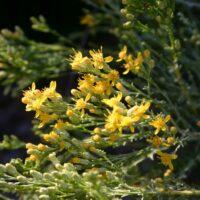
Ericameria ericoides
Native to sand dunes from Long Beach north to Bodega Bay, this low shrub resembles a heather, covered with clusters of small yellow daisies in late summer and fall. Reaching a height of up to 3 feet and spreading to 4 feet, making it an ideal shrub for the smaller garden. Needs occasional water in interior locations and full sun to light shade. Requires well-draining soil. Plant with Ceanothus, low manzanitas and pacific reed grass for a taste of the coast in your own garden. Excellent late season nectar source for bees and butterflies. A light winter pruning will help keep it dense and compact. Said to be deer resistant.
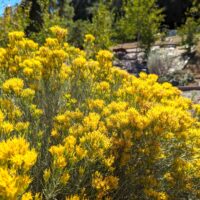
Ericameria nauseosa
This classic plant of the high desert grows in dry, hot, rocky areas throughout much of interior California and throughout the West. In summer and autumn, clusters of golden, star-like flowers cover the tips of the white branches on this low, rounded shrub which reaches up to 3 - 4 ft. tall and wide. Fine, white hairs cover the narrow leaves, giving the plant a ghostly grey-white appearance. Needs a sunny location with excellent drainage and little to no irrigation once established. Bees and butterflies love the flowers. A larval host for the northern checkerspot butterfly.
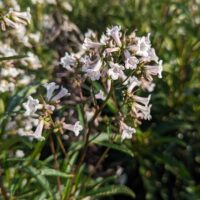
Eriodictyon californicum
Uncommon in the nursery trade, this aromatic, evergreen shrub is native to dry habitats of chaparral and mixed evergreen forest plant communities in North and Central California and into Oregon. An opportunist, this shrub stump sprouts after fires and grows with renewed vigor after any soil disturbance. The dark green, leathery leaves are covered in a shiny, fragrant, resin and are sticky to touch. The common name means, holy herb, and the pungent leaves have a long history of medicinal uses. Grows 3 - 5 ft. tall and spreads by underground roots to form a colony. Late spring brings clusters of small, trumpet-shaped flowers of pale lavender, sometimes white or pale blue, which are highly attractive to butterflies, hummingbirds and bees. Plant in full sun with good drainage and little water once established. Deer resistant.
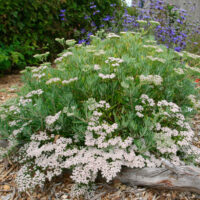
Eriogonum arborescens
A large, shrubby buckwheat with narrow, pale green foliage and sturdy, flat-topped inflorescences of creamy white to pink flowers. The flowers age over time, eventually turning reddish brown, remaining ornamental for a long period. Grows 3 to 4 ft. tall and slightly wider. Normal to very lean well-drained soils. Especially drought tolerant along the coast, may need infrequent summer water inland and possibly a little afternoon shade. Buckwheats are excellent additions to habitat gardens, providing pollen and nectar for bees and butterflies and seeds for many creatures. Deer resistant.
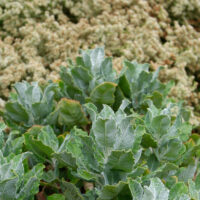
Eriogonum giganteum
Native to the Channel Islands of Southern California, this buckwheat can grow to be a very large mounding shrub with gray felted leaves, 4 - 5 ft. tall and wide. The flower stalks have large, flat sprays of cream-colored to pale pink flowers in summer and are prized by arrangers of dried bouquets. Flowers are attractive to bees and butterflies and birds enjoy the seeds. Best in sunny well-drained sites. Drought tolerant but in hot inland situations they look best with occasional deep waterings in summer.
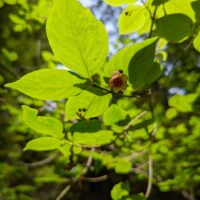
Euonymus occidentalis
Native to moist canyons, the uncommon western burning bush features small, burgundy flowers in the spring followed by dangling orangey-red fruits. The subtle appeal of this medium sized, deciduous shrub will please those native plant enthusiasts looking for a rare find. Reaches a height and width of about 8 ft. in most garden settings and is amenable to pruning. Plant in part shade to full shade. Enjoys moist situations but may become tolerant of drought in shadier locations. Needs good drainage.
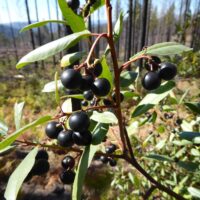
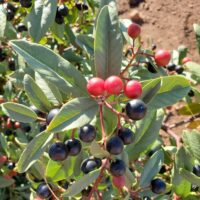
Frangula (Rhamnus) californica – large, inland form
Handsome native evergreen shrub with small greenish-yellow flowers followed by showy dark-colored berries. The propagation material for this this crop was collected from tall, upright shrubs on a hot inland site. Growing 8 ft. or more tall, coffeeberries thrive in full sun to light shade. They are drought tolerant once established, but would appreciate occasional deep summer waterings. A good choice for hedgerows and habitat gardens, coffeeberry provides food and nectar for a wide array of beneficial insects, birds and wildlife.
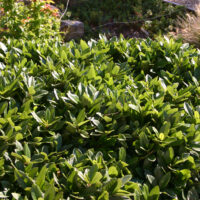
Frangula (Rhamnus) californica ‘Ed Holm’
Prized by gardeners for its low, dense habit and shiny, leathery leaves, this special selection of coffeeberry was discovered along Skyline Dr. in the northern Santa Cruz Mountains. Clusters of small, creamy-yellow flowers are produced from spring through fall and are followed by penny-sized, deep purple fruits. Over time, 'Ed Holm' will reach a height of up to 3 ft. and a width up to 6 ft.. Plant in full sun to light shade. Protect from the hot afternoon sun in hot areas and give moderate to infrequent irrigation. The blossoms are a favorite of bees.
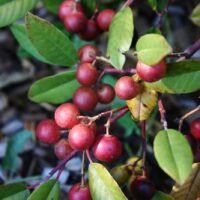
Frangula (Rhamnus) californica ‘Eve Case’
This well-known cultivar of coffeeberry was introduced to the trade in 1975 by the Saratoga Horticultural Foundation. Coffeeberry is a handsome evergreen shrub with broad leathery leaves. This selection grows to 6 ft. tall and wide, though mature specimens can reach 8 ft. or more tall under ideal circumstances. The small yellow-green flowers are not showy but attract an array of pollinators. The berries start out green and age to burgundy-black and are attractive to small mammals and birds. A larval food source for pale swallowtail butterfly. Adaptable, grows in sun to light shade. Drought tolerant but appreciates occasional summer water.
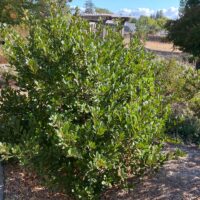
Frangula (Rhamnus) californica ‘Gumdrop’
This somewhat diminutive selection of our native coffeeberry was discovered as a seedling from a plant found on Montara Mountain, south of San Francisco. We thought the dense form and evocative, gumdrop shape was deserving of this sweet moniker. Only reaches to about 5 - 6 ft. tall and wide and offers attractive, slightly-concave, dark green, leathery leaves, not unlike its close relation ‘Leatherleaf’. Will accept full sun in somewhat cooler locations but enjoys a little shade in hotter regions. Occasional to infrequent irrigation once established. The small, yellowish flowers which appear in spring and summer are extremely popular with bees, and the juicy, purple fruits which follow are enjoyed by birds.