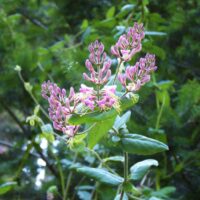
Lonicera hispidula
This native honeysuckle is often seen climbing over shrubs on the edge of woodlands where its roots are shaded and its foliage is sun drenched. The trumpet-shaped flowers range in color from rosy-pink to pink and white and feature prominent yellow stamens emerging from their mouths. They form clusters which decorate the tips of the vining branches and are attractive to bees and hummingbirds. The high point is the drooping clusters of luminous red berries in late summer which are beautiful to behold and provide a feast for birds, especially orioles. A drought tolerant vine but would appreciate occasional deep summer watering. Considered by some to be deer resistant.
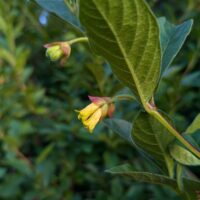
Lonicera involucrata
An interesting native shrub that grows along streams and other moist places. The tubular, red and yellow flowers are borne in pairs on bright red bracts and are hummingbird favorites. Two black shiny fruits follow the flower and are very showy set against the red bracts, making them attractive to birds. Reaches 6 - 10 ft. tall and wide, this neatly branched shrub loses its leaves in the winter. A great addition to the habitat garden in full sun to light shade with regular to occasional deep summer water. Orioles love the fruits. Needs afternoon shade in hot, inland areas. Deer resistant.
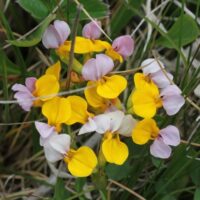
Lotus (Hosackia) formosissimus (gracilis)
A low growing native perennial found in seasonally moist meadows, ditches and seeps along California's coast, north to British Columbia. Small, neat leaves form a pretty, low ground cover spreading up to 2 ft. wide. Pea-like flowers have a bright yellow upper petal and deep pink lower petals which bloom in the spring then sporadically through the summer. Plant in full sun to light shade with regular moisture. Makes a nice container plant, too. Flowers visited by bees and other pollinators. Thought to be the larval food source for the possibly extinct lotus blue butterfly.
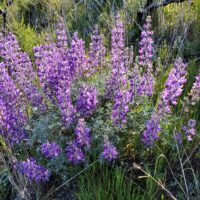
Lupinus albifrons var. albifrons
A popular California native lupine growing to around 3 ft. tall and wide. Beautiful silver foliage with intense blue-purple flower spikes in the spring. To thrive, this lupine needs full sun to very light shade and excellent drainage. Little to no water once established. Vulnerable to snail and slug predation. An excellent species for native pollinators and a larval host for several species of butterflies. Deer resistant.
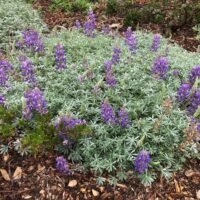
Lupinus albifrons var. collinus
A beautiful low growing form of the silver bush lupine. Forms a mat of gorgeous silvery foliage 12 inches or so wide with spires of rich blue flowers rising 12-18 inches tall in the spring. Plant in full sun to very light shade with well drained soil. Flowers attract a wide array of beneficial insects, especially bees of all types. Drought and deer resistant.
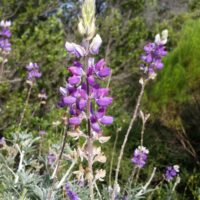
Lupinus albifrons var. douglasii
This variety of the popular silver bush lupine has the same wonderful wands of blue-purple flowers in spring and summer but also features larger, silvery leaves covered with fine hairs. The plant itself is also larger, reaching 3 – 5 feet in height. This variety grows from Marin County down to the Channel Islands. Plant in full sun with excellent drainage and little to no summer water once established. A nectar species for native bumblebees and hummingbirds. This is a butterfly host plant for several blues, hairstreaks and the northern cloudy-wing. Deer resistant.
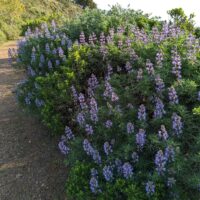
Lupinus arboreus – blue flowered form
Native to coastal areas from Sonoma Co. down to Southern California, the blue bush lupine is distinctive for its grand size (reaching up to 6 ft. tall) and racemes of scented, blue and white flowers. The showy blooms which appear in spring and continue into summer are an excellent nectar source for native bees and hummingbirds. Various butterflies use this species as a larval host plant. The seeds are enjoyed by birds. Grow in full sun with good drainage and occasional to no irrigation once established. Not suitable for areas which get very cold in the winter. Not suitable for Mendocino Co. northwards where it can invade natural areas. Deer resistant.
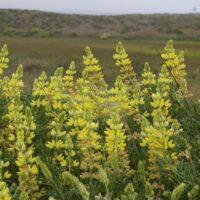
Lupinus arboreus – yellow flowered form
Native to coastal plant communities from Sonoma County south to Ventura County. Showy, fragrant, clear-yellow flowers in long, dense spikes in mid spring and into summer. A fast-growing, floriferous shrub, 3-6 ft. tall and wide. Excellent choice for coastal areas in full sun with good drainage. Not suggested for gardens in coastal Mendocino County due to its ability to quickly naturalize and take over fragile plant communities. Drought and wind tolerant. Lupines have great habitat value, offering nectar for pollinators and nourishing seeds for birds. Great for hummingbirds and a larval food source for various butterflies. Deer resistant.
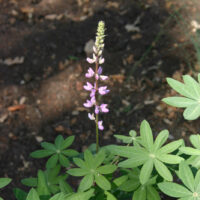
Lupinus latifolius var. parishii
A moisture loving lupine that grows along streambanks and throughout woodlands in central and southern California. A lush perennial, growing 3-4 feet tall and wide, with foot long flower spikes of scented, pink to lavender flowers in late spring-early summer. The large, dark green leaves create a bold texture beneath the slender flower stalks. Plant in lightly shaded conditions with some summer water. Dies back to the ground in winter. Attractive to bees and hummingbirds. Deer resistant.
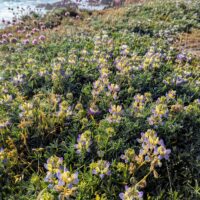
Lupinus littoralis var. variicolor
Often found nestled amid rocks and sand, this low-growing, perennial lupine is native to the beaches and dunes of coastal California. Forms a clump or mat of silver-green foliage under 18 inches tall, with jewel-like flower spikes. Blooms in a subtle range of colors, typically shades of purple-blue with white to pale yellow banners. Makes for an excellent addition to a rock garden. Formerly known as Lupinus variicolor, it is currently considered a variety of bluff lupine that is endemic to the Bay Area from Sonoma County down to the Peninsula. It attracts pollinators, and is one of the few hosts for the rare Mission Blue butterfly. Accepts various watering regimens from regular to occasional so long as it gets excellent drainage. Drought tolerant once established.
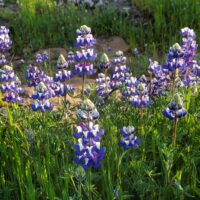
Lupinus nanus
This beautiful ANNUAL lupine can be seen on grassy hills, open slopes and fields, often casting a blue haze of color from a distance in the spring. Low growing, 6 - 20 inches tall and wide, with wonderfully fragrant, rich blue flowers with white markings. Prefers full sun, lean and well drained soils with minimal supplemental watering. Contrasts beautifully with California poppies, providing the classic, blue and gold displays of spring. Attractive to a myriad of pollinators and a larval food source for a number of butterfly and moth species. Deer resistant.
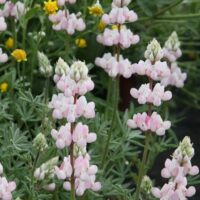
Lupinus nanus – Pacific Pink
Unusual, soft pink flowers distinguish this seed strain of the iconic California sky lupine, the traditionally blue flowered, ANNUAL species which blankets grasslands throughout California in the spring. The blossoms sit in whorls on upright stems above dissected, palmate leaves. This low plant reach 6 – 20 inches tall and wide, combining nicely with low, native perennials and grasses. Enjoys well-draining soil in full sun to light shade. Reseeds fairly readily if exposed soil surrounds the plants. Attractive to a diverse array of pollinators and a larval food source for a number of butterfly and moth species. Deer resistant.

Lupinus polyphyllus
The bog lupine is known for its tall flower spikes of blue to purple or sometimes pink, reaching up to almost 5' tall from a bed of large, dark green leaves about 18" in height. Clumps can grow about 3' wide. This species is the dominant parent used in many popular hybrid lupines. Native to moist places from the San Francisco Bay area northward along the coast and in mountainous places in the interior. Prefers full sun along the coast and dappled shade inland. This lupine tends to go winter dormant. Snails and slugs find lupines especially tasty when young. Needs regular water. One can create a wonderful meadow by planting the bog lupine with other moisture loving species such as lady ferns, umbrella plant and seep monkeyflower. Deer resistant.
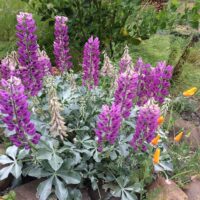
Lupinus sericatus
A rare species from Sonoma, Lake and Napa Counties, this lupine forms a low, wide mound of gorgeous, broad, silver leaves with thick,1 -2 foot spikes of mauve-pink to violet flowers in spring. Requires full sun to very light shade and good drainage. Do not water much once established. Lupine flowers attract a wide array of insects, especially bees. Deer resistant.
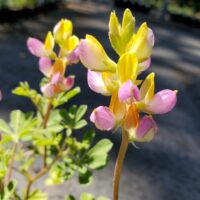
Lupinus stiversii
A striking ANNUAL lupine, endemic to California, with a disjunct distribution in the Sierra foothills and separate mountain ranges in Southern California. Instead of the more typical blue or purple flowers, this lupine sports beautiful, bicolored flowers of yellow and pink, on low foliage 6 - 18 inches tall. Grows in open, exposed areas, in full sun with good drainage, and is extremely drought tolerant. Blooms in the spring and offers excellent pollinator value, attracting a variety of insects, and a larval food source for a number of butterfly and moth species. Deer resistant.
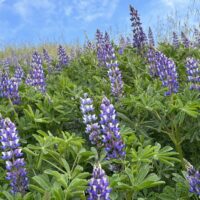
Lupinus succulentus
One of the easier-to-grow lupines, this long-blooming ANNUAL is low maintenance and thrives in heavier soils. Bright-green, palmate leaves topped by purple-blue spires quickly reach 2-3 feet tall and wide—or more, if happy. Reseeds easily and returns with winter rains, or whenever conditions are moist and fertile. Although it enjoys moderate to occasional water, it will tolerate both wet and dry areas. Arroyo lupine is found in diverse habitats with a broad native range in California, but prefers full sun and clay-rich soil. Looks splendid planted en masse and can serve as a nitrogen-fixing, seasonal groundcover. All parts of the plant are toxic if eaten, but it's an important butterfly larval host and a food source for native bees. Deer resistant.
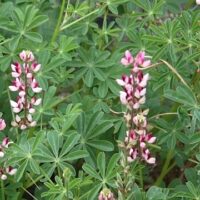
Lupinus succulentus
A pretty, pink selection of an easy-to-grow species of ANNUAL lupine. Arroyo lupines have lush, bright-green foliage and attractive flower spikes that typically come in shades of pink or purple. On 'Rodeo Rose', these eye-catching blooms combine rosy-pink wings with banners that turn a dark maroon. Grows quickly to 2-3 feet tall and wide, and reseeds readily at the end of its season. This adaptable species has an affinity for moist, heavy soils, and does well in irrigated gardens, but tolerates drier conditions as well. It is native to diverse habitats and has a broad range in California. Prefers full sun and occasional water. Plant en masse for a gorgeous, seasonal groundcover. All parts of the plant are toxic if eaten, but it's an important butterfly larval host and a food source for native bees. Deer resistant.
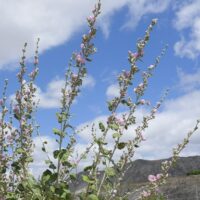
Malacothamnus fasciculatus
Native to western Southern California, this fast growing, evergreen shrub grows to 6 + feet tall and spreads to form colonies. A multi-branched mallow with hairy, gray-green, leaves often shaped like those of maples. The pale pink, cup-shaped flowers held in clusters along the stem, bloom from spring into summer. A native bee magnet. Useful as an evergreen screen for full sun. Occasional irrigation to drought tolerant once established. A larval food source for the west coast lady and the northern white-skipper butterflies. Reported to be deer resistant.
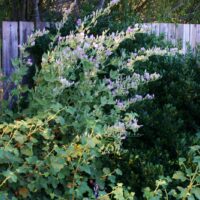
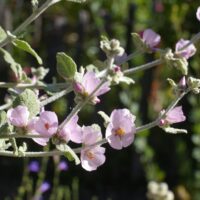
Malacothamnus fremontii
A fast growing, thicket forming, native shrub with silvery white, felted foliage 4 - 6 ft. tall and spreading. A profusion of pale-pink, cup-shaped flowers decorate the branch tips in summer. A tough and adaptable shrub for sunny dry areas, appreciating occasional summer water once established. Useful on banks or other challenging sites. Host plant for the Painted Lady and West Coast Lady butterfly. An excellent nectar source for orioles. Deer often seem to leave it alone.
Malacothamnus jonesii
A rare endemic from southern Monterey and San Luis Obispo counties, growing in foothill woodland and chaparral plant communities. Fast growing shrub, often coming in after fires or disturbance. Growing 4 - 6 ft. tall and wide with beautiful gray foliage, covered in white, velvety hairs. Lovely, soft pink, cup-shaped flowers appear in profusion on the slender branch tips, late spring into summer. Nectar is highly attractive to a myriad of insects, hummingbirds (who seek both nectar and insects), bees and butterflies. Larval food source for the West Coast Lady and Northern White Skipper butterflies. Plant in full sun to ight shade, where it will be drought tolerant once established.
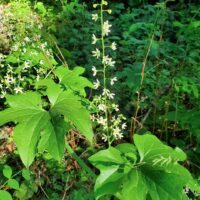
Marah oregana
A native perennial vine found in coastal counties from Santa Clara, California to British Columbia. Growing from a massive, enlarged tuber in forest edges and riparian habitats. The lush-green, palmate leaves with spiraling tendrils clamber along the ground and climb and sprawl over shrubs and trees. White, star-like flowers bloom in the spring and are favored by native bees as well as honeybees. The flowers lead to showy, inflated, bright-green, fruits with soft spines. The generic name Marah comes from the Hebrew word for bitter, in reference to all parts of the plants being extremely bitter to taste. Completely herbaceous, dying back to the woody root in late summer or fall, returning in the spring. Best with part shade. Quite drought tolerant but will accept moderate irrigation. Probably deer resistant.
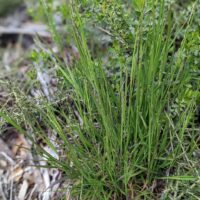
Melica californica
Here is a tough and handsome bunchgrass native to the grasslands and oak woodlands of northern and central coast ranges and the Sierra Nevada foothills. Bright green blades grow about one foot tall. The flower spikes are made up of glistening papery bracts and grow 2 - 4 ft. tall. The ornamental flowering culms remain attractive even after this grass has gone dormant, and is also useful as a “cut” in floral arrangements. Tolerant of many soil types, though it requires good drainage. Plant in full sun to light shade where it is very drought tolerant. Deer resistant.
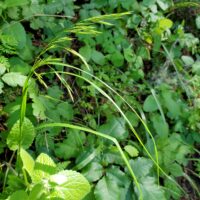
Melica geyeri
This perennial bunch grass is native to many types of habitat in seasonally moist forests and hillsides throughout much of California. Forms a lush, dense bunch of deep-green, broad blades, spreading slowly by rhizomes. The common name refers to the swollen, onion-like corms at the base of the stems. The inflorescence rises 3 ft. tall or more is made up of long, green, narrow spikelets with purple banding. A perfect grass for dappled shade under oaks and firs. Tolerant of some summer irrigation, but can survive the dry season once established. Goes dormant by early autumn. A host plant of the rural skipper and the white-lined sphinx moth. Deer resistant.
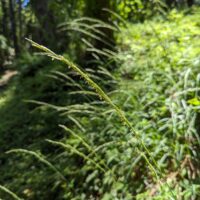
Melica harfordii
A lovely and useful grass native to dryish slopes and canyons of coniferous forests from central California to British Columbia. Forms a loose vertical clump with slightly arching stems 2 to 4 ft. tall. The delicate, narrow flower spikes add a sparkling effect to the woodland garden. Useful in lightly shaded plantings, where it is drought tolerant especially in cooler areas like western Sonoma County. It would benefit from occasional water during the dry season in warmer regions. Adds a nice vertical touch, as a specimen or in mass. Deer resistant.
Melica imperfecta
Native to dry hillsides, chaparral and open woodlands of southern and central California. This dainty native perennial grass grows 1 - 3 ft. tall in flower with narrow, glossy leaves at its base. The slender flower panicles provide a delicate effect, starting out cream and aging to beige. Grows best in cool sun or part shade and responds to some irrigation. Goes dormant if allowed to go summer dry once established, turning green with the winter rains. Useful for lightly shaded meadow plantings and stabilizing slopes. Deer resistant.
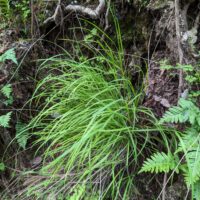
Melica torreyana
At its best in winter and early spring, this little northern California bunchgrass is a perfect mound of soft green blades. In full bloom it can reach 1 - 3 ft. tall, followed by typical melic fruit resembling small brown rice grains held close to the stem. Grows in sun and shade in nature, but performs best/longest in the garden in part shade. Will go semi-summer dormant with drought, but will be evergreen with some moisture. Deer resistant.
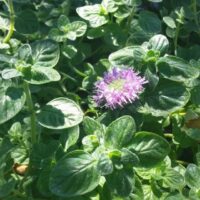
Monardella villosa ssp. franciscana ‘Pomo Canyon’
This low growing, dense selection of our native coyote mint was discovered near the mouth of the Russian River. Large, round, deeply veined leaves colored dark blue-green give this groundcover a lush appearance. In summer, soft lavender flowers which look like pincushions cover the plant. Reaches a height of up to 12 inches and spreads fairly quickly to form drifts. Provide full sun to light shade and moderate to infrequent irrigation. A stellar plant for bees, butterflies and hummingbirds. Coyote mint is not a true mint and won’t spread invasively by roots. Deer resistant.
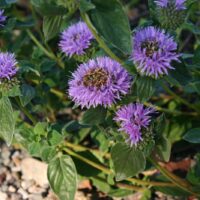
Monardella villosa ssp. franciscana ‘Russian River’
Our own selection of coyote mint from a rocky slope along the lower Russian River. Although Monardella is sometimes difficult in cultivation, this plant has proven to be vigorous. Grows 12 to 18 inches tall with ball-like clusters of pinkish-purple above the fragrant evergreen foliage. Good for a dry sunny site. Attracts bees and butterflies. Deer resistant.