
Adelinia (Cynoglossum) grandis
From woodlands throughout Northern and Central California comes this alluring bluebells relative. Dainty flower clusters ranging in color from periwinkle blue to lavender appear on slender stalks in the spring. The leaves are what gives this plant its name: grey-green and tongue-shaped, emerging in the winter from basal roots. Plant in bright shade and don’t water once established. Needs decent drainage. Once this plant goes to seed it will go dormant, re-emerging in late winter. A great accent plant for under the dry shade of deciduous oaks.
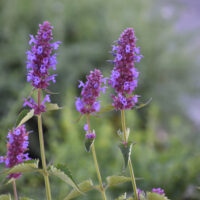
Agastache ‘Blue Boa’
This stunning hybrid hummingbird mint from Terra Nova Nurseries in Oregon has won awards at a number of plant trials. Flower spikes of deep violet-blue reach 2-1/2 ft. tall and 2 ft. wide atop foliage with a spicy mint fragrance. The large and sturdy terminal flower clusters dazzle mid to late summer into fall and are highly attractive to hummingbirds, bees and butterflies. Best in full sun with good drainage. Drought tolerant, but happiest with moderate to occasional summer water. Deer resistant.

Agastache ‘Morello’
Calling all pollinators! Hummingbirds, bees and butterflies will delight in the large, dense flower spikes of deep, burgundy-rose on this fragrant perennial. This summer bloomer has minty scented foliage which has a purple blush early in the season, growing 2 -3 ft. tall and 2 ft. wide. Plant in full sun with good drainage and moderate to occasional watering. Good in container plantings, too. Deer resistant.
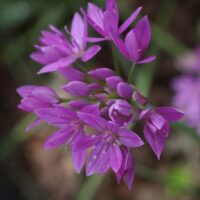
Allium unifolium
An adaptable and easy to grow native onion with handsome blue-green foliage. Late spring brings beautiful lavender-pink flowers on short stems 6 - 8 inches tall. Native in the Coast Range from the Central Coast, northwards. The flowers on this form have a particularly appealing saturated color. The original plants were given to us by the internationally known bulb expert and native plant horticulturist, Wayne Roderick. Fairly water tolerant, often found on seasonally moist and heavy soils. Spreads vigorously by seeds or bulb offsets. Goes dormant after bloom and will tolerate dry conditions at that time. Attractive to bees and butterflies. Reported to be gopher resistant. Deer resistant.
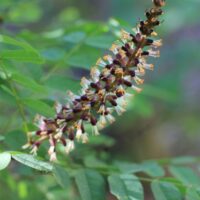
Amorpha californica var. napensis
A lovely and rare native shrub of the pea family, occasionally seen in woodland and chaparral communities in the coast ranges around the San Francisco Bay Area. Offering a delicate, airy quality, this deciduous shrub grows to around 6 ft. tall and wide, though can get bigger in the wild. Intricate flowers are closely set on slender spikes and are made up of tiny, intense indigo-purple petals with protruding bright orange stamens, charming on close inspection. This rare and threatened shrub is the larval food source for the California dogface butterfly, our state insect! Bees and butterflies nectar on the flowers as well. Best in lightly shaded areas with occasional to no summer water needed once established. Deer resistant.
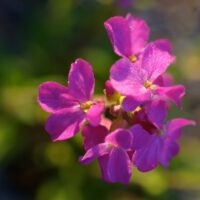
Arabis blepharophylla
A charming spring blooming perennial, native to rocky places of coastal scrub, Santa Cruz to Sonoma counties. The neat foliage grows in tight low rosettes and are topped with vibrant rose-purple mustard-like flowers 8 to 10 inches tall. A natural for coastal areas, it requires some relief from the hot sun and additional water inland. Perfect with other non rampant plants of similar requirements on a slope, rock garden, or along a border. Excellent container plant. Good nectar source for butterflies.
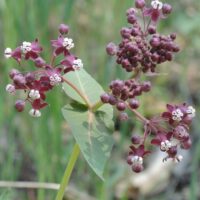
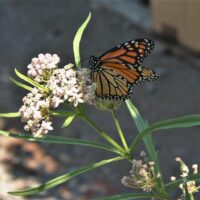
Asclepias fascicularis
Our most common native milkweed is found in meadows and on the banks above ponds. Its flowers are held in umbels of a pale mauve color. They form at the top of 1 - 3 ft. tall slender stems that die back in winter to a perennial rootstock. Its wandering roots form small colonies. Drought tolerant, it prefers seasonally moist soils and likes moderate water in the garden. The narrow leaves are the preferred larval food for the Monarch Butterfly. Full sun to part shade. Unlikely to be bothered by deer.
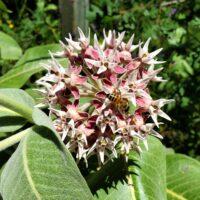
Asclepias speciosa
Bold and beautiful native milkweed that forms a large patch of tall stems with broad pale green leaves. Fragrant clusters of pinkish-purple flowers, followed by interesting seed pods. Spreads by underground shoots. Great in semi-dry naturalistic plantings. Host to Monarch butterflies. Deer resistant.
Aster x frikartii ‘Monch’
A particularly fine hybrid from the 1920’s, valued for its long display of clear lavender-blue daisies on stout, upright foliage, to around 2 ft. tall and wide. Easy to grow in full sun with good drainage and regular to moderate water. A wide variety of bee species visit this perennial, foraging for nectar and pollen. Attractive to butterflies too. Its long bloom period, May through October, make it a wonderful color accent and a powerhouse in the pollinator garden.
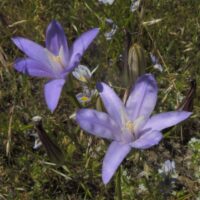
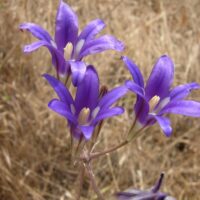
Brodiaea elegans
From grassy meadows and open woodlands comes this drought tolerant and colorful wildflower. Open clusters of dainty violet flowers sit atop stems reaching 8 to 20 inches in height. Plant in full sun to bright shade and provide decent drainage. As the name suggests, the harvest Brodiaea is the latest blooming of the Brodiaeas, sometimes not flowering until the end of summer after the grass-like leaves have gone dormant. It spreads rapidly but not invasively to form broad drifts. After blooming, this bulb will sleep until the return of winter rains. Do not irrigate. An excellent candidate for the rock garden where its graceful form will contrast wonderfully with the rigid stone.
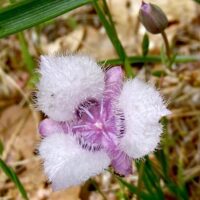
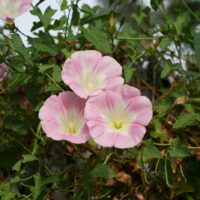
Calystegia purpurata ssp. purpurata
Lush, slender-stemmed vine with gray-green heart-shaped leaves scrambles up, over, or through any support provided. From late spring through early summer the plant is decorated with trumpet-shaped blossoms ranging in color from white to pink to purple. This deciduous vine can grow up to 10 ft. tall and wide. Sun to light shade, most soils, moderate to occasional watering for best appearance. Native throughout the Coast Range of California.
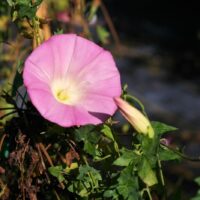
Calystegia purpurata ssp. purpurata ‘Palomarin’
Large flowers which open pinkish-white and darken to a rich lavender distinguish this selection which we discovered near Bolinas in Marin County. This vigorous, deciduous vine spreads quickly to climb over fences and shrubs with clasping stems and grey-green, arrow-shaped leaves. Reaches a height of up to 10 ft. or so and can spread at least as wide. In late spring and early summer, the morning glory flowers put on quite the display, opening at dawn and then closing at dusk. Does great in full sun but also enjoys a little shade, especially in hot, inland areas. Likes moderate irrigation but will become somewhat drought tolerant once established. Hummingbirds and native pollinators are drawn to the flowers.
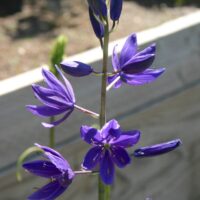
Camassia leichtlinii ssp. suksdorfii
Similar to the common camas, but with larger, star-shaped flowers ranging in color from soft to dark violet-blue on stems up to 3 ft tall. Native to grasslands and moist meadows that dry out in the summer. Also found in open, well lit woodlands. Easy to grow in full sun to light shade in a variety of soil types, including heavy clay. Allow to go dry after seed is set, where it will go completely dormant. This eye catching beauty is appealing to bees, butterflies and hummingbirds. An excellent container plant and cut flower. Deer resistant.
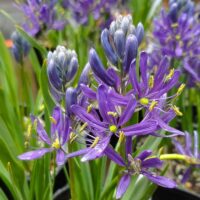
Camassia quamash
Camas lily is a beautiful native bulb, producing stunning displays of sky blue to violet-purple, star-shaped flowers. Found throughout much of the western United States, growing in moist meadows and grasslands that dry out in the summer. Important species to native peoples, who encouraged the bulb through fire management. Historical accounts describe fields of blue from the massive floral displays. Easy to grow in full sun to very light shade and tolerant of a wide variety of soils, including heavy clay. Long, slender leaves give way to erect racemes of blossoms, to 2 ft. tall in late spring. Allow to go dry once seed set commences. Dormant in the winter. An excellent container plant and cut flower. A favorite of bees, butterflies and hummingbirds. Deer resistant.
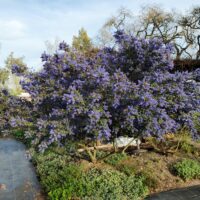
Ceanothus ‘Antonette’
An exciting introduction by Native Sons Nursery which was discovered in their landscape. ‘Antonette’ is believed to be a cross between Ceanothus arboreus and Ceanothus ‘Cynthia Postan’ with unusual elongated leaves which remind us of a rockrose. Grows 8 – 10 feet tall and 6 – 8 feet wide with spectacular displays of frosted, violet-blue flowers in early spring. Before they fully emerge, the flower buds display a pleasing rosy color. Plant in full sun with occasional to little summer water once established. Valuable habitat plant, providing food and cover for birds, bees and butterflies.
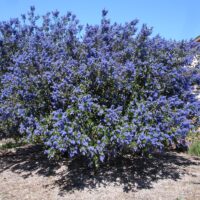
Ceanothus ‘Better Than Ray Hartman’
A friend of ours, Eric Nelson, discovered this spectacular selection growing on a property near where he lived. Masses of rich, blue-purple flowers held in large sprays cover the plant in spring, attracting bees and butterflies. The seeds which follow feed an array of birds. Reaches 10 – 15 ft. tall and wide with larger, deep-green, rounded leaves. We believe this plant is an existing cultivar, but none of the Ceanothus experts have been able to reach a consensus on exactly which one, hence the peculiar name referencing a selection which it resembles. Plant in full sun to light shade and water occasionally or less once established.
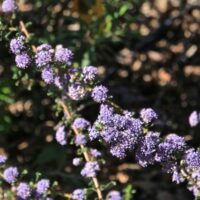
Ceanothus ‘Blue Jeans’
Not the color of denim exactly, the profuse springtime blossoms of 'Blue Jeans' are a rich lavender-purple. Erect evergreen shrub 6 ft. tall and wide with small shiny green leaves. Vigorous and fast growing. Best in full sun with little to no water once established. Tolerates heavy soils. Shrubby Ceanothus provide seeds eaten by bushtits, mockingbirds, quail and finches, as well as cover for birds.
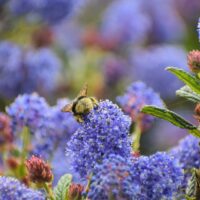
Ceanothus ‘Concha’
An adaptable shrub growing 6 ft. tall and wide, with a dazzling display of glowing purple-blue flowers in the spring. The gracefully arching branches carry dark green shiny leaves and are tolerant of light pruning. Thrives in full sun with little or no water once established. More tolerant of heavy soils and summer watering than most ceanothus. Shrubby Ceanothus provide seeds eaten by bushtits, mockingbirds, quail and finches, as well as cover for birds.
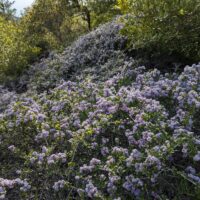
Ceanothus cuneatus
One of California's most widespread species offering a variety of forms. Typically buckbrush grows as an arching shrub growing 5 - 8 ft. or more tall and wide with small, thick, leathery leaves. Flowers can range from white to lavender to purple and are produced in small tight clusters in early spring. When in full bloom, the powerfully sweet scent of the flowers engulfs the visiting hiker. An excellent choice for hot dry conditions and difficult sites where it will grow in full sun with little to no water once established. Valuable addition to the habitat garden where it provides food and cover for a wide array of wildlife, birds, bees and butterflies. Said to be deer resistant.
Ceanothus divergens ssp. confusus
A species of special concern due to its limited distribution in the wild and continued habitat loss. The Rincon Ridge ceanothus is worth considering for those hot inland gardens where some of the more commonly available coastal ceanothus may not be as long lived. Forms a low growing mound of decumbent stems with small holly-like leaves usually under a foot tall. Flowers in dense clusters in early spring are lavender-purple. Plant in sunny areas with good drainage and little to no water once established. Ceanothus are wonderful additions to the habitat garden attracting a wide array of wildlife. This species is likely to be deer resistant.
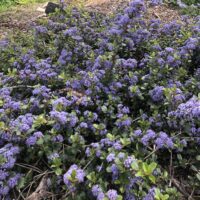
Ceanothus gloriosus var. exaltatus ‘Emily Brown’
One of the earliest blooming California lilacs. A low spreading evergreen shrub 2 - 4 ft. tall, 8 - 10 ft. wide with dark green hollylike leaves. Flowers of dark violet blue in 1 inch clusters cover the shrub in early spring. Sun and drought tolerant, but will need some afternoon shade in hot areas. Shrubby ceanothus provide seeds eaten by bushtits, mockingbirds, quail and finches, as well as cover for birds. Perhaps the most deer resistant of the ceanothus.
Ceanothus gloriosus var. gloriosus ‘Anchor Bay’
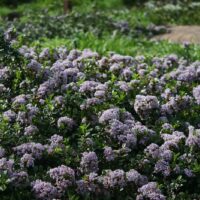
This Point Reyes ceanothus grows 1 - 2 ft. high or more and spreads 8 ft. wide or more with an attractively dense and luxuriant appearance. The evergreen foliage is dark green and holly-like in shape. Flowers of blue-violet cover the plant in spring. Sun to light shade. Drought tolerant along the coast - a little extra water inland but will tolerate up to moderate irrigation. Ceanothus are great additions to the habitat garden offering food and cover for birds and nectar for bees and butterflies. This species is somewhat deer resistant.
Ceanothus gloriosus var. gloriosus ‘Heart’s Desire’
One of the lowest growing ceanothus, under one foot tall and spreading three or more feet wide. The small, holly-like leaves line stems which tightly hug the ground. Performs better than most ground cover ceanothus on relatively hot inland sites. Flowers of lavender-blue appear in early spring. Sun, decent drainage, moderate to little summer water once established. Ceanothus are excellent additions to the habitat garden offering flowers for pollinators and seeds for birds. Deer resistant.
Ceanothus maritimus ‘Point Sierra’
An excellent choice for a small scale ground cover, this rare Ceanothus is found on coastal bluffs and low hills in northern San Luis Obsipo County. Even though it is native to the coast it does surprisingly well inland. Smaller and slower growing than most Ceanothus, it blooms very early often beginning in late January or early February. 'Point Sierra' was selected from Arroyo de la Cruz by Native Son's Nursery. Grows 2-3 ft. tall with small, thick, leathery leaves and a dense mounding habit looking almost like Cotoneaster. Rounded clusters of blue-violet flowers from dusty white buds in late winter provide an early nectar source for pollinators of all sorts. A natural for coastal areas in full sun but has proven durable inland when it is provided a little shade. Tolerates heavy soils. Drought tolerant once established. Somewhat deer resistant.
Ceanothus maritimus ‘Valley Violet’
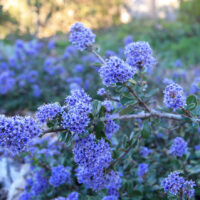
Valley Violet ceanothus is a tough and reliable shrub introduced by the UC Davis Arboretum as an "Arboretum All-Star", one of their 100 top recommended plants. This relatively small Ceanothus grows 2 ft. tall by 4 ft. wide with small leathery leaves and gorgeous dark-violet flowers in early spring. Though native to coastal bluffs of San Luis Obispo County, it performs well in both coastal and inland situations. In hot inland sites it may be best with a little afternoon shade. Drought tolerant once established. For a Ceanothus it is slower growing and has proven to be long lived and tolerant of many soil types. A wide array of pollinators are attracted to its flowers. Deer resistant.
Ceanothus papillosus – upright Baja form
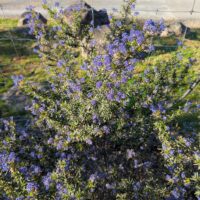
This cold hardy selection from Baja California is highly useful in the garden setting thanks to its tall, upright form and narrow, vaselike shape. Many customers ask us for a big but narrow form of ceanothus. This is one of the few selections that fits the bill. Plants reach 8 – 10 ft tall, but only reach 3 – 4 ft wide, making it ideal for a privacy screen in a small area. Indigo blue flowers cover plants in spring, followed by little seed capsules which are relished by birds. The crinkly, dark-green leaves are elongated and create a nice foil for brighter green plants, such as Salvia and Artemisia. As with all ceanothus, the flowers are loved by a large array of pollinators. Plant in full sun to very light shade and water infrequently once established. Needs decent drainage. This is the variety papillosus.
Cercis occidentalis
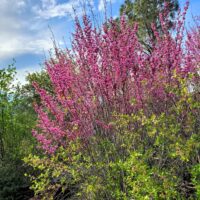
Beautiful in all its seasons, the native redbud is well worth growing. Highly ornamental multi-trunked shrub or small tree 6 - 20 ft. tall and wide. Masses of brilliant rose-purple blossoms in early spring followed by conspicuous long seed pods that start out lime green and age to purple-brown. The rounded heart-shaped leaves emerge apple green and develop to bluish-green. In colder areas, the leaves take a nice fall color of yellow or red. The smooth silvery-gray branches are picturesque in the winter landscape. Plant in full sun to light shade with good drainage. Drought tolerant. Important nectar and pollen source for bees. Attracts hummingbirds too.