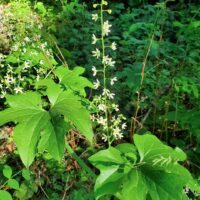
Marah oregana
A native perennial vine found in coastal counties from Santa Clara, California to British Columbia. Growing from a massive, enlarged tuber in forest edges and riparian habitats. The lush-green, palmate leaves with spiraling tendrils clamber along the ground and climb and sprawl over shrubs and trees. White, star-like flowers bloom in the spring and are favored by native bees as well as honeybees. The flowers lead to showy, inflated, bright-green, fruits with soft spines. The generic name Marah comes from the Hebrew word for bitter, in reference to all parts of the plants being extremely bitter to taste. Completely herbaceous, dying back to the woody root in late summer or fall, returning in the spring. Best with part shade. Quite drought tolerant but will accept moderate irrigation. Probably deer resistant.
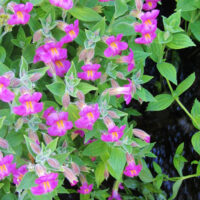
Mimulus (Erythranthe) lewisii – dark flowered form
From cold streams in the Cascade Mountains comes this particularly dark flowered form of Lewis' monkeyflower. Trumpet-shaped blossoms with flared mouths are colored a deep, rich rose-pink, unlike the paler Sierra form. Reaching up to more than a foot tall and spreading to form small clumps, this moisture-loving monkeyflower enjoys part-shade and decent drainage. Hummingbirds love the flowers. Plant with sedges, blue lobelia and false bugbane for a colorful woodland display filled with texture. Great in a container.
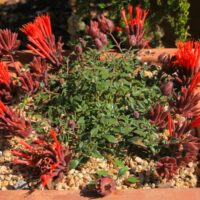
Monardella macrantha ‘Marian Sampson’
A choice native perennial forming low mats of fragrant dark green shiny leaves. Mid to late spring brings spectacular heads of scarlet tubular flowers which are hummingbird magnets. Well suited for rock garden or container use where good drainage can be provided along with occasional summer water. Appreciates light shade in hot regions. The cultivar ‘Marian Sampson’ is a vigorous and disease resistant selection, but still likely to be short lived, lasting 2 to 4 years. Fantastic accent plant which is deer resistant and attractive to butterflies and hummingbirds.

Myrica hartwegii
From Sierran streambanks comes this sweet bay, a cousin of our local wax myrtle. Rare in nature, this deciduous shrub can reach a height and width of up to 5 ft. Soft, lance-shaped leaves of gray-green flank the stems. Small red flowers appear in the spring. Enjoys dappled shade and good drainage. Requires regular irrigation. Plant with indian rhubarb, western columbine and ferns for a taste of the mountains in your own garden. Thought to be deer resistant.
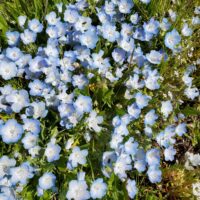
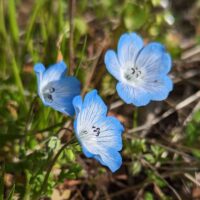
Nemophila menziesii – Frosty Blue
An interesting seed strain of the charming, ANNUAL baby blue eyes. Found in many habitat types throughout California, this beauty has long been in cultivation. The slender, succulent, lobed leaves grow 4 - 6 inches tall, spreading and spilling about 1 ft wide. The "Frosty" in the name refers to the silvery color to the foliage, which contrast nicely with the profusion of gorgeous, bright, baby-blue blossoms. Spectacular in drifts, where it can spill and cascade, at the front of a garden bed, in meadow plantings, rock gardens or in containers. Plant in full sun to light shade where it is early to bloom during the cool of spring. Hot weather triggers seed production. The large black seeds are relished by birds. Reseeds readily.
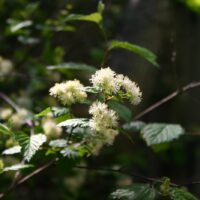
Neviusia cliftonii
Shasta snow-wreath is a rare species not know to science until 1992. Endemic to Shasta County, California, often on limestone embankments, in moist shady areas, this deciduous shrub grows to around 6 ft. tall spreading by underground rootstocks. Looking something like ocean spray or a delicate ninebark, heart shaped leaves with toothed edges are alternately arranged on the slender branches. The flowers are a starburst of white anthers in early spring surrounded by green petal-like sepals. A lovely addition to a woodland planting where it thrives in light shade with some summer water.
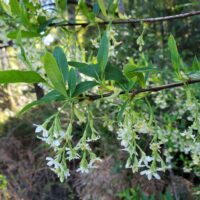
Oemleria cerasiformis
A charming native shrub which grows in moist areas along the coast or when inland on forest edges. Blooms in early spring just as the new leaves are beginning to expand with drooping clusters of fragrant white flowers. Male and female plants are separate and you'll need both to get the small blue-black fruits that birds enjoy. A suckering shrub growing 5 - 6 ft. tall or more. Plant in part shade with regular to occasional water. Can grow in cool full sun such as you find along the coast.
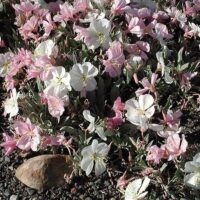
Oenothera californica
California primrose forms low mats of gorgeous, grey foliage, up to 2 to 3 ft. across. The soft leaves, covered with dense hairs, becomes nearly hidden by large, white, sweetly fragrant flowers. The long succession of blooms pop open in early evening from drooping flower buds and last just one night, becoming pink with age. Native to sandy or gravely soils of southern California, southwestern U.S. and Baja, where it can be found in chaparral, high elevation deserts and open woodland habitats. Perfect for the dry garden with well draining soils in full sun to very light shade. The luscious flower display can last from late spring into early summer. Goes completely dormant by mid-summer, returning the next winter. Pollinated by a number of interesting moth species including the Sphinx moth.
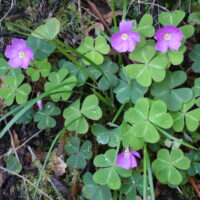
Oxalis oregana
A natural companion of coast redwoods where it forms low carpets of clover-like foliage. Useful ground cover for the woodland garden where it competes well with tree roots and thrives in partial to deep shade. Low and spreading with spring flowers that can range from white through dark pink . Best with humus in the soil and some summer moisture, though it is drought tolerant in coastal zones. Deer resistant.
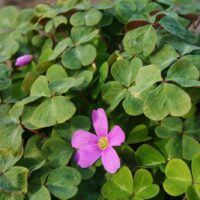
Oxalis oregana ‘American Beauty’
This remarkable selection of our native redwood sorrel has perhaps the largest flowers of any of the forms we've seen. The big pink blooms appear in spring above the lush, green, clover-like foliage. This ground cover competes well with tree roots and thrives in even the shadiest spots. Best with humus in soil and some moisture, though it is drought tolerant in coastal zones. Deer resistant.
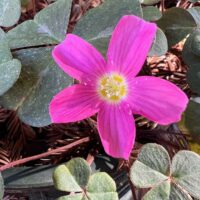
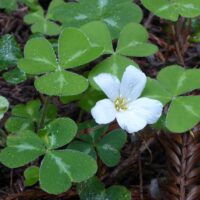
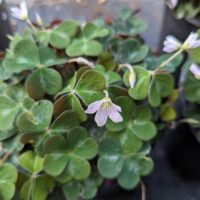
Oxalis oregana ‘Klamath Ruby’
Low spreading groundcover which thrives in the shady conditions of Douglas fir and redwood forests. The cultivar ‘Klamath Ruby’ offers dark green clover-like foliage with beautiful burgundy backed leaves. White flowers with pale pink veining on the petals bloom in the spring. A lovely groundcover for a shady garden with some summer water, though it is drought tolerant in coastal zones, once established. Deer resistant.
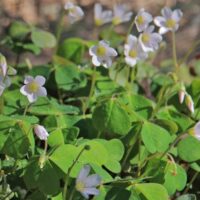
Oxalis oregana ‘Smith River White’
This Cal Flora selection carries white flowers with thin pink lines on the petals held up above the foliage, thus creating an effect somewhat reminiscent of our small native anemones. The foliage is handsome with dark olive green tops and purple-red undersides to the leaves. The perfect ground cover for deep to moderate shade with some summer moisture. Drought tolerant when grown in more coastal areas. Rampant when its needs are met, it competes well with tree roots and is the perfect companion to other redwood forest understory plants. Deer resistant.
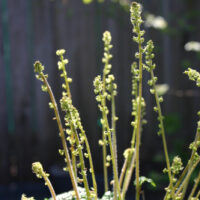
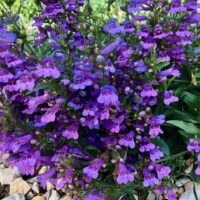
Penstemon ‘Catherine de la Mare’
Beautiful electric blue tubular flowers blush purple as they age. Low (12 -18 inches tall) plant with a loose, open habit. Blooming begins in May and continues for a month or two. An easy and hardy penstemon requiring moderate water and sun to light shade. Wonderful for the front of borders. Adored by hummingbirds and bees.
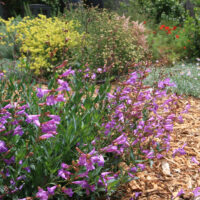
Penstemon azureus
Native to the mountains of California and Oregon where it grows in woodland and chaparral plant communities. Forms a tidy mound of bluish-green leaves 1-2 ft. tall and wide with bright blue tubular flowers late spring into summer. Requires good drainage and sun to light shade. This species is drought tolerant but prefers occasional summer water and is more garden tolerant than most native Penstemons. Attractive to bees and hummingbirds.
Penstemon barbatus
Native to sunny, hot, rocky slopes from Utah and Colorado to Texas and Mexico, this striking penstemon is a willing grower. Forms a low mound of lush foliage, topped with 4 ft. tall, erect flower spikes of brilliant, scarlet, tubular blossoms, providing a bold splash of color in beds, borders, rock garden or meadow planting. Plant in full sun with good drainage where it will be drought tolerant once established. Flowers adored by hummingbirds and butterflies. Deer resistant.
Penstemon barbatus ‘Coral Baby’
This dazzling selection of Penstemon is from the Plant Select program of Colorado. Forms a tidy, compact mound of bright green foliage to around 15 inches tall by 12 inches or so wide. Late spring brings upright spikes of eye catching coral-pink tubular flowers which attract bees, butterflies and hummingbirds. Full sun with good drainage and moderate to occasional summer water.
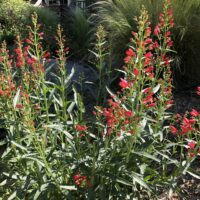
Penstemon barbatus ‘Red Riding Hood’
Trumpet-shaped blossoms of coral-red arise on thick stems up to 2 ft. high on this Dutch selection of the beardlip penstemon. Originating from the American Southwest, this superlative species offers flowers from late spring to the end of summer, enticing hummingbirds, bees and butterflies into the garden. Light green, lanceolate leaves grow densely at the base and climb up the stout stalks. This selection has proven to be very garden tolerant, liking full sun and moderate to infrequent irrigation.
Penstemon barbatus ‘Riding Hood Red’
Trumpet-shaped blossoms of coral-red arise on thick stems up to 2 ft. high on this Dutch selection of the beardlip penstemon. Originating from the American Southwest, this superlative species offers flowers from late spring to the end of summer, enticing hummingbirds, bees and butterflies into the garden. Light green, lanceolate leaves grow densely at the base and climb up the stout stalks. This selection has proven to be very garden tolerant, liking full sun and moderate to infrequent irrigation.
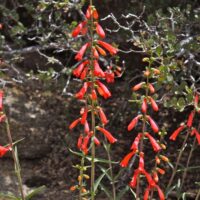
Penstemon centranthifolius
Custom made for hummingbirds, this Penstemon sports an abundance of bright-red to orange-red tubular flowers from late spring into summer. Native to dry habitats in the North Coast Ranges south to Mexico and east to the Southern Sierra, growing in chaparral and openings in woodlands below 6000 ft. Thick, blue-green leaves form a rosette 1 – 2 ft. tall and wide. Long flower spikes rise 2 – 4 ft. above the waxy leaves with many narrow, tubular, scarlet blossoms. Likes full sun, lean soils and good drainage. Drought and cold tolerant. Hummingbird and butterfly favorite.
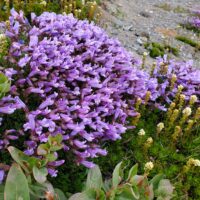
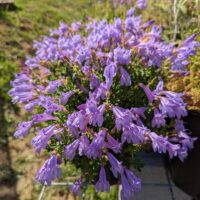
Penstemon fruticosus
Blue-purple, trumpet-shaped flowers with curvy, flared lips cover this diminutive mountain species with a showy display in spring or early summer. Truly a delightful and easy to grow mountain penstemon, only reaching about 12 inches high and spreading to about 1.5 ft, covered in dense, narrow leaves. Perfect for a container or in a rock garden with good drainage. Enjoys full sun to light shade and occasional to infrequent irrigation. Native to the Pacific Northwest and the Northern Rockies, almost making it into California. A favorite of hummingbirds and enjoyed by bees.
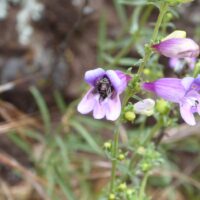
Penstemon heterophyllus
Iridescent blue-purple tubular flowers in short spikes put on a good show over a long period in spring and early summer. The spent flower spikes should be cut off to encourage more blooming, better form, and longer life. Best in full sun with well drained soils and moderate to little water once established. Hummingbird favorite.
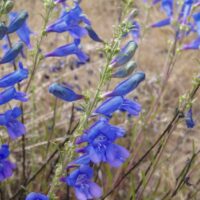
Penstemon heterophyllus – Hood Mt. seed strain
From the rugged Hood Mountain area, southeast of Santa Rosa, comes this local seed strain of foothill penstemon, which is showing promise as a particularly good performer. Proving to be vigorous and disease resistant, blooming freely with particularly large, vivid-blue, open-mouthed, tubular blossoms, spring into summer. An evergreen perennial, growing about 2 ft. tall and at least as wide, for full sun with decent drainage, and little water once established. Bees, butterflies and hummingbirds are all attracted to the showy flowers. A great, local, seed grown alternative to the cutting-grown 'Margarita BOP'.
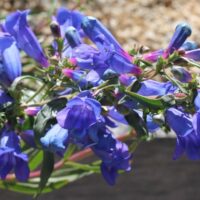
Penstemon heterophyllus ‘Blue Springs’
A seed strain of a highly variable native penstemon. Attractive narrow, shiny, bluish-green leaves topped with dense spikes of narrow bell-shaped blossoms of bright blue. Flowers late spring to early summer, growing to around 1 to 1 1/2 ft. tall and wide. The spent flower spikes should be cut off to encourage more blooming, better form, and longer life. Best in full sun with good drainage and moderate to little summer water.
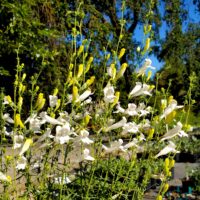
Penstemon heterophyllus ‘GMR White’
An unusual, bright white form of our native foothill penstemon that dazzles with dense blooms from spring to fall. Spring sees the emergence of soft yellow buds on this evergreen perennial, which then open as snowy fresh, tubular flowers. The showy flower stalks reach 18 inches to 2 feet and look spectacular cascading out of a container. A natural selection, its name is an abbreviation of Glendora Mountain Road, the area just north of Los Angeles where it was found. As beloved by hummingbirds and pollinators as the more common blue-violet form of this species and even more shockingly floriferous. Plant in full sun to very light shade where it will have good drainage, and provide occasional to no water. Thrives in large pots. Drought tolerant.
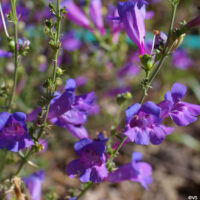
Penstemon heterophyllus ‘Margarita BOP’
A fine selection of a native penstemon from Las Pilitas Nursery where this chance hybrid seedling was discovered at the “Bottom Of the Porch”. Forms a tidy mound 18 inches tall by 2 ft. or so wide. Iridescent blue-purple tubular flowers in short spikes put on a good show over a long period in spring and early summer. The spent flower spikes should be cut off to encourage more blooming, better form, and longer life. Best in full sun with well drained soils and moderate to little water once established. 'Margarita BOP' has proven particularly adaptable and has survived longer than other cultivars. Hummingbird favorite.