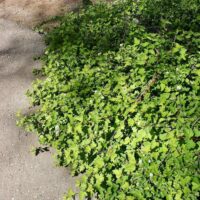
Physocarpus capitatus ‘Tilden Park’
A rare and delightful prostrate form of the native ninebark from San Bruno Mountain. Makes a sturdy groundcover about 3 ft. tall and spreading to at least 6 ft. wide, featuring lush, bright green, maple-like leaves with white flower clusters in the spring. The blossoms give way to bright red seed pods in the summer. Sun to light shade with moderate water, but will tolerate dryish conditions in part shade once established. Clay tolerant.

Plantago maritima
From coastal bluffs up and down the California coast comes this charming little plantain. Starting in late spring and continuing through summer, small, greenish-yellow flowers flank the top of slender stems up to 6 inches tall. The dense rosettes of narrow, succulent leaves provide a striking accent in a rock garden or nestled in crevices between pavers or stones. A good container specimen. Recognized for its edible and medicinal uses. Plant in full sun to light shade. Tolerates low to regular moisture. May spread vigorously by seed.
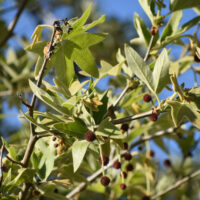
Platanus racemosa
This most Californian of trees from the southern and central parts of our state features stunning bark mottled white and grey on a large, sculptured trunk. The maple-like leaves create an open canopy on this stately tree which can reach up to around 80 ft. tall at maturity. Seeds are produced in fuzzy pom-poms dangling on short stems and are a great food source for birds. In autumn, the leaves can turn orangey-yellow before they drop, adding rare fall color to the California landscape. Makes its home in sunny, low-lying areas and canyons with moderate to occasional irrigation. A great shade tree for the large garden and a larval host for the Western tiger swallowtail butterfly. Deer resistant.
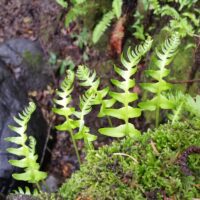
Polypodium glycyrrhiza
Native to moist coastal forests from Monterey County to Alaska. This epiphytic fern enjoys shady environments where it grows on trees, logs and stumps, mossy rocks and slopes. The long, narrow, deeply lobed fronds spread by creeping rhizomes, which have a sweet licorice flavor and a history of use by various native American peoples. They grow happily in moist shady gardens, going summer dormant once conditions get too dry, returning with the autumn rains and coolness. Drought tolerant in somewhat coastal conditions. Good container subject. Deer resistant.
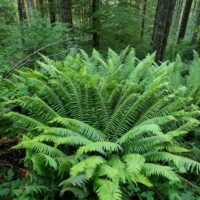
Polystichum munitum
The versatile western sword fern is an evergreen native fern from California to Alaska. In most gardens it will reach about three feet tall and wide. In prime areas near the coast where moisture is readily available and cool temperatures prevail, this fern can get up to 5 feet tall and wide. Excellent for shady beds, along walls, as a large scale groundcover and mixed woodland planting. Best with humusy soil and regular to moderate water, but drought tolerant once established and tolerant of most soil types. Actually quite adaptable and deer resistant.
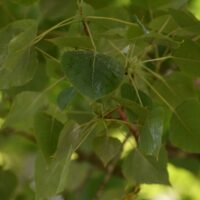
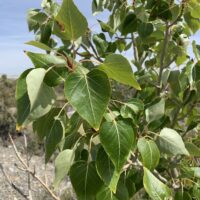
Populus fremontii
Fast growing riparian tree, native to watercourses throughout California. A tall and dramatic tree, 50 - 75 feet tall, with a spreading, open crown. The leaves are shiny, triangular to heart shaped, with coarsely serrated margins and flattened petioles. Turns beautiful shades of brilliant yellow in the autumn. The wind causes the leaves to flutter and rustle, making a whispering sound. Cottonwoods can be either male or female, with the female trees producing masses of cottony seeds. When young, the bark is smooth and silver gray, becoming thick and furrowed with age. They have wide spreading surface roots and sucker sprouts. An important wildlife plant, providing food and cover for a wide array of insects and birds. This major riparian species provides rich habitat value, soil stabilization, and expansive shade. Plant in full sun with plenty of space and regular to occasional irrigation.
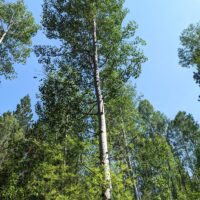
Populus tremuloides
From mountain meadows and hillsides across the Sierra Nevada comes this iconic native poplar. Smooth, white bark and rounded leaves which quake in the wind make this slender tree highly ornamental. Reaches a height of at least 20 ft. and spreads by underground roots to form groves. While the fall color may not be quite as stunning in lower elevation gardens as it is in the mountains, colder parts of our area will still see leaves of yellow, orange and red in the autumn. Easily grown at lower elevations, this form is reported to be particularly disease resistant. Needs full sun to light shade and regular to moderate irrigation once established. Lower irrigation should slow aspen’s ability to multiply.
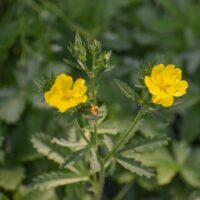
Potentilla gracilis
Prolific displays of bright yellow flowers resembling buttercups make this little cinquefoil a hit from spring through autumn. Flowers are held on two foot stems above low mats of dissected,dark green leaves. Native to mountainous areas throughout California. Provide full sun to light shade and give occasional to regular moisture. Will spread slowly by seed if exposed soil is nearby. A favorite of bees and butterflies. Deer resistant.
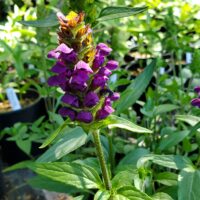
Prunella vulgaris v. lanceolata
Native to moist areas usually near coniferous forests and woodlands. Creeping perennial forms a low dense mat of foliage. Upright spikes of purple flowers over a long period summer - fall. Give some thought to placement because if happy it will reseed vigorously. Plant in full sun or light shade with regular water.
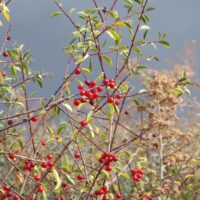

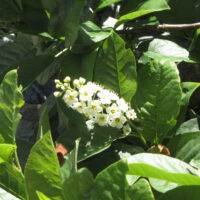
Prunus virginiana v. demissa
Large, deciduous shrub or small tree with red-purple bark and dark green foliage. Growing 8 foot or more tall and spreading slowly to form a thicket. Striking racemes of fragrant white flowers in the spring followed by dark red fruits which can be sweet but astringent. Foliage can take on nice fall color before dropping its leaves. Fabulous habitat plant drawing bees, butterflies and other pollinators to its flowers. Birds, especially bluebirds, adore the fruits and are known to swoop in and finish them off quickly. Where summers are hot, light or part shade is best, with regular to occasional water once established. They often grow where there is seasonal moisture in the spring, but somewhat dry as the season progresses.
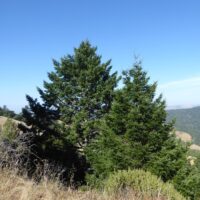
Pseudotsuga menziesii
We are not currently growing this plant due to flammability and reduced demand.
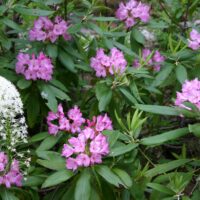
Rhododendron macrophyllum
One of the glories of our coastal redwoods forests, this evergreen rhododendron features clusters of large flowers in the spring which can range in color from deep rose to pale pink. Native from the Big Sur Coast north to Washington. In the wild, this open branched, big leaved shrub can reach a height of 13 feet. Plants in the garden tend to be much smaller, not usually exceeding 8 feet with a slightly narrower width. While somewhat temperamental in cultivation, success can be achieved with dappled shade, well draining soil rich in organic matter and moderate to regular water. Deer resistant.
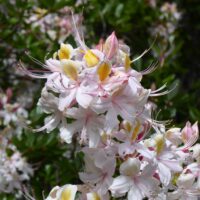
Rhododendron occidentale
A much sought after and admired native deciduous shrub found in moist places and stream banks in many plant communities throughout California. Leafs out in the spring with bright green foliage on a shrubby framework 3-6 ft. or more tall and wide. Glorious displays of fragrant azalea flowers in dense terminal clusters appear in late spring and can be pure white to pale pink often with yellow or orange markings. Needs decent light to bloom well but appreciates light shade, acid soils and regular water. Deer resistant
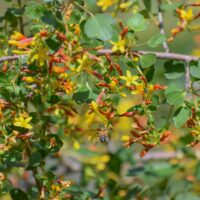
Ribes aureum
A vigorous deciduous shrub with masses of cheerful yellow blooms that appear in early spring. The light green foliage returns in late winter followed by delicate clusters of bright yellow tubular flowers that mature to a reddish-orange. Makes a wonderful addition to any habitat garden. Hummingbirds and bees adore the flowers, and the golden berries attract birds. Tolerates a variety of conditions from creeksides to dry woodland foothills to higher elevations - and even snow. Grows 6 to 8 ft. tall and wide. Where it finds water, it can spread by suckers, but is highly amenable to pruning. Adaptable to sun or shade, but does best with afternoon shade and moderate to occasional summer water.
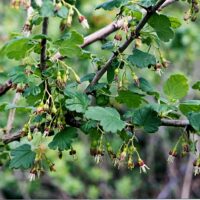
Ribes divaricatum var. pubiflorum
Native to coastal scrub, moist woods and shady canyons of the Pacific coast from British Columbia south through much of coastal California. This gooseberry is perhaps the most tasty of all of our native Ribes. The berries have the added benefit of being free of thorns. Forms an arching shrub 3-6 ft. tall and a bit wider with thorns at the leaf nodes. The tiny flowers are composed of reddish sepals and white petals that dangle beneath the branches and are attractive to hummingbirds. The small, blue-black berries are relished by birds. Plant in light shade with some summer moisture. Will tolerate full sun near the coast. Useful as a barrier, hedgerow or habitat plant where it provides excellent food and thorny cover for birds.
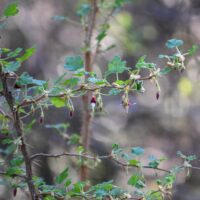
Ribes menziesii
A gooseberry of low elevation forests, growing to around 5-8 ft. tall with an open, arching habit. Bright green scalloped leaves with pale undersides are set on spiny stems. The charming flowers are small but sweet, with maroon sepals and white petals dangling beneath the thorny branches offering nectar to hummingbirds. The spiny red fruits that follow are decorative and attractive to birds. Often found on the edge or in openings of forests, the canyon gooseberry does best with light shade. It is drought tolerant especially near the coast, though it appreciates occasional summer water. An excellent habitat plant that provides shelter and food for a wide variety of birds.
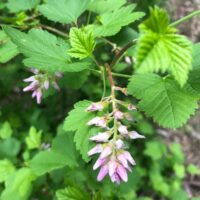
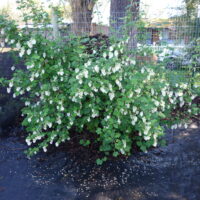
Ribes sanguineum v. glutinosum ‘Cal Flora White’
A Cal Flora Nursery original, a chance seedling in our nursery landscape. We watched this seedling develop into an elegant, eight foot, vase shaped shrub. The five inch pendulous racemes dangle from the branch tips and are pure white. Give flowering currants light or part shade except along the immediate coast where they grow in full sun. Moderate to occasional water once established. Hummingbird and bumblebee favorite. Birds enjoy the fruits.
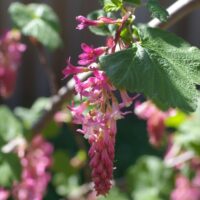
Ribes sanguineum v. glutinosum ‘Claremont’
Distinctive for its extra long, pendulous racemes of pink flowers with white centers. This Rancho Santa Ana Botanic Garden selection of the pink flowering currant is particularly vigorous, featuring abundant floral displays in early spring. Will attain a height and spread of 6 - 8 ft over time. Best with light shade and a little summer water. Important early nectar source for bumblebees and hummingbirds. Berries attract many birds including grosbeak and mockingbirds.
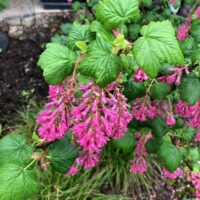
Ribes sanguineum v. glutinosum ‘Heart’s Delight’
A coastal Marin County selection of one of the West's choicest native shrubs. Deciduous, grows 6 ft. tall or more. In early spring it produces long drooping racemes of deep rosy-pink blossoms. Best with light shade inland, humusy soil and some summer water. Hummingbirds love the flowers and the berries attract many birds including robins, grosbeak and mockingbirds.
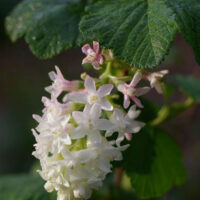
Ribes sanguineum v. glutinosum ‘Inverness White’
Selected by Roger Raiche on Inverness Ridge in Marin County. Distinguished from other white flowering cultivars in that the pure white blossoms develop a rosy cast as they fade. Deciduous shrub about 6 ft. tall by 6 ft. wide. Best with a little shade, woodsy soil and a little summer water. Berries attract many birds including grosbeak and mockingbirds.
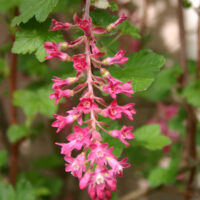
Ribes sanguineum v. glutinosum ‘Monte Bello’
This Cal Flora introduction was discovered in the hills west of Cupertino in the Santa Cruz Mountains. Long clusters of deep pink flowers make this selection of the pink-flowering currant stand out from other forms. In late winter and spring the flowers emerge on bare stems followed by rounded, maple-like leaves. This deciduous shrub has a vase-like shape, reaching a height of up to 10 ft. over time and a width of at least 6 ft. Provide full sun near the coast and light shade inland. Needs moderate to occasional irrigation once established. A great plant for hummingbirds and a wide array of pollinators. Birds enjoy the fruits.
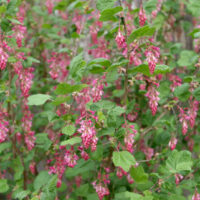
Ribes sanguineum v. glutinosum ‘Tranquillon Ridge’
A Native Sons Nursery selection from Tranquillon Ridge in Santa Barbara County, found growing under a canopy of Bishop pines. Super vigorous and very large, up to 10 ft. tall with extremely long racemes of dark pink flowers in the early spring. The racemes have an appealing shape, tapering to a point at the end of their long pendant flower clusters. Best with some shade even in coastal gardens where it’s drought tolerant. Occasional deep waterings are best in hot inland areas. Berries attract many birds including grosbeak and mockingbirds.
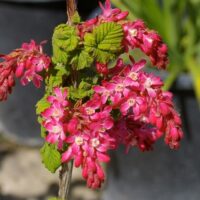
Ribes sanguineum v. sanguineum ‘Barrie Coate’
This selection of red flowering currant is a knock out in bloom. An early bloomer often starting in February with short racemes of nodding clusters of very deep rosy-pink, nearly red blossoms. Clusters of blue-black fruits follow and are enjoyed by birds. This deciduous shrub will grow 6 foot tall by 4 foot wide. Plant in sun to light shade with afternoon shade in hot regions and moderate to occasional summer water. An excellent early source of nectar for hummingbirds.
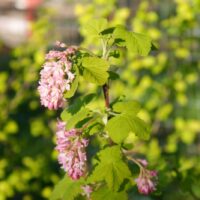
Ribes sanguineum v. sanguineum ‘Brocklebankii’
A distinctive shrub with gorgeous golden foliage on 5 ft. tall stems. Pendulous racemes of pink flowers in early spring just as the leaves are emerging are a favorite of hummingbirds. The leaves will scorch in the hot sun so part shade is best, especially during the hottest time of day. This cultivar prefers even moisture.
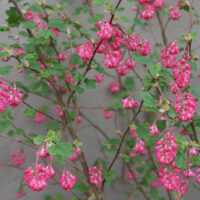
Ribes sanguineum v. sanguineum ‘Elk River Red’
This selection of the red flowering currant is from the Pacific Northwest. A deciduous shrub growing 6 ft. or more tall. Early spring brings eye catching bright rosy-red blossoms in drooping clusters. A wonderful early nectar source for hummingbirds. Plant in cool sun or light shade inland with occasional to moderate summer water. Berries attract many birds including grosbeak and mockingbirds.