
Sedum spathulifolium ‘Cape Blanco’
A mat forming, western native succulent, often seen on rocky cliffs and shady banks in California’s Coast Ranges and Sierra Nevada north to British Columbia. Small, spoon-shaped leaves form flat rosettes where bright yellow star-like flowers appear in late spring and early summer. The cultivar 'Cape Blanco' was selected along the Oregon coast, for its chalky-white foliage. A natural for the rock garden or container plantings where they are best with part shade. Very drought tolerant.
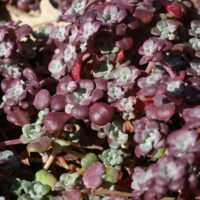
Sedum spathulifolium ‘Purpureum’
This distinctive form of the Pacific stonecrop features purple leaves which turn particularly dark in the winter. Bright yellow flowers are produced in late spring and early summer on short stems up to 4 inches high. This mat forming succulent grows in rocky crevices and shady banks in California’s Coast Ranges and Sierra Nevada north to British Columbia. The small, spoon-shaped leaves form flat rosettes. Needs excellent drainage and some shade, especially in the afternoon. A natural for the rock garden or container plantings where its diminutive nature can be appreciated. Very drought tolerant.
Sequoiadendron giganteum
This iconic Californian giant hales from the west side of the Sierra Nevada where it forms dramatic cathedrals with its massive, cinnamon-colored trunks. The leaves are gray-green and scale-like, hugging the billowing stems. In nature, this close relative of the coast redwood can be over 3,000 years old and reach over 300 ft. tall with trunks bulging to 56 ft. in diameter. In a garden setting you can expect a more reasonable height of 60 – 90 ft. with a canopy spread of around 40 ft. A stunning specimen tree for a large garden. Needs decent drainage and occasional irrigation when young, though it will become quite drought tolerant once established. Full sun to light shade. More cold hardy and drought tolerant than the coast redwood. Reported to be deer resistant.
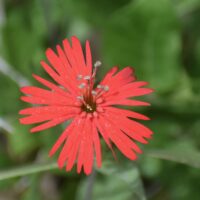
Silene laciniata ssp. californica
Native to open woods from Southern California north to Oregon, this native perennial is a knock out in bloom. Late spring and early summer bring brilliant, deeply lobed scarlet petals over the low growing mound of foliage 1-2 feet tall and about as wide. Best suited for well drained soils in lightly shaded settings where water can be withheld once plants begin to go dormant. A top notch rock garden subject and hummingbird favorite.
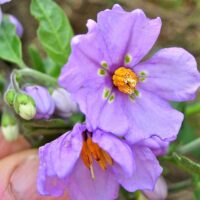
Solanum umbelliferum
A perennial subshrub from chaparral and oak woodland plant communities, often growing on the edge where they may receive some relief from the full sun. Grows quickly, to as much 3 ft. high with pale green oval leaves on green stems, often sprawling wider. Blooms over a long period with a multitude of blue-purple saucer shaped flowers followed by small tomato-like fruits. Plant in full sun to partial shade with little to no summer water. May go summer deciduous with drought, becoming twiggy and leafless until the rains return. All parts of the plant are poisonous which should make them dependably deer resistant.
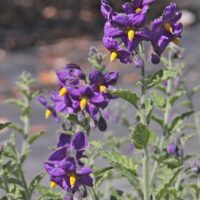
Solanum xanti ‘Mountain Pride’
Outstanding selection by Carol Bornstein from the hills surrounding Santa Barbara,following the wildfires of 2008. Chosen for its particularly dark purple flowers, this subshrub grows 3 ft. tall and at least as wide. Clusters of rich purple one inch blossoms with bright yellow stamens bloom over a long period but heaviest in spring. In nature it is often found growing along the borders of coastal scrub,chaparral and woodlands. Plant in full sun along the coast with a little shade inland, where it will be drought tolerant once established. Prune to promote bushy habit. A good container subject. Should be deer resistant as all parts of the plant are poisonous.
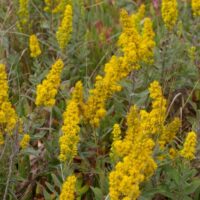
Solidago velutina ssp. californica
A showy and easy to grow late blooming native perennial. Spreads by creeping rootstocks where it can form a good-sized colony. Has spread slowly in our heavy clay soils with minimal water, but has the potential to spread aggressively in lighter soils especially with regular water. Late summer through fall brings slender wand-like flower stalks of golden yellow daisies 2 - 3 ft. tall which are visited by bees, butterflies and other insects. Plant in a sunny area where it is drought tolerant, but some supplemental summer water keeps it blooming longer.
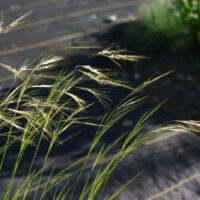
Stipa (Nassella) cernua
A beautiful native grass said to be a more impressive horticultural subject than the tough and useful Stipa pulchra. Forms a tufted bunch of foliage with elegant flower stems to about 2-3 ft. tall. The panicles of thin, fine, nodding awns have a silky aspect and are purplish at first drying silver. They glimmer when backlit. Prefers full sun (but will tolerate light shade) and well drained soils, but has proven adaptable. Drought tolerant. Often self sows. Deer resistant.
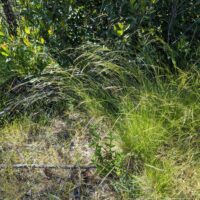
Stipa (Nassella) lepida
The native foothill needlegrass is a fine-bladed, medium-sized, perennial bunchgrass perfectly adapted to our Mediterranean climate. Growing vegetatively during the cool season and flowering in mid to late spring, going dormant with the dry of summer. Tufts of fine-textured blades 8 - 12 inches tall, give rise to slender, graceful flowering stems, 2 ft or more tall with panicles of silky awns which shimmer when back lit. Well suited for the dry garden, open woods, meadows and rocky slopes. Easy to grow, disease and pest resistant, tolerating more shade than other Stipa species. A strong re-seeder and deer resistant. Host plant for a number of butterflies. Deer resistant.
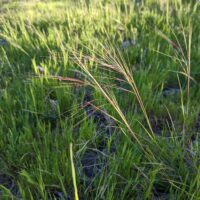
Stipa (Nassella) pulchra
Purple needlegrass is a major species in California grasslands. An excellent choice for naturalistic settings, native plantings, meadows or dry slopes in full sun. Handsome in mass where its purple awns shimmer. The entire plant turns golden come summer then goes dormant, reviving with the rainy season. Very drought tolerant. Can reseed vigorously. Deer resistant.
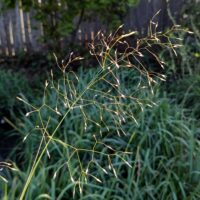
Stipa hymenoides
This rugged, incredibly drought tolerant bunchgrass hails from hot, sunny locations in desert areas and juniper woodlands of California. The inflorescences which emerge above the green foliage in spring and summer, are incredible airy and delicate. By the end of summer, plants take on an ivory color, appearing like billowing little clouds which create a wonderfully soft texture for the late season garden. Plants reach to about 2’ around. In winter, plants will go dormant. Little to no water once established. Needs decent drainage. Deer resistant.
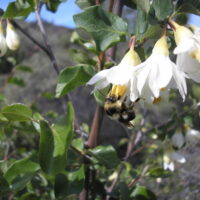
Styrax redivivus
A beautiful but little known California native. Slow to mature but worth the wait. Develops into a graceful multistemed deciduous shrub. Dark green rounded leaves clothe the smooth gray branches. Late spring brings dangling clusters of pure white, waxy, bell-shaped blossoms. Grows 6 to 10 ft. tall for sun to light shade. Drought tolerant. We have observed hummingbirds and pipevine swallowtail butterflies nectaring on styrax blossoms.
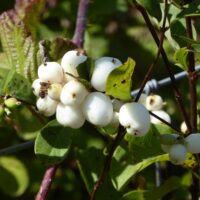
Symphoricarpos albus var. laevigatus
Snowberry is a deciduous, native shrub for dry or moist shade. Reaches about 4 - 6 ft. tall and spreading. Clusters of tiny, pinkish, urn-shaped flowers are followed by showy white berries on arching branches. Responds well to shearing. A good choice for under native oaks. Fruit may be toxic to humans. Hummingbirds like the flowers. Berries are palatable to hermit thrush, Swainson’s thrush, robins and other birds. Also creates good cover for birds.
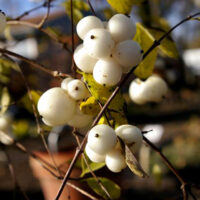
Symphoricarpos albus var. laevigatus ‘Bartlett Springs’
Snowberry is a deciduous, native shrub for dry or moist shade. Our own selection from Lake County, has particularly large oval leaves on graceful arching branches with exceptionally big fruits. Reaches about 4 ft. tall and spreading. Clusters of tiny, pinkish, urn-shaped flowers are followed by showy white berries on the branch tips. Responds well to shearing. A good choice for under native oaks. Fruit may be toxic to humans. Hummingbirds and bees like the flowers. Berries are palatable to hermit thrush, Swainson’s thrush, robins and other birds. Also creates good cover for birds.
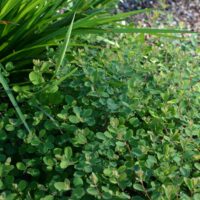
Symphoricarpos albus var. laevigatus ‘San Bruno Mountain’
This attractive low-growing form of our native snowberry is a Cal Flora Nursery selection from San Bruno Mountain. Its dimensions are about 8 inches tall and spreading. Indeed the spreading nature of this plant is robust and it should be included in areas where that is an asset rather than a liability. The wiry arching branches hold light green rounded leaves and the effect of the new growth is delicate and appealing. Tiny pink urn-shaped flowers decorate the branch tips, followed by small white fruits. Perfect for a lightly shaded bank or the light shade of a tree where it will be very drought tolerant. With total drought it may go summer deciduous but occasional summer water will keep it looking fresh. The flowers attract bees and hummingbirds.
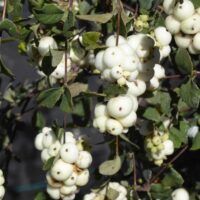
Symphoricarpos albus var. laevigatus ‘Tilden Park’
Here is a particularly fine selection of the native snowberry, notable for its dependable crop of showy white berries on arching branches. A deciduous shrub, snowberry grows to about 4 ft. tall and spreads to form drifts. A good choice for a shady bank, woodland edge, or under oaks. Appreciates and responds to moisture, but once established will tolerate dry conditions. Fruit may be toxic to humans. Hummingbirds like the flowers. Berries are palatable to hermit thrush, Swainson’s thrush, robins and other birds. Also creates good cover for birds.
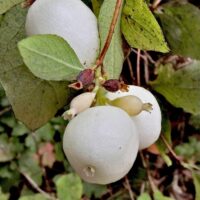
Symphoricarpos mollis
Low growing, spreading groundcover, usually staying around a foot tall by 3-6 feet wide. Rounded blue-green leaves on arching stems makes an excellent low growing thicket which competes well with tree roots. An amenable plant, able to grow in full sun in coastal areas and different depths of shade elsewhere, even fairly deep shade. The tiny, pink, bell shaped flowers are attractive to bees and hummingbirds and the white fruits that follow are eaten by birds. Good for erosion control and does well under oaks. Offers excellent habitat value with its flowers and fruits and provides cover for ground nesting birds. Drought tolerant once established. Deer often leave it alone.

Tellima grandiflora
Fringe cups is a sweet native perennial for the shade garden. Slender flower stalks rise above the soft mounds of foliage 18 inches to 2 ft. The small, urn-shaped flowers have tiny fringed petals which open green and then age to pink. Seeds about in a nice way. Tolerates dry shade. Deer resistant.
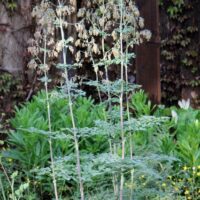
Thalictrum fendleri v. polycarpum
This native meadowrue has charm and adds a delicate, graceful quality to a woodland setting. Finely cut bluish-green foliage unfurls from purplish shoots. The tiny unisexual flowers are produced atop 2 - 5 ft. tall stalks on separate plants. The male flowers are showier with dangling cream-colored stamens; the females are clusters of greenish pistils. Useful in the woodland garden where it will thrive with some summer water or manage on winter rainfall. One way or the other it goes dormant in late summer where it can be allowed to go dry. Group several plants for best effect.
Trichostema lanatum
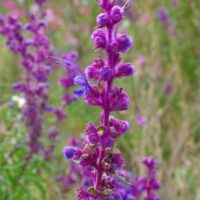
Woolly blue curls is a much sought after evergreen shrub with pungent, dark green, narrow leaves and spectacular flower spikes. Grows up to 5 ft tall and often wider, and blooms over a long period. Blue-purple to pink flowers, covered in purple hairs with protruding, long, curving stamens are a sight to behold. Native to coastal scrub and chaparral communities from Monterey county to northern Baja. Requires full sun, good drainage and is drought tolerant once established. Avoid regular irrigation, fertilizer and organic mulches. Pollinated by hummingbirds and visited by bumblebees and butterflies. Deer resistant.
Trientalis latifolia
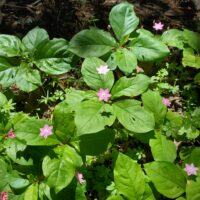
Shade loving native perennial, inhabiting open woods from San Luis Obispo County to British Columbia. Forming small colonies from underground tuberous rootstock. Slender stems rise 6 inches tall with a whorl of neat leaves at the top of the erect stems. Dainty pink star-shaped flowers are suspended above the leaves on thread-like pedicels. Flourishes in loose, woodsy, acidic soils in lightly shaded areas. Thrives with the spring rains, then goes dormant in the summer dry period. A charming addition to the shade garden.
Triteleia hyacinthina
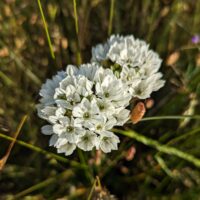
One of the easier to grow native bulbs that adapts well to garden conditions. Native to vernally moist areas that become summer dry in the Coast Ranges, Central Valley and Sierra Nevada into southwestern Oregon. Slender flowering stems rise one to two feet above the narrow leaves, with umbels of white, star-shaped flowers with green centers. If happy, the corms will multiply, forming drifts among grasses and shrubs and in open woodland settings. Easy to grow in containers, where they can be stashed in the shade once they go dormant. Bee and butterfly favorite.
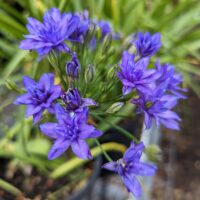
Triteleia laxa ‘Corrina’
A beautifully dark flowered form of our Ithuriel’s spear, with flowers a darker blue-purple than the more common ‘Queen Fabiola’. The trumpet-shaped flowers form circular clusters at the top of slender stalks 12 to 18 inches high. This easy to grow bulb sends up slender, grass-like leaves in late winter followed by the striking flowers in late spring. Multiplies readily forming colorful drifts which mix well with grasses and smaller perennials. Tolerant of pretty much all soil types and can be allowed to dry out completely in summer when it goes dormant. Unlike most grassland bulbs, this species will also tolerate moderate irrigation. Plant in full sun to light shade. Attracts bees, butterflies and hummingbirds.
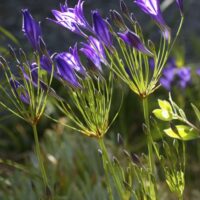
Triteleia laxa ‘Queen Fabiola’
Trumpets of bluish-purple blossoms make a dazzling display at the height of spring on this easily grown lily relative. The showy flowers rise up to 18 inches tall in dense whorls on slender stalks above grasslike leaves. The small bulbs increase rapidly to form small, colorful drifts. Give full sun to light shade. Tolerant of dry conditions but accepts occasional irrigation. Will go dormant by mid-summer but reemerges in early winter. Attracts bees, butterflies and hummingbirds. Plant in openings between low, evergreen plants or in meadows with yarrow, California fuchsia and grasses.
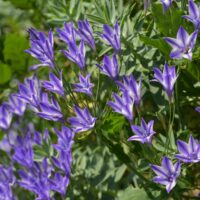
Triteleia laxa ‘Rudy’
An interesting flower color variation of this easy to grow native bulb. Grasslike blades 12 - 18 inches tall produce flower stems with large clusters of showy, funnel-shaped, pale blue-lavender blossoms with a vivid violet stripe down the center of each petal. An eye catching addition to a naturalistic planting, in sun to light shade. A willing grower which will multiply if happy. Enjoys dry conditions once done flowering, but will accept some moisture. Good container subject. Attracts bees, hummingbirds and butterflies.
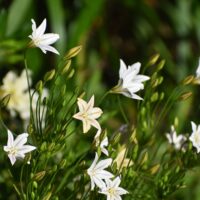
Triteleia laxa ‘Silver Queen’
A white form of Ithuriel’s spear! We kid you not. You may be familiar with this species and its traditionally blue-purple, trumpet-shaped flowers perched in whorls atop stalks a foot or more tall. We now have a selection featuring soft white flowers. This native bulb sends up grass-like foliage in the winter followed by the charming flowers in spring and early summer. The bulbs multiply readily, forming small colonies over time. While it tolerates dry conditions in summer, it will also accept occasional irrigation, making it very useful in the garden. Enjoys full sun to light shade and will tolerate clay soil.
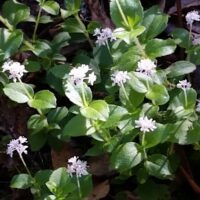
Whipplea modesta
The common name “modesty” fits this unassuming evergreen creeper. Though not super showy, one has to admire its ability to thrive on difficult sites. A good stabilizer native to forests of the Coast Ranges where it tolerates dry shady situations. Will appreciate a little summer water, but it is drought tolerant once established. Numerous tiny white flowers in late spring. Deer seem to leave it alone.
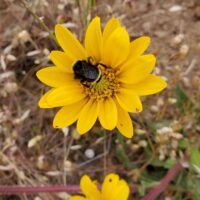
Wyethia angustifolia
Few hikers can resist the bright, golden-yellow flowers of this showy native sunflower relative. The large, 2” - 3” wide flowers perch atop stems 1.5 - 3 ft. tall in the spring. Bright green, lance-shaped leaves form low rosettes at the base of the flower stalks. This mule ears grows in sunny meadows and at the edges of woodlands. Perhaps the most garden tolerant of all of the mule’s ears, accepting occasional irrigation once established but not requiring it. Does not mind soils with poor drainage. A great plant for bees, butterflies and birds. Will go dormant once it finishes flowering but will re-emerge after the rain returns.