
Achillea millefolium – inland form – Napa County seed source
A vigorous and easy to grow perennial, yarrow grows native throughout California in many plant communities. This crop is grown from seed collected from a hot inland site in Napa County. In this form, flower stems rise 18 inches above the gray ferny foliage bearing white flowers in flat topped clusters. Plant in a sunny location with moderate to a little water. Spreads by rhizomes and can form sizable clumps if happy. A good addition to the habitat garden where the flowers provide nectar for bees and butterflies and the foliage provides winter forage for birds. The foliage is deer resistant.

Achillea millefolium – inland form – Sonoma County seed source
A vigorous and easy to grow perennial, yarrow grows native throughout California in many plant communities. This crop is grown from seed collected from a hot inland site in Sonoma County. In this form, flower stems rise 18 inches above the gray ferny foliage bearing white flowers in flat topped clusters. Plant in a sunny location with moderate to a little water. Spreads by rhizomes and can form sizable clumps if happy. A good addition to the habitat garden where the flowers provide nectar for bees and butterflies and the foliage provides winter forage for birds. The foliage is deer resistant.

Acmispon (Lotus) glaber (scoparius)
Bees go nuts over the bright-yellow flowers of this California native. From spring and into summer you can find this plant covered in blooms at the edges of chaparral throughout much of California. The intricate, pea-shaped flowers, often colored burnished red as they are pollinated, emerge along wand-like stems. Deerweed usually reaches a height and width of about 2 – 3 ft. Plant in full sun to light shade. Needs good drainage and no summer water once established. A remarkable number of butterflies use this species as a larval host plant, including the bramble hairstreak, orange sulphur, funeral duskywing, silvery blue, acmon blue and the avalon hairstreak.

Adelinia (Cynoglossum) grandis
From woodlands throughout Northern and Central California comes this alluring bluebells relative. Dainty flower clusters ranging in color from periwinkle blue to lavender appear on slender stalks in the spring. The leaves are what gives this plant its name: grey-green and tongue-shaped, emerging in the winter from basal roots. Plant in bright shade and don’t water once established. Needs decent drainage. Once this plant goes to seed it will go dormant, re-emerging in late winter. A great accent plant for under the dry shade of deciduous oaks.

Adenostoma fasciculatum
Chamise is found on the poorest soils in hot, dry, exposed areas of chaparral plant communities. Bright green needle-like leaves cover this evergreen shrub. Late spring brings showy plumes of creamy white flowers in small dense sprays, persisting as they age to reddish brown. This tough shrub can grow 4-10 ft tall and wide depending on conditions. An excellent erosion control plant for tough sites where it holds soil, provides cover for wildlife and acts as a nurse plant, paving the way for the other species to get started. Plant in full sun with no water required once established.

Aesculus californica
Beautiful in all its seasons, this native tree is perfectly adapted to our summer dry climate. Broad headed, deciduous tree rapidly growing to 15 feet or more with smooth grey bark and a rounded shapely habit. Bright green palmate leaves unfurl in the spring. Striking, fragrant white to pink flowers in long spikes are followed by pear shaped fruits that split open to reveal large chestnut-brown shiny seeds dangling from branch tips. Buckeyes lose their leaves in summer to avoid the long dry season. Adaptable and tolerant of a wide range of conditions. Sun to light shade, little to no water once established. Flowers provide nectar for hummingbirds, butterflies and native bees.

Agoseris grandiflora
With a wide distribution throughout the state, the California dandelion is much more refined and well-behaved than its European, weedy look-alike. Found in oak woodland, chaparral, and many other plant communities in part-shade or bright dappled light. Slender, dissected, low, fuzzy gray-green leaves give rise to stem-like peduncles up to 2+ feet tall that are topped with rounded, flat, gold-yellow flower clusters from March-May, followed by large, perfectly rounded white globes of seeds that are wind-dispersed. Plant in part-sun or in areas with bright dappled light that drain well and are summer dry. Does not reseed aggressively like the European dandelion. Drought-tolerant.
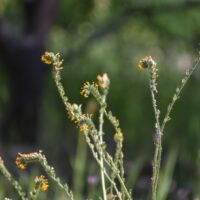
Amsinckia menziesii
A bright, yellow-orange ANNUAL with curled clusters of little trumpet-shaped flowers resembling the scrolled head of a violin. Flower stalks of one-to-three feet tall gradually unfurl with new blooms from mid-spring to early summer. The warmly-colored blossoms are a great nectar source for butterflies and develop into seeds adored by goldfinches and other songbirds. This grassland native adapts to the garden setting, where it prefers full sun and occasional irrigation. Will self-sow.
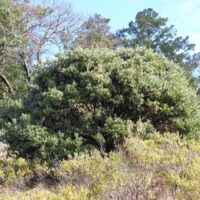
Arctostaphylos manzanita
Good subject for a dry sunny bank where this picturesque native shrub can develop its beautiful form of sinewy branches and smooth red-brown bark. Growing 8-12 ft. tall by 6-10 ft. wide or even larger with time. Flowers heavily in the spring with white to soft pink urn-shaped flowers followed by clusters of tiny apple-shaped fruits. An excellent habitat plant providing food and cover for a wide array of birds. The flowers are an excellent early nectar source for bees and hummingbirds. Very drought tolerant once established.
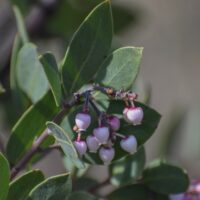
Arctostaphylos manzanita ‘Garrison Canyon’
This large, tree-like selection comes from Garrison Canyon on Pepperwood Preserve above Mark West Springs. Big, round, pewter-green leaves adorn branches covered in smooth mahogany bark. Especially large clusters of soft-pink flowers emerge in late winter and are followed in summer by “little apple” fruits. In time, this selection may reach up to 15 ft. tall and wide. Provide full sun. Very drought tolerant once established.
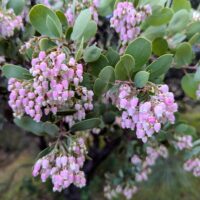
Arctostaphylos manzanita ‘Lake Sonoma Pink’
We discovered this stunning manzanita above Lake Sonoma, which stood out with large, rounded clusters of the pinkest flowers we’ve ever seen on this species. The big, rounded leaves are an appealing grey-green, a pleasing compliment to the colorful blossoms. The smooth, burgundy branches reach up to about 15 ft tall and nearly as wide if left unpruned. Hummingbirds and bumblebees enjoy the late winter flowers, while birds eat the ”little apples” which ripen in the summer. Plant in full sun to light shade and provide little to no irrigation once established. Needs decent drainage. Great as a loose hedge or featured as specimen.

Arctostaphylos manzanita ‘Saint Helena’
A vigorous selection of the common manzanita selected by Nevin Smith from the slopes of Mount St. Helena in Napa County. A beautiful, upright, evergreen shrub with gorgeous, sinewy branches of smooth, red-brown bark and medium green, pointed leaves. Fast growing for a manzanita, this robust and disease resistant selection grows 10 -12 tall and wide with a broad, rounded shape. Pure white, urn-shaped blossoms in late winter and early spring are an important early nectar source for bumblebees and hummingbirds. The bronze, little, apple-like fruits are relished by wildlife. Plant in full sun with good drainage, where it will be drought tolerant once established.
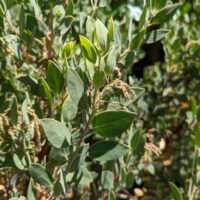
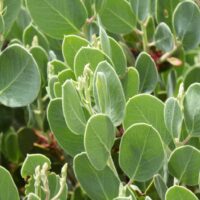
Arctostaphylos manzanita ‘Warm Springs’
From the steep slopes above Lake Sonoma, growing among gray pines, madrones and buckeyes, comes this standout manzanita. We noticed the particularly gray foliage amongst its more green leaved brethren. Has proven to be a vigorous grower, developing gorgeous, smooth, red-purple bark. The winter blooming, urn-shaped flowers are white with a hint of pink. Clusters of beautiful apple-green fruits mature to bronzy-red, decorate the branch tips. Plant this striking evergreen in full sun or very light shade, where it can grow 10 ft. tall or more and will be very drought tolerant once established. An important early nectar source for hummingbirds and bumble bees.
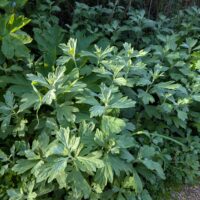
Artemisia douglasiana
Mugwort is native to many plant communities where there is at least some year round moisture: streams and riverbanks, road cuts, ditches, and moist meadows. A stout, rhizomatous perennial with aromatic foliage that is green on top and silvery beneath. The flowers are small and not particularly showy. The foliage is beautiful and fragrant with a long history of medicinal uses. Plant in sun to light shade where it will grow 3 ft. tall and spreading to form a colony. Well watered plants can grow even taller. Provides excellent cover and seeds for birds. Deer resistant.
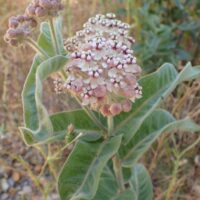
Asclepias eriocarpa
More diminutive than showy milkweed at 1-3 feet, this long-blooming species has similar broad, greyish leaves and creamy, pink-accented flower clusters. Like other milkweeds, it is a larval host for the monarch butterfly. A great choice for habitat gardens in dry, sunny areas, providing nectar for a wide array of pollinators from late spring into fall. Usually found in rocky soils throughout parts of Southern California and in foothill areas north of the San Francisco Bay. Spreads to form colonies with minimal supplemental water. Deer resistant.
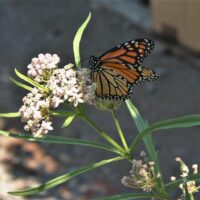
Asclepias fascicularis
Our most common native milkweed is found in meadows and on the banks above ponds. Its flowers are held in umbels of a pale mauve color. They form at the top of 1 - 3 ft. tall slender stems that die back in winter to a perennial rootstock. Its wandering roots form small colonies. Drought tolerant, it prefers seasonally moist soils and likes moderate water in the garden. The narrow leaves are the preferred larval food for the Monarch Butterfly. Full sun to part shade. Unlikely to be bothered by deer.
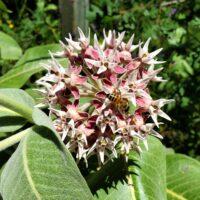
Asclepias speciosa
Bold and beautiful native milkweed that forms a large patch of tall stems with broad pale green leaves. Fragrant clusters of pinkish-purple flowers, followed by interesting seed pods. Spreads by underground shoots. Great in semi-dry naturalistic plantings. Host to Monarch butterflies. Deer resistant.
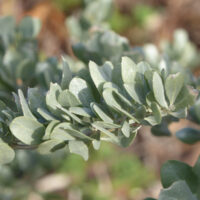
Atriplex lentiformis
This native bird favorite is a tough and useful shrub with beautiful silvery gray foliage. Growing 5 ft. or more tall and spreading widely, quail bush is valued for its ability to deal with difficult sites where it tolerates wind, salt spray, saline and alkaline soils. A terrific habitat plant, providing food and cover for a wide array of birds and mammals. Native from the coast to the desert. Excellent for erosion control and is fire resistant. Benefits from annual shearing and occasional aggressive pruning to rejuvenate. Plant in full sun with occasional to little summer water.
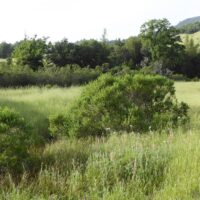
Baccharis pilularis
This is the upright form of coyote bush, growing 4 - 8 ft. tall and wide. Valued for its ability to flourish in a wide range of conditions. Also valued as an excellent habitat plant offering food and cover to a wide variety of wildlife. Flowers are not showy and the male and female flowers are borne on separate shrubs. This crop of plants are a mix of males and females and one can’t tell until they bloom. Plant in sunn or light shade. Not fussy about soils. Quite drought tolerant once established. Responds well to pruning or shearing, working well as a screen. Deer resistant.
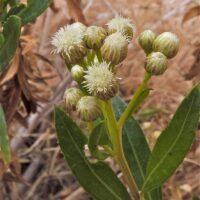
Baccharis salicifolia
This native shrub looks something like a willow in foliage and is found in similar habitats in California and the southwest US. Not a willow at all, but a member of the aster family, this evergreen shrub blooms nearly year round, making it a powerhouse for pollinators. The profusion of small, creamy white, fuzzy flowers, tinged with pink or red are highly attractive to butterflies, bees and other beneficial insects. Extremely tough and easy to grow in full sun with summer water, where it will grow 6 - 10 feet tall and wide with rich, green foliage. Able to survive drier conditions than a willow could handle, but it will look rough if it gets too dry. Responds well to pruning and can be cut down to six inches to refresh. Excellent screen, windbreak and for soil stabilization. Stellar for attracting pollinators.

Bouteloua curtipendula
A perennial bunch grass with 2-3 foot stalks of tiny, purple-tinged flowers that emerge in the heat of summer. The common name of the species derives from the arrangement of floral spikelets along one side of the inflorescence. Its blue-green foliage forms low, clumping mounds, turning purple-ish in fall and eventually going winter dormant. As the flowers mature into seeds and dry to golden, they hang decoratively off arching stems, bearing a resemblance to oat grass. Native to a large swath of central North America, its range reaches into hotter, drier areas of Southern California and the Southwest. Adapts to various irrigation schedules and soil types, but requires minimal water once established. Plant in full sun or part shade. Useful for meadows or rock gardens. Seeds attract birds.
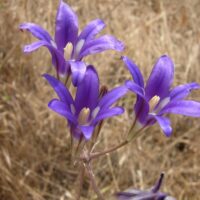
Brodiaea elegans
From grassy meadows and open woodlands comes this drought tolerant and colorful wildflower. Open clusters of dainty violet flowers sit atop stems reaching 8 to 20 inches in height. Plant in full sun to bright shade and provide decent drainage. As the name suggests, the harvest Brodiaea is the latest blooming of the Brodiaeas, sometimes not flowering until the end of summer after the grass-like leaves have gone dormant. It spreads rapidly but not invasively to form broad drifts. After blooming, this bulb will sleep until the return of winter rains. Do not irrigate. An excellent candidate for the rock garden where its graceful form will contrast wonderfully with the rigid stone.
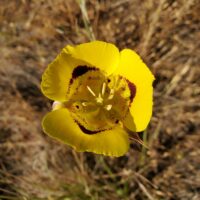
Calochortus luteus
This showy mariposa lily offers vibrant, golden-yellow flowers, often with reddish brown markings at the base of each of the three petals. The upward facing, bowl-shaped flowers seem to hover over grasslands on stems reaching one to two feet tall. In early winter, grass like leaves emerge from the soil, followed by the butterfly-favored blossoms in late spring and early summer. Once the flowers are done, this native bulb will go dormant. Plant in full sun to light shade with well-draining soil. Allow to go completely dry in the summer. Said to be one of the easiest of the mariposa lilies to grow in gardens.
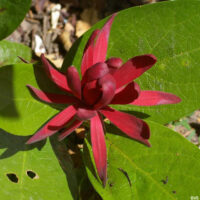
Calycanthus occidentalis
Native along streams, rivers and moist places in California. This attractive deciduous shrub is well worth growing. Bright green aromatic foliage with interesting maroon-red flowers in spring-summer that resemble small waterlilies and have a wine-like fragrance. Can be grown as a multi-stemmed small tree, trimmed hedge or left alone to become a large background shrub. 5 - 12 ft. tall and wide. Part-shade is ideal. Tolerates full sun with lots of moisture in somewhat cooler areas. Accepts full shade but will grow more slowly with a more open habit. Regular to moderate water. Somewhat deer resistant.
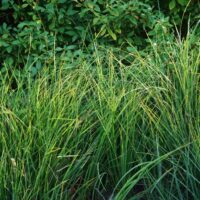
Carex barbarae
Widely distributed native sedge that is an important traditional basket fiber plant. Bright green sharp blades in clumps 1 - 3 ft. tall and spreading. Oval-shaped tufts of small reddish-brown flowers on spikes at the tip of the flowering stems. An attractive sedge, though it can be invasive. For sunny or partly shaded areas with regular to moderate moisture. Drought tolerant in clay soils or with some shade. Handsome container plant too. Often used in bio swales and riparian restoration. Deer resistant.
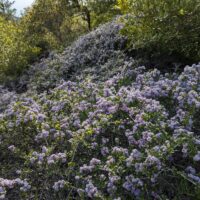
Ceanothus cuneatus
One of California's most widespread species offering a variety of forms. Typically buckbrush grows as an arching shrub growing 5 - 8 ft. or more tall and wide with small, thick, leathery leaves. Flowers can range from white to lavender to purple and are produced in small tight clusters in early spring. When in full bloom, the powerfully sweet scent of the flowers engulfs the visiting hiker. An excellent choice for hot dry conditions and difficult sites where it will grow in full sun with little to no water once established. Valuable addition to the habitat garden where it provides food and cover for a wide array of wildlife, birds, bees and butterflies. Said to be deer resistant.
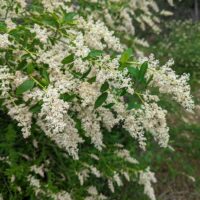
Ceanothus integerrimus
Deer brush is an excellent addition to the dry garden, featuring an abundance of blue, white or even pink flower plumes in late spring. One of the few deciduous species, displaying soft flat leaves which fall in autumn and reemerge in spring. Deer brush is an open upright shrub, growing 5 - 12 feet tall and wide with many different growth habits. A variable species found in a wide range of habitats throughout the state. Often used in restoration for its rugged qualities and ability to deal with summer heat and winter cold. This crop, grown from seed collected near Lake Sonoma has white flowers. Plant in full sun to light shade with good drainage. Little to no summer water once established.
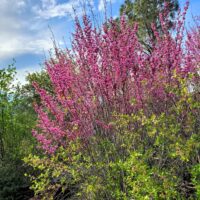
Cercis occidentalis
Beautiful in all its seasons, the native redbud is well worth growing. Highly ornamental multi-trunked shrub or small tree 6 - 20 ft. tall and wide. Masses of brilliant rose-purple blossoms in early spring followed by conspicuous long seed pods that start out lime green and age to purple-brown. The rounded heart-shaped leaves emerge apple green and develop to bluish-green. In colder areas, the leaves take a nice fall color of yellow or red. The smooth silvery-gray branches are picturesque in the winter landscape. Plant in full sun to light shade with good drainage. Drought tolerant. Important nectar and pollen source for bees. Attracts hummingbirds too.
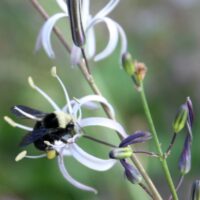
Chlorogalum pomeridianum v. pomeridianum
Known for their large, fibrous bulbs historically used by indigenous peoples and early settlers for soap, food and to stupefy fish. Long, wavy-margined leaves form a rosette in winter followed in late spring by tall, airy flower stems bearing small white flowers that open in the late afternoon and evening. Great in naturalistic settings in full sun to light shade. Needs to go summer dry once established. Larval food source for the Western Brown Elfin butterfly.