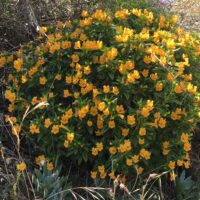
Diplacus (Mimulus) aurantiacus ‘Russian Gulch’
From the bluffs of the Sonoma Coast comes this beautifully compact form of sticky monkeyflower. The shiny, evergreen leaves are spaced to form a tight mound, 2 ft or so tall and wide. From late spring into autumn, cheerful, orange, tubular flowers cover the dense foliage. Makes a colorful, drought-tolerant addition to the garden where it can grow in full sun on the coast to part shade inland. Benefits from pinching to form a strong framework to support the flower display. Requires good drainage and responds to occasional watering, but resents drip irrigation systems that deliver water on a regular basis. Hummingbirds and bees relish the flowers and it is the larval food source for checkerspot and buckeye butterflies. Deer resistant.
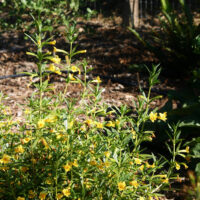
Diplacus (Mimulus) aurantiacus ‘Ted’s Yellow’
Grows 2 - 3 ft. tall with yellow tubular flowers. Full sun near coast, light shade inland. Good drainage, keep on the dry side and fertilize minimally. Benefits from annual trimming. Larval food source for the common checkerspot and buckeye butterflies. The flowers provide nectar for hummingbirds. Deer resistant.
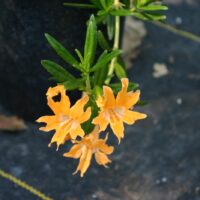
Diplacus (Mimulus) bifidus ‘Esselen’
We have been impressed with this fine selection from Big Sur, which offers compact habit, shiny green foliage and broad bright-orange flowers over a long period. Plant in sun to light shade with little to occasional summer water. Bees, butterflies and hummingbirds all work the flowers and it is a larval food source for the Checkerspot butterfly. Deer resistant.
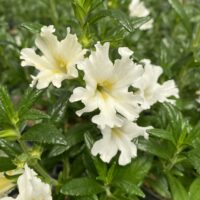
Diplacus (Mimulus) bifidus ‘White’
This elegant monkeyflower has extra frilly, creamy-white, azalea-like flowers, with soft yellow throats. The abundant blossoms stand out against the slender, deep green foliage and bloom over a long period, late spring and into fall. Reaches about 2 ft. tall and 3 ft. wide. Plant in sun to light shade with good drainage and occasional summer water. Hummingbirds, bees and butterflies are all drawn to the flowers and it is a larval food source for checkerspot and painted lady butterflies. Great in a container. Deer resistant.
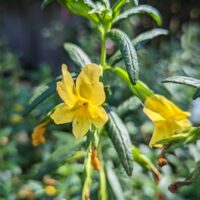
Diplacus (Mimulus) calycinus
From central and southern California, this species is similar to our local sticky monkeyflower but has large, creamy-yellow, trumpet-shaped flowers. Grows 2 - 3 ft tall, and at least as wide, and flowers from late spring through summer. For sun to light shade with good-draining soils and occasional summer water. Flowers attract hummingbirds, bees and butterflies and it is a larval food source for checkerspot and painted lady butterflies. Deer resistant. Previously: Mimulus longiflorus ssp. calycinus.
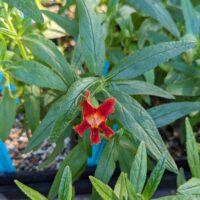
Diplacus (Mimulus) longiflorus
Hummingbirds love the abundant deep red flowers of this stand-out monkeyflower. Hailing from Southern California and growing 2 -3 ft. tall, and at least as wide, this drought-tolerant, floriferous shrublet blooms late spring into fall. Plant in sun to light shade with good drainage and occasional summer water. Besides hummingbirds, other pollinators will be attracted to the flowers, and the foliage is used by checkerspot and painted lady butterfly larvae. Deer resistant.
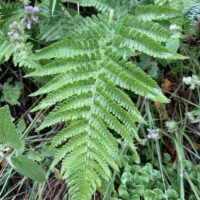
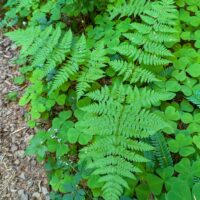
Dryopteris expansa
A very elegant native fern, with soft, bright green, finely divided fronds and a gently arching form. Rarely offered in California nurseries. Mature plants reach up to 3’ tall and wide, make them suitable for most garden spaces. Grows in moist, shady woodlands, mostly along our coast, from the Central Coast north to Alaska. Winter deciduous. Very similar to the lady fern, but with triangular-shaped fronds, not diamond-shaped. Said to be deer resistant.
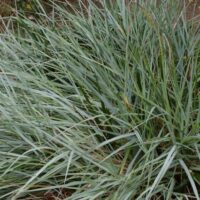
Elymus (Leymus) condensatus ‘Canyon Prince’
A beautiful selection from the Channel Islands off Southern California. Distinctive for the lovely, broad, silver-blue blades 2 1/2 to 3 ft. tall with wand-like grass flowers reaching up to 2 feet above the foliage. Accepts sun to very light shade and moderate to little water. Tolerates heavy soil. Spreads by rhizomes to form striking silver drifts, but is vigorous and aggressive. Best to use where a large patch is desired or where it is contained, such as a parkway strip. Cut back in winter to rejuvenate and remove old leaves. Drought and deer resistant.
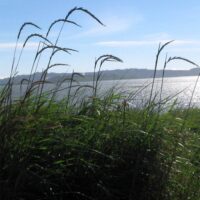
Elymus (Leymus) triticoides
Spreading, turf forming, perennial grass found in somewhat moist areas in many plant communities throughout California. An important restoration species, useful for holding soil and enhancing wildlife habitat value. Growing 2-4 ft. tall and spreading widely with an extensive network of rhizomatous roots which both hold soil and help prevent exotic weed establishment within their dense mats of roots and foliage. Slender blue-green blades are topped with narrow flower spikes 4-6 inches long. Excellent for seasonally moist bottom land and riparian areas where it can grow in full sun to light shade and tolerates many soil types. Will tolerate some drought in heavier soils. May spread too vigorously for small gardens.

Elymus (Leymus) triticoides x ‘Lagunita’
Discovered by grass expert and John Greenlee, who describes it as his personal favorite ground cover grass for meadow installations. Often this species has blue-grey blades and grows tall and floppy, but 'Lagunitas' grows just 10 - 16 inches tall, with rich green blades. This form rarely flowers and is quite adaptable to soil types and watering regimes. The ability to tolerate both wet and dry conditions makes it valuable for areas that seasonally flood like rain gardens. A vigorous spreader, especially when well watered, but is better behaved in dryer sites. Once established, can be maintained with one or two waterings a month, keeping it green and fire safe. Tolerates trimming to about 4 inches, possibly more. Grows in full sun to light shade. Host plant to the Woodland Skipper butterfly.
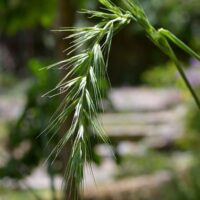
Elymus californicus
California bottlebrush grass is a tall robust grass with broad, bright green blades and nodding brushlike flower spikes. Uncommon in the wild it can be found in coastal counties on shaded banks and wooded areas, including redwood forests. Displays 3 - 6 ft. tall flower stalks with low foliage up to 1 ft. high. Provide moderate to infrequent irrigation. Deer resistant.
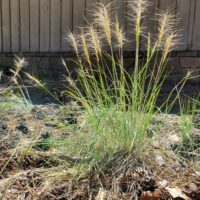
Elymus elymoides
A species of wild rye, this tough, native, widespread, perennial grass, sports distinctive seed heads with a bottlebrush or squirrel tail appearance. Super adaptable and willing to withstand a wide range of soil types and depths. Even tolerates serpentine soils. Able to make a living in full sun where it is extremely drought tolerant. Grows one foot to 18 inches tall with shimmering, purple-toned flower spikes that age to beige, bristly, seed heads. A dependable re-seeder, perfect for sunny, low water using landscapes and erosion control. Host plant for a number of butterfly and moth species including the woodland skipper. Deer resistant.
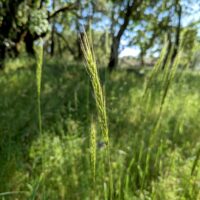
Elymus glaucus
A stiffly upright, clump-forming grass with blue-green blades, native to much of the western U. S.. The flowers form bristle-tipped, narrow, vertical spikes, rising 2-4 feet tall. Easy to grow and a strong reseeder for full sun to light shade. Summer water keeps plants green longer, but will go dormant with drought. This very adaptable grass is excellent for bank stabilization in challenging soils. Deer resistant.
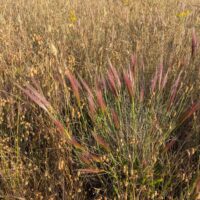
Elymus spicatus
Native to mountainous regions of the western US, where it lives in many plant communities. Grows to around 3 ft. tall with blue-gray blades and blooms in early summer. Narrow flower spikes have long awns that bend at right angles to the stem. Widely used in revegetation for its adaptability where it grows in many soil types, except for high alkalinity or excessive moisture. Plant in full sun to light shade, where it will be drought tolerant once established. Host to a number of butterfly and moth species. Deer resistant.
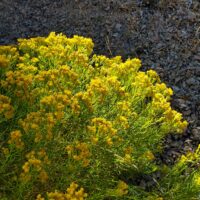
Ericameria arborescens
Native to chaparral regions throughout California, this tall, billowy shrub stands out with its soft and narrow, bright green leaves and, in the summer and early fall, clusters of small yellow flowers. Goldenfleece reaches 6 ft. or more tall with a width of around 4 ft. A wonderful accent plant for the dry garden, especially when combined with dark-foliaged plants such as ceanothus, toyon and manzanitas. Prefers full sun and excellent drainage. Very drought tolerant once established. Excellent for bees and butterflies. Deer resistant.
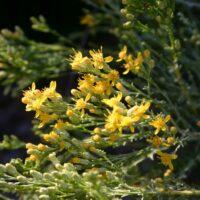
Ericameria ericoides
Native to sand dunes from Long Beach north to Bodega Bay, this low shrub resembles a heather, covered with clusters of small yellow daisies in late summer and fall. Reaching a height of up to 3 feet and spreading to 4 feet, making it an ideal shrub for the smaller garden. Needs occasional water in interior locations and full sun to light shade. Requires well-draining soil. Plant with Ceanothus, low manzanitas and pacific reed grass for a taste of the coast in your own garden. Excellent late season nectar source for bees and butterflies. A light winter pruning will help keep it dense and compact. Said to be deer resistant.
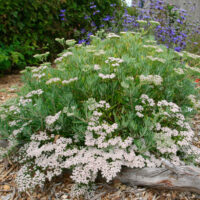
Eriogonum arborescens
A large, shrubby buckwheat with narrow, pale green foliage and sturdy, flat-topped inflorescences of creamy white to pink flowers. The flowers age over time, eventually turning reddish brown, remaining ornamental for a long period. Grows 3 to 4 ft. tall and slightly wider. Normal to very lean well-drained soils. Especially drought tolerant along the coast, may need infrequent summer water inland and possibly a little afternoon shade. Buckwheats are excellent additions to habitat gardens, providing pollen and nectar for bees and butterflies and seeds for many creatures. Deer resistant.
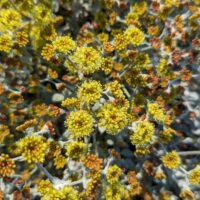
Eriogonum crocatum
A rare buckwheat grown for its beautiful gray, felty foliage and bright, clear yellow flowers. The yellow flowers open from brown buds and then age to a dark rusty brown. Grows 1 - 2 ft. tall and wide, this perennial requires full sun and good drainage. Little to no summer water once established. This Ventura County, California native is hardy to about 15°F. Good nectar source for bees and butterflies. Deer resistant.
Eriogonum elongatum
This buckwheat is native to dry, rocky places, from Monterey Bay south to Baja, in coastal scrub and chaparral plant communities. Super drought tolerant and late blooming, supporting native bees, parasitic and predatory insects and butterflies. Forms a low mound of gray foliage, topped with long, leafless, flower stems, rising 2 - 3 ft. tall. Flowers late in the summer with ball-like clusters of tiny white and pink flowers spaced along the tall, gray, tomentose stems. Full sun, good drainage. Tolerant of serpentine soils. Deer resistant.
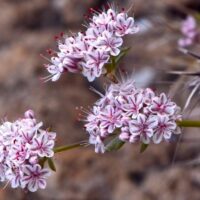
Eriogonum fasciculatum
This adaptable buckwheat is a native of central and southern California. It is a pioneer plant capable of surviving and colonizing some of the hottest driest sites. These attributes are very useful in a garden setting but it should not be planted in or adjacent to wildlands where it may escape and displace local natives. Small native shrub, forming a broad mound 3-4 ft. high and at least 4 ft. wide. Flower clusters are creamy white to pink, turning an attractive rust color with age. Good erosion control plant - best in a well drained, sunny site. Flowers attractive to bees and butterflies. Deer resistant.
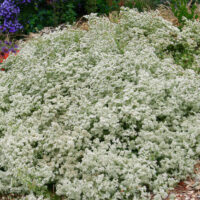
Eriogonum fasciculatum ‘Warriner Lytle’
An interesting form of California buckwheat introduced by the Theodore Payne Foundation. Grows quickly into a low and spreading evergreen groundcover clothed with small, needle-like leaves, 18 inches tall and 6 to 8 feet wide. From late spring to early fall, tight clusters of creamy-whitish pink flowers appear which are very attractive to bees and butterflies. As the flowers go to seed they gradually turn dark russet and are attractive to seed eating birds and mammals. Excellent for dry slopes where it will grow in full sun to light shade with good drainage. Quite drought tolerant once established. Deer resistant.
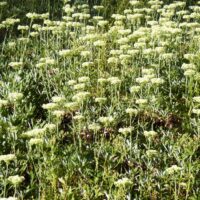
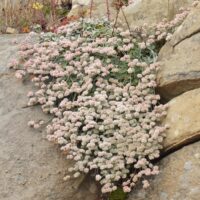
Eriogonum latifolium
Native to our coastal bluffs, this perennial forms neat mounds of silvery white foliage under 1 ft. tall. Flowers develop in dense pom-poms and are creamy white to pinkish. Tolerates sun, wind and drought once established but needs decent drainage. Provide occasional summer irrigation to keep them looking their best. Buckwheats have substantial wildlife value, providing pollen and nectar for bees and butterflies, larval food for butterflies, seeds for birds and cover for many creatures. Deer resistant.
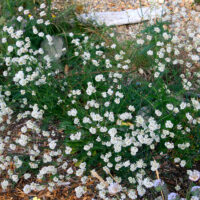
Eriogonum nudum
Few natives are as excellent a source of nectar for bees and butterflies as the buckwheats. This widely distributed species is known for its elegant flower displays on naked stems rising one to three feet above low mounds of grey-green leaves. Naked buckwheat has flower pom-poms ranging in color from white to pink set on slender stems in open clusters up to twelve inches wide. Blooms from late spring into early autumn. Provide full sun to very light shade in soil with decent drainage. Drought tolerant once established. Generally deer resistant.
Eriogonum nudum – robust form
This buckwheat came to us by way of Ginny Hunt and her seed company Seedhunt. Collected from a local race (Santa Cruz area) of naked buckwheat where the flower stems rise to 5 foot or more! Naked buckwheat is the most widely distributed species of buckwheat, growing throughout the state. Forms low mounds of foliage with tall, slender, naked stems, topped with clusters of white to pinkish pom-poms. Plant in full sun to very light shade with good drainage. Drought tolerant once established. Important pollinator plant. Said to be deer resistant.
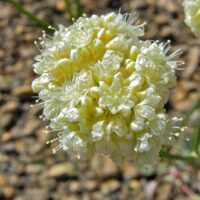
Eriogonum nudum – soft yellow form
This seed strain of the naked buckwheat hails from a particularly robust population found in blue oak savanna, in the foothills of Tehama County. It has soft, buttery-yellow inflorescences, rather than the more common white or soft pink flowered forms. 3-5 feet tall, chunky stems topped with soft yellow, pom-pom shaped flower clusters emerge from a low, narrow, evergreen rosette of rounded leaves from May-August. Provide full-sun, good soil drainage, and little to no water once established. Native bees and butterflies enjoy the flowers. Great for rock gardens. Drought-tolerant.
Eriogonum nudum ‘Ella Nelson’s Yellow’
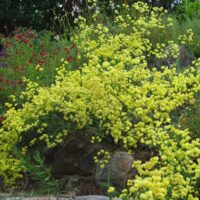
The naked buckwheat has the widest distribution of all the buckwheats, occurring from the coast to timberline in the mountains. This interesting seed strain was collected by Eric Nelson along the middle fork of the Eel River in Mendocino County and named for his grandmother. Instead of the more common white or pink flowers of the species, this strain has beautiful yellow flowers. The spoon shaped leaves which form a low rosette are grey green on top and white and wooly beneath. Late spring brings a multitude of small, bright yellow flowers carried on the bare, leafless stems 18-24 inches above the foliage. Best on well drained soils in full sun where they are drought tolerant once established. Buckwheats are highly attractive to nectar feeding insects. Deer resistant.
Eriogonum parvifolium ‘Moss Landing’
Native to coastal bluffs of the central and south coast. Forms a mounding shrub 2 ft. or more tall by 2 – 3 ft. wide with thick, dark green, triangular shaped leaves often with a reddish tinge, and white and woolly beneath. Round pom-poms of white to pink flowers over a long period late spring and summer, fade to an attractive russet brown. A natural for coastal areas where it grows fast in full sun with good drainage and is very drought tolerant once established. Inland, a little afternoon shade is recommended. Looks great on slopes or draping over walls. An important pollinator plant, appealing to a wide array of insects. In its native range, the rare and endangered El Segundo blue butterfly relies exclusively on this species in all stages of its life cycle. Deer tolerant.