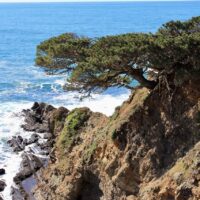
Pinus contorta ssp. contorta
On windswept coastal bluffs from Mendocino Co. northwards resides this dense, picturesque shore pine. While small in stature on the weathered cliffs of our shoreline often reaching only 6-10 ft. in height, in a garden setting the shore pine is a small to medium sized tree, growing to about 30 ft. Short, dark green needles cover the stems with small cones. An excellent compact conifer for the medium sized garden or in a container where it stays more diminutive. Provide full sun and occasional deep irrigation once established. Needs decent drainage. Deer resistant.
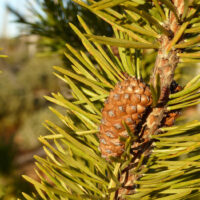
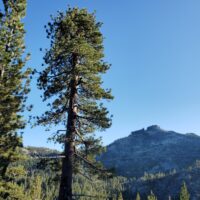
Pinus jeffreyi
This stately pine hales from many of California’s mountain regions and is the dominant pine of the Tahoe basin. Features long needles and a broad trunk with deeply furrowed bark of orangy-red. Similar to the ponderosa pine but occurs at higher elevations and the bark has a distinctive vanilla scent. The cones are also larger than those of the ponderosa and don’t have sharp, outwardly protruding scales, hence the affectionate name “gentle Jeffrey.” Often reaches heights of over 100 feet with an open canopy. Provide good drainage and full sun to light shade. Drought tolerant and deer resistant.
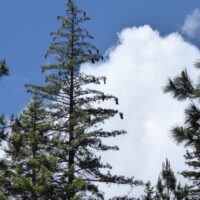
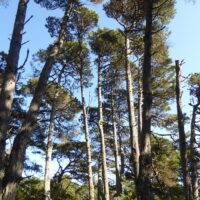
Pinus muricata
The Bishop pine is native to the northern California coast from Marin to Mendocino. A medium to large sized tree with a beautifully rounded crown and long, gray-green needles. Distinguished from the more southerly Monterey pine by its smaller cones which prick the hand when held. The Bishop pine often cohabitates with redwoods and other coastal conifers. Drought tolerant once established except in interior locations where an occasional deep watering may be required. Generally reaches 40 to 70 feet in height. Deer resistant.
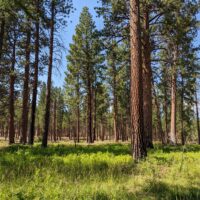
Pinus ponderosa
Often associated with the Sierra Nevada mountains, this majestic pine can be found in Sonoma County as well. Long, gray-green needles form bushy clusters at the ends of branches with cantaloupe-sized cones that emerge at the very tips. The bark at maturity is a colorful patchwork of orange-tan plates separated by deep grooves of dark brown. It can grow a couple of feet a year, and averages from 60 to more than 100 feet in height in a garden setting. Provide full sun to light shade with occasional deep waterings when young. Needs decent drainage. Deer resistant.
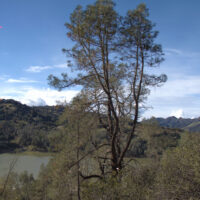
Pinus sabiniana
A distinctive pine native to chaparral areas of California’s foothills. Sometimes called ghost pine due to its long gray needles set against dark, furrowed bark. While fairly slow growing, the gray pine can reach a height of 80 ft or more in well-draining sites with ample sunlight. Native Americans prized the big, prickly cones for their large, edible seeds. Prefers full sun and requires minimal water once established
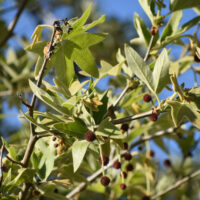
Platanus racemosa
This most Californian of trees from the southern and central parts of our state features stunning bark mottled white and grey on a large, sculptured trunk. The maple-like leaves create an open canopy on this stately tree which can reach up to around 80 ft. tall at maturity. Seeds are produced in fuzzy pom-poms dangling on short stems and are a great food source for birds. In autumn, the leaves can turn orangey-yellow before they drop, adding rare fall color to the California landscape. Makes its home in sunny, low-lying areas and canyons with moderate to occasional irrigation. A great shade tree for the large garden and a larval host for the Western tiger swallowtail butterfly. Deer resistant.
Polypodium glycyrrhiza
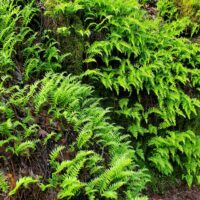
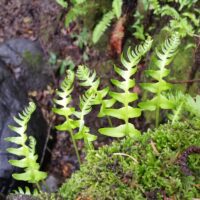
Native to moist coastal forests from Monterey County to Alaska. This epiphytic fern enjoys shady environments where it grows on trees, logs and stumps, mossy rocks and slopes. The long, narrow, deeply lobed fronds spread by creeping rhizomes, which have a sweet licorice flavor and a history of use by various native American peoples. They grow happily in moist shady gardens, going summer dormant once conditions get too dry, returning with the autumn rains and coolness. Drought tolerant in somewhat coastal conditions. Good container subject. Deer resistant.
Polystichum munitum
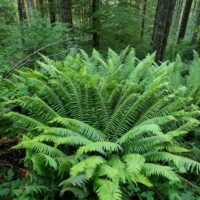
The versatile western sword fern is an evergreen native fern from California to Alaska. In most gardens it will reach about three feet tall and wide. In prime areas near the coast where moisture is readily available and cool temperatures prevail, this fern can get up to 5 feet tall and wide. Excellent for shady beds, along walls, as a large scale groundcover and mixed woodland planting. Best with humusy soil and regular to moderate water, but drought tolerant once established and tolerant of most soil types. Actually quite adaptable and deer resistant.
Potentilla gracilis
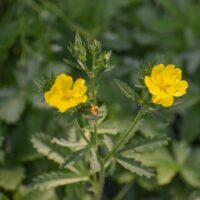
Prolific displays of bright yellow flowers resembling buttercups make this little cinquefoil a hit from spring through autumn. Flowers are held on two foot stems above low mats of dissected,dark green leaves. Native to mountainous areas throughout California. Provide full sun to light shade and give occasional to regular moisture. Will spread slowly by seed if exposed soil is nearby. A favorite of bees and butterflies. Deer resistant.
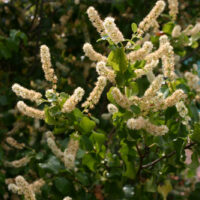
Prunus ilicifolia ssp. ilicifolia
Hollyleaf cherry is a large, evergreen shrub that can grow more than 15 feet tall and wide, but is easily pruned to be more compact. This adaptable foothill native can be clipped into a formal hedge, pruned to be treelike, or left to its own natural gumdrop-shaped habit. Often it is used for background or screen plantings. Glossy, holly-like leaves are accompanied by showy displays of creamy-white flowers in narrow spikes from late spring to early summer. Plant in full sun to very light shade. Looks best with occasional deep waterings, but can tolerate very dry conditions once established. Although it requires good drainage, it is tolerant of heat, drought, wind and oak root fungus. An excellent habitat plant, offering food and cover for wildlife. Birds enjoy the small reddish-purple cherries. Generally deer resistant.
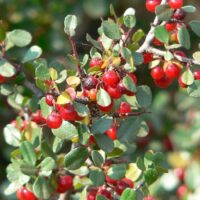
Rhamnus crocea
An under-used evergreen shrub native to chaparral, woodland, and coastal-sage scrub communities in California. Spiny redberry can grow up to 6 feet tall and wider, but is typically in the 2 - 4 ft. height range, spreading to 6 ft. or more across. Small, leathery, dark-green ovate leaves give this tough shrub a delicate look once established. The flowers on both male and female plants are inconspicuous, blooming from late winter into early spring. Female plants produce sporadic, jelly-like red berries. Great for dappled light under oaks, or a dry, shady woodland slope with California fescue. Can tolerate more sun near the coast, but prefers afternoon shade inland. Drought-tolerant once established. Larval host for a multitude of butterflies and moths, including the pale tiger swallowtail butterfly, Ceanothus silk moth, and Hermes copper butterfly. Deer resistant.

Rhamnus ilicifolia
A handsome evergreen shrub with small, dark green, leathery, serrated leaves. Found in the foothills and mountains of southern and central California, the Sierras and west of the Sacramento Valley up to 3,500 feet. Slow-growing, reaching 6-10 feet tall and wide, with a somewhat open, upright habit. Male and female plants are separate, producing inconspicuous yellow-cream flowers from spring into early summer. Female plants produce sporadic, gelatinous red fruits. Hollyleaf redberry can be planted in full sun to shade, but prefers a bit of relief from the afternoon sun in inland sites. It requires decent drainage and is drought-tolerant once established. Larval host for the pale swallowtail butterfly. Reportedly deer resistant.
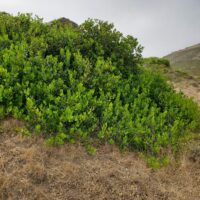
Rhus integrifolia
This sturdy native shrub or small tree is highly valued for its evergreen foliage and as a source of food for birds, bees and butterflies. Round, serrated, leaves, flatter than those of the sugar bush, cover this plant from head to toe. In late winter to early spring, white to pink flower clusters emerge, followed by sticky, reddish fruits. Ranging in height and width from 6 to 20 ft., lemonade berry is very tolerant of pruning, either into a small tree or a low hedge. Cold hardy to about 20 degrees. Plant in full sun to part shade. Will be very drought tolerant once established. Fire resistant. Deer resistant.
Rhus ovata
Handsome evergreen shrub native to dry slopes away from the coast in Southern California, Baja, and Arizona. A durable shrub thriving in hot, rocky conditions in full sun to part shade where it will be completely drought tolerant once established. Grows 6 - 10 ft. tall and wide. A profusion of dense flower clusters are rosy tinted in bud opening to white with a pinkish blush. Small reddish fruits follow that are coated with a sugary secretion that tastes lemony. Excellent subject for hot, dry inland conditions. Good for birds, bees and butterflies. Fire resistant. Deer resistant.
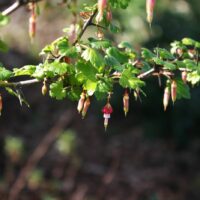
Ribes californicum
Undemanding, winter blooming, deciduous shrub, native to Coast Range mountains of California, from Mendocino County south to Orange County. Excellent choice for habitat gardens, where it provides abundant flowers and fruits plus thorny, protective cover. Variable in size, this spiny shrub can grow 4 - 6 ft. tall and wide. The pendant flowers are tiny but numerous and charming on close inspection. The tubular flower parts are white and extend beyond the reflexed red sepals, and are highly attractive to hummingbirds and other pollinators. Red, bristly, globular fruits follow and are adored by birds. The bright green leaves often take on striking crimson colors in the late summer before going dormant with drought. Host plant to several butterfly species as well as the white-lined sphinx moth. Best with light shade and a little irrigation, though once established it is completely drought tolerant.
Ribes speciosum
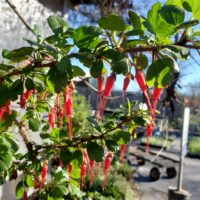
One of California’s showiest gooseberry, blooming in late winter - early spring with charming bright red, pendant, fuchsia-like flowers. The thorny branches are arching and grow 4 - 6 ft. tall and wide. Best with light shade and needs no irrigation once established. Occasional summer water keeps most of the leaves green through the summer, but will go summer dormant with dry conditions. An excellent choice for under native oaks. The flowers attract hummingbirds and the spiny fruits attract many birds including grosbeak and mockingbirds. Deer resistant.
Ribes viburnifolium
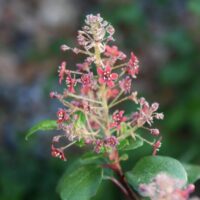
Native to Santa Catalina Island, this Ribes is unique for the genus, being evergreen and low growing. Leathery, dark green, glossy leaves with a spicy fragrance on red stems forms a spreading shrubby groundcover to 2- 3 ft. tall. Small clusters of interesting, star-shaped, salmon-pink flowers decorate the arching branches in late winter to early spring, followed by little, red fruits. Requires part shade and is drought tolerant once established. Adaptable to a variety of soil types including heavy clay. Tip pruning is recommended to encourage a dense growth habit. Deer resistant.
Romneya coulteri
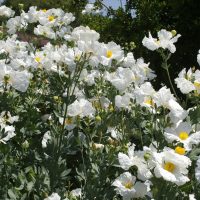
A much admired, spectacular, shrub-like perennial, with a long history in cultivation. Can be both finicky to get going and extremely vigorous once established. The large flowers are made up of crinkly, crape paper-like, white petals with a shaft of yellow stamens in the center, at the top of long, gray-foliaged stems. Plant where its size and spreading won't be a problem and prune severely in winter. Height 4 -8 feet. Full sun. Drought and deer tolerant.
Salvia ‘Aromas’
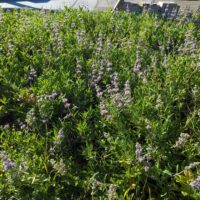
A hybrid between Salvia clevelandii & Salvia leucophylla, this aromatic shrubby sage grows 4 ft. tall and 4 ft. wide. Early summer brings flower stalks with whorls of lavender-blue blossoms. Good for sunny areas with good drainage. Occasional to little summer water. Flowers are attractive to bees, hummingbirds and butterflies. Deer and drought tolerant.
Salvia ‘Bee’s Bliss’
A beautiful native hybrid sage grows around 18 inches tall by 6 ft. wide or more. The handsome gray foliage is topped with a profusion of lavender flowers on long spikes in the spring. Sun, decent drainage, occasional to little water. Deer tolerant. A bee and hummingbird favorite.
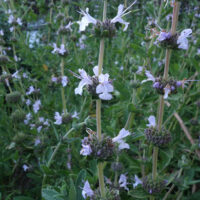
Salvia ‘Calamity Jane’
A cross between Salvia leucophylla and a prostrate form of Salvia mellifera. Forms a fragrant mounding shrub up to 4 ft. tall and spreading, with flower spikes of light lavender blossoms. An excellent choice for a dry sunny bank with little to no summer water once established. Flowers are highly attractive to bees and hummingbirds. Deer resistant.
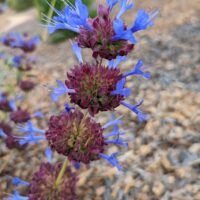
Salvia ‘Celestial Blue’
A pollinator powerhouse, this sage attracts hummingbirds, bees and butterflies with its vibrant blossoms. Selected and introduced by Las Pilitas Nursery, thought to be a hybrid between Salvia clevelandii and S. pachyphylla, or perhaps a three way hybrid involving Salvia 'Pozo Blue'. Gray-green, sweetly fragrant foliage, grows 3 to 5 ft. tall and wide. The striking blue flowers are on widely spaced whorls of eye-catching violet-blue. The decorative, architectural seed heads that follow provide food for songbirds. Plant in full sun with good drainage and occasional water. Drought and deer tolerant tolerant.
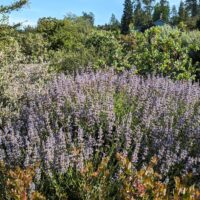
Salvia ‘Mrs. Beard’
This cultivar has been around since 1965, a chance seedling discovered in a Berkeley garden. A hybrid between Salvia sonomensis and Salvia mellifera, 'Mrs. Beard’ has proven durable and disease resistant. Forms a dense mat of gray fragrant foliage up to 2 ft. tall and 4-6 ft. wide. Spring brings an abundance of tiny pale lavender-blue flowers in ball-like clusters that are highly attractive to bees and hummingbirds. Plant in full sun along coast and light shade in hot inland sites, where it will be quite drought tolerant once established. Deer resistant.
Salvia ‘Shirley’s Creeper’
A vigorous garden hybrid involving the native Salvia mellifera selected by Charlie Christiansen. The cultivar name is misleading. This shrub does not creep exactly but mounds up 4-6 ft. tall and wide. It can be kept lower and more dense by an annual cutting back after flowering. Dark green aromatic foliage is a nice foil for the whorls of white flowers in the spring which are a favorite of bees and hummingbirds. Plant in full sun to light shade. Very drought tolerant once established. Dependably deer resistant.
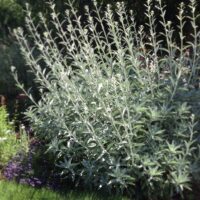
Salvia apiana
A striking native sage with large, silvery-white, aromatic leaves and tall flower stalks reaching above the foliage displaying lavender tinged white blossoms. The foliage of this shruby sage reaches 3 - 4 ft. tall with flowering stalks adding another 2 ft. or more above that. A useful plant for sunny, dry areas with good drainage. Combine with dark-leaved plants such as ceanothus and manzanitas to create a dramatic display. Used in smudge bundles as a natural incense. A bee and hummingbird favorite. Deer resistant.
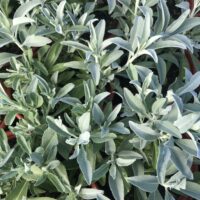
Salvia apiana ‘Compacta’
Having all the attributes of white sage, but growing about half the size, topping out at around 3 ft. tall. Gorgeous silver-gray foliage and stately flower stems of white, pollinator attracting blossoms. Heat and drought tolerant, this striking sage makes a wonderful specimen and contrasts beautifully with greener foliage. Plant in full sun with good drainage where it thrives with summer heat and drought. The powerfully fragrant foliage is dependably deer resistant.