
Plantago maritima
From coastal bluffs up and down the California coast comes this charming little plantain. Starting in late spring and continuing through summer, small, greenish-yellow flowers flank the top of slender stems up to 6 inches tall. The dense rosettes of narrow, succulent leaves provide a striking accent in a rock garden or nestled in crevices between pavers or stones. A good container specimen. Recognized for its edible and medicinal uses. Plant in full sun to light shade. Tolerates low to regular moisture. May spread vigorously by seed.
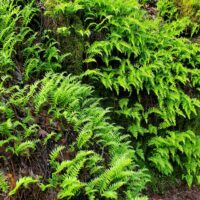
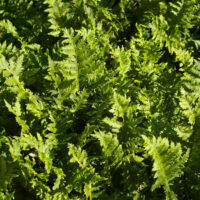
Polypodium californicum ‘Sarah Lyman’
An interesting cultivar of the California polypody fern with finely divided leaves. A wonderful addition to the shade garden where it is perfectly adapted to our dry summers. With the first coolness of autumn the fiddleheads emerge and unfurl. Energetic bright green frilly foliage thrives all winter and into spring. Goes dormant late spring or early summer where it waits out the dry season returning dependably again in the autumn. Grows 12 to 15 inches tall and slowly spreads.
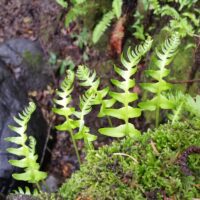
Polypodium glycyrrhiza
Native to moist coastal forests from Monterey County to Alaska. This epiphytic fern enjoys shady environments where it grows on trees, logs and stumps, mossy rocks and slopes. The long, narrow, deeply lobed fronds spread by creeping rhizomes, which have a sweet licorice flavor and a history of use by various native American peoples. They grow happily in moist shady gardens, going summer dormant once conditions get too dry, returning with the autumn rains and coolness. Drought tolerant in somewhat coastal conditions. Good container subject. Deer resistant.
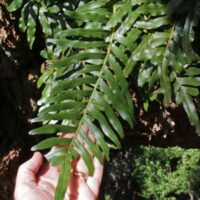
Polypodium scouleri
A choice species native to moist coastal forests of the western U.S. where this fern will grow on trees, rocks and logs. Beautiful, leathery, deeply lobed, evergreen fronds grow on creeping rhizomes to about 8-12 inches tall and slowly spreading. Requires good drainage with a humusy soil and some summer moisture, but not overly wet. Wonderful on rocks, cracks in walls, and logs in shady locations. Excellent in containers. Makes a lovely hanging basket.
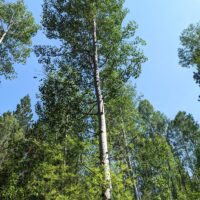
Populus tremuloides
From mountain meadows and hillsides across the Sierra Nevada comes this iconic native poplar. Smooth, white bark and rounded leaves which quake in the wind make this slender tree highly ornamental. Reaches a height of at least 20 ft. and spreads by underground roots to form groves. While the fall color may not be quite as stunning in lower elevation gardens as it is in the mountains, colder parts of our area will still see leaves of yellow, orange and red in the autumn. Easily grown at lower elevations, this form is reported to be particularly disease resistant. Needs full sun to light shade and regular to moderate irrigation once established. Lower irrigation should slow aspen’s ability to multiply.
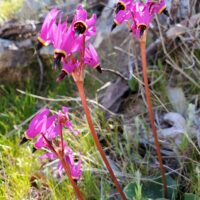
Primula (Dodecatheon) hendersonii
Description coming soon! Also known as: Primula hendersonii
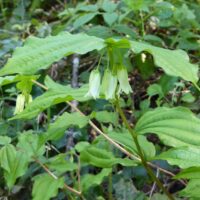
Prunus virginiana v. demissa
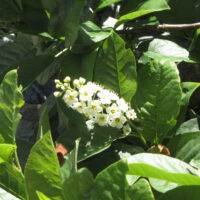
Large, deciduous shrub or small tree with red-purple bark and dark green foliage. Growing 8 foot or more tall and spreading slowly to form a thicket. Striking racemes of fragrant white flowers in the spring followed by dark red fruits which can be sweet but astringent. Foliage can take on nice fall color before dropping its leaves. Fabulous habitat plant drawing bees, butterflies and other pollinators to its flowers. Birds, especially bluebirds, adore the fruits and are known to swoop in and finish them off quickly. Where summers are hot, light or part shade is best, with regular to occasional water once established. They often grow where there is seasonal moisture in the spring, but somewhat dry as the season progresses.
Rhododendron occidentale
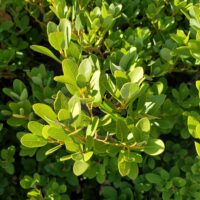
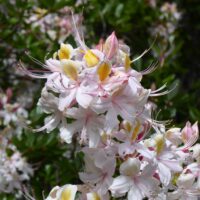
A much sought after and admired native deciduous shrub found in moist places and stream banks in many plant communities throughout California. Leafs out in the spring with bright green foliage on a shrubby framework 3-6 ft. or more tall and wide. Glorious displays of fragrant azalea flowers in dense terminal clusters appear in late spring and can be pure white to pale pink often with yellow or orange markings. Needs decent light to bloom well but appreciates light shade, acid soils and regular water. Deer resistant
Ribes divaricatum var. pubiflorum
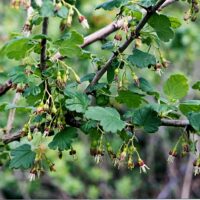
Native to coastal scrub, moist woods and shady canyons of the Pacific coast from British Columbia south through much of coastal California. This gooseberry is perhaps the most tasty of all of our native Ribes. The berries have the added benefit of being free of thorns. Forms an arching shrub 3-6 ft. tall and a bit wider with thorns at the leaf nodes. The tiny flowers are composed of reddish sepals and white petals that dangle beneath the branches and are attractive to hummingbirds. The small, blue-black berries are relished by birds. Plant in light shade with some summer moisture. Will tolerate full sun near the coast. Useful as a barrier, hedgerow or habitat plant where it provides excellent food and thorny cover for birds.
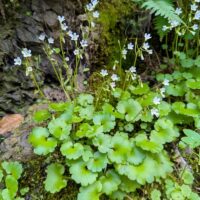
Romanzoffia californica
The California mistmaiden is diminutive, reaching a bit over a foot tall when its dainty white flowers are in bloom. The bell-shaped blossoms appear in winter, perched in clusters on tall, thin stems above lush foliage. Summer dormant until the first autumn rains, this plant is often the first garden greenery to return after a hot, dry summer. At home in the Coast Range from the Santa Cruz Mountains north to Oregon, it requires light shade and decent moisture during the growing season. Allow to go dry when the rains stop. Great for rock gardens and small nooks with excellent drainage.
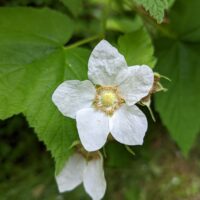
Rubus parviflorus
Thimbleberry is a deciduous native shrub with handsome large pale green velvety leaves. Small clusters of pretty white single flowers in spring and early summer followed by thimble-shaped mild-flavored edible berries in mid summer. Grows 3 - 6 ft. tall and spreading. Needs part shade and moisture.

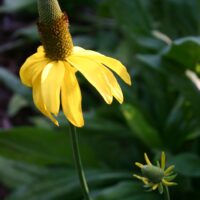
Rudbeckia californica
Large, bold perennial native to montane seeps and meadows where they receive regular moisture. The big leafy clumps can become very large growing 3 foot tall or more. Midsummer brings showy yellow daisies on tall stems with a distinctive long central cone and a skirt of three inch yellow petals. Plant in sun to light shade with regular water. Highly attractive to bees and other pollinators.
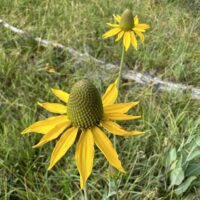
Rudbeckia glaucescens
This uncommon coneflower hails from the Klamath Mountains of northern California and southern Oregon. While similar in flower to the California coneflower, featuring yellowish-brown cones encircled with a skirt of long, yellow petals, this species has waxy leaves tinted a striking blue-gray. The flowers perch atop leafless stalks reaching 3 to 4 ft tall, rising above the large, lance-shaped leaves. A favorite of bees and butterflies. Even though this species normally occurs in serpentine soils, it grows easily in almost any soil type, as long as it is kept moist. Enjoys regular to moderate irrigation and full sun to part shade.
Rudbeckia occidentalis
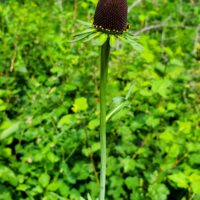
From mountains in Northern California and throughout the West comes this unusual and distinctive coneflower. Deep purple, almost black cones sit atop a star of green sepals without any petals to distract from the striking form. Large, pointed green leaves climb up the flowering stems which can reach 5 or 6 ft. high. Slowly spreads to form a small clump in moist locations with decent drainage. Will tolerate full sun near the coast, but some afternoon shade is needed in hot, inland areas. An excellent pollinator plant from the sunflower family attracting bees and butterflies. Works well in a container. Winter deciduous.
Salvia greggii ‘Mirage Rose Bicolor’
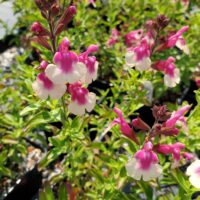
Top winner at the Welby Flower Trials in Colorado, this hybrid sage was bred for long blooming and heat tolerance. Compact and tidy, growing 12 -14 inches tall and a bit wider. The fragrant foliage is topped with a profusion of nectar-rich, two toned flowers of deep rose-pink and creamy-white, summer into fall. The appealing, bold display attracts hummingbirds, butterflies and bees. Plant in full sun to light shade with moderate to occasional water. Makes a good container subject. Deer resistant.
Salvia greggii ‘Radio Red’
This new cultivar of autumn sage offers larger, vivid red flowers and a more compact habit. Despite it's common name, autumn sage blooms over a long period, beginning in late spring, into summer and through autumn. Well branched shrubby habit with neat, fragrant foliage growing 2 - 3 foot tall and wide. Can be grown as a single specimen, lightly clipped as a low, informal hedge or in a container. Plant in full sun with moderate to occasional summer watering. The true, bright red flowers are highly attractive to hummingbirds as well as bees and butterflies. Deer resistant.
Salvia greggii ‘Smokin’ Lavender’
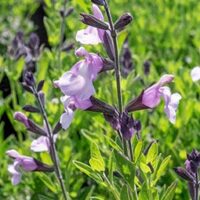
Yet another cultivar of autumn sage, a sturdy and floriferous perennial, native to the southwest U.S. and Northern Mexico. A great addition to the pollinator garden where it provides copious nectar to bees, butterflies and hummingbirds throughout the summer and fall. A compact evergreen with aromatic foliage, growing about 2 ft tall and wide. Soft, lavender blossoms emerge from dark purple calyces and bloom freely over a long period. Plant in full sun to very light shade with moderate to occasional watering once established. Good container plant. Deer resistant.
Scutellaria californica
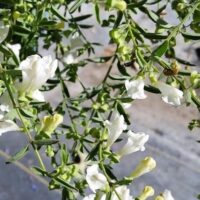
A charming perennial native to gravelly soils of low and mid elevation mountains of Northern California where it grows on the edge of woodlands and chaparral communities. Leaves are arranged oppositely on erect stems around one foot tall. The very sweet, small, creamy-white snapdragon-like flowers occur in pairs at the leaf axils. Spreads by underground rootstocks to form colonies. In our nutritious, water-retentive soils has spread quite vigorously, in dryer leaner soils less so. Plant in full sun to light shade. Drought tolerant but would appreciate a little summer water.
Sedum divergens
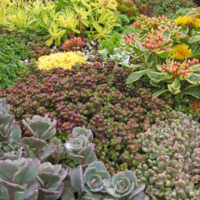
This is a little beauty. Mat-forming and evergreen, this succulent is native to California north to Alaska. Tolerant of wet winters, the shiny round bead-like leaves turn a dark red in full sun. Stays compact and slowly spreads, 2 - 4 inches tall, reaching about 18 inches in diameter. Blooms starry yellow flowers in summer. Great in rock gardens, planters, useful as an edge plant. Adapts to many soil types. Fully hardy and drought tolerant once established. We have this planted in our trough in front of the greenhouse.
Sedum spathulifolium
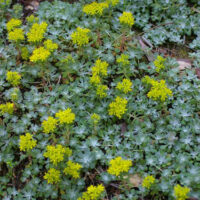
A mat forming native succulent often seen on rocky cliffs and shady banks in California’s Coast Ranges and Sierra Nevada north to British Columbia. Small, spoon-shaped leaves form flat rosettes where bright yellow star-like flowers appear in late spring and early summer. A natural for the rock garden or container plantings where they are best with part shade. Very drought tolerant.
Sedum spathulifolium ‘Cape Blanco’
A mat forming, western native succulent, often seen on rocky cliffs and shady banks in California’s Coast Ranges and Sierra Nevada north to British Columbia. Small, spoon-shaped leaves form flat rosettes where bright yellow star-like flowers appear in late spring and early summer. The cultivar 'Cape Blanco' was selected along the Oregon coast, for its chalky-white foliage. A natural for the rock garden or container plantings where they are best with part shade. Very drought tolerant.
Sedum spathulifolium ‘Purpureum’
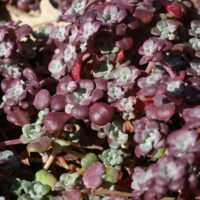
This distinctive form of the Pacific stonecrop features purple leaves which turn particularly dark in the winter. Bright yellow flowers are produced in late spring and early summer on short stems up to 4 inches high. This mat forming succulent grows in rocky crevices and shady banks in California’s Coast Ranges and Sierra Nevada north to British Columbia. The small, spoon-shaped leaves form flat rosettes. Needs excellent drainage and some shade, especially in the afternoon. A natural for the rock garden or container plantings where its diminutive nature can be appreciated. Very drought tolerant.
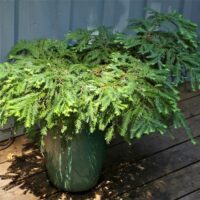
Sequoia sempervirens ‘Kelly’s Prostrate’
A low growing form of the coast redwood with a flat, spreading habit. Exceptionally low growing, we have never seen any upright growth in this form. The flat sprays of foliage are deep green with light green new growth and spreading to five foot wide or more. Best in moist, well drained soils with light shade. Use where the unique form can be shown off. Makes an excellent container subject.
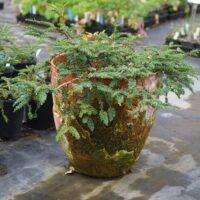
Sequoia sempervirens ‘Nana Pendula’
An intriguing prostrate form of the coast redwood. Bluish-green leaves on pendulous branches spread out in a circular form usually under 1 ft. tall. May mound up taller over time, trim out any tall leaders that may occur. An interesting specimen or container subject for lightly shaded areas with regular water. Grows much slower than the upright tree form of coast redwood, with the branches achieving a spread of around 6 to 12 ft. in ten years.