
Eriogonum nudum – robust form
This buckwheat came to us by way of Ginny Hunt and her seed company Seedhunt. Collected from a local race (Santa Cruz area) of naked buckwheat where the flower stems rise to 5 foot or more! Naked buckwheat is the most widely distributed species of buckwheat, growing throughout the state. Forms low mounds of foliage with tall, slender, naked stems, topped with clusters of white to pinkish pom-poms. Plant in full sun to very light shade with good drainage. Drought tolerant once established. Important pollinator plant. Said to be deer resistant.
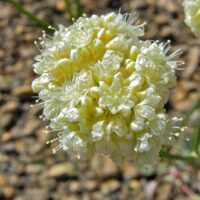
Eriogonum nudum – soft yellow form
This seed strain of the naked buckwheat hails from a particularly robust population found in blue oak savanna, in the foothills of Tehama County. It has soft, buttery-yellow inflorescences, rather than the more common white or soft pink flowered forms. 3-5 feet tall, chunky stems topped with soft yellow, pom-pom shaped flower clusters emerge from a low, narrow, evergreen rosette of rounded leaves from May-August. Provide full-sun, good soil drainage, and little to no water once established. Native bees and butterflies enjoy the flowers. Great for rock gardens. Drought-tolerant.
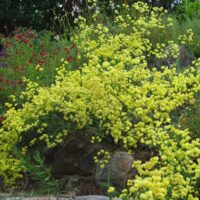
Eriogonum nudum ‘Ella Nelson’s Yellow’
The naked buckwheat has the widest distribution of all the buckwheats, occurring from the coast to timberline in the mountains. This interesting seed strain was collected by Eric Nelson along the middle fork of the Eel River in Mendocino County and named for his grandmother. Instead of the more common white or pink flowers of the species, this strain has beautiful yellow flowers. The spoon shaped leaves which form a low rosette are grey green on top and white and wooly beneath. Late spring brings a multitude of small, bright yellow flowers carried on the bare, leafless stems 18-24 inches above the foliage. Best on well drained soils in full sun where they are drought tolerant once established. Buckwheats are highly attractive to nectar feeding insects. Deer resistant.
Eriogonum parvifolium ‘Moss Landing’
Native to coastal bluffs of the central and south coast. Forms a mounding shrub 2 ft. or more tall by 2 – 3 ft. wide with thick, dark green, triangular shaped leaves often with a reddish tinge, and white and woolly beneath. Round pom-poms of white to pink flowers over a long period late spring and summer, fade to an attractive russet brown. A natural for coastal areas where it grows fast in full sun with good drainage and is very drought tolerant once established. Inland, a little afternoon shade is recommended. Looks great on slopes or draping over walls. An important pollinator plant, appealing to a wide array of insects. In its native range, the rare and endangered El Segundo blue butterfly relies exclusively on this species in all stages of its life cycle. Deer tolerant.
Eriogonum umbellatum
Intense yellow flowers in flat-topped clusters sit atop short stems above grey to green foliage. Ranging in height from 10 to 18 inches, this highly variable and widely distributed California native is an excellent addition to the drought tolerant garden. Provide decent drainage and occasional to no irrigation once established. Full sun to light shade. Just like all buckwheats, this species is loved by bees and butterflies. The foliage is deer resistant but they may nibble the flowers.
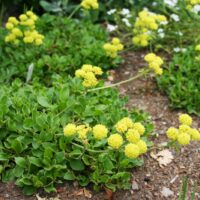
Eriogonum umbellatum var. aureum ‘Kannah Creek’
Selected from the Kannah Creek region of Western Colorado, this durable perennial will make a fine addition to the dry garden. Forms low mats of leathery leaves 12-24 inches wide, which turn shades of red and purple in the autumn. Masses of bright yellow flowers on stalks 12-15 inches tall appear late spring to early summer and deepen in color to orange as they age. Plant in full sun to light shade with occasional to little water. Drought tolerant once established. Buckwheats attract an array of beneficial insects, provide pollen and nectar for bees and butterflies and seeds for birds.
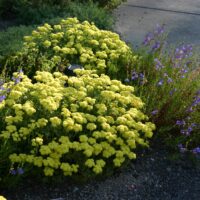
Eriogonum umbellatum var. polyanthum ‘Shasta Sulphur’
A striking selection of the sulphur flower buckwheat. Great choice for a dry sunny border or rock garden with decent drainage. Grows 1 1/2 ft. tall and up to 5ft. wide. Smothered with clusters of intensely yellow flowers in spring which fade to orange russet then coppery brown. Needs full sun to bright shade and is drought tolerant once established. Buckwheats have substantial wildlife value, providing pollen and nectar for bees and butterflies, larval food for butterflies, seeds for birds and cover for many creatures. The foliage is deer resistant.
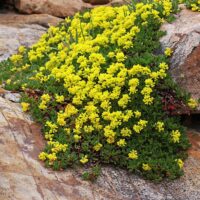
Eriogonum umbellatum var. porteri
One of our most diminutive buckwheats, featuring intensely yellow flowers in charming pom-poms held just above tight mats of deep green, rounded leaves. The foliage only reaches about 4 inches tall and about a foot wide, making this variety a great choice for containers, rock gardens, and small spaces. While the same species as our Californian sulphur buckwheats, this form is found on gravelly ridges in the Great Basin and the Rocky Mountains. Does well in local gardens with decent drainage in full sun to very light shade. A great pollinator plant when in bloom in spring and summer.
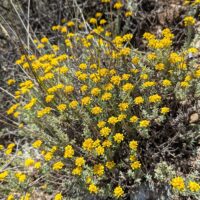
Eriophyllum confertiflorum
Native to dry sites in many plant communities of California. Forms a mound of pale green, finely cut foliage with woolly undersides 12-24 inches tall. Late spring and summer brings domes of bright golden yellow daisies in dense heads. Tough little shrublet for the dry garden in full sun where its interesting fine-textured foliage provides a useful contrast to grasses and bold-leaved shrubs and perennials. The flowers provide nectar to bees and butterflies. Needs good drainage.
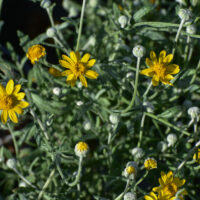
Eriophyllum lanatum – inland form
A cheerful native perennial with yellow, daisy-like flowers from spring to fall. While the species varies in size and habit, our seed-grown strains are upright, reaching around 1.5-3 feet tall and wide when in full bloom. The woolly foliage tends to be silvery, but comes in shades of green, and is most lush and dense around the base. Woolly sunflower is found in a range of plant communities from Central California through the Pacific Northwest, thriving in sun to part-shade. Our seed-grown plants come from hot, inland sites where they grow on dry, rocky slopes and bluffs. Tolerates various soil types with good drainage and minimal irrigation once established. The sunny, 2-in. blossoms are butterfly favorites and attractive to bees and other pollinators. A good choice for rock and habitat gardens. Deer and gopher resistant.
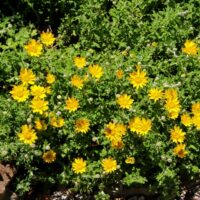
Eriophyllum lanatum ‘Horseshoe Cove’
This western native grows on rocky slopes and bluffs over a wide range of plant communities in California, Oregon and Washington. This low dense coastal selection forms a mat of woolly, bright green foliage just a few inches tall and 1-2 ft. across, topped with cheerful golden yellow daisies rising to 6 inches tall, late spring and summer. The flowers are attractive to bees, butterflies and other beneficial insects. Plant in full sun to light shade inland with good drainage and moderate summer water.
Eriophyllum lanatum ‘Siskiyou’
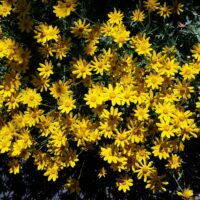
An extremely variable species ranging from the immediate coast to the high mountains of California and into Oregon. The cultivar 'Siskiyou' is a Siskiyou Rare Plant Nursery selection. Lush gray-green woolly foliage forms low mats up to 10 inches and 3-4 feet wide. Blooms over a long period, spring into fall with cheery 2 inch golden-yellow daisies. This tough perennial will thrive in full sun to light shade, decent drainage and moderate to infrequent summer water once established. The open-faced daisies are an excellent sources of pollen and nectar and make good platforms for insects to perch, attracting butterflies, bees and other insects.
Eriophyllum staechadifolium
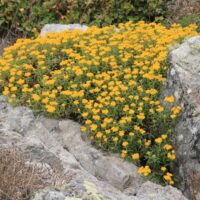
This native perennial is perfect for coastal environments where it tolerates full sun, wind, salt spray and drought. Forms leafy mounds 2 - 3 ft. tall and at least as wide. The foliage is grey-green above and silvery beneath with flower heads densley packed with tiny golden-yellow daisies from May through August. Drought tolerant but appreciates occasional summer waterings, especially when grown away from the coast. Excellent for pollinators. Tip pruning helps keep the mounds tidy. Annual pruning back will refresh.
Erysimum franciscanum
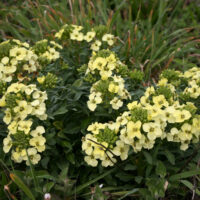
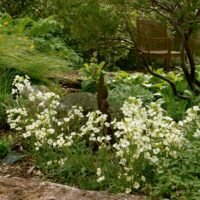
This rare and threatened species makes its home in the sand dunes and hills of the San Francisco Bay area. Development has seriously impacted its native habitat. Fragrant, four-petaled flowers ranging in color from creamy white to yellow rise up to 18” above dark green foliage in the spring and early summer. Thrives with good drainage and occasional water once established. Plant this special wallflower in full sun with other small perennials such as buckwheats, checkermallows and coyote mint. Attractive to butterflies.
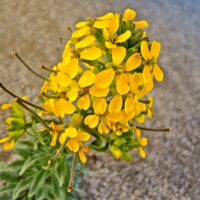
Erysimum menziesii
A rare species native to sand dunes along the north coast of California. Forms tight mounds of narrow leaves 8-12 inches tall and wide. Bright-yellow fragrant flowers bloom in late spring and will continue into summer with a little additional summer watering. The fragrant flowers are butterfly favorites. Adaptable and can seed about if happy, though not weedy. Requires good drainage, full sun, to light shade inland, with moderate to occasional summer water. Said to be deer tolerant.
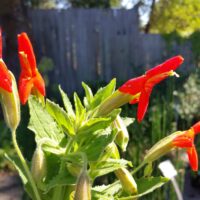
Erythranthe (Mimulus) cardinalis
Native to wet areas throughout the West, this robust perennial can easily grow to more than 2 ft. tall and wide. Tubular scarlet flowers are a hummingbird favorite and are very showy. Plant in sun to part shade with ample water. Perfect beside a pond, stream or water feature. Trim as needed to keep tidy. The flowers provide nectar for hummingbirds.
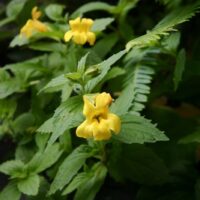
Erythranthe (Mimulus) dentata
Native to coastal streams and wet shady places in Humboldt and Del Norte Counties, north to British Columbia.Handsome bright green leaves with toothed margins,6-15 inches high spreading by slender rhizomes to form perennial patches.Late spring and summer brings funnel shaped bright yellow flowers with tiny red dots in the throat, which bloom over a long period. Excellent for any moist shady spot where the cheerful blossoms brighten. A good container plant too.
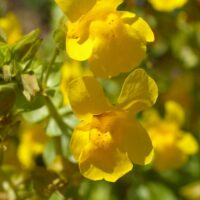
Erythranthe (Mimulus) guttata
This charming monkeyflower is native to wet places throughout the west. Forms mats of bright green foliage topped with flowering stems of cheerful, bright yellow, tubular flower. Needs regular moisture and full sun to light shade. Seeds about when happy. The flowers provide nectar for hummingbirds. Works great in a swale, combined with rushes, Helenium and bee plant.
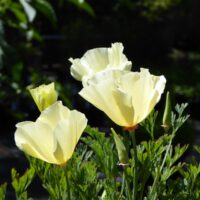
Eschscholzia californica – cream colored flowers
Smaller in stature than the typical robust orange forms of California poppy, this perennial fits into plantings nicely without overwhelming. Low foliage is ferny and finely dissected and topped with cup-shaped blossoms that are a lovely shade of cream to pale yellow. Best in full sun with dryish conditions. Given the opportunity may seed about. Flowers provide pollen that is favored by native bees, bumbles and honey bees.
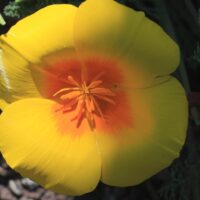
Eschscholzia californica var. maritima
This is the perennial, coastal form of California poppy. Low growing and spreading with beautiful, finely cut, blue-gray foliage. Abundant flowers are golden yellow with orange centers, blooming over a long period, especially in mild climates. Plants retreat to leafy rosettes in winter. Best in full sun where they are drought tolerant, but a little summer water can extend their bloom period. Seeds about if happy.
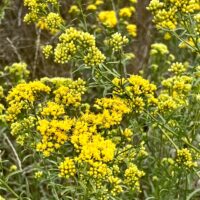
Euthamia occidentalis
This little known, native goldenrod is a pollinator powerhouse, supporting bees, as well as a wide array of butterflies, including the Monarch, who are drawn to the nectar. In late summer and autumn, small, golden-yellow flowers form rounded clusters at the tops of tall, vertical branches, 4’ to 6’ high, clothed in long, slender, leaves. Grows naturally in sunny, low-lying areas which stay at least somewhat moist into early summer, but may be dry later in the year. Spreads quickly by underground rhizomes, especially in areas with perennial moisture, making it good for erosion control, but not suitable for small gardens. In two years, plants should reach about 4’ wide. Great in containers in smaller spaces.
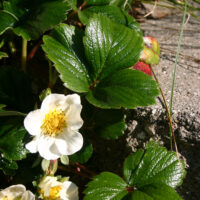
Fragaria chiloensis ‘Green Pastures’
Beach strawberry is native to Pacific coast beaches and bluffs of North and South America. A popular and adaptable groundcover growing well in a wide range of climates and conditions. This selection forms lush carpets of shiny dark green foliage. The five-petaled white flowers are particularly large, showy and profuse in the spring. A great colonizer and stabilizer, this vigorous perennial spreads by runners to form dense carpets. Plant in sun to light shade with moderate to occasional summer water. Drought tolerant along the coast. This ia a male selection and will not fruit. Deer resistant.
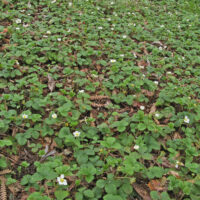
Fragaria vesca
This native woodland strawberry is a great colonizer and can cover a lot of ground in a hurry. Pretty little white flowers are followed by small, tasty, red berries. Tolerates drought but best with a little summer water. Well suited for under oaks and conifers. Said to be deer resistant.
Fragaria vesca ‘Montana de Oro’
A vigorous, heavy blooming selection of woodland strawberry from a coastal canyon at Montana de Oro in San Luis Obisbo County. This easy to grow, carpet forming, ground cover is a great colonizer and stabilizer for lightly shaded areas. Deals well with root competition and thin soils. Pretty little white flowers are followed by small, tasty, red fruits. Often deer resistant.
Gambelia (Galvezia) speciosa
Evergreen shrub native to the Channel Islands off the So. California coast. Forms an arching mound of medium green foliage 3-4 ft. tall x 5 ft. wide, but can climb or lean on other shrubs to grow even taller. Clusters of scarlet, tubular flowers decorate the branch tips in spring and intermittently throughout the year and are adored by hummingbirds. Full sun along the coast, light shade in hot areas. Drought tolerant and amenable to pruning. Hardy to around 20°F.
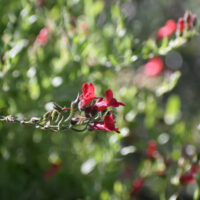
Gambelia (Galvezia) speciosa ‘Firecracker’
An interesting, evergreen subshrub from the California Channel Islands. Showy, deep-red, tubular flowers decorate the branch tips and are highly attractive to hummingbirds. The cultivar ‘Firecracker’ was selected by Tree of Life Nursery for its compact habit, growing 3 foot tall and 5 foot wide, with fuzzy, pale green leaves and larger, red, snapdragon-like flowers. A natural along the coast where it will grow in full sun to light shade, afternoon shade is best in hotter inland sites. Drought tolerant once established, but enjoys occasional summer water, especially away from the coast. Hardy to 15 -20 degrees F.
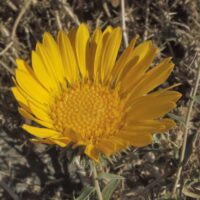
Grindelia camporum
A tough and attractive native perennial found in valleys and lowlands of California. An upright grower, 18-24 inches tall, with resinous foliage and stiff leaves and flower stems. Thick green flower buds hold bright yellow daisies summer through fall which are attractive to bees and butterflies. Best in full sun where it is drought tolerant once established. Tolerates heavy soils and is said to be deer resistant.
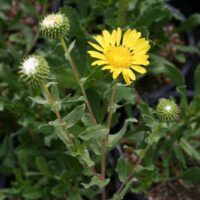
Grindelia hirsutula
Easy to grow, vigorous native perennial that is adaptable to a variety of soils and watering regimes. Grows 1 - 2 ft. tall with good-sized bright yellow daisies over a long period from spring into summer. An excellent nectar plant to add to a habitat garden. With a little grooming and dead heading this sometimes rough looking perennial can look quite handsome in a garden setting. Requires full sun and little to no summer water. Said to be deer resistant.
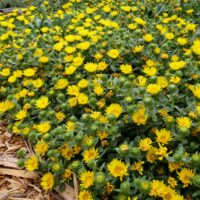
Grindelia stricta var. platyphylla ‘Mendocino’
This selection features particularly large bright yellow 2 1/2 inch daisies over a long period in the summer. Each fat green flower bud holds a dollop of gummy white resin which protects the blooms from predators, hence the name “gum plant”. 'Mendocino' is a particularly prostrate form under 8 inches tall and spreading to at least 6' wide. Native to dunes, marshes and bluffs in coastal scrub throughout coastal California. Excellent pollinator plant. Useful in a meadow planting or with other low groundcovers and shrubs. Looks nice draping over a wall too. An adaptable plant for sun to light shade, moderate to occasional water. A natural along the coast where it tolerates wind and salt spray. Deer resistant.