
Lupinus polyphyllus
The bog lupine is known for its tall flower spikes of blue to purple or sometimes pink, reaching up to almost 5' tall from a bed of large, dark green leaves about 18" in height. Clumps can grow about 3' wide. This species is the dominant parent used in many popular hybrid lupines. Native to moist places from the San Francisco Bay area northward along the coast and in mountainous places in the interior. Prefers full sun along the coast and dappled shade inland. This lupine tends to go winter dormant. Snails and slugs find lupines especially tasty when young. Needs regular water. One can create a wonderful meadow by planting the bog lupine with other moisture loving species such as lady ferns, umbrella plant and seep monkeyflower. Deer resistant.
Lupinus sericatus
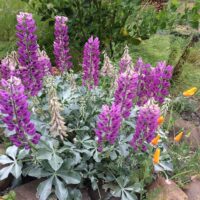
A rare species from Sonoma, Lake and Napa Counties, this lupine forms a low, wide mound of gorgeous, broad, silver leaves with thick,1 -2 foot spikes of mauve-pink to violet flowers in spring. Requires full sun to very light shade and good drainage. Do not water much once established. Lupine flowers attract a wide array of insects, especially bees. Deer resistant.
Lupinus stiversii
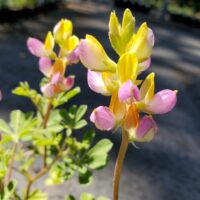
A striking ANNUAL lupine, endemic to California, with a disjunct distribution in the Sierra foothills and separate mountain ranges in Southern California. Instead of the more typical blue or purple flowers, this lupine sports beautiful, bicolored flowers of yellow and pink, on low foliage 6 - 18 inches tall. Grows in open, exposed areas, in full sun with good drainage, and is extremely drought tolerant. Blooms in the spring and offers excellent pollinator value, attracting a variety of insects, and a larval food source for a number of butterfly and moth species. Deer resistant.
Lupinus succulentus
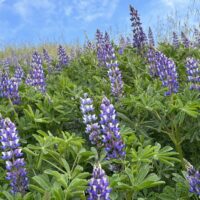
One of the easier-to-grow lupines, this long-blooming ANNUAL is low maintenance and thrives in heavier soils. Bright-green, palmate leaves topped by purple-blue spires quickly reach 2-3 feet tall and wide—or more, if happy. Reseeds easily and returns with winter rains, or whenever conditions are moist and fertile. Although it enjoys moderate to occasional water, it will tolerate both wet and dry areas. Arroyo lupine is found in diverse habitats with a broad native range in California, but prefers full sun and clay-rich soil. Looks splendid planted en masse and can serve as a nitrogen-fixing, seasonal groundcover. All parts of the plant are toxic if eaten, but it's an important butterfly larval host and a food source for native bees. Deer resistant.
Lupinus succulentus
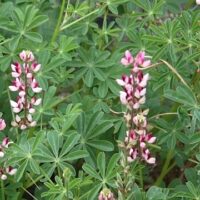
A pretty, pink selection of an easy-to-grow species of ANNUAL lupine. Arroyo lupines have lush, bright-green foliage and attractive flower spikes that typically come in shades of pink or purple. On 'Rodeo Rose', these eye-catching blooms combine rosy-pink wings with banners that turn a dark maroon. Grows quickly to 2-3 feet tall and wide, and reseeds readily at the end of its season. This adaptable species has an affinity for moist, heavy soils, and does well in irrigated gardens, but tolerates drier conditions as well. It is native to diverse habitats and has a broad range in California. Prefers full sun and occasional water. Plant en masse for a gorgeous, seasonal groundcover. All parts of the plant are toxic if eaten, but it's an important butterfly larval host and a food source for native bees. Deer resistant.
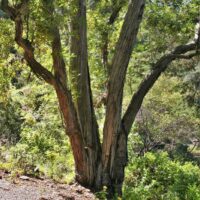
Lyonothamnus floribundus ssp. aspleniifolius
A rare and beautiful evergreen tree from Santa Cruz Island off of the Southern California coast. Fernlike, pinnately divided, shiny, dark-green leaves adorn this fast growing tree which can reach 20 to 50 ft. tall and 15 to 20 ft. wide. Late spring brings large flat-topped clusters of creamy-white flowers on this unusual rose family member. Peeling, reddish-brown bark adds to the interest of this single or multi-trunked tree, which can be used in small groves or as a striking specimen. Plant in full sun to partial shade with moderate to infrequent water. Cold hardy to about 15 degrees. Pollinating insects and birds are attracted to the flowers.
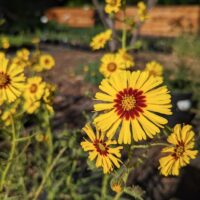
Madia elegans
Native ANNUAL growing 3-4 ft. tall with multi branching aromatic stems. Cheerful bright yellow daisies top the stems in the summer and can be solid yellow or may have a maroon spot at the base of each petal. Tarweeds are an important late nectar source for butterflies, bees and other beneficial insects. The seeds are relished by small mammals and birds, especially finches. Native to grasslands and open forests, well adapted to clay soils and full sun, perfectly adapted to our long, dry summers.
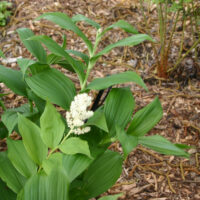
Maianthemum (Smilacina) racemosum
Choice herbaceous perennial native to moist woodlands in California and throughout North America. Forms robust clumps of arching branches 2-3 ft. tall. The branch tips carry dense panicles of sweetly fragrant, white, star-shaped flowers in late spring. Clusters of red berries follow in summer and fall. A lovely addition to the shade garden where it thrives in well drained, woodsy soil with some summer moisture. In cooler coastal environments can go summer dry once established. This lily family member slowly spreads to form striking clumps which die back to the ground in the winter. An elegant and long lived beauty.
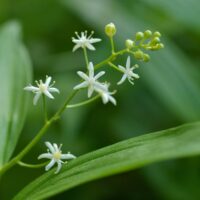
Maianthemum (Smilacina) stellatum
Native to California and much of North America, this woodlander makes a worthy and useful addition to the shade garden. Spreading by stout rhizomes forming colonies of lush, green foliage one foot to 18 inches tall. Small, white, star-shaped flowers top the slender stems in the spring and early summer. Berries follow that are often striped with purple or black, eventually turning red. Thrives in shade with moisture but tolerates dryish conditions once established. Can grow in quite a bit of light as long as there is moisture. A variety of insects seek nectar or pollen from the flowers and woodland song birds love the berries.
Malacothamnus fasciculatus
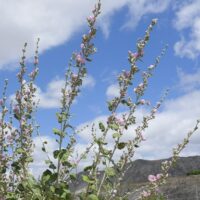
Native to western Southern California, this fast growing, evergreen shrub grows to 6 + feet tall and spreads to form colonies. A multi-branched mallow with hairy, gray-green, leaves often shaped like those of maples. The pale pink, cup-shaped flowers held in clusters along the stem, bloom from spring into summer. A native bee magnet. Useful as an evergreen screen for full sun. Occasional irrigation to drought tolerant once established. A larval food source for the west coast lady and the northern white-skipper butterflies. Reported to be deer resistant.
Malacothamnus fremontii
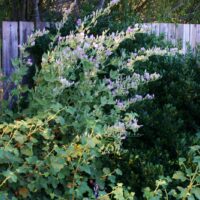
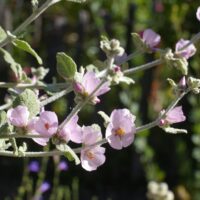
A fast growing, thicket forming, native shrub with silvery white, felted foliage 4 - 6 ft. tall and spreading. A profusion of pale-pink, cup-shaped flowers decorate the branch tips in summer. A tough and adaptable shrub for sunny dry areas, appreciating occasional summer water once established. Useful on banks or other challenging sites. Host plant for the Painted Lady and West Coast Lady butterfly. An excellent nectar source for orioles. Deer often seem to leave it alone.
Malacothamnus jonesii
A rare endemic from southern Monterey and San Luis Obispo counties, growing in foothill woodland and chaparral plant communities. Fast growing shrub, often coming in after fires or disturbance. Growing 4 - 6 ft. tall and wide with beautiful gray foliage, covered in white, velvety hairs. Lovely, soft pink, cup-shaped flowers appear in profusion on the slender branch tips, late spring into summer. Nectar is highly attractive to a myriad of insects, hummingbirds (who seek both nectar and insects), bees and butterflies. Larval food source for the West Coast Lady and Northern White Skipper butterflies. Plant in full sun to ight shade, where it will be drought tolerant once established.
Malacothamnus palmeri var. lucianus
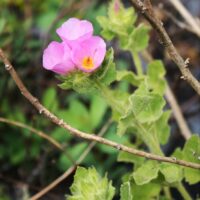
From the hot valleys of the Santa Lucia mountains in central California comes this rare form of the native bush-mallow. Deep pink, cup-shaped flowers appear in late spring and early summer above the fuzzy, light green leaves. Reaches a height of about 6 ft and slowly spreads to form colonies. Give full sun to light shade and provide little to no water once established. A good choice for hot, dry banks with Toyon, Ceanothus and Manzanita. An excellent nectar source for orioles. Deer seem to leave it alone.
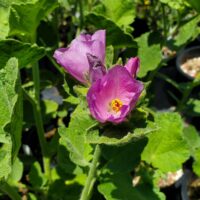
Malacothamnus palmeri var. lucianus ‘Hanging Valley’
Description coming soon!
Marah oregana
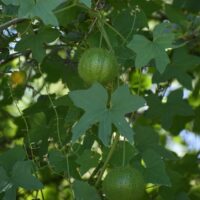
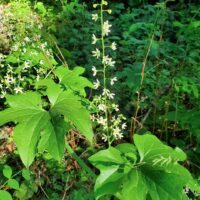
A native perennial vine found in coastal counties from Santa Clara, California to British Columbia. Growing from a massive, enlarged tuber in forest edges and riparian habitats. The lush-green, palmate leaves with spiraling tendrils clamber along the ground and climb and sprawl over shrubs and trees. White, star-like flowers bloom in the spring and are favored by native bees as well as honeybees. The flowers lead to showy, inflated, bright-green, fruits with soft spines. The generic name Marah comes from the Hebrew word for bitter, in reference to all parts of the plants being extremely bitter to taste. Completely herbaceous, dying back to the woody root in late summer or fall, returning in the spring. Best with part shade. Quite drought tolerant but will accept moderate irrigation. Probably deer resistant.
Mimulus (Erythranthe) lewisii – dark flowered form
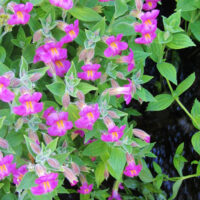
From cold streams in the Cascade Mountains comes this particularly dark flowered form of Lewis' monkeyflower. Trumpet-shaped blossoms with flared mouths are colored a deep, rich rose-pink, unlike the paler Sierra form. Reaching up to more than a foot tall and spreading to form small clumps, this moisture-loving monkeyflower enjoys part-shade and decent drainage. Hummingbirds love the flowers. Plant with sedges, blue lobelia and false bugbane for a colorful woodland display filled with texture. Great in a container.
Monardella purpurea
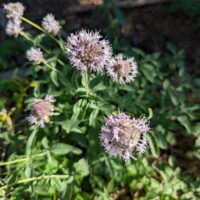
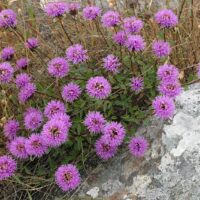
A locally rare and more refined version of our common coyote mint, often with darker flowers, colored purple. Mature plants typically stay under a foot tall, but will get a little wider. Leaves are narrow and dark green, lining burgundy-tinged stems. While native to serpentine soils, it does well in most soils with good drainage. Plant in full sun to part shade and water infrequently. A great, rarely offered native for rock gardens or smaller areas, where butterflies and bees will enjoy the summer blossoms. Deer resistant.
Monardella villosa ssp. franciscana ‘Pomo Canyon’
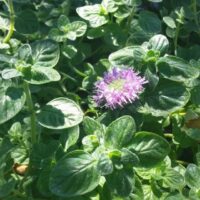
This low growing, dense selection of our native coyote mint was discovered near the mouth of the Russian River. Large, round, deeply veined leaves colored dark blue-green give this groundcover a lush appearance. In summer, soft lavender flowers which look like pincushions cover the plant. Reaches a height of up to 12 inches and spreads fairly quickly to form drifts. Provide full sun to light shade and moderate to infrequent irrigation. A stellar plant for bees, butterflies and hummingbirds. Coyote mint is not a true mint and won’t spread invasively by roots. Deer resistant.
Monardella villosa ssp. franciscana ‘Russian River’
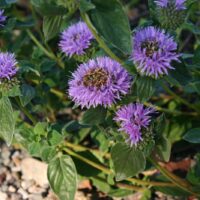
Our own selection of coyote mint from a rocky slope along the lower Russian River. Although Monardella is sometimes difficult in cultivation, this plant has proven to be vigorous. Grows 12 to 18 inches tall with ball-like clusters of pinkish-purple above the fragrant evergreen foliage. Good for a dry sunny site. Attracts bees and butterflies. Deer resistant.
Monardella villosa ssp. villosa – Mark West seed strain
This sweet little coyote mint hails from the dry, inland hills above the Mark West watershed in North East Santa Rosa. It is more compact than the ‘Russian River’ selection, mounding to about 1’ high and spreading to 3’ across. The aromatic foliage is a light minty green, and the round lavender-pink flower heads bloom from late spring through summer. Best with a bit of protection from the hot afternoon sun, this coyote mint is great to tuck under a large, upright, drought tolerant shrub, such as manzanita or Ceanothus. Drought tolerant once established, but blooms best with occasional deep soaks. Needs good drainage. Like other coyote mints, it is a butterfly and native bee magnet. Deer resistant.
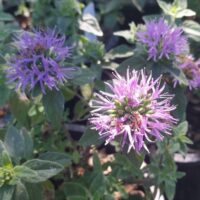
Monardella villosa ssp. villosa – Mark West seed strain ‘Mark West’
This sweet little coyote mint hails from the dry, inland hills above the Mark West watershed in North East Santa Rosa. It is more compact than the ‘Russian River’ selection, mounding to about 1’ high and spreading to 3’ across. The aromatic foliage is a light minty green, and the round lavender-pink flower heads bloom from late spring through summer. Best with a bit of protection from the hot afternoon sun, this coyote mint is great to tuck under a large, upright, drought tolerant shrub, such as manzanita or Ceanothus. Drought tolerant once established, but blooms best with occasional deep soaks. Needs good drainage. Like other coyote mints, it is a butterfly and native bee magnet. Deer resistant.
Monardella viridis
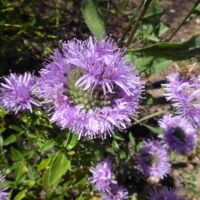
A pollinator magnet! Found in inland Sonoma County, and in Lake and Napa Counties, on hot, dry, rocky slopes, green coyote mint entices the senses with its minty, sage-like aroma, small, pointed, ovate, green-gray foliage, and its saturated lavender inflorescences that bloom in summer. Growing to 4’ across, this low mounding woody perennial prefers decent drainage and a bit of relief from afternoon sun in hotter, inland sites. The flowers are especially attractive to native bees and butterflies. Deer resistant and drought-tolerant once established.
Nemophila menziesii – Frosty Blue
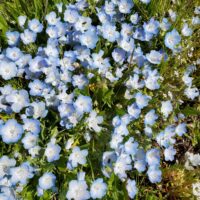
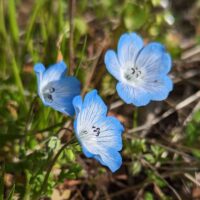
An interesting seed strain of the charming, ANNUAL baby blue eyes. Found in many habitat types throughout California, this beauty has long been in cultivation. The slender, succulent, lobed leaves grow 4 - 6 inches tall, spreading and spilling about 1 ft wide. The "Frosty" in the name refers to the silvery color to the foliage, which contrast nicely with the profusion of gorgeous, bright, baby-blue blossoms. Spectacular in drifts, where it can spill and cascade, at the front of a garden bed, in meadow plantings, rock gardens or in containers. Plant in full sun to light shade where it is early to bloom during the cool of spring. Hot weather triggers seed production. The large black seeds are relished by birds. Reseeds readily.
Oemleria cerasiformis
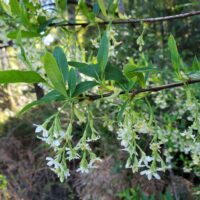
A charming native shrub which grows in moist areas along the coast or when inland on forest edges. Blooms in early spring just as the new leaves are beginning to expand with drooping clusters of fragrant white flowers. Male and female plants are separate and you'll need both to get the small blue-black fruits that birds enjoy. A suckering shrub growing 5 - 6 ft. tall or more. Plant in part shade with regular to occasional water. Can grow in cool full sun such as you find along the coast.
Oenothera californica
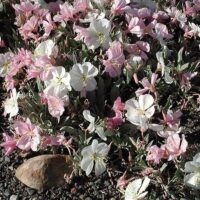
California primrose forms low mats of gorgeous, grey foliage, up to 2 to 3 ft. across. The soft leaves, covered with dense hairs, becomes nearly hidden by large, white, sweetly fragrant flowers. The long succession of blooms pop open in early evening from drooping flower buds and last just one night, becoming pink with age. Native to sandy or gravely soils of southern California, southwestern U.S. and Baja, where it can be found in chaparral, high elevation deserts and open woodland habitats. Perfect for the dry garden with well draining soils in full sun to very light shade. The luscious flower display can last from late spring into early summer. Goes completely dormant by mid-summer, returning the next winter. Pollinated by a number of interesting moth species including the Sphinx moth.