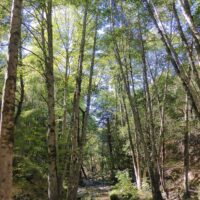
Alnus rhombifolia
From creeks and rivers throughout California, the white alder rapidly grows to become a large tree, reaching to 50 ft. or more at maturity. Serrated green leaves produce an excellent canopy above the straight, silvery-gray trunk. In winter, when the leaves have fallen, the ghostly branches make a striking silhouette with dangling catkins from the branch tips. An excellent plant for creek restoration where its aggressive roots help to stabilize banks. Keep away from irrigation pipes and foundations. Needs regular moisture and sun to light shade.
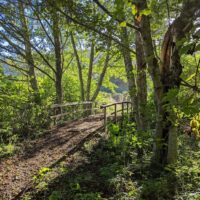
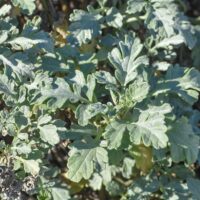
Ambrosia chamissonis
The silvery mats of this sand-dwelling species are important for soil stabilization along our coastline, but can also be used as an attractive, evergreen groundcover in the garden setting. Dissected leaves line crawling branches, forming a dense carpet up to about 10” high and spreading wherever they have room to grow. While vigorous, it can be pruned back easily. In summer, short stalks of inconspicuous, cream colored flowers raise, followed by bur-like seed capsules. Plant in sunny locations with moderate to occasional irrigation. Tolerant of different soil types.
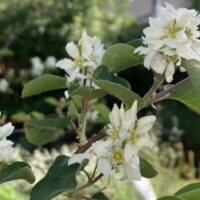
Amelanchier alnifolia
A common native shrub or small multi-trunked tree often found growing along seasonal streams. Serviceberries provide a touch of autumn color where the leaves turn a lovely butterscotch yellow. The white spring flowers are followed by dark blue-purple fruits coveted by band-tailed pigeons in the wild. Sun to partial shade. Moderate to infrequent water. Many butterflies use this species as a larval host, such as the California hairstreak and the Ceanothus silkmoth. Grows well in a large container.
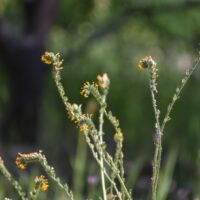
Amsinckia menziesii
A bright, yellow-orange ANNUAL with curled clusters of little trumpet-shaped flowers resembling the scrolled head of a violin. Flower stalks of one-to-three feet tall gradually unfurl with new blooms from mid-spring to early summer. The warmly-colored blossoms are a great nectar source for butterflies and develop into seeds adored by goldfinches and other songbirds. This grassland native adapts to the garden setting, where it prefers full sun and occasional irrigation. Will self-sow.
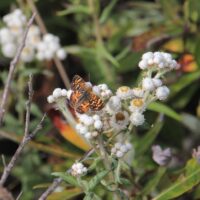
Anaphalis margaritacea
An adaptable plant with silver-green leaves that are densely white and woolly beneath. The flowers appear in summer and are made up of pearly white papery bracts surrounding yellow centers. The “straw flowers” retain their shape and color and are often used in dried arrangements. Tolerant of almost any soil type, it prefers full sun where it will grow in moist to somewhat dry conditions. Can spread vigorously, perhaps best used in meadow plantings or other naturalistic settings. Grows 1 - 3 ft. tall and spreading. Dies back to the ground in the winter. Larval food source for the painted lady and American lady butterflies. Deer resistant.
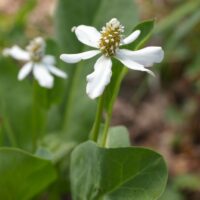
Anemopsis californica
An unusual plant - native to wet areas, but adaptable to regular or moderate garden water. The low rosettes of leaves spread into attractive colonies. The white flowers, or actually, flower bracts, are very showy in late spring. Sun to light shade with moisture. Herbalists use roots and leaves for a topical antibiotic and other uses.

Angelica arguta
A remarkable form of this native mountain Angelica with striking bluish-gray foliage. Umbrella-shaped clusters of white flowers sit on stalks up to 6 feet in height. Needs moderate irrigation and dappled shade inland. Combine with native Heleniums, lilies and columbines to create a beautiful woodland flower patch. Great for native pollinators. A larval food source for the anise swallowtail butterfly.
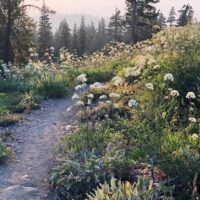
Angelica breweri
From the Sierras and the Klamath mountains comes this elegant member of the carrot family. Clear white flowers perch like little stars in flat-topped clusters up to 10 inches wide. Flower stalks can reach 6 feet in height with green serrated leaves forming 2 foot tall mounds at the base. Enjoys dappled shade away from the coast and moderate water. Great for native bees and butterflies. A larval food source for the anise swallowtail butterfly.
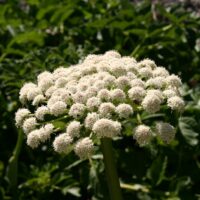
Angelica hendersonii
Found in nature on the immediate coast, though well adapted to the watered inland garden. It has the overall look of a stout cow parsnip with creamy white flowers in umbels and pinnately compound leaves of a deep green. Like many umbels, it is a good nectar source for beneficial insects. 4 - 6 ft. tall. Full sun to light shade. Good drainage with moderate summer water.
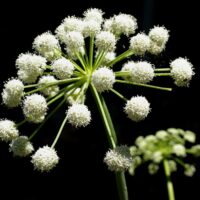
Angelica tomentosa
This species offers striking, flat-topped clusters of white flowers held up dramatically on stalks reaching up to around 5 ft. tall. Handsome, pinnately compound, gray-green leaves mass at their base. A generally inland angelica found in more or less moist, lightly shaded places, usually on serpentine. It can grow in full sun as long as it has plenty of moisture during the growing season. An important plant for the Pomo for its many medicinal and shamanistic uses. Diverse pollinators utilize the flowers, while the anise swallowtail butterfly uses the stems and leaves as a host plant for the catterpillars. Enjoys moderate water in the garden with a late summer rest (low water).
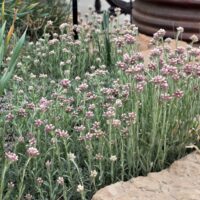
Antennaria rosea
A charming, native, mountain dweller which grows among rocks and onto boulders at meadow edges. Forms low mats only a couple of inches high of woolly, gray leaves that creep and cascade. Short flower stems with small, creamy-white and rosy-pink papery bracts, bloom summer into fall. Plant in full sun to very light shade with good drainage and a little summer water. Good addition for the pollinator garden and is the larval food source for a number of butterflies including the American lady. This is one of the few natives which is so low growing you can plant it between stepping stones.
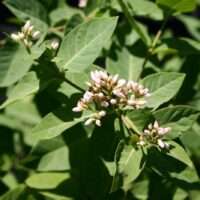
Apocynum cannabinum
Native throughout much of North America, California and our own Santa Rosa Valley. Grows 3 ft. tall and spreads vigorously by roots to form large patches. Small white flowers in summer. Turns beautiful shades of yellow in the autumn then dies back to the ground in the winter. Good for wild meadow or ethnobotanical garden. Important to Native Americans who used the stems for cordage, rope, twine nets etc. Sun to light shade with some moisture. Will tolerate dry conditions after blooming. Very attractive to butterflies. BEWARE! SPREADS VIGOROUSLY!
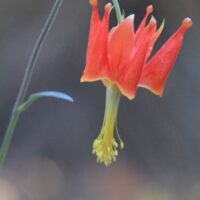
Aquilegia eximia
Large, orangey-red flowers with yellow stamens adorn this beautiful and uncommon native columbine. The pendant, brightly colored blossoms are larger than those of the western columbine but just as attractive to hummingbirds. Forms a 1 ft. high mound of foliage with flowering stalks reaching up to 5 ft. tall. Native to the Coast Ranges from Mendocino to Ventura Counties often on serpentine soils. Provide full sun to part shade and only water enough to prevent the soil from drying out completely. In areas far away from the coast provide a little shade from the hot afternoon sun. This species is a little more drought tolerant than the more common Western columbine.
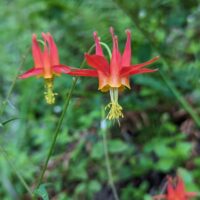
Aquilegia formosa
A popular native perennial with fern-like foliage and wonderful, nodding, spurred blossoms of red and yellow. Best with a little shade and moderate to regular moisture, but will tolerate full sun in somewhat cooler climates. The flower stalks reach 1 1/2’ to 3’ tall, with the grey-green foliage forming a mound of about 1 ft tall and wide. Flowers attract hummingbirds, while the seeds are relished by small birds such as sparrows and Juncos. If seed pods are left on the plants, you may get volunteer seedlings in the fall.
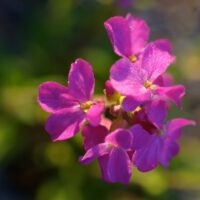
Arabis blepharophylla
A charming spring blooming perennial, native to rocky places of coastal scrub, Santa Cruz to Sonoma counties. The neat foliage grows in tight low rosettes and are topped with vibrant rose-purple mustard-like flowers 8 to 10 inches tall. A natural for coastal areas, it requires some relief from the hot sun and additional water inland. Perfect with other non rampant plants of similar requirements on a slope, rock garden, or along a border. Excellent container plant. Good nectar source for butterflies.
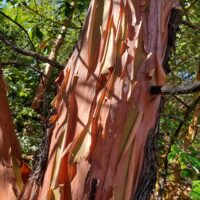
Arbutus menziesii
A beautiful native evergreen tree which features handsome, smooth, reddish bark that peels in thin flakes. Leaves are leathery and shiny dark green. Large clusters of white flowers give way to red-orange berries that can remain into winter if the birds don't get them. It can be tricky to establish, necessitating planting in the fall. MUST have good drainage and just enough water to establish. Once established give only infrequent deep waterings or no water at all. Bees and hummingbirds love the flowers.
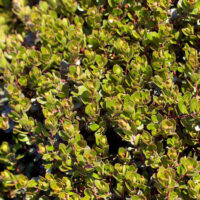
Arctostaphylos ‘Emerald Carpet’
This popular manzanita forms a wonderful, dense, green groundcover around 1 ft. tall by 6 ft. wide. Clusters of small, white, urn-shaped flowers decorate the plant in early winter. A natural hybrid discovered on Haven's Neck on the southern Mendocino Coast. Often planted en mass to create a large scale groundcover. Somewhat slower growing than bearberry and slightly taller over time. Enjoys full sun near the coast but does best in hotter areas with some afternoon shade. Needs moderate water once established.
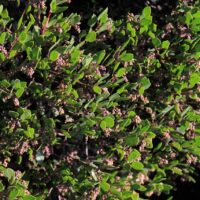
Arctostaphylos ‘Howard McMinn’
One of the most popular of the manzanitas, for several good reasons. It is rounded in form and profusely branched, growing 5 - 7 ft. tall. It has shiny green leaves and abundant light pink flowers. Beautiful mahogany trunks create a wonderful sculptural effect. The dense foliage responds exceptionally well to pruning - even shearing, and tolerates a far greater range of soils and watering regimes than most manzanitas.
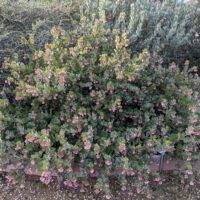
Arctostaphylos ‘John Dourley’
A beautiful mounding manzanita growing 3-4 ft. tall and 6 ft. wide.Bluish-green leaves with gorgeous bronzy new growth, abundant pink flowers followed by red fruits make this vigorous grower a wonderful addition to the garden. Plant in sunny areas with little to no water once established. The early blooming manzanitas provide an important nectar source for hummingbirds and bees.
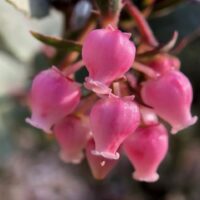
Arctostaphylos ‘Lester Rowntree’
A stunning manzanita named for the early native plant pioneer and groundbreaking woman, Lester Rowntree, who provided the seed. Shapely, upright branches sport bluish foliage with unusual coral-pink, urn-shaped flowers very early, often beginning in October. A special feature for an upright manzanita is the large, glossy, red berries which ripen in the summer. The reddish bark, gorgeous foliage and flowers make this an excellent candidate for sunny areas with little to no summer water once established. This selection, involving A. pajaroensis, develops into a striking specimen, growing 8-10 ft. tall and wide with time. Its early flowering period offers nectar to hummingbirds and bees when not much else native is blooming. Introduced by Rancho Santa Ana Botanic Garden.
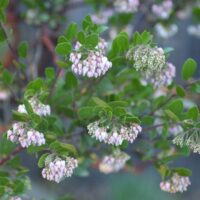
Arctostaphylos ‘Lutsko’s Pink’
One of the very best ornamental manzanitas, named by Cal Flora for the landscape architect who introduced it: Ron Lutsko. An upright shrub 4 -7 ft. tall, with dark glossy green leaves and covered with blossoms in spring which are blushed pink. Mahogany trunks develop a beautiful contorted shape. Good for dry sunny spot.
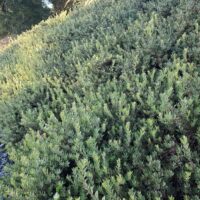
Arctostaphylos ‘Pacific Mist’
A broadly spreading shrub, fast growing for a manzanita, eventually forming a good dense ground cover 1.5 - 2.5 ft. tall by 10 ft. wide. Handsome gray-green leaves with deep reddish-brown bark. Small clusters of white urn-shaped flowers in late winter are pretty, but it is not a heavy bloomer. This fine introduction from Rancho Santa Ana Botanic Garden is proving to be dependable and disease resistant. Plant in sun or light shade. More drought tolerant than the popular bearberries. In cool summer areas may need no additional summer water once established. In hotter inland sites,occasional deep summer waterings is best. It is believed to be a cross involving the rare Bonny Doon manzanita.
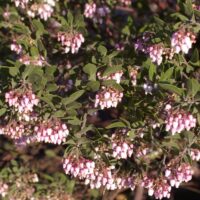
Arctostaphylos ‘Sentinel’
Somewhat more upright in habit but less dense and less uniform than Arctostaphylos 'Howard McMinn', it is a far heavier bloomer with LOTS of vivid pink blossoms and soft grey green leaves. A relatively easy and dependable manzanita, growing 6 - 8 ft. tall and wide, though reputed to be less tolerant of irrigation and heavy soils than A. ‘Howard McMinn’, the most adaptable of all manzanitas. Distinctive burgundy-colored bark. Early nectar source for hummingbirds and bumble bees.
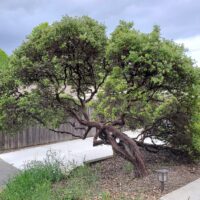
Arctostaphylos ‘Sunset’
A handsome manzanita growing 6 ft. tall and wide with especially attractive coppery-red new growth. Flowers are urn-shaped pinkish-white. Exfoliating shaggy bark reveals smooth red toned trunks. Can be pruned to expose the beautiful sinuous branching structure. A naturally occuring hybrid discovered near Prunedale in Monterey Co. involving A. pajaroensis and A. hookeri. Tolerant of heavy soils and heat as well as occasional irrigation.
Arctostaphylos ‘White Lanterns’
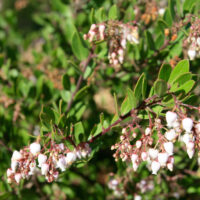
This lovely manzanita believed to be a selection of A. densiflora originated at the Santa Barbara Botanical Gardens many years ago, but today it is a rare find in nurseries. Slowly growing to a dense mound 3-5 feet tall and wide, this tough and disease resistant plant is equally at home as a beautiful specimen or massed in large plantings. Especially heavy blooming, this shrub is covered with clusters of white blossoms opening from pink buds over a long period in late winter. Excellent early nectar source for hummingbirds and bees. Plant in full sun to very light shade with little to no water once established.
Arctostaphylos auriculata
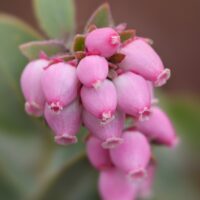
From the rocky slopes of Mount Diablo comes this rare and delightful manzanita. Smallish, fuzzy, grey leaves densely cover the branches over mahogany-red trunks. Late winter brings flowers ranging in color from pink to white. This species grows slowly and densely to about 5 or 6 ft. tall and at least as wide. Needs full sun. Make sure to provide excellent drainage and little to no irrigation once established.
Arctostaphylos bakeri ssp. bakeri ‘Louis Edmunds’
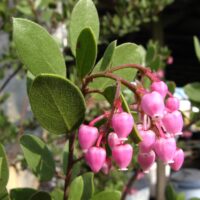
A beautiful and durable upright manzanita reaching 5 - 7 ft. tall and nearly as wide. This species is native to Sonoma Co. where it is considered very rare and threatened by development. Handsome gray-green foliage with wonderful purplish-brown trunks contrast nicely with showy clusters of pink urn-shaped flowers in spring. Great for sunny areas where it endures heat and drought but enjoys an occasional deep watering. The manzanita berries can attract mockingbirds, robins, and cedar waxwings. It provides low shrubby cover for quail and wrentits and its flowers provide nectar for hummingbirds.