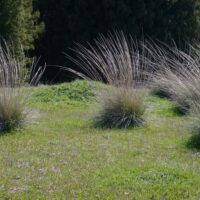
Muhlenbergia rigens
With its graceful, arching habit and tall, attractive seed stalk, this versatile, adaptable native grass is a striking addition to any garden. Forms a tidy, dense clump 3 ft. tall and 3-4 feet wide, making it useful as a specimen and also wonderful planted in mass. Remains mostly evergreen with occasional summer water, but can be periodically chopped down to spur fresh growth. Plant in full sun to light shade. Tolerates moist or dry soils and performs well in clay. Its extensive root system makes it an excellent for soil stabilization. Good habitat value offering seeds for songbirds and is a larval food source for a number of butterflies species. Deer resistant.

Myrica hartwegii
From Sierran streambanks comes this sweet bay, a cousin of our local wax myrtle. Rare in nature, this deciduous shrub can reach a height and width of up to 5 ft. Soft, lance-shaped leaves of gray-green flank the stems. Small red flowers appear in the spring. Enjoys dappled shade and good drainage. Requires regular irrigation. Plant with indian rhubarb, western columbine and ferns for a taste of the mountains in your own garden. Thought to be deer resistant.
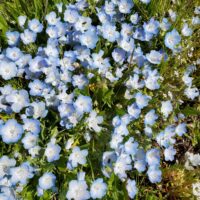
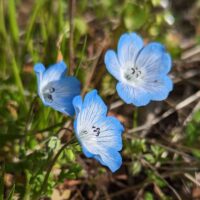
Nemophila menziesii – Frosty Blue
An interesting seed strain of the charming, ANNUAL baby blue eyes. Found in many habitat types throughout California, this beauty has long been in cultivation. The slender, succulent, lobed leaves grow 4 - 6 inches tall, spreading and spilling about 1 ft wide. The "Frosty" in the name refers to the silvery color to the foliage, which contrast nicely with the profusion of gorgeous, bright, baby-blue blossoms. Spectacular in drifts, where it can spill and cascade, at the front of a garden bed, in meadow plantings, rock gardens or in containers. Plant in full sun to light shade where it is early to bloom during the cool of spring. Hot weather triggers seed production. The large black seeds are relished by birds. Reseeds readily.
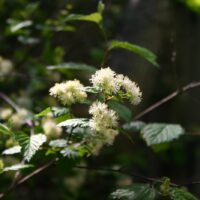
Neviusia cliftonii
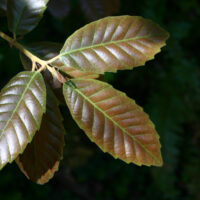
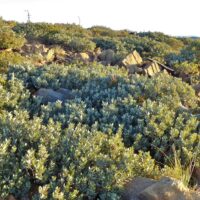
Shasta snow-wreath is a rare species not know to science until 1992. Endemic to Shasta County, California, often on limestone embankments, in moist shady areas, this deciduous shrub grows to around 6 ft. tall spreading by underground rootstocks. Looking something like ocean spray or a delicate ninebark, heart shaped leaves with toothed edges are alternately arranged on the slender branches. The flowers are a starburst of white anthers in early spring surrounded by green petal-like sepals. A lovely addition to a woodland planting where it thrives in light shade with some summer water.
Oemleria cerasiformis
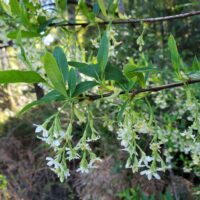
A charming native shrub which grows in moist areas along the coast or when inland on forest edges. Blooms in early spring just as the new leaves are beginning to expand with drooping clusters of fragrant white flowers. Male and female plants are separate and you'll need both to get the small blue-black fruits that birds enjoy. A suckering shrub growing 5 - 6 ft. tall or more. Plant in part shade with regular to occasional water. Can grow in cool full sun such as you find along the coast.
Oenothera californica
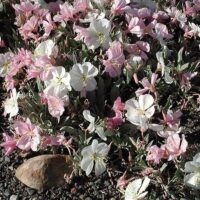
California primrose forms low mats of gorgeous, grey foliage, up to 2 to 3 ft. across. The soft leaves, covered with dense hairs, becomes nearly hidden by large, white, sweetly fragrant flowers. The long succession of blooms pop open in early evening from drooping flower buds and last just one night, becoming pink with age. Native to sandy or gravely soils of southern California, southwestern U.S. and Baja, where it can be found in chaparral, high elevation deserts and open woodland habitats. Perfect for the dry garden with well draining soils in full sun to very light shade. The luscious flower display can last from late spring into early summer. Goes completely dormant by mid-summer, returning the next winter. Pollinated by a number of interesting moth species including the Sphinx moth.
Oenothera elata ssp hookeri
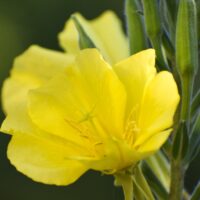
Found in coastal areas from Sonoma County down to San Diego County. A vigorous, showy, winter-deciduous perennial that makes a dramatic border or background planting in full-sun gardens. In late summer into early fall, sprays of large, cheery, bright-yellow flowers with flat, papery petals top tall stalks up to 5’ high that are clothed with light-green lanceolate leaves. Blossoms provide a late season sweet treat for native butterflies and bees. As the name suggests, flowers fold and close during the heat of the day. May vigorously seed about. Moderate to occasional water once established.
Oxalis oregana ‘Smith River White’
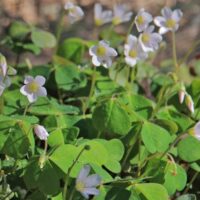
This Cal Flora selection carries white flowers with thin pink lines on the petals held up above the foliage, thus creating an effect somewhat reminiscent of our small native anemones. The foliage is handsome with dark olive green tops and purple-red undersides to the leaves. The perfect ground cover for deep to moderate shade with some summer moisture. Drought tolerant when grown in more coastal areas. Rampant when its needs are met, it competes well with tree roots and is the perfect companion to other redwood forest understory plants. Deer resistant.
Penstemon azureus
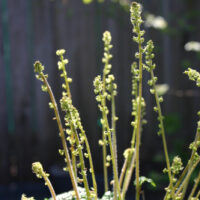
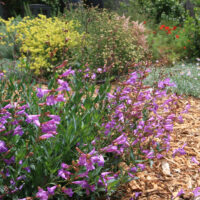
Native to the mountains of California and Oregon where it grows in woodland and chaparral plant communities. Forms a tidy mound of bluish-green leaves 1-2 ft. tall and wide with bright blue tubular flowers late spring into summer. Requires good drainage and sun to light shade. This species is drought tolerant but prefers occasional summer water and is more garden tolerant than most native Penstemons. Attractive to bees and hummingbirds.
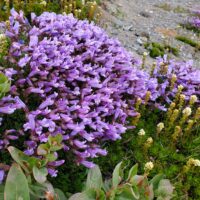
Penstemon eatonii
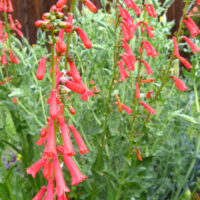
Adaptable and beautiful perennial native to the western United States including southeastern California. Narrow, leathery leaves form an evergreen rosette of foliage. Flower stalks rise 2-3 ft above the foliage. This form has brilliant red tubular flowers lining the erect stems in early summer. Requires good drainage, full sun to light shade and occasional to little summer water. Tolerates winter cold to 18 degrees and drought once established. Hummingbird favorite.
Penstemon fruticosus
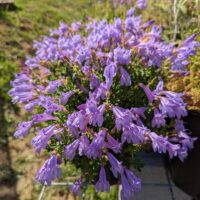
Blue-purple, trumpet-shaped flowers with curvy, flared lips cover this diminutive mountain species with a showy display in spring or early summer. Truly a delightful and easy to grow mountain penstemon, only reaching about 12 inches high and spreading to about 1.5 ft, covered in dense, narrow leaves. Perfect for a container or in a rock garden with good drainage. Enjoys full sun to light shade and occasional to infrequent irrigation. Native to the Pacific Northwest and the Northern Rockies, almost making it into California. A favorite of hummingbirds and enjoyed by bees.
Penstemon heterophyllus ‘GMR White’
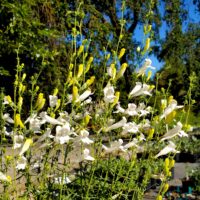
An unusual, bright white form of our native foothill penstemon that dazzles with dense blooms from spring to fall. Spring sees the emergence of soft yellow buds on this evergreen perennial, which then open as snowy fresh, tubular flowers. The showy flower stalks reach 18 inches to 2 feet and look spectacular cascading out of a container. A natural selection, its name is an abbreviation of Glendora Mountain Road, the area just north of Los Angeles where it was found. As beloved by hummingbirds and pollinators as the more common blue-violet form of this species and even more shockingly floriferous. Plant in full sun to very light shade where it will have good drainage, and provide occasional to no water. Thrives in large pots. Drought tolerant.
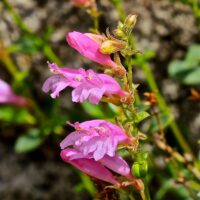
Penstemon newberryi
As the common name implies, this beauty is native to the mountains of California, Oregon and Nevada, where it grows in rocky habitats at high elevations. Forms an evergreen mat, under a foot tall with thick, leathery leaves and gorgeous magenta-pink tubular flowers, in mid to late spring. Good drainage is a must for success and growing in a container is an option for those with heavy soils. Full sun to very light shade with occasional summer waterings. Can be challenging to cultivate, but well worth the extra effort. The showy flowers are highly attractive to hummingbirds and butterflies. Said to be deer resistant.
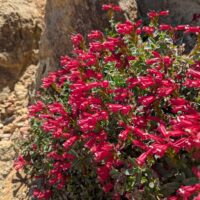
Penstemon newberryi v. sonomensis
This rare, perennial, inland beauty, found only in Sonoma, Napa, and Lake Counties, is a great addition to the dry, inland rock garden. A low mat of small, gray-green, succulent-like leaves gives rise to 5-12” stalks topped with clusters of chunky, tubular, magenta-red flowers with white, fuzzy throats and reproductive structures. Mature plants are no more than 2' wide. A native bee and hummingbird magnet. Plant in full sun with decent soil drainage. Little to no water once established.
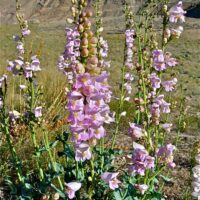
Penstemon palmeri
Showy, grape-scented, pale pink flowers top blue-green, succulent-like foliage on vertical stalks reaching an astonishing 4 to 5 ft. in height. The bulbous flowers have given rise to the common name, ballon flower. Native to desert mountains of southern California and throughout the western United States. This penstemon is attractive to a multitude of pollinators, especially hummingbirds. Plant in full sun to light shade and provide good drainage. Drought tolerant once established. The tall but narrow flower stalks make this penstemon useful in narrow spaces where height is desired.
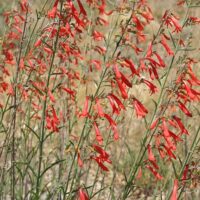
Penstemon rostriflorus
A wonderful addition to the dry garden, bringing late summer color through abundant, bright red, tubular flowers. Growing 2 - 4 feet tall and wide, with attractive, glossy foliage, that takes on red and bronze tones in winter. A late blooming Penstemon, beginning in July, provides copious nectar for hummingbirds as well as bees, butterflies, and moths. Tolerant of wide range of soils and conditions, plant in full sun to light shade with occasional water. Drought tolerant once established.
Penstemon rydbergii
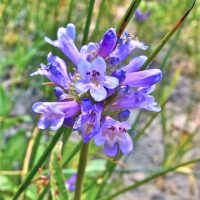
A widespread species native to much of the western United States, including California, growing in mountainous regions in moist meadows and along streams. Forms a low rosette of bright green leaves topped with flower stems 1 -2 foot tall. The small, lavender-purple, tubular flowers are clustered in whorls on dense spikes. The blossoms offer an excellent source of nectar and pollen to hummingbirds, bees and butterflies, as well as a larval food source for a number of butterfly species. Considered easy to grow and long lived. Plant in full sun to light shade with regular moisture. Somewhat winter deciduous. Deer resistant.
Penstemon strictus
Showy perennial, native to a number of states in the Rocky Mountains, where it grows in sage brush and coniferous forest communities. Forming clumps of neat evergreen foliage 8 - 10 inches tall by 36 inches wide. Mid to late spring brings flowering stems 2 foot or so above the foliage with deep blue-purple tubular flowers. Considered one of the easier to grow, tolerating heavier soil and moisture better than many Penstemon species. Still, good drainage is best with little summer water once established. Plant in full sun to light shade in hot regions. Very cold tolerant. Penstemons are attractive to hummingbirds, bees and butterflies.
Perideridia gairdneri
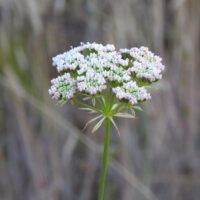
An interesting and rarely cultivated native perennial that grows in grasslands and meadows in central to northern California and the Sierra Nevada foothills. Narrow leaves emerge in the spring giving way to lovely 4 ft. tall flowering stems topped with umbels of delicate white flowers in the summer. Looks particularly nice in mass and livens up a meadow or grassland planting that may be waning in summer. Entice the anise swallowtail butterfly with a NATIVE larval food source. Plant in full sun to light shade with a little water. Allow to go dry after flowering.
Perideridia kelloggii
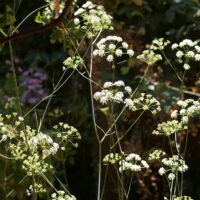
An interesting and rarely cultivated native perennial that grows in grasslands and meadows in central to northern California and the Sierra Nevada foothills. Narrow leaves emerge in the spring giving way to lovely 4 ft. tall flowering stems topped with umbels of delicate white flowers in the summer. Looks particularly nice in mass and livens up a meadow or grassland planting that may be waning in summer. Entice the anise swallowtail butterfly with a NATIVE larval food source. Plant in full sun to light shade with a little water. Allow to go dry after flowering.
Petasites frigidus var. palmatus
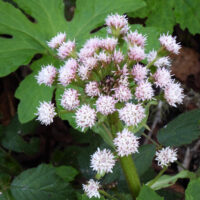
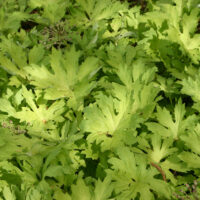
A bold, beautiful and AGGRESSIVE creekside native, found in coastal and montane regions in California, north to Alaska, where it grows along shady creek banks. The large, almost tropical, palmate leaves spread from thick creeping rootstocks to form large colonies. Flowers before the foliage fully emerges in the spring with flat topped clusters of white to pink flowers on 1-2 ft. tall stems. Requires shade and plenty of water and is useful as a soil stabilizer. To control its spreading nature, use in containers or in contained areas. It won't spread into areas which are dry. Dies back to the ground in the winter. Flowers attractive to a wide range of beneficial insects.
Petasites palmatus ‘Golden Palms’
Here is an exciting introduction of the western coltsfoot with wonderful golden foliage. Native to streamsides in low elevation forests, the broadly palmate leaves spread by creeping rhizomes. Careful thought should be given to its placement as it can be invasive. This bold foliage plant is great in containers or contained areas with regular water and part shade. Dies back to the ground in winter.
Phacelia bolanderi
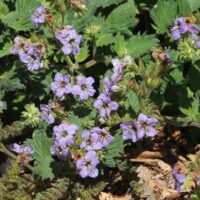
Easy to grow perennial for part shade and a little summer water. Native to slopes and canyons of coastal forests in northern California. Forms low mounds of soft foliage 6 - 8 inches tall by 2 ft. or so wide. Pretty powder blue-purple one inch flowers late spring into summer offer nectar to hummingbirds, bees, and butterflies. The seeds are enjoyed by songbirds. Though somewhat short-lived, it often reseeds. Appears to be deer resistant.
Phacelia imbricata
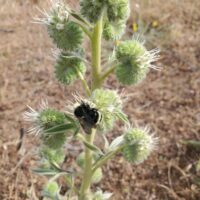
Native to dry slopes and open woodland throughout much of California, this rarely-offered perennial phacelia thrives in heat. Creamy-white flowers form curly clusters atop stalks ranging from 1 to 3 feet. Bees and butterflies find them irresistible. The soft, dense foliage hugs the ground in an up-to-2-ft-wide mound. Plant in full sun to light shade in areas with good drainage and minimal irrigation once established. Drought tolerant.
Phacelia tanacetifolia
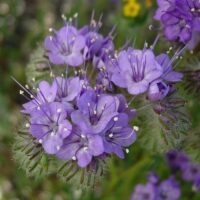
A robust ANNUAL increasingly used in agriculture as a pollinator attracting cover crop. This native covers the ground and flowers abundantly producing high quality pollen and nectar which is highly attractive to bees and beneficial insects. Fast growing frilly foliage grows 2-4 ft. tall and wide topped with clusters of small lavender-blue cup shaped flowers. Sun to light shade, decent drainage and drought tolerant. Occasional water during flowering will keep it going longer.