
Achillea millefolium – Bodega Bay form
Larger leaves up to 10 inches long distinguish this form from most other local yarrow selections. While most yarrow from our coastline have very green leaves, this strain is on the grey side. From spring through autumn, large white flower clusters sit upon stalks about to at least 2 feet in height. Water occasionally in areas away from the coast and provide full sun. The foliage is deer resistant.

Achillea millefolium – inland form – Lake County seed source
A vigorous and easy to grow perennial, yarrow grows native throughout California in many plant communities. This crop is grown from seed collected from a hot inland site in Lake County. In this form, flower stems rise 18 inches above the gray ferny foliage bearing white flowers in flat topped clusters. Plant in a sunny location with moderate to a little water. Spreads by rhizomes and can form sizable clumps if happy. A good addition to the habitat garden where the flowers provide nectar for bees and butterflies and the foliage provides winter forage for birds. The foliage is deer resistant.

Achillea millefolium – inland form – Napa County seed source
A vigorous and easy to grow perennial, yarrow grows native throughout California in many plant communities. This crop is grown from seed collected from a hot inland site in Napa County. In this form, flower stems rise 18 inches above the gray ferny foliage bearing white flowers in flat topped clusters. Plant in a sunny location with moderate to a little water. Spreads by rhizomes and can form sizable clumps if happy. A good addition to the habitat garden where the flowers provide nectar for bees and butterflies and the foliage provides winter forage for birds. The foliage is deer resistant.

Achillea millefolium – inland form – Sonoma County seed source
A vigorous and easy to grow perennial, yarrow grows native throughout California in many plant communities. This crop is grown from seed collected from a hot inland site in Sonoma County. In this form, flower stems rise 18 inches above the gray ferny foliage bearing white flowers in flat topped clusters. Plant in a sunny location with moderate to a little water. Spreads by rhizomes and can form sizable clumps if happy. A good addition to the habitat garden where the flowers provide nectar for bees and butterflies and the foliage provides winter forage for birds. The foliage is deer resistant.
Achillea millefolium – Montara Mountain form
We discovered the parent of this giant seed strain on the lower slopes of Montara Mountain in San Mateo Co.. With broad, white flower clusters reaching up to 4 ft. high, this is the largest yarrow we've encountered. While seedlings can vary, we have high hopes for this new introduction. Give full sun and moderate to infrequent irrigation. Potentially an excellent spreading perennial for a tall meadow. Attracts all sorts of pollinators. The green, fuzzy leaves are usually considered to be deer resistant.

Achillea millefolium ‘Island Pink’
A color variant of the normally white California native yarrow from Santa Cruz Island. Dark green ferny foliage topped with clusters of bright pink flowers on 18 inch stems over a long period. Sun to partial shade, occasional to moderate water. Good habitat value, providing nectar for bees and butterflies. The foliage is deer resistant.

Achillea millefolium ‘Red Velvet’
This yarrow is getting rave reviews for its deep-red flowers produced atop grey-green ferny foliage. Spreading 2 foot or so wide with flowers rising 2 – 2 ½ feet tall. Best in full sun with moderate to occasional watering. Popular with bees and butterflies. Often deer resistant.

Achillea millefolium ‘Sonoma Coast’
This is a local selection from the Sonoma County coast near Salmon Creek. Bright green foliage is topped with white flowers in dense heads on compact stems to around 1 ft. tall. Can bloom over a long period, spring through fall, depending on conditions. Best in sunny areas with some summer water, though it is drought tolerant. Flowers attract butterflies and other insects. The foliage is deer resistant.

Achillea millefolium ‘Terracotta’
This hybrid yarrow forms a mat of grey-green ferny foliage 2 - 3 ft. wide with interesting earth-tone colored flowers. The long-lasting flower clusters simultaneously sport peachy-yellow tones through burnt orange, on sturdy non-floppy stems to around 2 ft. tall. Plant in full sun with moderate to occasional summer water once established. Bees and butterflies love yarrows, but they are not deer favorites. Excellent cut flowers too.

Agrostis pallens
A fine textured, drought tolerant, spreading, perennial grass that forms an undulating, naturalistic, meadow look, or can be mowed and used as a lawn substitute. Native to meadows, open woodlands and forests in many plant communities in California north to British Columbia. Grows 1 -2 ft. tall with airy flower stems in late spring to early summer. May be shy to flower in shady areas. Plant in sun to light shade, with decent drainage, where it will accept both water and drought. Will go dormant in summer without irrigation. If using as a lawn substitute, it will need summer irrigation, though requiring far less than a traditional lawn. Excellent understory among trees or shrubs, for rain gardens, bio-swales, meadows or mowed as a lawn substitute. Host plant for a number of butterflies. Deer resistant.
Bouteloua gracilis
Here’s a wonderful grass - an important species of the original North American shortgrass prairie. In California it occurs in desert regions. Fine textured light green-gray foliage topped with interesting flowers 8 - 36” tall. The flowers are attached to the stem at right angles and resemble tiny combs. The whole plant turns purple with frost then fades to blonde. Use in mass or as a specimen in rock garden or containers. Often suggested for a mowed or unmowed lawn where it tolerates extreme cold, heat, drought and foot traffic. Deer resistant.
Bouteloua gracilis ‘Pestanas de Angeles’
Long lived, warm season, perennial grass, native to North America. The selection ‘Pestanas de Angeles’ is from San Bernardino County in Southern California. Fine textured, grey-green blades about 6 inches tall. Intriguing flower heads look like little flags or eye lashes on wiry stems under a foot tall. Tolerant of heat, drought and poor soils, this grass is at home in the arid west. Plant in full sun where it will be drought tolerant once established. Blades go dormant in the winter. Excellent in rock gardens, with succulents or as a meadow subject. Good cut flower. Deer resistant.
Carex pansa
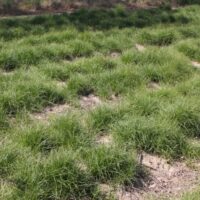
A durable spreading sedge which can be used as a lawn substitute or unmowed meadow. Growing 8 -12 inches tall and spreading by rhizomes to form dense colonies of curling dark green foliage. The foliage is evergreen in mild climates and grows well in full sun to partial shade with regular to occasional water. Too much drought causes summer dormancy. Flowers appear in early spring but are not real showy. Deer resistant.
Carex praegracilis
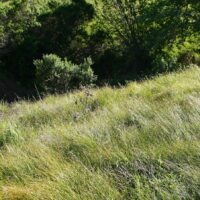
Similar to Carex pansa but growing taller. The fine textured grass-like blades can reach a foot or more tall and spreads freely by rhizomes to form a thick weed smothering groundcover. Useful for meadows, green roofs, bio-swales, erosion control and as a lawn substitute. Can be left natural where it has a lush tousled appearance or trimmed occasionally for a low turf-like appearance. Tolerates drought, inundation, poor soils, salt spray, heat, cold, shade and foot traffic. Plant in sun to light shade where it requires some summer moisture but far less than a conventional lawn. Will go summer dormant if allowed to get too dry. Deer resistant.
Carex praegracilis ‘Chisai’
An excellent cultivar of the native field sedge, selected for it's compact form and slower spreading habit. Increases by short rhizomes to form a sturdy, dark-green carpet, 6 -8 inches tall and 1 - 2 ft wide. Grows more clumping and significantly tighter than the rapidly spreading forms more typical of the species. Still, it will form a solid, small scale ground cover or turf substitute, between stepping stones or mixed with bulbs and perennials for a meadow affect. Plant in full sun to light shade with occasional to moderate water. Tolerates light foot traffic. Deer resistant.
Carex serratodens
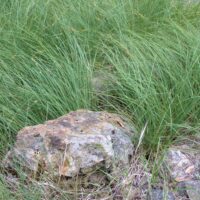
From serpentine meadows comes this lush, blue-green sedge. Our form grows 1 - 2 ft. tall and spreads at a moderate pace, creating broad drifts over time. Needs moderate to regular moisture and full sun to part shade. Often goes semi-dormant in winter at which time the plants can be cut back to just a few inches. A useful sedge for gardens on serpentine or for bank stabilization where it can provide cover for tree frogs and other critters. Does not require serpentine soils to thrive. Deer resistant.
Dichondra donelliana
Dichondra is a small genus of flowering plants in the morning glory family that form a thick, mat-like ground cover of rounded leaves, once popular as lawn substitutes. This native species is uncommon in the nursery trade and in gardens, but has potential worth exploring. Native to California coastal plant communities on open slopes and moist grasslands, it forms a flat, perennial ground cover with tidy, rounded leaves, densely packed along creeping stems. The flowers are tiny and greenish-white, not real showy but interesting. An obvious application would be a small scale ground cover or meadow planting in areas with some moisture. Could be a candidate for green roofs or walls, where a low and spreading plant is the ticket. Plant in full sun on the immediate coast, otherwise light shade is necessary. Moderate summer water.
Elymus (Leymus) triticoides x ‘Lagunita’
Discovered by grass expert and John Greenlee, who describes it as his personal favorite ground cover grass for meadow installations. Often this species has blue-grey blades and grows tall and floppy, but 'Lagunitas' grows just 10 - 16 inches tall, with rich green blades. This form rarely flowers and is quite adaptable to soil types and watering regimes. The ability to tolerate both wet and dry conditions makes it valuable for areas that seasonally flood like rain gardens. A vigorous spreader, especially when well watered, but is better behaved in dryer sites. Once established, can be maintained with one or two waterings a month, keeping it green and fire safe. Tolerates trimming to about 4 inches, possibly more. Grows in full sun to light shade. Host plant to the Woodland Skipper butterfly.
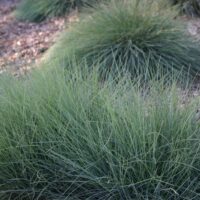
Festuca rubra – Molate strain
Discovered on Point Molate near Richmond, this selection spreads to form soft, flowing drifts of gray-green foliage 12 to 18 inches tall with graceful, open flowers rising to 3 feet. One of the biggest forms of our native red fescue, it’s eye-catching when planted in large masses or when combined with mounding shrubs or some of the more robust native bulbs. Very choice for a meadow or parking strip. Prefers some afternoon shade in the hotter climates and occasional water away from the coast. More drought tolerant than many other red fescues. Deer resistant.
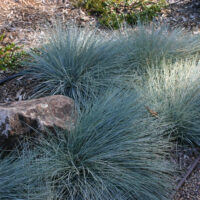
Festuca rubra ‘Patrick’s Point’
Discovered on a rock at Patrick's Point on our north coast, this perennial grass slowly spreads by creeping rhizomes to form tufted drifts of silvery blue. Effective as a component of a meadow or as a small scale groundcover. Typically at its best in situations where it is either unmown or infrequently mown. The 6 - 12 inch tall, vivid blue-gray blades have a soft flowing appearance which combines strikingly with dark foliaged plants such as Iris and beach strawberries. The grass flowers rise 6 to 12 inches above the foliage in loose panicles. Plant in full sun to light shade. Protect form the hot afternoon sun in inland areas. Enjoys occasional to moderate irrigation away from the coast. Deer resistant.
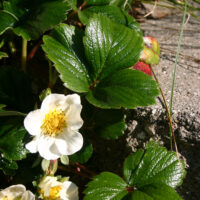
Fragaria chiloensis ‘Green Pastures’
Beach strawberry is native to Pacific coast beaches and bluffs of North and South America. A popular and adaptable groundcover growing well in a wide range of climates and conditions. This selection forms lush carpets of shiny dark green foliage. The five-petaled white flowers are particularly large, showy and profuse in the spring. A great colonizer and stabilizer, this vigorous perennial spreads by runners to form dense carpets. Plant in sun to light shade with moderate to occasional summer water. Drought tolerant along the coast. This ia a male selection and will not fruit. Deer resistant.
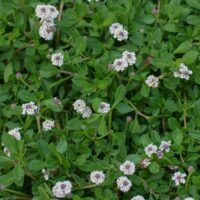
Phyla nodiflora
Vigorous, spreading ground cover native to California, North America and other parts of the world. It's a tough one, able to survive a wide range of conditions and soil types. Tolerates both drought and flooding, but best with occasional deep watering in full sun to very light shade. Flowers heavily over a long period with charming little heads of mauve-pink, lavender and white blossoms, delighting an assortment of bees and butterflies. This dense, carpeting plant makes a serviceable ground cover or lawn-like replacement, tolerating moderate foot traffic and occasional mowing. May look rough in the winter, but quickly recovers in spring. Free flowering and pollinator friendly.
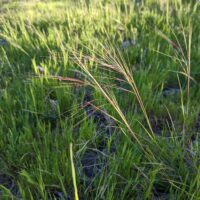
Stipa (Nassella) pulchra
Purple needlegrass is a major species in California grasslands. An excellent choice for naturalistic settings, native plantings, meadows or dry slopes in full sun. Handsome in mass where its purple awns shimmer. The entire plant turns golden come summer then goes dormant, reviving with the rainy season. Very drought tolerant. Can reseed vigorously. Deer resistant.