
Achillea millefolium – Bodega Bay form
Larger leaves up to 10 inches long distinguish this form from most other local yarrow selections. While most yarrow from our coastline have very green leaves, this strain is on the grey side. From spring through autumn, large white flower clusters sit upon stalks about to at least 2 feet in height. Water occasionally in areas away from the coast and provide full sun. The foliage is deer resistant.

Achillea millefolium – inland form – Lake County seed source
A vigorous and easy to grow perennial, yarrow grows native throughout California in many plant communities. This crop is grown from seed collected from a hot inland site in Lake County. In this form, flower stems rise 18 inches above the gray ferny foliage bearing white flowers in flat topped clusters. Plant in a sunny location with moderate to a little water. Spreads by rhizomes and can form sizable clumps if happy. A good addition to the habitat garden where the flowers provide nectar for bees and butterflies and the foliage provides winter forage for birds. The foliage is deer resistant.

Achillea millefolium – inland form – Napa County seed source
A vigorous and easy to grow perennial, yarrow grows native throughout California in many plant communities. This crop is grown from seed collected from a hot inland site in Napa County. In this form, flower stems rise 18 inches above the gray ferny foliage bearing white flowers in flat topped clusters. Plant in a sunny location with moderate to a little water. Spreads by rhizomes and can form sizable clumps if happy. A good addition to the habitat garden where the flowers provide nectar for bees and butterflies and the foliage provides winter forage for birds. The foliage is deer resistant.

Achillea millefolium – inland form – Sonoma County seed source
A vigorous and easy to grow perennial, yarrow grows native throughout California in many plant communities. This crop is grown from seed collected from a hot inland site in Sonoma County. In this form, flower stems rise 18 inches above the gray ferny foliage bearing white flowers in flat topped clusters. Plant in a sunny location with moderate to a little water. Spreads by rhizomes and can form sizable clumps if happy. A good addition to the habitat garden where the flowers provide nectar for bees and butterflies and the foliage provides winter forage for birds. The foliage is deer resistant.
Achillea millefolium – Montara Mountain form
We discovered the parent of this giant seed strain on the lower slopes of Montara Mountain in San Mateo Co.. With broad, white flower clusters reaching up to 4 ft. high, this is the largest yarrow we've encountered. While seedlings can vary, we have high hopes for this new introduction. Give full sun and moderate to infrequent irrigation. Potentially an excellent spreading perennial for a tall meadow. Attracts all sorts of pollinators. The green, fuzzy leaves are usually considered to be deer resistant.

Achillea millefolium ‘Island Pink’
A color variant of the normally white California native yarrow from Santa Cruz Island. Dark green ferny foliage topped with clusters of bright pink flowers on 18 inch stems over a long period. Sun to partial shade, occasional to moderate water. Good habitat value, providing nectar for bees and butterflies. The foliage is deer resistant.

Achillea millefolium ‘Red Velvet’
This yarrow is getting rave reviews for its deep-red flowers produced atop grey-green ferny foliage. Spreading 2 foot or so wide with flowers rising 2 – 2 ½ feet tall. Best in full sun with moderate to occasional watering. Popular with bees and butterflies. Often deer resistant.

Achillea millefolium ‘Sonoma Coast’
This is a local selection from the Sonoma County coast near Salmon Creek. Bright green foliage is topped with white flowers in dense heads on compact stems to around 1 ft. tall. Can bloom over a long period, spring through fall, depending on conditions. Best in sunny areas with some summer water, though it is drought tolerant. Flowers attract butterflies and other insects. The foliage is deer resistant.

Achillea millefolium ‘Terracotta’
This hybrid yarrow forms a mat of grey-green ferny foliage 2 - 3 ft. wide with interesting earth-tone colored flowers. The long-lasting flower clusters simultaneously sport peachy-yellow tones through burnt orange, on sturdy non-floppy stems to around 2 ft. tall. Plant in full sun with moderate to occasional summer water once established. Bees and butterflies love yarrows, but they are not deer favorites. Excellent cut flowers too.

Agrostis pallens
A fine textured, drought tolerant, spreading, perennial grass that forms an undulating, naturalistic, meadow look, or can be mowed and used as a lawn substitute. Native to meadows, open woodlands and forests in many plant communities in California north to British Columbia. Grows 1 -2 ft. tall with airy flower stems in late spring to early summer. May be shy to flower in shady areas. Plant in sun to light shade, with decent drainage, where it will accept both water and drought. Will go dormant in summer without irrigation. If using as a lawn substitute, it will need summer irrigation, though requiring far less than a traditional lawn. Excellent understory among trees or shrubs, for rain gardens, bio-swales, meadows or mowed as a lawn substitute. Host plant for a number of butterflies. Deer resistant.
Ambrosia chamissonis
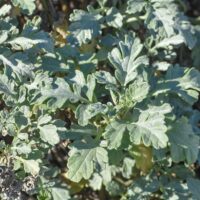
The silvery mats of this sand-dwelling species are important for soil stabilization along our coastline, but can also be used as an attractive, evergreen groundcover in the garden setting. Dissected leaves line crawling branches, forming a dense carpet up to about 10” high and spreading wherever they have room to grow. While vigorous, it can be pruned back easily. In summer, short stalks of inconspicuous, cream colored flowers raise, followed by bur-like seed capsules. Plant in sunny locations with moderate to occasional irrigation. Tolerant of different soil types.
Anemone deltoidea
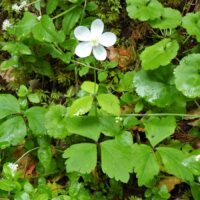
Rhizomatous perennial native to coniferous forests in the coastal mountains of Northern California through Washington. Forming low colonies, 6 inches or so tall with slender stems holding three leaflets. Simple, pure white flowers with a central shaft of anthers hold themselves just above the foliage. Spreads vigorously and best used with shrubs, ferns or other sturdy subjects. Can romp over smaller perennials. Sweet addition to the woodland garden where it will grow in full to part shade with regular to a occasional summer watering. Good in containers too. Dies back to the ground in winter.
Anemopsis californica
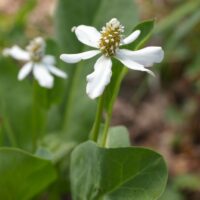
An unusual plant - native to wet areas, but adaptable to regular or moderate garden water. The low rosettes of leaves spread into attractive colonies. The white flowers, or actually, flower bracts, are very showy in late spring. Sun to light shade with moisture. Herbalists use roots and leaves for a topical antibiotic and other uses.
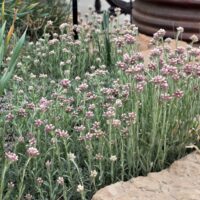
Antennaria rosea
A charming, native, mountain dweller which grows among rocks and onto boulders at meadow edges. Forms low mats only a couple of inches high of woolly, gray leaves that creep and cascade. Short flower stems with small, creamy-white and rosy-pink papery bracts, bloom summer into fall. Plant in full sun to very light shade with good drainage and a little summer water. Good addition for the pollinator garden and is the larval food source for a number of butterflies including the American lady. This is one of the few natives which is so low growing you can plant it between stepping stones.
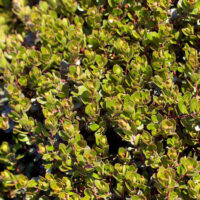
Arctostaphylos ‘Emerald Carpet’
This popular manzanita forms a wonderful, dense, green groundcover around 1 ft. tall by 6 ft. wide. Clusters of small, white, urn-shaped flowers decorate the plant in early winter. A natural hybrid discovered on Haven's Neck on the southern Mendocino Coast. Often planted en mass to create a large scale groundcover. Somewhat slower growing than bearberry and slightly taller over time. Enjoys full sun near the coast but does best in hotter areas with some afternoon shade. Needs moderate water once established.
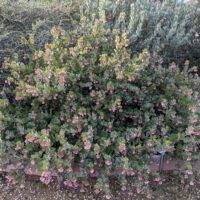
Arctostaphylos ‘John Dourley’
A beautiful mounding manzanita growing 3-4 ft. tall and 6 ft. wide.Bluish-green leaves with gorgeous bronzy new growth, abundant pink flowers followed by red fruits make this vigorous grower a wonderful addition to the garden. Plant in sunny areas with little to no water once established. The early blooming manzanitas provide an important nectar source for hummingbirds and bees.
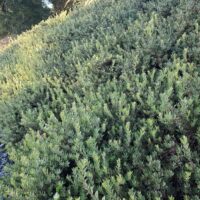
Arctostaphylos ‘Pacific Mist’
A broadly spreading shrub, fast growing for a manzanita, eventually forming a good dense ground cover 1.5 - 2.5 ft. tall by 10 ft. wide. Handsome gray-green leaves with deep reddish-brown bark. Small clusters of white urn-shaped flowers in late winter are pretty, but it is not a heavy bloomer. This fine introduction from Rancho Santa Ana Botanic Garden is proving to be dependable and disease resistant. Plant in sun or light shade. More drought tolerant than the popular bearberries. In cool summer areas may need no additional summer water once established. In hotter inland sites,occasional deep summer waterings is best. It is believed to be a cross involving the rare Bonny Doon manzanita.
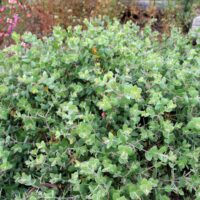
Arctostaphylos cruzensis
This rare, low-growing manzanita comes from the San Luis Obispo coast. Features grey-green, wedge-shaped leaves and soft pink flowers in the winter. Its distinctive creeping habit makes it ideal for crawling over walls or lining walkways. Provide full sun to light shade and moderate to infrequent irrigation once established. Good in containers.
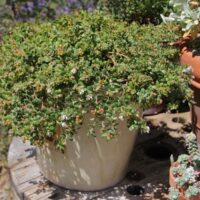
Arctostaphylos edmundsii ‘Bert Johnson’
Choice, low growing manzanita introduced by the Tilden Botanic Garden. Dense, mounding or cascading habit growing to around a foot tall by 6 ft. wide with small dark green leaves and bronzy new growth. Not as fast growing as 'Carmel Sur'. Clusters of tiny pink to white urn-shaped flowers in winter attract hummingbirds and are followed by handsome cinnamon colored little apple-shaped fruits. Excellent cascading over walls, rocks, or containers in sun to light shade. This manzanita has proven adaptable and fairly garden tolerant putting up with heavy soils and more summer water than many. Full sun along the coast with light shade in hot inland sites. Drought tolerant once established but appreciates occasional summer water.
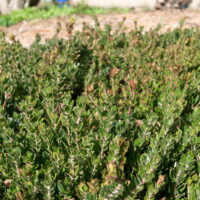
Arctostaphylos edmundsii ‘Carmel Sur’
Perhaps the fastest growing variety of this species. Attractive gray-green foliage with a dense, spreading habit under 1 ft. tall and 6 ft. across. Light pink flowers appear in winter but are few and infrequent. A handsome alternative to other groundcover manzanitas. More drought and heat tolerant than the bearberries and 'Emerald Carpet'. Likes full sun but may enjoy a little afternoon shade in especially hot inland sites.
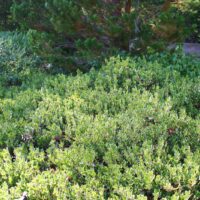
Arctostaphylos franciscana
This distinctive clone of the very rare franciscan manzanita displays luxuriant growth of shiny, dark green leaves spreading fairly quickly to form a dense drift up to eight ft wide and 2 - 3 ft tall. An excellent groundcover similar in appearance to A. uva-ursi but more drought tolerant and somewhat taller. A good manzanita for serpentine but still does well in other soils. Produces a modest display of pinkish white flowers in winter. Plant in full sun but light shade is fine especially in hotter climates. Requires moderate to occasional irrigation once established.
Arctostaphylos glandulosa f. repens ‘Mount Vision’
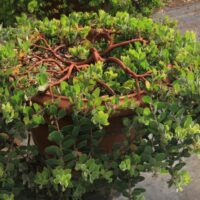
Found only in the Bishop pine forest of the Point Reyes Peninsula, the repens form has a low and mounding habit. This particular selection was picked for its exceptionally compact and creeping nature and large, gray-green leaves. Clusters of white flowers hang from branch tips in early winter. While slower growing than most other groundcover manzanitas, this cultivar will eventually reach about 6 ft wide with a height of about 1 ft. 'Mount Vision' is best planted as a specimen rather than in mass plantings. Very drought tolerant once established with full sun to light shade. An excellent container plant.
Arctostaphylos hookeri ‘Harry Roberts’
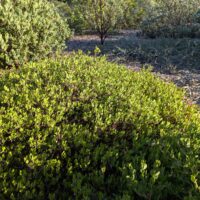
A dense and low selection of this hardy and adaptable species, reaching to about 1 foot tall and around 6 ft wide. Not quite as short as ‘Monterey Carpet’, but a little faster growing. The deep green, pointed leaves create a verdant groundcover, suitable for drier spots. The small, white flowers in winter are not particularly abundant. Plant in full sun to light shade and water infrequently. Clay soil tolerant. A great, low growing manzanita for hotter areas. This species is a rare native from coastal Monterey and Santa Cruz Counties.
Arctostaphylos hookeri ‘Ken Taylor’
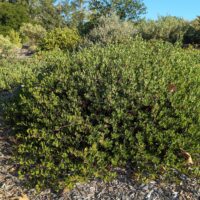
This hardy, groundcover manzanita is denser and a little more refined than the popular ‘Wayside’ selection. Pointed, smaller, rich-green leaves clothe mounding branches reaching 2’-3’ tall and 6’-8’ wide. In winter, the white, urn-shaped flowers are somewhat sparse, making the lustrous, evergreen foliage the star of the show. Tolerates more heat, more sun and needs less water than the bearberry. A great option as a bank cover, where it enjoys full sun to light shade, infrequent irrigation, and tolerates clay soil. Combine with deer grass and California fuchsia for a hardy and attractive planting. The Hooker’s manzanita is a rare native from coastal Monterey and Santa Cruz Counties.
Arctostaphylos hookeri ‘Monterey Carpet’
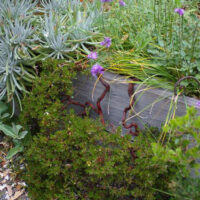
Evergreen, creeping manzanita less than 1 ft. tall with small, deep green leaves. Dark red branches tend to root and increase its spread to 8 ft. or so wide. Small clusters of white flowers appear in late winter to early spring. Prefers a little shade inland. Drought tolerant but enjoys occasional irrigation in inland sites. Perfect under deciduous oaks or tall pines. Works well in spots where the creeping branches can spill over an edge, creating a cascade effect.
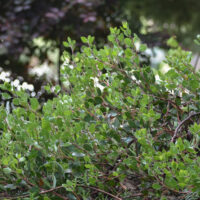
Arctostaphylos hookeri ‘Wayside’
A robust selection of the Monterey manzanita with dense branches growing up to 3 ft. high by 8 ft or more broad. Attractive upsweeping crooked trunks with little white flowers and small deep green leaves. Occurring on open hills around Monterey Bay. Despite its somewhat coastal origin, this selection tolerates, sun, heat and drought quite well. That being said, it will also accept occasional irrigation and light shade. A very useful plant for covering large sunny banks with poor soil.
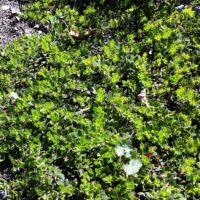
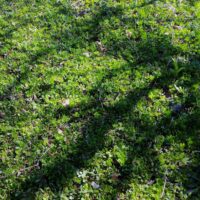
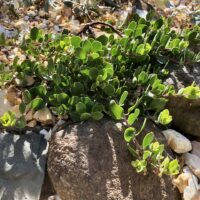
Arctostaphylos montana ssp. ravenii
This diminutive, groundcover manzanita once grew on windswept, serpentine outcrops in San Francisco where the Presidio currently exists. Due to rapid development in the late 19th and early 20th centuries, only one clone of this manzanita currently exists in the wild, making it one of the rarest species around. The small, thick, gray-green leaves line creeping stems reaching 6 - 12 inches in height. Forms a large mat over time, crawling around rocks and other obstacles. In late winter/early spring, clusters of little, white, urn-shaped flowers appear at the ends of the stems. Needs full sun to light shade and decent drainage. Drought tolerant once established but will enjoy an occasional deep watering, especially in warmer areas. You don’t have to be a collector to enjoy this appealing little manzanita.