Arctostaphylos stanfordiana
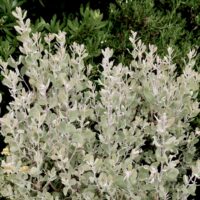
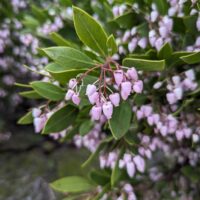
One of the most beautiful of manzanitas with handsome dark mahogany bark, dense shiny green leaves and flowers ranging in color from intense pink to white. Its upright form ranges in height from 4 to 8 ft with a somewhat narrower width. Native to warmer areas of northern California's Coast Range, this species requires excellent drainage, full sun and NO water once established.
Arctostaphylos stanfordiana ‘Sonoma’
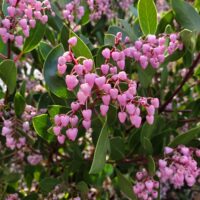
Masses of deep pink flowers and glossy, deep green leaves are an enticing feature of this uncommon selection. But what really distinguishes this cultivar from other Stanford manzanitas is the fact that it actually survives in the garden! Most other selections of this species are notoriously challenging to keep alive in cultivation. While fairly slow growing, the dense foliage mounds up over time to reach a height and width of about 5 ft. The striking burgundy-red trunks contrast nicely with the green leaves. Needs full sun and excellent drainage. No summer water once established.
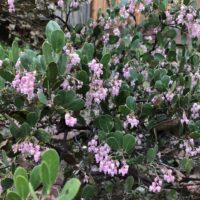
Arctostaphylos stanfordiana ssp. decumbens
A Sonoma County endemic, this rare manzanita is from Rincon Ridge east of Santa Rosa. Low growing mounding shrub to as much as 4 ft tall by more than 6 ft. wide. Charming pink urn-shaped flowers in early spring. Handsome, rugged and drought tolerant. Best in full sun with good drainage, no water necessary once established. A good choice for lean soils, summer heat and drought.

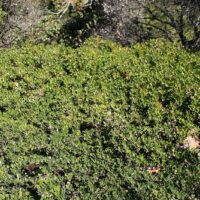
Arctostaphylos uva-ursi ‘Green Supreme’
A superior garden hybrid of the trailing bearberry. A volunteer seedling discovered by staff at Tilden Regional Parks Botanic Garden. Ultimately spreads 6 - 12 ft. across and less than a foot tall. Enjoys moderate to occasional irrigation. The glossy bright green leaves create a beautiful groundcover. Tolerates a wide range of soil types with reasonable drainage. Very disease resistant and fast growing. Shy to bloom or set berries. Sun to part-shade.
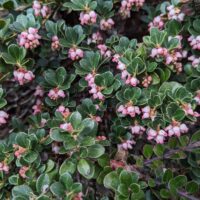
Arctostaphylos uva-ursi ‘Point Reyes’
An unusual selection of our native bearberry discovered near the Point Reyes lighthouse in Marin County. Dark green, leathery leaves form distinctive whorls along the stems with pale pink, urn-shaped flowers emerging in early winter. The showy red berries contrast nicely with the dark green leaves. Reaching a height of about 18” and a width of at least 6 ft., this groundcover works well in a rock garden or mixed with other low shrubs and grasses from our coastal areas. Give moderate water in interior locations and protect from the hot afternoon sun.
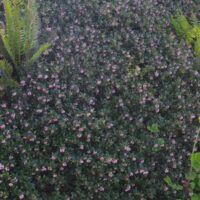
Arctostaphylos uva-ursi ‘Radiant’
A very low mat of glossy, dark green foliage 6 - 8 inches high and creeping at least 6 ft. across. Light pink flowers in early winter are followed by showy red berries. In hot inland areas give moderate water and light afternoon shade. A sturdy evergreen groundcover.
Arctostaphylos uva-ursi ‘San Bruno Mountain’
A beautiful selection of bearberry from San Bruno Mountain south of San Francisco. This groundcover manzanita forms a luxuriant mat of large, glossy, spatulate leaves spreading to around 6 feet wide. The soft pink urn-shaped flowers lead to big red showy berries. A natural for coastal plantings where it can grow in full sun with little to no summer water needed. Inland, bearberry does best with shade from the hot afternoon sun and moderate summer watering.
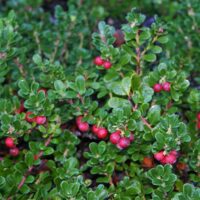
Arctostaphylos uva-ursi ‘Wood’s Compact’
A low growing, spreading manzanita with lustrous green, rounded foliage, little pink urn-shaped flowers and pretty red berries, quite large for the species. This selection from coastal Oregon spreads at a moderate pace to 6-8 feet wide and only getting 6-8 inches tall. Full sun to light shade in hot areas with moderate summer water.
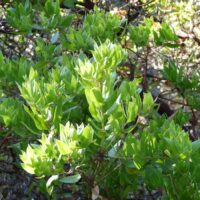
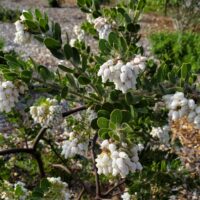
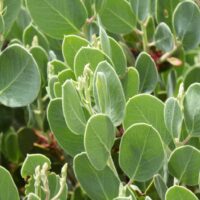
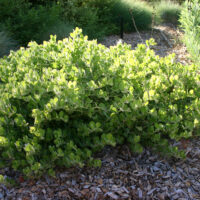
Arctostaphylos x media – Point Arena forms
This special and diverse group of manzanitas come from Point Arena on the southern Mendocino Coast. These naturally occurring hybrids involve at least two species: A. uva-ursi, A. columbiana and sometimes A. nummularia. The resulting offspring have wonderfully varying features. The leaves range from large, light-green, and fuzzy to small, dark-green and glossy. The plants can form a mounding habit reaching up to 4 feet tall or hug the ground to form dense mats. Plant in full sun to light shade and give moderate to infrequent irrigation once established. Plants grown in hot areas will benefit from extra irrigation and some afternoon shade.
Arctostaphylos x media – Tilden form
This big-leaved selection was discovered at Point Arena on the southern Mendocino coast by Steve Edwards of Tilden Botanic Garden. Distinctive for its large, hairy, apple-green leaves and low, dense form only reaching up to about 2 ft in height and at least 6 ft. in width. Clusters of white flowers appear in spring followed by round, bright green fruits. Plant in full sun to light shade and provide moderate to occasional irrigation once established. Should be quite drought tolerant once established.
Arctostaphylos x media ‘Humboldt Mystery’
Arching branches and a mounding habit up to 6 ft. tall and 8 ft. wide distinguish this manzanita from its relatives. In winter, pinkish-white flowers provide nectar for hummingbirds and bees, followed by large, red berries in the autumn. Burnished red trunks display a colorful backdrop to the leathery, large, dark green leaves. Plant in full sun to light shade and provide moderate to infrequent irrigation. James Roof of Tilden Botanic Garden discovered this unusual selection somewhere on the Humboldt Coast, but, true to his enigmatic character, refused to say where he found it. It is believed to be a natural cross between bearberry and the hairy manzanita.
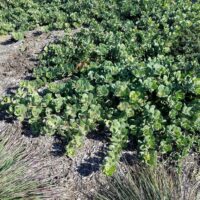
Arctostaphylos x media ‘Peter Ehrlich’
This unusual manzanita from the southern Mendocino coast features what may be the largest leaves of any of the groundcover manzanitas. The round, grey-green foliage mounds densely over time to reach a height of about 3 ft. and a width of up to 8 ft. Clusters of white flowers gather at branch tips in winter, followed by little apple-like fruits in the spring. While fairly adaptable in the garden, decent drainage is best and full sun to light shade. Accepting of moderate irrigation but will become quite drought tolerant once established.
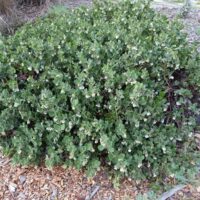
Arctostaphylos x media ‘Reina de Arena’
An outstanding selection from a special population of natural manzanita hybrids, holding court on the rugged, fog shrouded, coastal bluffs of Point Arena in Mendocino County. The "Queen" forms a lovely, compact mound of large, rounded, fuzzy leaves, reaching up to about 2 ft. high and at least 6 ft. wide. Elegant, pure white, urn-shaped flowers decorate the branch tips in winter and are an early nectar source for hummingbirds and bumblebees. Plant in full sun to light shade and give moderate to infrequent summer water once established. Plants grown in hot areas will benefit from some afternoon shade and extra irrigation.

Aristolochia californica
Dutchman’s pipe vine is an interesting vine native to river, stream side and woodland habitats. Soft heart-shaped leaves and unusual purplish pipe-shaped flowers bloom in early spring. This deciduous twining plant will need some support if you wish it to grow upwards. Adaptable, but best with a little shade and moderate water. Slow to establish, we offer this adage to encourage patience: “The first year it sleeps, the second year it creeps and the third year it leaps”. Once established it will put on ample growth, easily covering a trellis or chain link fence. THE larval food source for the pipevine swallowtail butterfly. Deer resistant.
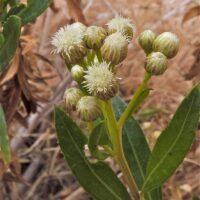
Baccharis salicifolia
This native shrub looks something like a willow in foliage and is found in similar habitats in California and the southwest US. Not a willow at all, but a member of the aster family, this evergreen shrub blooms nearly year round, making it a powerhouse for pollinators. The profusion of small, creamy white, fuzzy flowers, tinged with pink or red are highly attractive to butterflies, bees and other beneficial insects. Extremely tough and easy to grow in full sun with summer water, where it will grow 6 - 10 feet tall and wide with rich, green foliage. Able to survive drier conditions than a willow could handle, but it will look rough if it gets too dry. Responds well to pruning and can be cut down to six inches to refresh. Excellent screen, windbreak and for soil stabilization. Stellar for attracting pollinators.
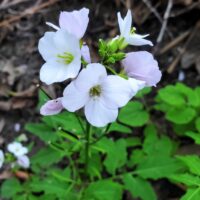
Cardamine californica
One of California's most widespread and earliest spring wildflowers, often beginning to bloom in the winter. Found in somewhat shady locations in a number of plant communities, this slender perennial has rounded basal leaves. Flower stems 10 inches to 20 inches tall are topped with four petaled flowers of pure white to soft pink. This sweet harbinger of spring is easy to grow given a little shade and winter rain. After flowering and setting seed it dies back to its roots where it goes dormant until next year's rains awaken it. Good under oaks.
Ceanothus maritimus ‘Point Sierra’
An excellent choice for a small scale ground cover, this rare Ceanothus is found on coastal bluffs and low hills in northern San Luis Obsipo County. Even though it is native to the coast it does surprisingly well inland. Smaller and slower growing than most Ceanothus, it blooms very early often beginning in late January or early February. 'Point Sierra' was selected from Arroyo de la Cruz by Native Son's Nursery. Grows 2-3 ft. tall with small, thick, leathery leaves and a dense mounding habit looking almost like Cotoneaster. Rounded clusters of blue-violet flowers from dusty white buds in late winter provide an early nectar source for pollinators of all sorts. A natural for coastal areas in full sun but has proven durable inland when it is provided a little shade. Tolerates heavy soils. Drought tolerant once established. Somewhat deer resistant.
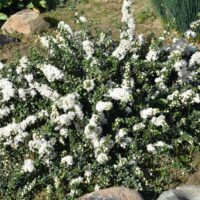
Ceanothus maritimus ‘Popcorn’
A special white-flowered form of a very rare species from Hearst Castle in San Luis Obispo County. This rugged groundcover ceanothus reaches up to 3 ft tall and spreads to 5 ft wide, an excellent candidate for parkway strips and drier borders. The thick, rigid leaves are serrated along the margins and colored a pleasing gray-green. In spite of its coastal origin, 'Popcorn' tolerates sun and heat quite well, but will enjoy a little afternoon shade in the hottest interior locations. It has been long-lived and very drought tolerant here in Fulton, even putting up with our heavy clay soil. A fabulous pollinator plant which also provides food and cover for birds.
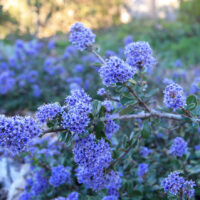
Ceanothus maritimus ‘Valley Violet’
Valley Violet ceanothus is a tough and reliable shrub introduced by the UC Davis Arboretum as an "Arboretum All-Star", one of their 100 top recommended plants. This relatively small Ceanothus grows 2 ft. tall by 4 ft. wide with small leathery leaves and gorgeous dark-violet flowers in early spring. Though native to coastal bluffs of San Luis Obispo County, it performs well in both coastal and inland situations. In hot inland sites it may be best with a little afternoon shade. Drought tolerant once established. For a Ceanothus it is slower growing and has proven to be long lived and tolerant of many soil types. A wide array of pollinators are attracted to its flowers. Deer resistant.
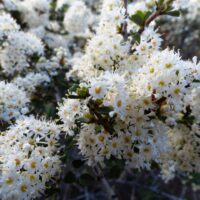
Ceanothus rigidus ‘Snowball’
A good selection for a dry sunny hillside or as a cascading plant for a wall. A densely mounding shrub 3 - 5 feet tall and wide. Covered with ball-like clusters of white flowers in late winter. Plant in full sun with occasional to no summer water once established. Ceanothus are great additions to the habitat garden offering food and cover for birds and nectar for bees and butterflies. Deer resistant.
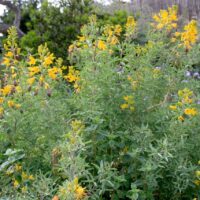
Cleomella (Isomeris) arborea
This distinctive small shrub from Southern California features clusters of golden-yellow flowers with long stamens, giving them a delicate, airy quality. The flowers are followed by papery, lantern-like seed pods which can become almost translucent with age. While this species blooms strongest in the spring, flowers can be seen year-round. Bladderpod has a loose, rounded habit, reaching 4 to 6 ft. tall and wide. If your plant becomes too lanky, simply cut it to the ground to rejuvenate it. Plant in full sun with good drainage and provide infrequent to zero irrigation once established. A great nectar source for hummingbirds, bees and butterflies. Deer resistant.
Previously known as: Peritoma arborea
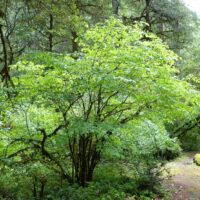
Corylus cornuta ssp. californica
Western hazelnut is a handsome, open, multi-stemmed shrub native to forests from Santa Cruz northwards in the Coast Range, and from Sequoia northwards in the Sierra foothills. Winter deciduous with decorative dangling catkins in winter. The soft, somewhat hairy leaves turn yellow in the fall. Small amounts of tasty nuts are produced in late summer and are relished by wildlife and people. Part shade with some moisture, but will tolerate fairly dry conditions once established. Usually grows 6 - 10 ft. tall. Somewhat deer resistant.
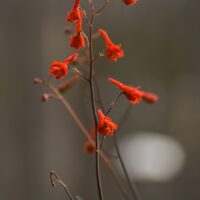
Delphinium nudicaule
In late winter and spring, scarlet flowers with elongated tails perch on upright stalks, usually not more than 3 ft tall. The green, lobed leaves which form a low mound above the ground have a distinctive pale patch in their centers. This native makes its home on summer-dry slopes throughout much of Northern California and parts of Central Ca., inhabiting bright, open woodlands and rocky road cuts. Needs good drainage and little to no irrigation in the summer. While it can grow in a fair amount of shade, it blooms best under a bright, dappled canopy. A favorite of hummingbirds and butterflies. All parts are poisonous if ingested.
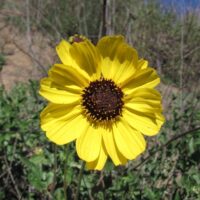
Encelia californica
Cheery yellow daisies with purplish-brown centers cover this sunflower from late winter all the way into summer, making it one of our longest blooming natives. The 2-inch-wide blossoms make for stupendous cut flowers and are loved by bees and butterflies. Goldfinches enjoy the seeds which follow. This somewhat short-lived subshrub features dark green, diamond-shaped leaves and reaches about 3 – 4 ft. tall, spreading a little wider. Should reseed if the spent flowers aren’t removed. Enjoys full sun to light shade and occasional to infrequent irrigation with decent drainage to look its best. Native to generally coastal areas in southern California. While not especially cold sensitive, it will freeze if the temperature gets down to the mid 20s.