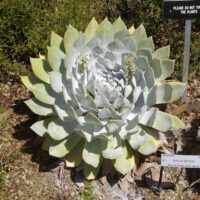
Dudleya brittonii
A Baja California native. Useful and very dramatic in containers or well-drained rock gardens. Likes a protected and sunny microclimate where cold air and winter wet can drain away. Enjoys a little afternoon shade in hotter climates. Develops up to 1 1/2 ft. wide rosettes with fleshy chalk-covered leaves. Yellow flowers sit atop tall stalks in late spring and early summer.
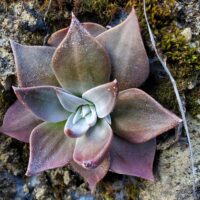
Dudleya cymosa
This charming succulent is in native to California where it grows in between rocks on inland cliffs in sun or bright shade. Best in the garden in a rock wall or terra-cotta pot with some afternoon shade. Height in flower is under one foot. The yellow to orange flowers are attractive to hummingbirds. Occasional to infrequent water in the ground. In pots, let dry out between waterings.

Dudleya pulverulenta
Large, broad, chalky-white leaves forming rosettes up to two ft. wide make this Dudleya one of our most sought-after native succulents. A multitude of tubular red flowers appear in late spring and early summer on stalks reaching from 1.5 to 3 ft. tall. Fleshy, heart-shaped bracts line the stems. Plant in bright shade or provide morning sun and afternoon shade. Needs excellent drainage and infrequent irrigation. Plant at an angle to prevent water from gathering around the base in winter. A gravel mulch around the plant can help stabilize soil temperature and prevent excessive dehydration. Good container plant.
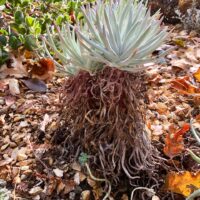
Dudleya virens ssp. hassei
Endemic to Catalina Island, this rare succulent forms chalky-grey rosettes made up of plump fingerlike leaves, 6 inches tall and spreading to form a mat 1 – 2 feet wide. Small white flowers with yellow centers on stems 6 -12 inches tall, bloom in the late spring and are attractive to hummingbirds and other pollinators. Plant in full sun to light shade with occasional deep summer watering. Tolerates heavier soils than most Dudleyas. A dependable small-scale groundcover or container plant.
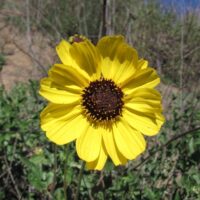
Encelia californica
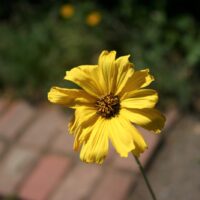
Cheery yellow daisies with purplish-brown centers cover this sunflower from late winter all the way into summer, making it one of our longest blooming natives. The 2-inch-wide blossoms make for stupendous cut flowers and are loved by bees and butterflies. Goldfinches enjoy the seeds which follow. This somewhat short-lived subshrub features dark green, diamond-shaped leaves and reaches about 3 – 4 ft. tall, spreading a little wider. Should reseed if the spent flowers aren’t removed. Enjoys full sun to light shade and occasional to infrequent irrigation with decent drainage to look its best. Native to generally coastal areas in southern California. While not especially cold sensitive, it will freeze if the temperature gets down to the mid 20s.

Epipactis gigantea
Here’s a native orchid that’s easy in cultivation. In time it will form a colony producing many flower stems. Each stem holds several interesting orchid blossoms of subtle orange, coral and green tones 12 - 18 inches tall. Dies back to the ground in winter. Best with decent drainage and regular to moderate moisture (NOT soggy soils) and dappled shade part of the day. Wonderful addition to the woodland garden, around pond or near streams. Good in containers too.
Epipactis gigantea ‘Serpentine Night’
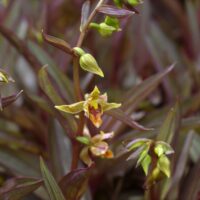
The stream orchid is found in perennial streams, seepages, or other permanently moist places in California. Spreads by runners and will form a colony producing many flower stems. Each stem holds several orchid blosssoms of subtle orange tones 12 - 18 inches tall. The cultivar ‘Serpentine Night’ has wonderful dark purple foliage, emerging in the spring almost black. As the season progresses the color changes to dark bronze then bronzy green. Goes dormant in winter. Best with good light but may need afternoon shade in hot areas. Easy to grow with regular to moderate water. Excellent in containers.
Erigeron ‘Olga’
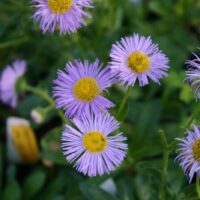
A fine seaside daisy hybrid introduced by Siskiyou Rare Plant Nursery in Oregon. Forms a tidy, dense mat of dark green foliage. Lavender daisies rise 12 inches above the compact foliage late spring into summer. Plant in full sun along the coast, part shade inland with moderate to occasional summer water. This compact grower is perfect for small spaces, troughs or containers. Bee and butterfly favorite.
Erigeron glaucus
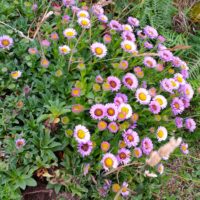
Low growing native perennial to 1 ft. tall with lovely, lavender, daisy-like flowers blooming over a long part of the year. Native to coastal dunes and bluffs, but does well inland with some afternoon shade and a little extra summer water. A natural along the coast where it thrives with little to no summer water and tolerates wind and salt spray. Good nectar source for butterflies and many different pollinators. Their seeds are favored by juncos and finches.
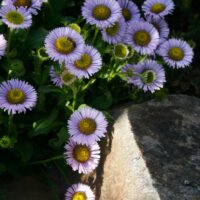
Erigeron glaucus ‘Bountiful’
Forms a lush mound of foliage 10 inches - 1 ft. tall by 2 ft. wide. Exceptionally floriferous and long blooming, 'Bountiful' offers masses of lavender daisies with yellow centers held above loose rosettes of green foliage. It slowly spreads to form drifts which combine wonderfully with Iris and low grasses. A natural along the coast where it grows in full sun and is drought tolerant. Appreciates some afternoon shade and summer water inland. A reliable and easy to grow perennial. Butterfly and bee favorite. Their seeds are favored by juncos and finches.
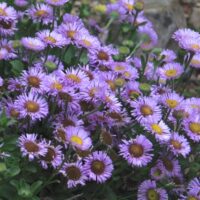
Erigeron glaucus ‘Cal Flora’
This seedling appeared at the base of a decorative pot planted with Erigeron glaucus ‘Cape Sebastian’. The seedling's foliage and form appears to be intermediate between Erigeron glaucus 'Cape Sebastian’ and Erigeron glaucus 'Bountiful'. It has a nice dense habit, though a bit taller than ‘Cape Sebastian', with larger and darker flowers held just above the foliage at about 10 inches in height. A natural along the coast where it thrives with little to no summer water once established and tolerates wind and salt spray. In hotter inland conditions give some afternoon shade and additional summer water. Good pollen and nectar source for bees and butterflies. Their seeds are favored by juncos and finches.
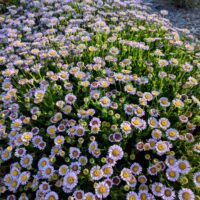
Erigeron glaucus ‘Cape Sebastian’
This selection of the West Coast native seaside daisy is from Oregon, just north of the California border. A compact and dense mound up to 6 inches high, topped with lavender daisies over a long period. Full sun near coast, light shade in hot regions. Best with moderate to occasional summer water in hotter climates. A favorite of pollinators. Their seeds are favored by juncos and finches.
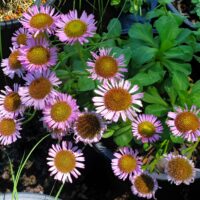
Erigeron glaucus ‘Ron’s Pink’
A delightful pink-flowered version of the useful seaside daisy, an easy to grow perennial native to the coast. Mounds of compact foliage topped with large, pink daisies, spring through autumn. At home on coastal bluffs in full sun with wind and salt spray. Requires afternoon shade and some summer water when grown in hotter interior locations. Looks beautiful when planted with Douglas iris, low fescues and woolly sunflowers. Attractive to a wide array of pollinators, including native bees and butterflies.
Erigeron glaucus ‘Wayne Roderick’
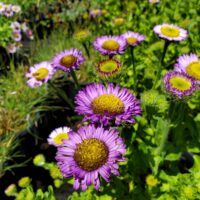
This selection offers the darkest flowers of any of the seaside daisies. Deep purple petals surround golden discs on flowers 1 ½ inches wide. The prolific blooms begin in spring and can continue into autumn if the spent flowers are removed. Bright green leaves create a slowly spreading mound up to a foot high with the flowers perched just above. Plant in full sun near the coast but protect from the hot afternoon sun in inland locales. Enjoys moderate to occasional irrigation. The seaside daisies make a great addition to the meadow garden, combining beautifully with iris, blue fescues and spreading gumplant.
Erigeron glaucus ‘White Lights’
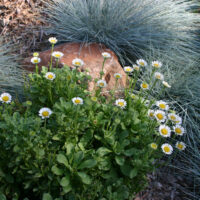
This unusual white flowering form of seaside daisy was discovered along a coastal bluff in Sonoma County by Roger Raiche. It has been a long bloomer, starting in spring and continuing into autumn. Reaches a height of up to 1 ft. and spreads to form a small clump. Prefers sun, decent drainage, and is drought tolerant once established. A little shade and moderate to occasional water is best in hot inland sites. A member of the sunflower family, seaside daisies are excellent sources of both nectar and pollen for butterflies, bees and other pollinators. Their seeds are favored by juncos and finches.
Erigeron linearis
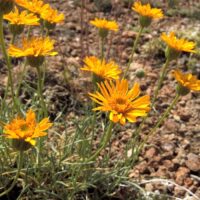
This native Erigeron grows in a number of western states, including California, where it is found in the mountains, on rocky slopes, sagebrush scrub and desert plant communities. Most Erigeron species flowers are white, pink or shades of purple, but this low growing, tufted perennial sports dime-sized, yellow daisies, in the late spring to early summer. The flower buds nod at first, then straighten as they open above the mound of narrow leaves, rising to around 8 inches or so tall and getting about as wide. A natural for the dry garden, rock garden, crevice, wall or container, where it gets full sun and excellent drainage. Bees and butterflies are attracted to the flowers, including several checkerspot butterfly species and the white-lined sphinx moth.
Eriodictyon californicum
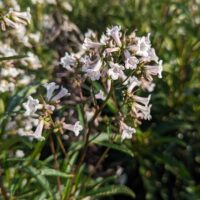
Uncommon in the nursery trade, this aromatic, evergreen shrub is native to dry habitats of chaparral and mixed evergreen forest plant communities in North and Central California and into Oregon. An opportunist, this shrub stump sprouts after fires and grows with renewed vigor after any soil disturbance. The dark green, leathery leaves are covered in a shiny, fragrant, resin and are sticky to touch. The common name means, holy herb, and the pungent leaves have a long history of medicinal uses. Grows 3 - 5 ft. tall and spreads by underground roots to form a colony. Late spring brings clusters of small, trumpet-shaped flowers of pale lavender, sometimes white or pale blue, which are highly attractive to butterflies, hummingbirds and bees. Plant in full sun with good drainage and little water once established. Deer resistant.
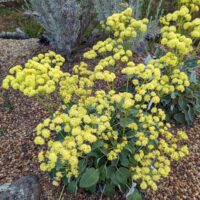
Eriogonum compositum – yellow flowered form
This unusual form of the native arrowleaf buckwheat features soft yellow flowers, as opposed to the more come cream-colored ones. In spring, flattened clusters of blossoms emerge on stout stems held at least a foot above rounded mounds of large, fuzzy, gray-green leaves, reaching up to 2 ft wide. Found in gravelly soils in seasonally dry areas which bake in summer but freeze in the winter. Plant in full sun and water infrequently once plants are established. A surprisingly adaptable species which does well in local gardens. As with other buckwheats, butterflies and bees love the flowers. Numerous butterfly species use this plant as a larval host. Native from Sonoma and Napa Counties north to Washington and east to Idaho.
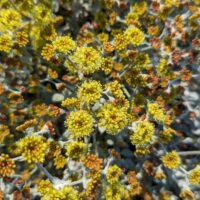
Eriogonum crocatum
A rare buckwheat grown for its beautiful gray, felty foliage and bright, clear yellow flowers. The yellow flowers open from brown buds and then age to a dark rusty brown. Grows 1 - 2 ft. tall and wide, this perennial requires full sun and good drainage. Little to no summer water once established. This Ventura County, California native is hardy to about 15°F. Good nectar source for bees and butterflies. Deer resistant.
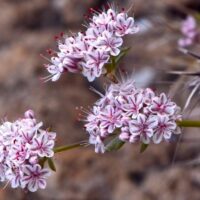
Eriogonum fasciculatum
This adaptable buckwheat is a native of central and southern California. It is a pioneer plant capable of surviving and colonizing some of the hottest driest sites. These attributes are very useful in a garden setting but it should not be planted in or adjacent to wildlands where it may escape and displace local natives. Small native shrub, forming a broad mound 3-4 ft. high and at least 4 ft. wide. Flower clusters are creamy white to pink, turning an attractive rust color with age. Good erosion control plant - best in a well drained, sunny site. Flowers attractive to bees and butterflies. Deer resistant.
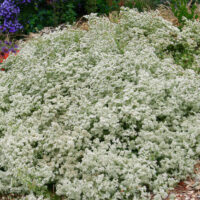
Eriogonum fasciculatum ‘Warriner Lytle’
An interesting form of California buckwheat introduced by the Theodore Payne Foundation. Grows quickly into a low and spreading evergreen groundcover clothed with small, needle-like leaves, 18 inches tall and 6 to 8 feet wide. From late spring to early fall, tight clusters of creamy-whitish pink flowers appear which are very attractive to bees and butterflies. As the flowers go to seed they gradually turn dark russet and are attractive to seed eating birds and mammals. Excellent for dry slopes where it will grow in full sun to light shade with good drainage. Quite drought tolerant once established. Deer resistant.
Eriogonum giganteum
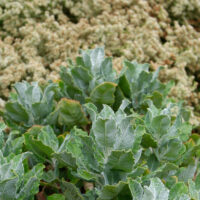
Native to the Channel Islands of Southern California, this buckwheat can grow to be a very large mounding shrub with gray felted leaves, 4 - 5 ft. tall and wide. The flower stalks have large, flat sprays of cream-colored to pale pink flowers in summer and are prized by arrangers of dried bouquets. Flowers are attractive to bees and butterflies and birds enjoy the seeds. Best in sunny well-drained sites. Drought tolerant but in hot inland situations they look best with occasional deep waterings in summer.
Eriogonum grande var. rubescens
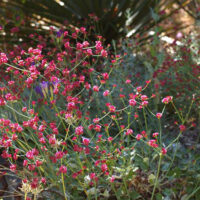
A small, colorful, and highly ornamental native perennial for a sunny spot. Low mounds of grey-green foliage feature flower stems up to a foot tall with rounded heads of intense rosy-pink. Buckwheats have substantial wildlife value, providing pollen and nectar for bees and butterflies, larval food for butterflies, seeds for birds and cover for many creatures. Drought tolerant once established and appreciates decently draining soil. An excellent rock garden plant.
Eriogonum latifolium
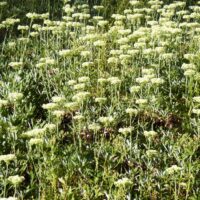
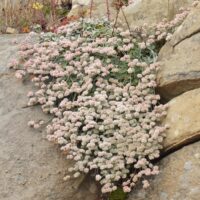
Native to our coastal bluffs, this perennial forms neat mounds of silvery white foliage under 1 ft. tall. Flowers develop in dense pom-poms and are creamy white to pinkish. Tolerates sun, wind and drought once established but needs decent drainage. Provide occasional summer irrigation to keep them looking their best. Buckwheats have substantial wildlife value, providing pollen and nectar for bees and butterflies, larval food for butterflies, seeds for birds and cover for many creatures. Deer resistant.
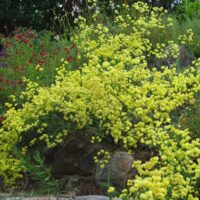
Eriogonum nudum ‘Ella Nelson’s Yellow’
The naked buckwheat has the widest distribution of all the buckwheats, occurring from the coast to timberline in the mountains. This interesting seed strain was collected by Eric Nelson along the middle fork of the Eel River in Mendocino County and named for his grandmother. Instead of the more common white or pink flowers of the species, this strain has beautiful yellow flowers. The spoon shaped leaves which form a low rosette are grey green on top and white and wooly beneath. Late spring brings a multitude of small, bright yellow flowers carried on the bare, leafless stems 18-24 inches above the foliage. Best on well drained soils in full sun where they are drought tolerant once established. Buckwheats are highly attractive to nectar feeding insects. Deer resistant.
Eriogonum parvifolium ‘Moss Landing’
Native to coastal bluffs of the central and south coast. Forms a mounding shrub 2 ft. or more tall by 2 – 3 ft. wide with thick, dark green, triangular shaped leaves often with a reddish tinge, and white and woolly beneath. Round pom-poms of white to pink flowers over a long period late spring and summer, fade to an attractive russet brown. A natural for coastal areas where it grows fast in full sun with good drainage and is very drought tolerant once established. Inland, a little afternoon shade is recommended. Looks great on slopes or draping over walls. An important pollinator plant, appealing to a wide array of insects. In its native range, the rare and endangered El Segundo blue butterfly relies exclusively on this species in all stages of its life cycle. Deer tolerant.
Eriogonum umbellatum
Intense yellow flowers in flat-topped clusters sit atop short stems above grey to green foliage. Ranging in height from 10 to 18 inches, this highly variable and widely distributed California native is an excellent addition to the drought tolerant garden. Provide decent drainage and occasional to no irrigation once established. Full sun to light shade. Just like all buckwheats, this species is loved by bees and butterflies. The foliage is deer resistant but they may nibble the flowers.
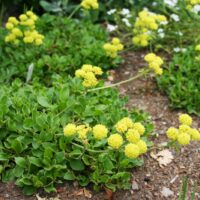
Eriogonum umbellatum var. aureum ‘Kannah Creek’
Selected from the Kannah Creek region of Western Colorado, this durable perennial will make a fine addition to the dry garden. Forms low mats of leathery leaves 12-24 inches wide, which turn shades of red and purple in the autumn. Masses of bright yellow flowers on stalks 12-15 inches tall appear late spring to early summer and deepen in color to orange as they age. Plant in full sun to light shade with occasional to little water. Drought tolerant once established. Buckwheats attract an array of beneficial insects, provide pollen and nectar for bees and butterflies and seeds for birds.